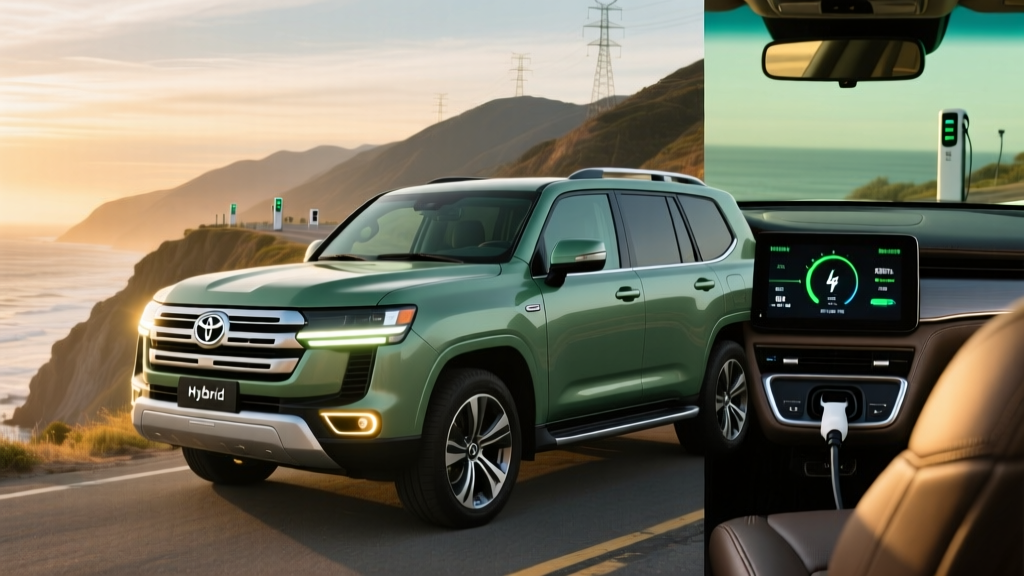
The Toyota Land Cruiser returned to the U.S. market with a turbocharged hybrid powertrain, shedding its old V8 for the i-FORCE MAX system that pairs a 2.4-liter turbo four-cylinder with an electric motor. For 2026, the hybrid Toyota Land Cruiser continues as a body-on-frame SUV built for off-road duty while squeezing more miles from every gallon than its predecessors ever could. But how efficient is it really, and does the hybrid system hold up to Toyota's reliability reputation?
We've analyzed the EPA data, real-world driving reports, and ownership economics to give you every number you need before signing the paperwork.
i-FORCE MAX Powertrain: How the Hybrid System Works
The 2026 Land Cruiser uses Toyota's i-FORCE MAX hybrid powertrain — the same architecture found in the Tacoma and 4Runner. This is a conventional hybrid (HEV), not a plug-in hybrid (PHEV). You never plug it in. The system recovers energy during braking and deceleration to charge a small nickel-metal hydride (NiMH) battery pack mounted between the frame rails.
HEV vs PHEV — What Land Cruiser Buyers Need to Know
Hybrid Toyota Land Cruiser (HEV): No plug required. The gas engine and regenerative braking charge a ~1.87 kWh battery. You drive it exactly like a gas car — fill up at the pump and go. Electric assist improves city MPG and low-speed torque.
Plug-in Hybrid (PHEV) alternative: Vehicles like the Toyota RAV4 Prime offer ~42 miles of electric-only range but require a 120V or 240V outlet for charging. Toyota does not currently offer a PHEV Land Cruiser, and no PHEV variant has been announced for 2026 or 2027.
Here are the exact powertrain figures for the 2026 model:
| Specification | 2026 Toyota Land Cruiser |
|---|---|
| Engine | 2.4L turbocharged inline-4 |
| Electric Motor | 48-hp permanent-magnet motor integrated in 8-speed auto |
| Combined System Output | 326 hp / 465 lb-ft torque |
| Transmission | 8-speed automatic (Direct Shift) |
| Hybrid Battery | ~1.87 kWh NiMH (sealed) |
| Drivetrain | Full-time 4WD with locking center diff |
| Towing Capacity | 6,000 lbs |
| 0–60 mph (est.) | ~6.5 seconds |
| Curb Weight | ~5,070 lbs |
Fuel Economy: EPA Ratings and Real-World MPG
According to fueleconomy.gov, the 2026 hybrid Toyota Land Cruiser carries the following EPA estimates:
| Driving Condition | EPA MPG | Real-World Expectation |
|---|---|---|
| City | 23 MPG | 22–25 MPG |
| Highway | 24 MPG | 21–23 MPG |
| Combined | 23 MPG | 21–24 MPG |
Why city and highway are nearly identical: Unlike most hybrids that dominate in stop-and-go traffic, the Land Cruiser's boxy aerodynamics and 5,000+ lb curb weight work against it at highway speeds. The electric motor's regenerative braking advantage shrinks on open interstates, while wind resistance surges. Expect real-world highway driving at 75+ mph to drop into the low 20s.
Cold-weather note: In sub-freezing temperatures, NiMH batteries lose some charge/discharge efficiency, and the engine runs longer to heat the cabin. Plan on 19–21 MPG combined in sustained winter conditions below 30°F.
Pricing, Trims, and Tax Credit Eligibility
The 2026 hybrid Toyota Land Cruiser is available in two core trims, with pricing before destination:
| Trim | MSRP |
|---|---|
| Land Cruiser 1958 | ~$57,345 |
| Land Cruiser | ~$62,345 |
| Destination Charge | $1,495 |
Federal Tax Credit Status
Under current IRS §30D clean vehicle credit rules, the hybrid Toyota Land Cruiser does not qualify for the federal $7,500 EV tax credit. That credit applies exclusively to battery electric vehicles (BEVs) and plug-in hybrids (PHEVs) meeting battery-sourcing and critical-mineral requirements.
The Land Cruiser is a conventional hybrid (HEV). There is no federal tax credit for HEVs as of 2026. Some states may offer modest rebates or reduced registration fees for hybrid vehicles — check your state's energy office or DMV for current programs.
Battery Warranty, Lifespan, and Replacement Cost
Hybrid battery longevity is the number-one concern for buyers of any hybrid SUV. Toyota addresses this with one of the strongest warranties in the segment.
Toyota Hybrid Battery Warranty
Coverage: 10 years / 150,000 miles (whichever comes first) for the hybrid battery and all hybrid-system components, including the electric motor, inverter, and control modules.
What's covered: Defects in materials, workmanship, and capacity loss below a defined threshold (typically ~60% of original capacity).
Transferable: Yes — the warranty transfers to subsequent owners, which supports resale value.
How Long Will the Battery Last?
Toyota's NiMH hybrid batteries in vehicles like the Prius and Highlander Hybrid have demonstrated lifespans of 150,000–200,000+ miles in real-world use, with many original batteries still functioning beyond 200K miles. The Land Cruiser's battery is relatively small (~1.87 kWh) and operates within a narrow state-of-charge window (roughly 40–80%), which dramatically reduces degradation stress compared to a full EV battery.
Replacement Cost If It Fails
Should the hybrid battery require replacement outside of warranty:
- OEM replacement battery: $2,500–$4,000 (parts only)
- Full installed cost at a Toyota dealer: $3,500–$5,500
- Refurbished/aftermarket option: $1,500–$2,500 installed
Given the 10-year/150,000-mile warranty and NiMH chemistry's proven track record, most owners will never face an out-of-pocket battery replacement.
Reliability and Ownership Track Record
Toyota's hybrid systems are among the most thoroughly proven in the automotive industry. The i-FORCE MAX powertrain shares architecture with the Tacoma and Tundra, which have accumulated millions of real-world miles since the system's 2022 introduction. The Land Cruiser nameplate itself carries decades of durability credibility.
Key reliability considerations:
- No plug, no charging infrastructure needed — eliminates a major failure point and ownership hassle
- Regenerative braking reduces wear on the mechanical brake pads, often extending pad life to 80,000+ miles
- Turbocharged engine adds a component (the turbo) that naturally aspirated engines don't have, though Toyota's turbo designs in the Tundra have shown strong early durability data
- Body-on-frame construction means higher weight and slightly higher tire and suspension wear versus unibody crossovers
Hybrid Toyota Land Cruiser vs. Alternatives: Which Should You Choose?
✓ Pros
- 326 hp / 465 lb-ft with seamless electric torque fill
- 23 MPG combined in a 5,000-lb body-on-frame SUV
- Genuine off-road hardware: locking diffs, Multi-Terrain Select, Crawl Control
- 10-year/150K hybrid battery warranty
- Strong resale value (Toyota + Land Cruiser nameplate)
- No charging infrastructure required
✗ Cons
- 23 MPG combined is modest — hybrid gains are limited by weight and aero
- No PHEV option for electric-only commuting
- Third-row seat is tight for adults
- Cargo space trails unibody competitors (behind 3rd row: ~12 cu ft)
- No federal tax credit eligibility
- Premium fuel recommended for max output
Decision Framework: Land Cruiser Hybrid vs. EV vs. Gas
Choose the hybrid Land Cruiser if: You need serious off-road capability and body-on-frame durability, want better fuel economy than a pure gas SUV without changing your fueling habits, and plan to keep the vehicle 10+ years.
Choose a full EV (e.g., Rivian R1S) if: You have home Level 2 charging, mostly drive on pavement, want 300+ miles of range, and qualify for the $7,500 federal tax credit to offset the higher purchase price.
Choose a gas-only SUV (e.g., Lexus GX 550 without hybrid) if: You drive very low annual miles, live in an area with limited hybrid service support, or prioritize maximum towing and are indifferent to fuel costs.
Real-World Ownership Costs: 5-Year Estimate
| Cost Category (5 yr / 75K mi) | Land Cruiser HEV | Gas-Only Comparable |
|---|---|---|
| Fuel (23 MPG vs 19 MPG, $3.80/gal) | $12,391 | $15,000 |
| Maintenance (oil, brakes, tires) | $3,200 | $3,800 |
| Insurance (avg) | $9,500 | $9,000 |
| 5-Year Fuel Savings vs Gas | +$2,609 saved | — |
The hybrid system saves roughly $2,600 in fuel over five years at 15,000 miles/year. The bigger financial benefit is lower brake wear from regenerative braking and the strong resale value the Land Cruiser nameplate commands.
Frequently Asked Questions
How many MPG does the hybrid Toyota Land Cruiser get?
The EPA rates the 2026 Land Cruiser hybrid at 23 MPG city, 24 MPG highway, and 23 MPG combined. In real-world driving, expect 22–25 MPG in mixed use. Highway-only driving at speeds above 75 mph will drop to around 21 MPG due to the vehicle's boxy aerodynamics and 5,000+ lb weight.
Does the Land Cruiser hybrid need to be plugged in?
No. The Land Cruiser is a conventional hybrid (HEV), not a plug-in hybrid (PHEV). The battery charges through regenerative braking and the gas engine. You fuel it exactly like any gasoline vehicle.
Is there a plug-in hybrid (PHEV) Toyota Land Cruiser?
Not for 2026. Toyota has not announced a PHEV Land Cruiser variant. If electric-only commuting is a priority, consider the Toyota RAV4 Prime (42 miles EV range) or a full-electric SUV like the Rivian R1S or Tesla Model X.
Is the hybrid Toyota Land Cruiser reliable?
Toyota's hybrid systems are among the most proven in the industry, with the Prius lineage stretching back to 1997. The i-FORCE MAX system shares components with the Tundra and Tacoma, which have been on the road since 2022. The hybrid battery carries a 10-year/150,000-mile warranty. NiMH chemistry is exceptionally stable and has demonstrated 200,000+ mile lifespans in other Toyota hybrids.
What does a Land Cruiser hybrid battery replacement cost?
An OEM replacement runs $3,500–$5,500 installed at a Toyota dealer. Aftermarket or refurbished options cost $1,500–$2,500 installed. However, the 10-year/150,000-mile warranty covers most owners, and NiMH batteries in Toyota hybrids routinely last well beyond 150,000 miles.
Does the hybrid Land Cruiser qualify for a federal tax credit?
No. Under IRS §30D rules, the federal clean vehicle credit applies only to BEVs and PHEVs meeting battery-component and critical-mineral sourcing requirements. The Land Cruiser is an HEV and is not eligible. Check your state's energy office for possible local hybrid incentives.
Hybrid vs PHEV vs EV — which SUV is right for me?
Hybrid (HEV): Best if you want better MPG with zero lifestyle change — no plugs, no range planning. Ideal for the Land Cruiser buyer who needs off-road capability and long-distance range in remote areas.
Plug-in Hybrid (PHEV): Best if you have home charging and a short commute (20–40 miles) that you can cover on electricity, plus the flexibility of a gas engine for road trips.
Full EV (BEV): Best if you have reliable home Level 2 charging, mostly drive on pavement, and want the lowest per-mile energy cost and zero tailpipe emissions.