Quick Verdict: The Hybrid Subaru Outback in 2026
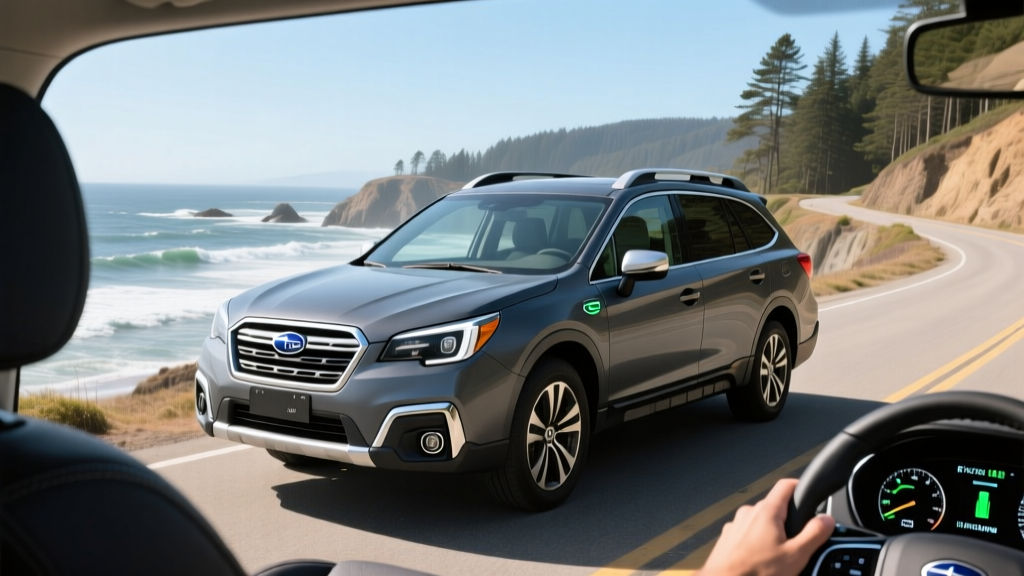
For 2026, Subaru offers the Outback with its proven conventional hybrid (HEV) powertrain — a self-charging system that pairs a 2.5-liter flat-four engine with an electric motor integrated into the CVT. There is no plug-in hybrid (PHEV) variant of the Outback currently in production. If you're searching for a hybrid Subaru Outback, you're looking at a vehicle that requires no charging infrastructure, delivers meaningful fuel savings over the gas-only model, and maintains the all-wheel-drive capability the Outback is known for.
The 2026 Outback Hybrid targets buyers who want better fuel economy without changing their refueling habits. It's not an EV, and it doesn't pretend to be one. It's a practical efficiency upgrade for the wagon-loyal, outdoors-inclined driver who covers serious miles and doesn't have reliable access to home charging.
HEV vs PHEV: What the Outback Hybrid Actually Is
Before diving into specs, it's essential to distinguish between the two hybrid architectures because buyer confusion here leads to disappointment at the dealership.
| Feature | Conventional Hybrid (HEV) | Plug-In Hybrid (PHEV) |
|---|---|---|
| Plug-in charging required? | No — self-charging via regen & engine | Yes — plug in for EV-only range |
| Electric-only driving | Limited (low-speed, short bursts) | 20-40+ miles on battery alone |
| Battery size | ~1.0-1.6 kWh (small) | 13-20+ kWh (large) |
| Federal tax credit (§30D) | Not eligible | Up to $7,500 if eligible |
| Outback availability (2026) | Yes | Not offered |
The 2026 Outback Hybrid is a conventional hybrid (HEV). It captures energy during braking and deceleration to recharge its small battery, which then assists the gasoline engine during acceleration and low-speed driving. You never plug it in. If you want electric-only commuting in a Subaru, the closest option is the Solterra (a full BEV), not a plug-in Outback.
Fuel Economy: EPA Ratings and Real-World MPG
Fuel economy is the primary reason buyers cross-shop the hybrid Outback. Here's how the numbers break down according to EPA estimates:
| Configuration | City MPG | Highway MPG | Combined MPG |
|---|---|---|---|
| 2026 Outback Hybrid (AWD) | 35 | 34 | 35 |
| 2026 Outback 2.5L Gas (AWD) | 26 | 32 | 28 |
| 2026 Outback 2.4T Turbo (AWD) | 22 | 29 | 25 |
The hybrid powertrain delivers a substantial 7 MPG combined improvement over the standard 2.5-liter engine and a 10 MPG gain over the turbocharged 2.4T Wilderness-adjacent trims. Over 15,000 annual miles, that translates to roughly 107 fewer gallons consumed per year — approximately $375-$450 in annual fuel savings at $3.50-$4.20/gallon.
Conventional hybrids often exceed their EPA city ratings because regenerative braking recovers more energy in stop-and-go traffic. Expect 36-38 MPG in urban driving. Highway driving at sustained 70-80 MPH typically yields 31-33 MPG, as the electric motor provides less benefit at constant speed. In cold weather (below 30°F), anticipate a 2-4 MPG drop due to increased engine idling for cabin heat and reduced battery efficiency. Drivers in flat, moderate-climate cities may see 37+ combined; mountainous or extreme-cold routes should expect 30-32 combined.
Powertrain and Performance Specs
| Specification | 2026 Outback Hybrid |
|---|---|
| Engine | 2.5L SUBARU BOXER 4-cylinder |
| Electric Motor | Integrated CVT motor (approx. 19 kW) |
| Combined Horsepower | 194 hp (net system) |
| Combined Torque | 188 lb-ft |
| Transmission | Lineartronic CVT with electric motor |
| Drivetrain | Symmetrical All-Wheel Drive |
| 0-60 MPH | ~8.2 seconds (est.) |
| Towing Capacity | 2,700 lbs |
| Hybrid Battery | ~1.1 kWh lithium-ion (self-charging) |
| Ground Clearance | 8.7 inches |
The hybrid system adds modest power but makes its presence felt in low-speed responsiveness. The electric motor fills in the torque gap that the naturally aspirated 2.5-liter engine has at low RPM, making around-town driving feel more immediate than the gas-only variant. It's not a performance upgrade — the turbo 2.4T (260 hp) still owns that role — but it's a noticeably smoother and more efficient daily driver.
Towing capacity drops slightly compared to the turbo model (3,500 lbs) but matches the standard 2.5L at 2,700 lbs. That's sufficient for a small utility trailer, a pair of dirt bikes, or a lightweight camping trailer, but not a boat or large camper.
Hybrid Battery Warranty and Longevity
Subaru covers the hybrid battery pack with an 8-year / 100,000-mile warranty (extended to 10 years / 150,000 miles in California-emission states including CA, CT, ME, MD, MA, NJ, NY, OR, RI, VT, and WA). This warranty covers defects and capacity loss below a defined threshold, typically around 60-70% of original capacity.
Hybrid battery replacement cost for the Outback HEV is estimated at $2,500-$4,000 including labor at a Subaru dealer, though independent hybrid specialists may offer refurbished units for $1,500-$2,500. In practice, modern lithium-ion hybrid batteries in Toyota and Subaru HEV systems have demonstrated 150,000-200,000+ mile lifespans with gradual, manageable degradation rather than sudden failure. Because the battery is small (~1.1 kWh) and never deeply cycled (the system keeps it in a 40-80% state-of-charge window), stress on the cells is minimal compared to a full EV or PHEV battery.
The hybrid system's other components — the inverter, electric motor, and power control unit — share the 8-year/100,000-mile hybrid system warranty. Subaru's warranty documentation details specific coverage terms.
Pricing, Trims, and Tax Credit Eligibility
| 2026 Outback Trim | MSRP (est.) | Powertrain |
|---|---|---|
| Base (2.5L gas) | $30,395 | Gas |
| Premium Hybrid | $35,595 | Hybrid HEV |
| Limited Hybrid | $39,995 | Hybrid HEV |
| Touring XT (2.4T gas) | $42,795 | Gas Turbo |
The hybrid powertrain carries approximately a $2,500-$3,500 premium over the equivalent gas-only trim. At 7 MPG better fuel economy and ~$400 annual savings, the payback period is roughly 6-9 years for an average driver covering 15,000 miles per year. For high-mileage drivers (20,000+ miles/year), payback shortens to 4-6 years.
- The Outback Hybrid is a conventional HEV, not a PHEV or BEV
- IRS §30D credits require plug-in electric vehicles with ≥7 kWh battery capacity
- The Outback Hybrid's ~1.1 kWh battery does not meet the threshold
- Some states offer separate hybrid incentives — check your state energy office
- Previously, the federal Alternative Motor Vehicle Credit for hybrids expired for most manufacturers
According to IRS §30D guidelines, only plug-in electric vehicles qualify for the new clean vehicle credit. Conventional hybrids like the Outback Hybrid do not qualify for any federal purchase incentive. A few states (notably Colorado and California) have offered modest hybrid rebates in the past, but these programs change frequently — verify current availability with your state's energy or environmental agency.
Who Should Choose the Hybrid Outback vs. a Full EV or Gas Car?
Choose the Hybrid Outback if:
- You don't have access to home or workplace charging (apartment, street parking)
- You regularly drive 300+ miles in rural areas with sparse charging infrastructure
- You need AWD and 8.7 inches of ground clearance for unpaved roads and snow
- You want better fuel economy without any behavioral change or charging routine
- You tow occasionally (2,700 lbs) and need a roof rack for gear
Choose a full EV (like the Subaru Solterra or Hyundai Ioniq 5) if:
- You have reliable Level 2 home charging
- Your daily commute is under 250 miles round-trip
- You want to qualify for the $7,500 federal tax credit (§30D)
- You want zero tailpipe emissions and lower per-mile "fuel" costs
Stick with the gas Outback 2.5L if:
- Your annual mileage is under 10,000 miles (hybrid premium won't pay back)
- You want the lowest upfront purchase price
- You plan to keep the vehicle under 5 years
Pros and Cons
- 35 MPG combined — 25% improvement over gas model
- No plug-in charging required — zero lifestyle change
- Standard Symmetrical AWD with 8.7" ground clearance
- Proven hybrid architecture (shared lineage with Toyota system)
- 8-year/100,000-mile hybrid battery warranty
- Excellent cargo volume (32.5 cu ft rear seats up)
- No PHEV option — no electric-only commuting
- Not eligible for federal §30D tax credit
- ~$2,500-$3,500 premium over gas-only trims
- Modest 194 hp — not a performance upgrade
- Towing limited to 2,700 lbs (turbo does 3,500)
- Hybrid only available in mid-to-high trims
Frequently Asked Questions
How many MPG does the hybrid Subaru Outback get?
The 2026 Outback Hybrid is EPA-rated at 35 MPG city, 34 MPG highway, and 35 MPG combined. In real-world city driving with frequent stops, many owners report 36-38 MPG thanks to regenerative braking. Highway-only driving at 75+ MPH typically yields 31-33 MPG.
Is there a plug-in hybrid Subaru Outback?
No. For 2026, Subaru does not offer a plug-in hybrid (PHEV) Outback. The Outback Hybrid is a conventional hybrid (HEV) that self-charges through regenerative braking and engine power. Subaru's Crosstrek previously offered a PHEV variant, but it was discontinued. If you need electric-only range from Subaru, the Solterra BEV is the current option.
Does the hybrid Subaru Outback qualify for a tax credit?
No. The federal §30D clean vehicle credit requires plug-in electric vehicles with a battery capacity of at least 7 kWh. The Outback Hybrid's ~1.1 kWh battery does not qualify. Some states may offer separate incentives for hybrids — check your state's energy office for current programs.
How long will the hybrid battery last, and what does replacement cost?
Subaru warranties the hybrid battery for 8 years/100,000 miles (10 years/150,000 miles in CARB states). Real-world data from similar Toyota/Subaru hybrid systems suggests 150,000-200,000+ mile lifespans are common. Replacement cost is estimated at $2,500-$4,000 at a dealer, or $1,500-$2,500 for a refurbished unit from an independent hybrid specialist.
Is the hybrid Outback reliable?
Subaru's hybrid system shares engineering lineage with Toyota's proven Hybrid Synergy Drive architecture. The conventional hybrid layout has fewer failure points than a PHEV or full EV — no high-voltage charging port, no large battery pack to degrade, no DC fast-charge stress. IIHS has historically rated the Outback as a Top Safety Pick, and the hybrid variant shares the same structural platform and safety systems.
How does the hybrid Outback perform in cold weather?
Unlike full EVs, which can lose 20-30% of range in sub-freezing temperatures, the Outback Hybrid's fuel economy drops only modestly — expect 2-4 MPG less in sustained cold below 30°F. The gasoline engine provides cabin heat without draining the battery, and the small hybrid battery is less affected by cold because it operates in a narrow state-of-charge window. AWD performance in snow remains excellent.