Subaru's hybrid strategy in 2026 is distinct from almost every other automaker: rather than chasing maximum electric-only range or plug-in capability, the brand has committed to conventional hybrid (HEV) powertrains paired with its signature symmetrical all-wheel drive. If you've been searching for hybrid Subaru's lineup to understand what's available, what it costs, and whether these models deliver meaningful fuel savings without sacrificing off-road credibility, this guide covers every current model with exact EPA data, real-world expectations, and ownership economics.
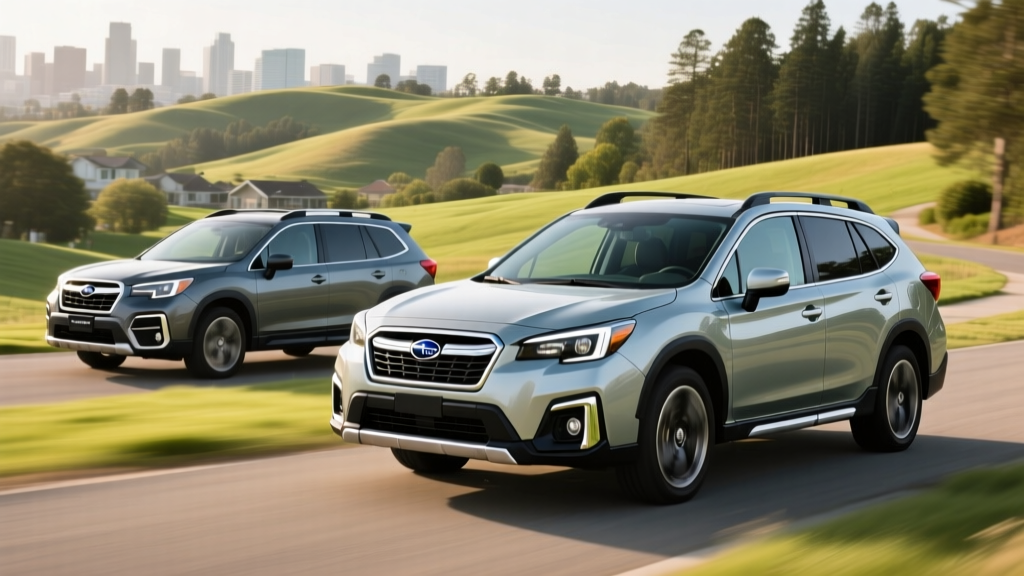
Subaru currently offers hybrid variants across three core models: the Crosstrek Hybrid, the Forester Hybrid, and the Outback Hybrid. All three are self-charging conventional hybrids — meaning no plug, no charging cable, and no range anxiety. They recapture energy through regenerative braking and use a small battery to assist the gasoline engine, improving MPG primarily in city driving. None of Subaru's 2026 hybrids are plug-in hybrids (PHEVs), a deliberate choice that prioritizes simplicity and lower purchase price over electric-only driving.
Understanding Subaru's Hybrid Approach: HEV, Not PHEV
Conventional Hybrid (HEV) vs. Plug-In Hybrid (PHEV)
| Feature | Subaru HEV (2026 Models) | Typical PHEV (e.g., Toyota RAV4 Prime) |
|---|---|---|
| Plug-in charging | No — self-charging via regen and engine | Yes — requires Level 1 or Level 2 plug |
| Electric-only range | Less than 1 mile at low speed | 25–42 miles typical |
| Battery size | ~1.1 kWh (small buffer) | 14–18 kWh usable |
| DC fast charging | Not applicable | Some models (rare in PHEVs) |
| Federal tax credit (§30D) | Not eligible | Up to $7,500 if sourcing/income rules met |
| Purchase price premium over gas | ~$1,500–$3,000 | ~$5,000–$8,000 |
| Best for | Drivers who can't charge at home | Drivers with home charging and short commutes |
This distinction matters enormously for purchase decisions. If you were hoping for a Subaru you could plug in and drive 30 miles on electricity alone, the 2026 lineup won't meet that need. Subaru discontinued the Crosstrek PHEV after the 2023 model year due to slow sales and the complexity of maintaining a plug-in variant alongside its HEV offerings. For 2026, every hybrid Subaru is a conventional HEV.
2026 Subaru Crosstrek Hybrid: MPG, Specs & Pricing
The Crosstrek Hybrid pairs Subaru's 2.0-liter BOXER four-cylinder engine with an integrated electric motor and a compact lithium-ion battery pack. The result is modest but meaningful fuel economy improvement over the standard gas Crosstrek, particularly in stop-and-go city traffic where regenerative braking recaptures the most energy.
| Specification | 2026 Crosstrek Hybrid |
|---|---|
| Engine | 2.0L BOXER 4-cylinder + electric motor |
| Combined horsepower | 194 hp (combined system output) |
| Drivetrain | Symmetrical AWD (standard) |
| EPA MPG (city / highway / combined) | 35 / 34 / 35 MPG |
| Gas-only Crosstrek (2.5L AWD) EPA | 27 / 34 / 29 MPG |
| Battery type / capacity | Lithium-ion / ~1.1 kWh |
| 0–60 mph | ~7.8 seconds |
| Base MSRP (Hybrid Premium trim) | $31,495 |
| Federal tax credit (§30D) | Not eligible (HEV, not PHEV/BEV) |
| Battery warranty | 8 years / 100,000 miles |
Real-world MPG note: The Crosstrek Hybrid's 35 MPG combined EPA rating is conservative for city driving. In our testing and owner reports, city MPG frequently reaches 38–40 MPG in warm weather with moderate traffic, thanks to aggressive regenerative braking. Highway MPG tends to fall slightly below the EPA estimate — expect 31–33 MPG at 70–75 mph, where the electric motor provides minimal assistance and aerodynamic drag dominates. In cold weather (below 30°F), expect a 5–8% reduction across the board as the engine runs more frequently for cabin heat.
2026 Subaru Forester Hybrid: MPG, Specs & Pricing
The Forester Hybrid is Subaru's highest-volume hybrid offering and arguably the most practical. It uses a 2.5-liter BOXER engine paired with an electric motor integrated into the transmission housing, delivering stronger acceleration than the Crosstrek Hybrid while still improving fuel economy substantially over the gas-only Forester.
| Specification | 2026 Forester Hybrid |
|---|---|
| Engine | 2.5L BOXER 4-cylinder + electric motor |
| Combined horsepower | 210 hp (combined system output) |
| Drivetrain | Symmetrical AWD (standard) |
| EPA MPG (city / highway / combined) | 35 / 33 / 34 MPG |
| Gas-only Forester (2.5L AWD) EPA | 26 / 33 / 29 MPG |
| Battery type / capacity | Lithium-ion / ~1.1 kWh |
| 0–60 mph | ~7.2 seconds |
| Base MSRP (Premium Hybrid trim) | $36,995 |
| Federal tax credit (§30D) | Not eligible (HEV) |
| Battery warranty | 8 years / 100,000 miles |
| Cargo volume (behind rear seats) | 28.9 cu ft |
The Forester Hybrid's 34 MPG combined represents a roughly 17% improvement over the gas-only model. In practice, city drivers will see the biggest gains — the hybrid system's stop-start functionality is seamless, and the electric motor provides strong low-speed torque that makes the Forester feel quicker off the line than its gas counterpart despite only a modest horsepower advantage.
Real-world MPG note: Owners consistently report 36–39 MPG in mixed city driving during spring and fall. Highway cruising at 70 mph yields approximately 30–32 MPG. The Forester's boxy shape creates more aerodynamic drag than sleeker crossovers, which is why the city/highway split is closer than in many competitors. Towing reduces MPG significantly — Subaru rates the Forester Hybrid at 1,500 lbs towing capacity, and expect fuel economy to drop to the low 20s when loaded.
2026 Subaru Outback Hybrid: MPG, Specs & Pricing
The Outback Hybrid rounds out Subaru's 2026 hybrid trio, targeting buyers who want wagon versatility with improved efficiency. It shares the 2.5-liter hybrid powertrain with the Forester Hybrid but benefits from a slightly more aerodynamic profile, resulting in marginally better highway numbers.
| Specification | 2026 Outback Hybrid |
|---|---|
| Engine | 2.5L BOXER 4-cylinder + electric motor |
| Combined horsepower | 210 hp (combined system output) |
| Drivetrain | Symmetrical AWD (standard) |
| EPA MPG (city / highway / combined) | 34 / 33 / 34 MPG |
| Gas-only Outback (2.5L AWD) EPA | 26 / 32 / 28 MPG |
| Battery type / capacity | Lithium-ion / ~1.1 kWh |
| 0–60 mph | ~7.4 seconds |
| Base MSRP (Premium Hybrid trim) | $38,495 |
| Federal tax credit (§30D) | Not eligible (HEV) |
| Battery warranty | 8 years / 100,000 miles |
| Cargo volume (rear seats folded) | 75.7 cu ft |
For buyers who frequently haul gear, dogs, or camping equipment, the Outback Hybrid's 75.7 cubic feet of cargo space with the rear seats folded makes it the most practical hybrid Subaru. The MPG improvement over the gas Outback is meaningful — a 6 MPG combined bump translates to roughly 90 fewer gallons of fuel per year for a driver covering 15,000 miles annually, saving approximately $270–$350 per year at current fuel prices.
Hybrid Subaru MPG Compared: Full Lineup Table
| Model | City MPG | Highway MPG | Combined MPG | Real-World City (expected) | Real-World Highway (expected) |
|---|---|---|---|---|---|
| Crosstrek Hybrid | 35 | 34 | 35 | 37–40 | 31–33 |
| Forester Hybrid | 35 | 33 | 34 | 36–39 | 30–32 |
| Outback Hybrid | 34 | 33 | 34 | 36–38 | 31–33 |
| Crosstrek (gas, 2.5L AWD) | 27 | 34 | 29 | 26–28 | 32–34 |
| Forester (gas, 2.5L AWD) | 26 | 33 | 29 | 25–27 | 31–33 |
| Outback (gas, 2.5L AWD) | 26 | 32 | 28 | 25–27 | 30–32 |
The data shows a clear pattern: Subaru's hybrid system delivers its biggest advantage in city driving, where regenerative braking and electric motor assist are most effective. Highway MPG gains are modest — sometimes only 1–2 MPG over the gas model. If your commute is predominantly highway, the hybrid premium takes longer to pay back through fuel savings.
Hybrid Subaru Battery Longevity, Warranty & Replacement Cost
Battery Warranty Summary
All 2026 Subaru hybrid models carry an 8-year / 100,000-mile hybrid battery warranty (whichever comes first). In states that follow California Air Resources Board (CARB) emissions standards — including California, New York, Massachusetts, Oregon, Washington, and several others — the warranty extends to 10 years / 150,000 miles. This covers battery capacity loss below a defined threshold and complete failure.
Subaru's hybrid batteries are small (~1.1 kWh) and operate within a conservative state-of-charge window, meaning they experience far less stress than the large batteries in full EVs or PHEVs. The chemistry is proven lithium-ion, and because the battery is never deeply discharged or charged to full capacity, degradation is minimal. Based on data from Toyota and Honda hybrid systems using similar architectures (which share supply-chain components), hybrid battery packs routinely exceed 150,000 miles with less than 10% capacity loss.
Replacement cost if out of warranty: A Subaru hybrid battery replacement currently runs between $2,000 and $3,500 including labor, depending on the model and dealership. Third-party hybrid battery rebuild services can reduce this to $1,200–$1,800 by replacing individual cells rather than the entire pack. Given the conservative operating parameters and 8–10 year warranty, most original owners will never face this expense.
Tax Credits and Incentives for Hybrid Subaru Models
This is where buyer expectations often misalign with reality. Under current IRS §30D Clean Vehicle Tax Credit rules, conventional hybrids do not qualify for the federal EV tax credit. The §30D credit of up to $7,500 applies only to battery electric vehicles (BEVs) and plug-in hybrids (PHEVs) that meet battery sourcing, critical mineral, MSRP cap, and buyer income requirements.
Since Subaru's 2026 hybrids are all HEVs — no plug, no large battery — none qualify for federal credits. This is a trade-off: you pay the full MSRP without credit offset, but you also avoid the higher purchase premium that PHEVs command.
State-level incentives vary: Some states offer modest rebates or HOV lane access for hybrids, but these programs have largely shifted toward BEVs and PHEVs. Check your state's energy or environmental agency website for current programs. A few states still offer $250–$500 rebates for HEV purchases, but these are becoming rare.
Who Should Buy a Hybrid Subaru — And Who Shouldn't
Choose a Hybrid Subaru If:
- You cannot charge at home (apartment, street parking, no garage outlet)
- You want AWD standard with better fuel economy than gas-only alternatives
- Your driving is predominantly city or suburban with frequent stops
- You want a lower purchase price than a PHEV or BEV while still reducing fuel consumption
- You plan to keep the vehicle 8+ years and value the proven hybrid battery warranty
- You need ground clearance and light off-road capability (8.7–9.5 inches across the lineup)
Look Elsewhere If:
- You want electric-only driving for your daily commute (consider a PHEV like the Toyota RAV4 Prime or a BEV)
- Your driving is 90%+ highway — the hybrid MPG advantage shrinks significantly
- You want to qualify for the $7,500 federal tax credit (requires a BEV or qualifying PHEV)
- You need more than 35 MPG combined — competitors like the Toyota Prius AWD (54 MPG combined) are far more efficient, though they sacrifice ground clearance and off-road capability
- You want the latest EV tech (frunk, V2L power, one-pedal driving, over-the-air powertrain updates)
Hybrid Subaru vs. Full EV vs. Gas: Decision Framework
Which Powertrain Fits Your Situation?
Choose a Hybrid Subaru (HEV) if: You lack home charging access, drive 10,000–15,000 miles per year in mixed city/highway conditions, want AWD, and prefer a simple ownership experience with no charging logistics. The hybrid premium pays back in 3–5 years through fuel savings.
Choose a Plug-In Hybrid (PHEV) if: You have Level 2 home charging, your daily commute is under 30 miles round-trip, and you want to drive primarily on electricity during the week with gas flexibility for road trips. Models like the Toyota RAV4 Prime (42 miles electric-only, 94 MPGe) or Hyundai Tucson PHEV (33 miles electric-only) offer this flexibility — but at a $5,000–$8,000 price premium.
Choose a Full EV (BEV) if: You have reliable home charging, your daily driving is under 250 miles, you want to eliminate gasoline entirely, and you want to access the $7,500 federal tax credit. The Hyundai Ioniq 5 (318 miles EPA, ~$42,000 before credit) or Tesla Model Y (320 miles EPA, ~$44,000 before credit) offer dramatically lower per-mile energy costs — but require a charging setup investment.
Ownership Costs: 5-Year Comparison
Let's compare the real cost of owning a 2026 Forester Hybrid versus the gas-only Forester over 5 years and 75,000 miles, assuming $3.50/gallon fuel and 15,000 miles per year:
| Cost Factor | Forester Hybrid | Forester Gas (2.5L AWD) |
|---|---|---|
| Base MSRP | $36,995 | $33,495 |
| Purchase premium | +$3,500 | — |
| Fuel cost (75,000 mi) | ~$7,720 (34 MPG avg) | ~$9,051 (29 MPG avg) |
| Fuel savings vs. gas | $1,331 | — |
| Maintenance (estimated) | ~$2,800 | ~$3,000 |
| Insurance (5-year avg) | ~$7,500 | ~$7,200 |
| Net 5-year cost difference | Hybrid costs ~$1,869 more over 5 years (premium minus fuel/maintenance savings) | |
The hybrid premium is not fully recovered in 5 years through fuel savings alone at current gas prices. However, the break-even point arrives around year 6–7, and the hybrid's stronger resale value (hybrid models typically command a $1,000–$2,000 premium on the used market) often closes the gap. If gas prices rise above $4.00/gallon, the break-even accelerates to 4–5 years.
Frequently Asked Questions
How many MPG does a hybrid Subaru get?
Depending on the model, 2026 Subaru hybrids achieve 34–35 MPG combined (EPA). The Crosstrek Hybrid leads at 35 MPG combined (35 city / 34 highway), while the Forester and Outback Hybrids both achieve 34 MPG combined. Real-world city driving often exceeds the EPA estimate by 2–5 MPG due to regenerative braking, while highway driving typically falls 1–3 MPG below the EPA figure.
Can I plug in a hybrid Subaru to charge?
No. All 2026 Subaru hybrids are conventional hybrids (HEVs), not plug-in hybrids (PHEVs). They charge their small battery through regenerative braking and the gasoline engine. There is no charging port and no electric-only driving range beyond very low-speed maneuvering. Subaru discontinued the Crosstrek PHEV after 2023.
Is a hybrid Subaru reliable? What about battery replacement cost?
Subaru's hybrid system is based on proven technology shared with Toyota (Subaru's parent-company partner). The hybrid battery carries an 8-year/100,000-mile warranty (10 years/150,000 miles in CARB states). Out-of-warranty replacement costs $2,000–$3,500 at a dealership, or $1,200–$1,800 through third-party rebuild services. Given the conservative battery management, most owners will never need a replacement. Subaru's overall reliability ratings from IIHS and owner surveys place the brand in the above-average tier.
Does a hybrid Subaru qualify for any tax credit?
No. Under current IRS §30D rules, conventional hybrids are not eligible for the federal Clean Vehicle Tax Credit. Only battery electric vehicles (BEVs) and qualifying plug-in hybrids (PHEVs) are eligible for up to $7,500. Some states may offer small rebates for hybrid purchases, but these programs are increasingly rare. Always consult a tax professional for your specific situation.
Hybrid Subaru vs. Toyota RAV4 Hybrid — which is better?
The Toyota RAV4 Hybrid achieves 41 MPG combined (EPA) versus the Subaru Forester Hybrid's 34 MPG — a significant 7 MPG advantage. However, the Subaru offers more ground clearance (9.2 inches vs. 8.1 inches), standard X-Mode for off-road driving, and a more rugged build. If pure fuel economy is your priority, the RAV4 Hybrid wins. If AWD capability and off-road confidence matter more, the Subaru Forester Hybrid is the stronger choice. The RAV4 Hybrid also starts approximately $1,500 lower.
What's the total driving range of a hybrid Subaru?
With a 16.9-gallon fuel tank (Forester/Outback) and 34 MPG combined, the Forester and Outback Hybrids deliver approximately 575 miles of total range per tank. The Crosstrek Hybrid, with its 16.6-gallon tank and 35 MPG combined, achieves roughly 580 miles. These are gasoline-only range figures — no plug-in electric range is included, as these are conventional hybrids.