Choosing between a hybrid or electric vehicle in 2026 comes down to three variables: your daily commute distance, your access to charging, and your budget. Each powertrain — conventional hybrid (HEV), plug-in hybrid (PHEV), and battery electric (BEV) — has a sweet spot. This guide breaks down the exact numbers you need to decide, using current 2026 model-year data, EPA figures, and IRS tax credit rules.
HEV vs PHEV vs BEV: The Core Differences
Before comparing costs, the terminology matters. These three powertrains operate very differently, and confusing them leads to bad purchase decisions.
| Feature | HEV (Hybrid) | PHEV (Plug-In Hybrid) | BEV (Electric) |
|---|---|---|---|
| Plugs in? | No | Yes | Yes |
| Gas engine | Yes | Yes | No |
| Electric-only range | 0 mi (motor assists only) | 25–50 mi typical | 200–400 mi (full range) |
| Battery size | 1–2 kWh | 12–25 kWh | 55–100+ kWh |
| Refuel/recharge | Gas station only | Gas + plug-in | Plug-in only |
| Federal tax credit (§30D) | No | Up to $7,500 (varies) | Up to $7,500 (varies) |
| Example (2026) | Toyota Prius | Toyota RAV4 Prime | Tesla Model Y |
Key distinction: A conventional hybrid (HEV) never plugs in. It recovers energy through regenerative braking and uses a small battery to assist the gas engine. A plug-in hybrid (PHEV) has a larger battery you charge from a wall outlet or charger, giving you a genuine electric-only driving range before the gas engine kicks in.
Fuel Economy Compared: Real MPG and MPGe Numbers
Fuel economy is where the hybrid or electric decision gets quantifiable. Here's how three popular 2026 models stack up, per EPA estimates at fueleconomy.gov:
| Model (2026) | Type | City MPG/MPGe | Highway MPG/MPGe | Combined | Electric-Only Range |
|---|---|---|---|---|---|
| Toyota Prius LE | HEV | 57 MPG | 56 MPG | 57 MPG | N/A |
| Toyota RAV4 Prime | PHEV | 94 MPGe (EV mode) | 84 MPGe (EV mode) | 94 MPGe / 38 MPG gas | 42 mi |
| Tesla Model Y Long Range | BEV | 127 MPGe | 109 MPGe | 119 MPGe | 320 mi |
Real-World MPG: What to Actually Expect
Hybrids often exceed their EPA city estimates in real-world stop-and-go driving because regenerative braking recovers more energy at low speeds. Many Prius owners report 58–62 MPG in city commuting. Highway driving is where hybrids lose their advantage — sustained high speeds reduce regen benefit and increase aerodynamic drag. Expect the Prius to return around 48–52 MPG on the highway in practice.
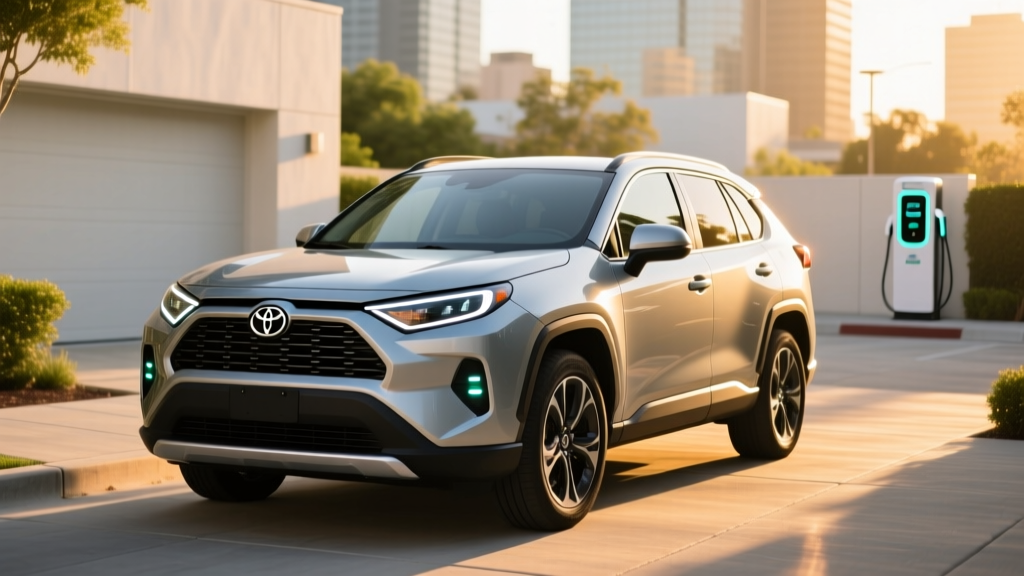
For PHEVs like the RAV4 Prime, the 42-mile electric-only range assumes moderate temperatures and mixed driving. In cold weather (below 35°F), expect that electric range to drop to roughly 30–35 miles due to battery chemistry limitations and cabin heating demand. Once the battery depletes, the RAV4 Prime operates as a conventional hybrid at around 35–38 MPG combined.
BEVs like the Model Y Long Range carry a 320-mile EPA estimate, but real-world highway driving at 70+ mph typically yields 260–280 miles. Cold weather compounds this: expect 220–250 miles in sub-freezing conditions without preconditioning.
Powertrain Specs: Horsepower and Drivetrain
| Spec | 2026 Toyota Prius LE | 2026 Toyota RAV4 Prime | 2026 Tesla Model Y LR |
|---|---|---|---|
| Combined HP | 194 hp | 302 hp | 384 hp |
| Engine | 2.0L 4-cyl + 2 motors | 2.5L 4-cyl + 2 motors | Dual electric motors |
| Drivetrain | FWD | AWD (e-AWD rear motor) | AWD |
| 0–60 mph | 7.2 sec | 5.7 sec | 4.8 sec |
| Battery (usable) | ~1.0 kWh (Li-ion) | ~14.9 kWh (Li-ion) | ~75 kWh (NMC) |
| Cargo volume | 23.8 cu ft | 33.5 cu ft | 30.2 cu ft (+ frunk) |
The RAV4 Prime's 302 hp makes it Toyota's quickest SUV, and its standard AWD is a significant advantage in snow-belt states. The Prius trades power for efficiency — 194 hp is adequate for commuting but not exciting. The Model Y's instant electric torque delivers the strongest acceleration and lowest center of gravity.
Charging and Refueling: Time, Cost, and Access
Charging logistics are often the deciding factor in the hybrid or electric debate.
HEV: Zero Behavior Change
The Prius requires no lifestyle adjustment. You fill up at any gas station. With a 10.6-gallon tank and 57 MPG combined, total range is roughly 600 miles — far exceeding any BEV. Refueling takes five minutes. Annual fuel cost (12,000 miles at $3.20/gallon): approximately $674.
PHEV: Best of Both Worlds — With a Caveat
The RAV4 Prime charges on Level 1 (120V) in about 12 hours or Level 2 (240V) in approximately 2.5 hours. It does not support DC fast charging — a limitation worth knowing if you hoped to top up on road trips. Total combined range (electric + gas) is roughly 600 miles.
To actually benefit from PHEV efficiency, you need regular access to a plug — ideally a home garage with a 120V or 240V outlet. If you never charge a PHEV, you're hauling around dead battery weight and getting worse MPG than a lighter conventional hybrid.
BEV: Charging Infrastructure Required
The Model Y Long Range charges at up to 250 kW on DC fast chargers (Tesla Supercharger network), achieving a 10–80% charge in roughly 20–25 minutes. Home Level 2 charging (48A / 11.5 kW) adds about 44 miles per hour, fully replenishing overnight. Annual electricity cost (12,000 miles at $0.14/kWh national average): approximately $630.
The catch: apartment dwellers without home charging face a real access barrier. Public DC fast charging costs $0.35–$0.55/kWh, pushing annual fuel costs to $1,200–$1,600 — erasing the BEV savings advantage.
Pricing, Tax Credits, and Total Cost of Ownership
| Model | Base MSRP | Federal §30D Credit | Effective Price |
|---|---|---|---|
| 2026 Toyota Prius LE | $29,445 | $0 (HEV ineligible) | $29,445 |
| 2026 Toyota RAV4 Prime SE | $44,465 | Up to $7,500* | ~$36,965 |
| 2026 Tesla Model Y LR | $46,630 | Up to $7,500* | ~$39,130 |
*Federal §30D tax credit eligibility depends on buyer income caps (≤$150K single / ≤$300K joint), vehicle MSRP caps ($55K sedans / $80K SUVs), battery critical-mineral sourcing, and North American final assembly. Credits can now be transferred at point of sale as a price reduction per IRS guidelines. Always verify current eligibility with a tax professional.
5-Year Cost of Ownership Estimate
| Cost Category | Prius (HEV) | RAV4 Prime (PHEV) | Model Y (BEV) |
|---|---|---|---|
| Purchase (after credit) | $29,445 | $36,965 | $39,130 |
| Fuel/energy (5 yr, 60K mi) | $3,370 | $2,100 (if charging daily) | $3,150 (home charging) |
| Maintenance (5 yr) | $2,800 | $2,600 | $1,500 |
| Insurance (5 yr avg) | $6,500 | $7,200 | $8,500 |
| Estimated depreciation | $11,000 | $14,500 | $16,000 |
| Total 5-yr cost | $53,115 | $63,365 | $68,280 |
The Prius wins on pure cost. The RAV4 Prime and Model Y justify their premium through performance, AWD, tech, and daily EV-mode commuting — but only if you charge regularly. Insurance premiums on BEVs run 15–25% higher than hybrids, a factor many buyers overlook.
Battery Warranty, Reliability, and Replacement Cost
Hybrid Battery Warranty (Federal Minimum): 8 years / 100,000 miles (10 years / 150,000 miles in CARB states including CA, NY, WA, MA, and others).
BEV Battery Warranty: 8 years / 100,000 miles federally, with capacity retention guaranteed to 70% by most manufacturers.
Are Hybrid Batteries Reliable?
Yes — modern hybrid batteries are among the most durable components in these vehicles. Toyota's hybrid system has accumulated over two decades of field data. The Prius battery typically lasts 150,000–200,000+ miles before significant degradation. Replacement cost for a Prius hybrid battery: $2,000–$3,500 at a dealer, with refurbished options available for $1,000–$1,500.
The RAV4 Prime's larger PHEV battery carries a higher replacement cost of $5,000–$8,000, though failures within the warranty period are covered. Real-world data from fleets shows PHEV batteries retaining 85–90% capacity at 100,000 miles with daily cycling.
BEV battery replacement remains expensive — a Model Y pack costs $12,000–$16,000 out of warranty — but catastrophic failures are rare. Most NMC packs show 8–12% degradation at 100,000 miles, meaning a 320-mile Model Y would still deliver roughly 280–290 miles of range.
Hybrid or Electric: Which Should You Choose?
Choose a conventional hybrid (HEV) if:
- You have no access to home or workplace charging
- Your budget is under $32,000
- You regularly take long road trips through rural areas
- You want maximum fuel savings with zero behavior change
- You live in an apartment without charging options
Choose a plug-in hybrid (PHEV) if:
- Your daily commute is under 40 miles round-trip
- You have a garage or driveway with at least a 120V outlet
- You want electric commuting but need gas flexibility for road trips
- You live in a cold climate where BEV range loss concerns you
- You want AWD and strong acceleration without full EV commitment
Choose a battery electric vehicle (BEV) if:
- You can install a Level 2 home charger (240V)
- Your daily driving is under 200 miles
- You want the lowest per-mile energy cost and minimal maintenance
- You qualify for the full §30D tax credit
- You value instant torque, quiet operation, and zero tailpipe emissions
Frequently Asked Questions
How many MPG does a hybrid get in real-world driving?
The 2026 Toyota Prius is EPA-rated at 57 MPG combined. In real-world city driving, many owners achieve 58–62 MPG thanks to regenerative braking. Highway driving typically returns 48–52 MPG. Driving style, temperature, and terrain affect results — aggressive acceleration and cold weather reduce efficiency.
How far can a PHEV go on electric only?
The 2026 Toyota RAV4 Prime delivers 42 miles of EPA-rated electric-only range. In cold weather (below 35°F), expect 30–35 miles. Once the battery depletes, the vehicle operates as a conventional hybrid at 35–38 MPG combined with no electric range. Other 2026 PHEVs range from 25 miles (Jeep Wrangler 4xe) to 51 miles (Prius Prime).
Do conventional hybrids need to be plugged in?
No. Conventional hybrids (HEVs) charge their small battery entirely through regenerative braking and the gas engine. You never plug them in. Only plug-in hybrids (PHEVs) and full electric vehicles (BEVs) require an external power source.
Is a hybrid or electric vehicle more reliable long-term?
Both are highly reliable. Toyota's hybrid powertrains have demonstrated 200,000+ mile durability across millions of vehicles. BEVs have fewer moving parts (no engine, transmission, or exhaust) but carry higher repair costs if the battery fails out of warranty. Consumer Reports reliability data consistently ranks Toyota hybrids among the most dependable vehicles sold. The federal hybrid battery warranty (8 yr/100K mi minimum) provides strong protection for both types.
Does a hybrid qualify for a federal tax credit?
Conventional hybrids (HEVs) do not qualify for the federal §30D clean vehicle credit. Only plug-in hybrids (PHEVs) and battery electric vehicles (BEVs) are eligible, and even then, eligibility depends on income caps ($150K single / $300K joint), MSRP limits, battery sourcing requirements, and North American assembly. Check current rules at irs.gov. Some states offer additional credits for PHEVs — check your state's energy office.
What is the cost to replace a hybrid battery?
A conventional hybrid battery (Prius) costs $2,000–$3,500 to replace at a dealership, with refurbished options from $1,000–$1,500. PHEV batteries cost more — $5,000–$8,000 for the RAV4 Prime. BEV packs run $12,000–$16,000+. All are covered under the federal 8-year/100,000-mile hybrid battery warranty, and most last well beyond that coverage period.
Can I road-trip a PHEV without range anxiety?
Yes. That's the PHEV's core advantage. Once the battery is depleted, the gas engine takes over seamlessly. The RAV4 Prime's total range (electric + gas) is roughly 600 miles. You refuel at any gas station in under five minutes. On road trips, a PHEV functions identically to a conventional hybrid — no charging infrastructure needed.
Bottom Line: Your Commute Decides
The hybrid or electric decision in 2026 isn't about which technology is "better" — it's about which fits your life. If you can charge at home and drive under 200 miles daily, a BEV like the Model Y delivers the lowest operating cost and strongest performance. If you want electric commuting with gas flexibility, the RAV4 Prime is the most versatile PHEV on the market. If you need maximum efficiency with zero lifestyle change, the Prius HEV remains the gold standard at 57 MPG and $29,445.
Run your own numbers: multiply your daily round-trip miles by 260 workdays, compare that to PHEV electric range, and factor in whether you can install a Level 2 charger at home. The right answer emerges from your specific commute, not from marketing.