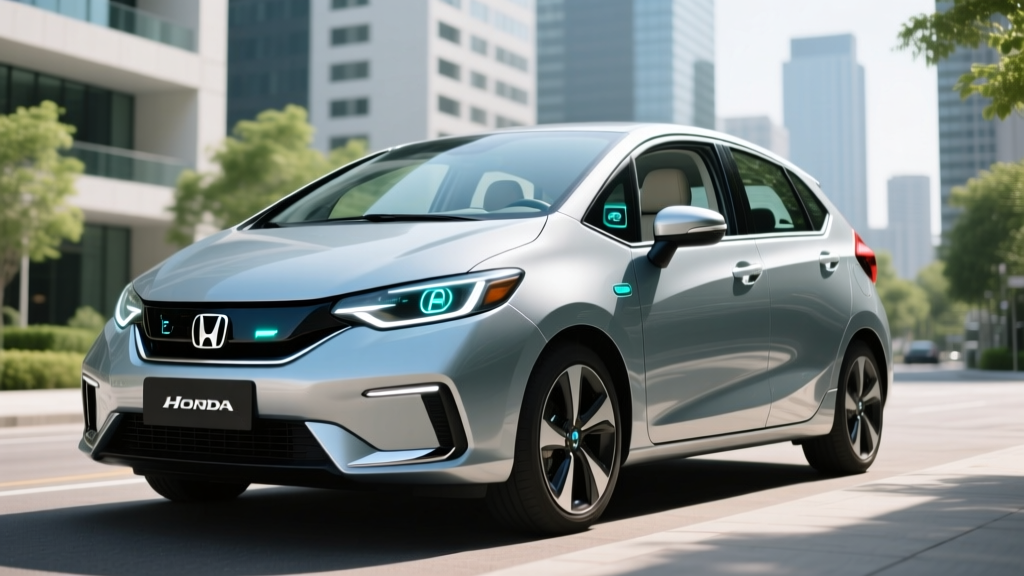
If you have been searching for a hybrid Honda Fit, you are not alone. The Fit remains one of the most beloved subcompact hatchbacks ever sold in America — practical, affordable, and surprisingly roomy. But as fuel prices fluctuate and electrified vehicles dominate headlines, buyers increasingly want to know: can you get a Honda Fit with a hybrid powertrain?
The short answer for US buyers is complicated. Honda sells a hybrid Fit (badged as the Fit e:HEV) in Japan and select Asian markets, but it has never been offered in the United States. Honda discontinued the Fit in the US market after the 2020 model year, replacing it with the HR-V crossover. As of 2026, there is no hybrid Honda Fit available new at any American dealership.
This guide covers the Fit e:HEV's specs for context, explains why it is not sold stateside, and details the best hybrid alternatives that deliver the same subcompact practicality with outstanding fuel economy.
What Is the Honda Fit e:HEV? (Not Sold in the US)
The Honda Fit e:HEV uses Honda's i-MMD (Intelligent Multi-Mode Drive) hybrid system — the same architecture found in the US-market Accord Hybrid and CR-V Hybrid. It is a conventional hybrid (HEV), not a plug-in hybrid (PHEV). That means you never plug it in; the gasoline engine and regenerative braking recharge the small battery.
- HEV (Conventional Hybrid): Small battery (~1-2 kWh), no plug, recharged by engine and regen. Think Toyota Prius, Honda CR-V Hybrid.
- PHEV (Plug-in Hybrid): Larger battery (~10-20 kWh), plugs into a wall outlet or charger, offers 20-50 miles of electric-only driving before the gas engine kicks in. Think Toyota Prius Prime, Hyundai Tucson PHEV.
Fit e:HEV Powertrain Specs (Japan Market)
| Specification | Fit e:HEV (Japan Spec) |
|---|---|
| Powertrain Type | HEV (conventional hybrid, no plug) |
| Engine | 1.5L 4-cylinder Atkinson cycle |
| Combined System Output | ~109 hp (electric motor drive) |
| Hybrid Battery | ~0.86 kWh lithium-ion |
| EPA MPG | Not rated (not sold in US) |
| Japan WLTP Fuel Economy | ~29.4 km/L (~69 MPG equivalent, JC08 cycle varies) |
| Plug-in Charging | No — not a PHEV |
| Electric-Only Range | N/A (HEV, very short EV assist only) |
| US Availability | Not available |
The WLTP and JC08 fuel economy figures from Japan are not directly comparable to EPA testing, which tends to be more conservative. If the Fit e:HEV were EPA-rated, a reasonable estimate based on similar i-MMD hybrids would be in the 45-52 MPG combined range.
Why Honda Discontinued the Fit in America
Honda ended US Fit sales after 2020 for several converging reasons:
- Crossover shift: American buyers overwhelmingly moved toward small SUVs. The HR-V, built on the same platform, offered higher seating and AWD availability.
- Regulatory cost: Meeting evolving US crash-test and emissions standards for a low-margin subcompact became harder to justify.
- Price pressure: The Fit's base price had climbed to nearly $18,000 by its final year, eroding its value proposition against used crossovers.
Honda has not announced any plans to reintroduce the Fit or a Fit-based hybrid in the US market for 2026 or beyond. The global Fit/Jazz continues in other markets, but American buyers looking for Honda hybrid efficiency need to look elsewhere in the lineup — or to competitors.
Best Hybrid Alternatives to the Honda Fit (2026 US Market)
If you want the Fit's subcompact spirit — small footprint, big cargo, great fuel economy — with a hybrid powertrain, these are the strongest options currently available in the United States.
Toyota Prius (HEV)
The redesigned Prius is the closest spiritual successor to what a hybrid Fit would be: efficient, practical, and now genuinely quick.
| Spec | 2026 Toyota Prius LE | 2026 Toyota Prius XLE |
|---|---|---|
| EPA City / Hwy / Combined | 57 / 56 / 57 MPG | 52 / 52 / 52 MPG |
| Combined HP | 194 hp | 194 hp (AWD: 196 hp) |
| 0-60 mph | ~7.0 sec | ~7.0 sec |
| Cargo Volume | 23.8 cu ft (rear seats up) | 23.8 cu ft |
| Base MSRP | ~$29,450 | ~$32,895 |
| Hybrid Battery Warranty | 10 years / 150,000 miles | 10 years / 150,000 miles |
Real-world MPG note: The Prius HEV consistently meets or exceeds its EPA rating in city driving thanks to regenerative braking. Expect 55-60 MPG in urban stop-and-go. Highway cruising at 75+ mph will drop to around 48-50 MPG. In cold weather (below 30°F), expect a 5-10% reduction as the engine runs more frequently for cabin heat. Source: fueleconomy.gov.
Toyota Prius Prime (PHEV)
If you want electric-only commuting with a gas backup, the Prius Prime is the segment leader.
| Spec | 2026 Toyota Prius Prime SE |
|---|---|
| EPA Electric-Only Range | 44 miles |
| EPA Combined (gas, after battery depleted) | 52 MPG |
| Total Combined Range | ~440 miles |
| Battery Capacity | 13.6 kWh lithium-ion |
| Level 2 Charge Time (0-100%) | ~4 hours (at 3.3 kW) |
| DC Fast Charge | Not supported |
| Combined HP | 220 hp |
| Base MSRP | ~$34,115 |
The Prius Prime does not support DC fast charging — it tops out at 3.3 kW on Level 2. For a 13.6 kWh battery, this is adequate for overnight home charging but impractical for quick top-ups on road trips. That said, with 44 miles of electric range, most daily commutes require no gas at all.
Honda's Own Hybrid Options
If brand loyalty keeps you at Honda, the automaker offers several US-market hybrids using the same i-MMD technology the Fit e:HEV uses abroad:
- Honda Civic Hybrid — 49 MPG combined, 200 hp, ~$29,845 MSRP. The closest Honda to the Fit's car-like driving dynamics.
- Honda Accord Hybrid — 48 MPG combined (Sport trim), 204 hp, ~$34,295 MSRP. Larger but supremely efficient.
- Honda CR-V Hybrid — 40 MPG combined (Sport AWD), 204 hp, ~$36,395 MSRP. The crossover Honda steered Fit buyers toward.
Both Honda and Toyota cover their hybrid batteries for 10 years or 150,000 miles (whichever comes first) in all 50 states. This exceeds the federal minimum of 8 years/80,000 miles for emissions-related components. Hybrid battery replacement, if needed out of warranty, typically costs $2,000-$4,000 for these models — far less than EV battery replacement. In practice, most Toyota and Honda hybrid batteries last well beyond 150,000 miles with minimal degradation.
Hybrid vs PHEV vs EV: Which Is Right for You?
Choosing between a conventional hybrid, plug-in hybrid, and full electric vehicle depends on your driving patterns, charging access, and budget. Here is a practical decision framework:
Choose a Conventional Hybrid (HEV) If:
- You cannot charge at home or work (no garage, apartment living)
- You want maximum simplicity — just add gas and drive
- Your budget is under $35,000
- You drive mostly in the city where regenerative braking maximizes efficiency
Choose a Plug-in Hybrid (PHEV) If:
- You can install a Level 2 charger at home (240V outlet or hardwired)
- Your daily commute is under 40 miles round-trip (covers most electric-only range)
- You take occasional long road trips and want gas-engine flexibility
- You want to reduce fuel consumption to near zero on weekdays
Choose a Full EV (BEV) If:
- You have reliable home Level 2 charging
- Your daily driving is under 250 miles (well within EPA range for most modern EVs)
- You want the lowest per-mile fuel cost and near-zero maintenance
- You qualify for the federal §30D tax credit (up to $7,500, subject to MSRP caps, income limits, and battery sourcing rules — see IRS.gov for current eligibility)
Does a Hybrid Qualify for a Federal Tax Credit?
This is one of the most common questions from hybrid shoppers. Here is the 2026 reality:
- Conventional hybrids (HEVs) do NOT qualify for the federal §30D Clean Vehicle Credit. The Toyota Prius HEV, Honda Civic Hybrid, and Honda CR-V Hybrid are ineligible.
- PHEVs MAY qualify if they meet all §30D requirements: MSRP caps ($80,000 for SUVs/vans/pickups; $55,000 for sedans and other vehicles), buyer income limits ($300,000 joint / $225,000 head of household / $150,000 individual AGI), and battery critical-mineral and component sourcing rules.
- The Prius Prime has historically qualified for a partial or full credit, but sourcing requirements tighten each year. Always verify current eligibility on fueleconomy.gov's tax credit page before purchasing.
- Some states offer additional rebates for PHEVs (California's CVRP, for example), but these vary by jurisdiction and funding availability.
Used Honda Fit Hybrid: Should You Import One?
Some enthusiasts ask whether they can import a used Fit e:HEV from Japan. Under the US 25-year import rule, you generally cannot import a vehicle that does not meet US Federal Motor Vehicle Safety Standards (FMVSS) unless it is at least 25 years old. Since the Fit e:HEV is a relatively recent model, importation is not legally feasible for road use in the US.
Even if you could import one, you would face:
- No EPA emissions certification — registration would be denied in most states
- No US-spec safety equipment (side markers, lighting standards)
- No Honda USA warranty coverage
- Difficulty sourcing parts for a Japan-only hybrid system
The practical answer: buy a US-market hybrid instead.
Real-World Ownership Costs: Hybrid vs Gas Subcompact
Let us compare the total cost picture for a hybrid like the Prius against the last gas-only Honda Fit and a comparable gas subcompact. Using 15,000 miles/year and national averages:
| Annual Cost Factor | Toyota Prius HEV (57 MPG) | Gas Subcompact (33 MPG) |
|---|---|---|
| Fuel (gas at $3.40/gal) | ~$895 | ~$1,545 |
| Annual Fuel Savings | ~$650/year with the hybrid | |
| 5-Year Fuel Cost | ~$4,475 | ~$7,725 |
| Maintenance (est. annual) | ~$400 | ~$500 |
| Insurance (est. annual) | ~$1,400 | ~$1,200 |
The hybrid saves roughly $3,250 in fuel over 5 years, partially offset by a higher purchase price and slightly higher insurance. Break-even typically occurs within 3-4 years of ownership depending on your local gas prices and annual mileage.
Pros and Cons: Chasing the Hybrid Honda Fit Dream
✓ Pros of Fit e:HEV (If US-Available)
- Subcompact size with Honda's Magic Seat cargo versatility
- Estimated 45-52 MPG combined
- i-MMD hybrid system proven reliable in Accord/CR-V
- Low purchase price in Japan (~¥2.2M / ~$15,000)
- No plug-in charging needed
✗ Cons / Reality for US Buyers
- Not sold in the United States — cannot buy new
- Cannot legally import (under 25 years old)
- No US warranty, parts, or service support
- Not EPA or FMVSS certified
- US hybrid alternatives (Prius, Civic Hybrid) offer similar or better efficiency
Frequently Asked Questions
How many MPG does the Honda Fit hybrid get?
The Fit e:HEV sold in Japan is rated at approximately 29.4 km/L on the WLTP cycle, which loosely translates to around 69 MPG — but Japanese test cycles are more optimistic than the EPA. A realistic EPA-equivalent estimate would be 45-52 MPG combined. Since the Fit e:HEV is not sold in the US, there is no official EPA rating. For comparison, the US-market Toyota Prius LE achieves an EPA-rated 57 MPG combined.
Is the Honda Fit hybrid a plug-in?
No. The Fit e:HEV is a conventional hybrid (HEV), not a plug-in hybrid (PHEV). It has a small ~0.86 kWh battery that is recharged by the gasoline engine and regenerative braking. You never plug it in. If you want plug-in capability from Toyota (the closest alternative), the Prius Prime offers 44 miles of electric-only range from a 13.6 kWh battery.
Will Honda bring the hybrid Fit to the US?
As of early 2026, Honda has made no announcement about reintroducing the Fit or a Fit-based hybrid to the US market. Honda's US hybrid strategy focuses on the Civic Hybrid, Accord Hybrid, and CR-V Hybrid. The subcompact hatchback segment has shrunk significantly in America, making a business case for the Fit's return unlikely in the near term.
Is a hybrid battery expensive to replace?
For Honda and Toyota hybrids, replacement hybrid batteries typically cost $2,000 to $4,000 including labor. Both brands provide a 10-year / 150,000-mile hybrid battery warranty. Real-world data shows these batteries frequently last 200,000+ miles with gradual capacity loss rather than sudden failure. The small battery in a conventional hybrid is far less expensive to replace than the large traction battery in a full EV ($5,000-$20,000+).
Does any hybrid Honda qualify for a tax credit?
No current Honda hybrid qualifies for the federal §30D Clean Vehicle Credit. The credit applies only to plug-in electric vehicles (PHEVs and BEVs) that meet MSRP, income, and battery sourcing requirements. Honda does not currently sell a PHEV in the US market. If you want a hybrid-adjacent vehicle with tax credit eligibility, the Toyota Prius Prime (PHEV) is a strong option — check IRS.gov for current-year eligibility.
What is the best hybrid subcompact I can actually buy in 2026?
The Toyota Prius LE at 57 MPG combined and ~$29,450 MSRP is the best overall hybrid subcompact available in the US. If you want a Honda specifically, the Civic Hybrid at 49 MPG combined and ~$29,845 MSRP delivers Honda's i-MMD hybrid technology in a compact hatchback that echoes the Fit's practicality, if at a slightly larger footprint.