Quick Verdict: The Hybrid Honda CR-V at a Glance
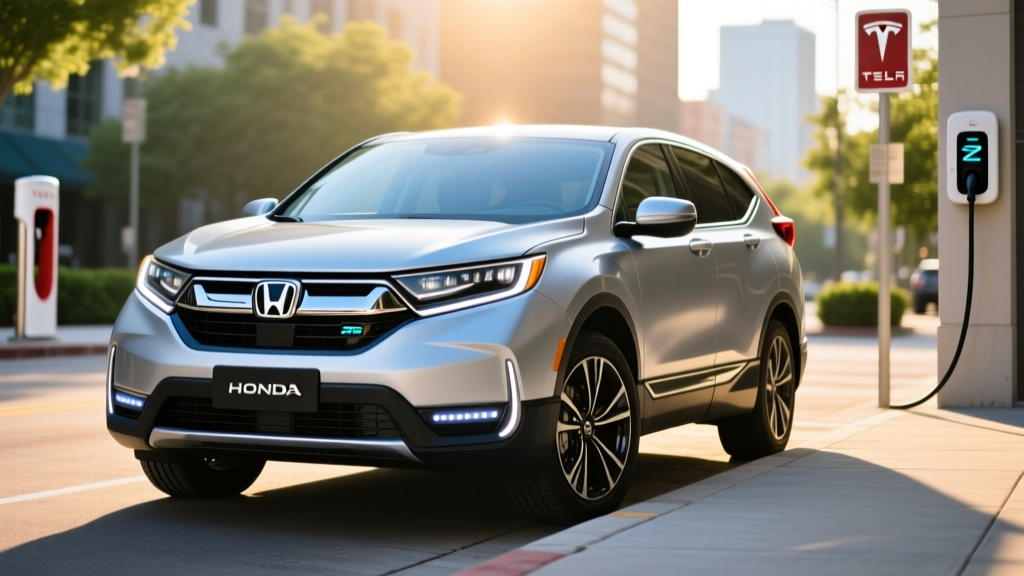
The 2026 Honda CR-V Hybrid remains one of the most compelling compact SUVs for buyers who want serious fuel efficiency without plugging in. With an EPA-rated 40 MPG combined and standard all-wheel drive across all hybrid trims, it bridges the gap between a conventional gas SUV and a full battery-electric vehicle — no charging cables, no range anxiety, and no behavioral changes required.
Honda's two-motor hybrid system pairs a 2.0-liter Atkinson-cycle four-cylinder with two electric motors to produce 204 combined horsepower. The result is a powertrain that feels responsive around town (where the electric motors do the heavy lifting) while sipping fuel at rates that rival much smaller cars.
| Spec | 2026 CR-V Hybrid |
|---|---|
| Powertrain | 2.0L Atkinson I-4 + 2 electric motors |
| Combined HP | 204 hp |
| Combined Torque | 247 lb-ft (motor) |
| Drivetrain | AWD (standard on all hybrid trims) |
| EPA MPG (City / Hwy / Combined) | 43 / 36 / 40 |
| Fuel Tank | 14.0 gallons |
| Total Range | ~560 miles |
| 0–60 mph | ~7.6 seconds |
| Cargo Volume (rear seats up / down) | 36.3 / 76.5 cu ft |
| Starting MSRP | $36,395 (Sport trim) |
| Battery Warranty | 8 years / 100,000 miles |
EPA MPG vs. Real-World Fuel Economy
How many MPG does the hybrid Honda CR-V actually get? The EPA rates the 2026 CR-V Hybrid at 43 city / 36 highway / 40 combined. But hybrids have a well-documented quirk: real-world city driving often exceeds the EPA estimate, while highway driving can fall short.
| Driving Scenario | EPA Estimate | Real-World Expectation |
|---|---|---|
| City (stop-and-go, under 45 mph) | 43 MPG | 42–46 MPG |
| Highway (70–80 mph sustained) | 36 MPG | 33–36 MPG |
| Combined (mixed driving) | 40 MPG | 37–42 MPG |
| Cold weather (below 30°F, short trips) | — | 32–36 MPG |
The reason is physics. In city driving, the CR-V Hybrid's electric motors handle most low-speed propulsion, and regenerative braking recaptures energy at every stop. The gas engine shuts off frequently, coasting the SUV on electric power alone. On the highway, however, the gas engine runs continuously to maintain speed, and aerodynamic drag works against the CR-V's boxy profile.
In cold weather, expect a 10–15% fuel-economy hit. The engine runs more often to generate cabin heat (the CR-V Hybrid lacks a heat pump), and the battery's charge-discharge efficiency drops in low temperatures. Short-trip winter commuting is where you'll see the lowest numbers — sometimes dipping into the low 30s until the engine and cabin warm up.
How the CR-V Hybrid Powertrain Works
Honda's hybrid system in the CR-V is a series-parallel two-motor design, sometimes called e:HEV or the fourth-generation i-MMD system. Here's how it operates across different conditions:
- EV Drive: At low speeds and light loads, the propulsion motor drives the wheels using battery energy alone. The gas engine is off. This is how the CR-V Hybrid achieves its exceptional city MPG.
- Hybrid Drive: Under moderate acceleration, the gas engine spins a generator motor that feeds electricity to the propulsion motor. The engine is not mechanically connected to the wheels — it acts as a onboard generator.
- Engine Drive: At steady highway speeds, a lock-up clutch mechanically connects the engine to the front wheels through a single gear ratio. This is more efficient than converting mechanical energy to electrical and back again.
- Regenerative Braking: During deceleration, the propulsion motor reverses function and acts as a generator, sending energy back into the lithium-ion battery pack.
The system transitions between these modes seamlessly — most drivers will never notice which mode is active unless they watch the power-flow display on the instrument cluster. The 204 combined horsepower and 247 lb-ft of electric motor torque give the CR-V Hybrid confident passing power, though the engine does drone noticeably under hard acceleration (a characteristic of the Atkinson cycle and single-gear-ratio design).
HEV vs. PHEV vs. Full EV: Which Powertrain Fits You?
Honda does not currently offer a plug-in hybrid (PHEV) version of the CR-V in the United States. The CR-V Hybrid is a conventional hybrid (HEV) — it generates all its own electricity and never needs to be plugged in. If you're cross-shopping electrified SUVs, here's how the three powertrain types compare:
| Factor | HEV (CR-V Hybrid) | PHEV (e.g., Toyota RAV4 Prime) | Full EV (e.g., Hyundai Ioniq 5) |
|---|---|---|---|
| Plug-in required? | No | Yes (for EV range) | Yes (always) |
| Electric-only range | ~1 mile at low speed | 35–42 miles | 250–320+ miles |
| Total range | ~560 miles | ~500+ miles | 250–320 miles |
| Home charging needed? | No | Recommended (Level 2) | Essential (Level 2) |
| Starting MSRP range | $36,000–$41,000 | $44,000–$50,000 | $42,000–$55,000+ |
| Federal tax credit (§30D) | Not eligible | Up to $7,500 (if eligible) | Up to $7,500 (if eligible) |
| Best for | No home charging, simplicity | Short commutes + road trips | Home charging + low running cost |
The CR-V Hybrid is the right pick if you don't have access to home charging (apartment dwellers, street parkers) or if you want zero lifestyle changes from a gas vehicle. You fill up at any gas station and drive. The trade-off is that you'll never experience the near-silent, instant-torque electric driving that PHEVs and EVs offer for daily commuting.
If you have a garage or driveway where you can install a Level 2 charger and your daily commute is under 40 miles, a PHEV like the Toyota RAV4 Prime lets you drive most days on electricity alone while keeping a gas engine for longer trips. A full EV eliminates gas entirely but requires reliable charging access.
Pricing, Trims, and Tax Credit Eligibility
The 2026 Honda CR-V Hybrid is offered in four trims, all with standard AWD:
| Trim | MSRP | Key Features |
|---|---|---|
| Sport | $36,395 | 18" wheels, wireless CarPlay/Android Auto, Honda Sensing suite |
| Sport-L | $38,395 | Leather-trimmed seats, power tailgate, heated front seats |
| Sport Touring | $41,395 | Bose 12-speaker audio, panoramic moonroof, wireless charging, navigation |
Federal tax credit: The conventional CR-V Hybrid (HEV) does not qualify for the IRS §30D Clean Vehicle Credit. That credit applies only to plug-in electric vehicles (PHEVs and BEVs) that meet battery-sourcing, critical-mineral, MSRP cap, and buyer income requirements. The CR-V Hybrid's lithium-ion battery is too small and the vehicle cannot plug in, so it falls outside §30D eligibility entirely.
Some states and local utilities offer modest rebates for conventional hybrids, but these vary widely by jurisdiction and change frequently. Check your state energy office or utility provider for current programs. A tax professional can confirm whether any local incentives apply to your situation.
Battery Longevity, Warranty, and Replacement Cost
Battery lifespan is the single biggest concern for hybrid buyers, and it's worth addressing directly. The CR-V Hybrid uses a relatively small lithium-ion battery pack (approximately 1.1 kWh usable capacity — far smaller than an EV's 60–100 kWh pack). This battery is not designed to store large amounts of energy; it buffers charge and discharge cycles to assist the engine and capture regenerative braking energy.
Honda Hybrid Battery Warranty
- Coverage: 8 years or 100,000 miles (whichever comes first)
- Extended in CARB states: 10 years or 150,000 miles in states that follow California Air Resources Board emissions standards (includes CA, NY, MA, WA, CO, and others)
- What's covered: Battery capacity loss below a defined threshold, defects, and premature failure
Is the hybrid Honda CR-V reliable? Honda's hybrid powertrain has proven durable across multiple generations. The company's two-motor system has been in production since 2014 (debuting in the Accord Hybrid), and real-world failure data is sparse — a positive signal. The battery operates within a narrow state-of-charge window (roughly 40–60% SoC most of the time), which dramatically reduces degradation compared to an EV battery that cycles between 10% and 90%.
Replacement cost: If the hybrid battery does fail outside of warranty, a replacement battery pack for the CR-V Hybrid typically runs between $2,000 and $4,000 including labor. This is a fraction of an EV battery replacement ($10,000–$20,000+) because the pack is small and relatively simple. Third-party refurbishers and independent hybrid specialists are increasingly available as hybrid vehicles age, often offering replacements at the lower end of that range.
For context, Consumer Reports data and long-term owner forums suggest that Honda hybrid batteries routinely last 150,000–200,000+ miles before significant capacity loss. Most owners will sell or trade the vehicle long before a battery replacement becomes necessary.
Driving Impressions and Daily Practicality
The CR-V Hybrid drives like a well-sorted compact SUV that happens to be efficient — not like a compromised eco-box. The electric motor's instant torque (247 lb-ft available from near-zero RPM) gives it a responsive, almost punchy feel from stoplights. The transition from electric to gas power is smooth, and the brake pedal feel — often a weak point in hybrids due to blending regenerative and friction braking — is linear and predictable in the current generation.
Where the hybrid system shows its limits is under sustained hard acceleration, such as merging onto a fast-moving freeway. The engine revs high and holds there (the single-ratio lock-up clutch and generator-driven architecture mean there's no traditional multi-speed transmission to shift through). It's not unrefined, but it's noticeably louder than a turbocharged gas engine under the same load.
Ride quality is comfortable, cabin noise is well-managed at cruising speeds, and the 36.3 cubic feet of cargo space behind the rear seats is competitive with non-hybrid rivals. The hybrid battery is packaged under the cargo floor, so there's no intrusion into passenger or cargo volume compared to the gas CR-V.
Pros and Cons
Pros
- 40 MPG combined with AWD standard — no trade-off for efficiency
- No plug-in charging required; zero lifestyle change from a gas vehicle
- Strong electric torque for responsive city driving
- Proven hybrid system with excellent reliability track record
- Spacious cabin and cargo area; battery doesn't compromise utility
- Honda Sensing ADAS suite standard on all trims
Cons
- Engine drone under hard acceleration
- Highway MPG drops to low-to-mid 30s at 75+ mph
- No federal tax credit eligibility (HEV, not PHEV)
- Starting price ~$4,000 higher than the base gas CR-V
- No PHEV variant available in the US for electric-only commuting
- Infotainment system in lower trims lacks polish
Frequently Asked Questions
How many MPG does the hybrid Honda CR-V get in real-world driving?
The EPA rates the 2026 CR-V Hybrid at 43 city / 36 highway / 40 combined. In real-world mixed driving, expect 37–42 MPG. City-heavy commutes often exceed the EPA city estimate (42–46 MPG is common), while sustained highway driving at 75+ mph can drop to 33–35 MPG. Cold weather short trips may dip into the low 30s.
Does the Honda CR-V Hybrid need to be plugged in?
No. The CR-V Hybrid is a conventional hybrid (HEV), not a plug-in hybrid. It generates all its electricity internally through the gas engine and regenerative braking. You fuel it at any gas station, exactly like a conventional vehicle.
Does the hybrid CR-V qualify for any federal tax credit?
No. The IRS §30D Clean Vehicle Credit applies only to plug-in electric vehicles (PHEVs and BEVs) meeting specific battery-sourcing, MSRP, and income requirements. The CR-V Hybrid is an HEV and does not qualify. Some state or utility rebates may apply — check local programs.
How long will the CR-V Hybrid battery last, and what does replacement cost?
Honda covers the hybrid battery for 8 years/100,000 miles (10 years/150,000 miles in CARB states). Real-world data suggests these batteries routinely last 150,000–200,000+ miles. Out-of-warranty replacement costs approximately $2,000–$4,000 including labor — far less than an EV battery replacement.
Is the CR-V Hybrid better than the gas CR-V?
If you drive more than 12,000 miles per year or do a lot of city driving, the hybrid's 40 MPG combined versus the gas model's ~30 MPG combined saves roughly $400–$600 per year in fuel (at $3.50/gallon). The hybrid also comes with standard AWD, more low-end torque, and a smoother stop-start experience. The ~$4,000 price premium pays for itself in 6–9 years for most drivers, and the hybrid's resale value tends to be stronger.
Should I buy the CR-V Hybrid or wait for a PHEV or EV?
Choose the CR-V Hybrid if you lack home charging access, frequently take long road trips, or want an efficient SUV with zero behavioral changes. Choose a PHEV (like the RAV4 Prime) if you have home charging and a short commute but still want gas-engine range for trips. Choose a full EV (like the Ioniq 5 or Tesla Model Y) if you have reliable home charging, want the lowest per-mile operating cost, and are comfortable planning charging stops on road trips.
How does the CR-V Hybrid AWD system work?
The CR-V Hybrid uses Honda's Real Time AWD with a mechanical driveshaft connecting the front hybrid powertrain to a rear differential. Unlike some hybrids that use a separate rear electric motor for AWD, the CR-V's system sends engine and motor power to all four wheels mechanically. This provides confident traction in rain and light snow, though it's not designed for serious off-road use.
Sources: EPA Fuel Economy, Honda CR-V Hybrid Official Specs, IRS Clean Vehicle Credits, IIHS Safety Ratings.