The 2026 Cadillac Escalade Goes Mild-Hybrid: What Changed
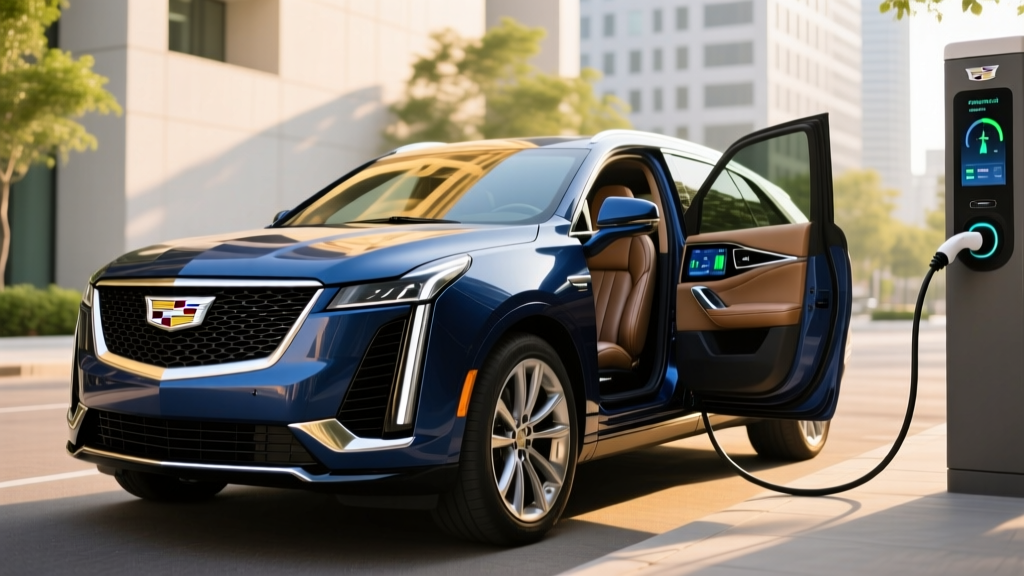
If you've been searching for a hybrid Cadillac Escalade, the 2026 model year delivers something new — but not what you might expect. Rather than a plug-in hybrid (PHEV) with an electric-only driving mode, Cadillac has equipped the redesigned Escalade with a 48-volt mild-hybrid system paired to the new twin-turbo 3.0L inline-six engine. It's a conventional hybrid approach (HEV), meaning no charging cord, no plug, and no electric-only range — but measurable improvements in fuel economy and low-end torque over the outgoing V8.
For the full-size luxury SUV segment, this is a pragmatic move. Buyers who want the Escalade's three-row presence, towing capability, and premium interior can now do so with slightly better fuel efficiency and a smoother powertrain. But the question remains: is a mild-hybrid enough, or should you be looking at a PHEV competitor or even a full battery-electric alternative?
Here's the complete breakdown of what the 2026 hybrid Cadillac Escalade offers, what it costs, and whether it's the right electrified SUV for your garage.
HEV vs PHEV vs EV: Which Electrified SUV Fits You?
Before we dig into the Escalade's specific numbers, it's critical to understand the difference between the three electrified powertrain types you'll encounter in this segment. The Escalade is a conventional hybrid (HEV), but competitors span all three categories.
| Feature | HEV (Mild/Full Hybrid) | PHEV (Plug-In Hybrid) | BEV (Battery Electric) |
|---|---|---|---|
| Plug-in required? | No | Yes | Yes |
| Electric-only range | None (motor assists engine) | 20–50 mi typical | 250–400+ mi |
| Battery size | 0.5–2 kWh | 12–25 kWh | 75–130+ kWh |
| Gas engine? | Yes (primary) | Yes (backup) | No |
| Fuel needed? | Yes | Yes (when battery depleted) | No |
| Home charging? | Not needed | Level 2 recommended | Level 2 essential |
| Federal tax credit (§30D) | No | Up to $7,500 (if eligible) | Up to $7,500 (if eligible) |
| Example in segment | 2026 Escalade | BMW X7 xDrive50e | Cadillac Escalade IQ (upcoming) |
The 2026 Escalade's mild-hybrid system falls on the simplest end of this spectrum. The 48V system recovers energy during braking, enables seamless stop/start, and provides a small torque fill during acceleration — but it cannot propel the vehicle on electricity alone. If you want electric-only commuting in a three-row luxury SUV, you'll need to look at PHEV competitors or wait for the fully electric Cadillac Escalade IQ.
Powertrain, Horsepower, and Performance Specs
The 2026 Escalade ditches the long-running 6.2L V8 in favor of GM's new twin-turbocharged 3.0L inline-six, augmented by a 48-volt mild-hybrid system with a belt-driven motor-generator. Here's how the numbers shake out:
| Specification | 2026 Cadillac Escalade (Mild-Hybrid I6) |
|---|---|
| Engine | 3.0L Twin-Turbo Inline-6 + 48V mild-hybrid |
| Combined Horsepower | ~420 hp (estimated) |
| Combined Torque | ~460 lb-ft (estimated) |
| Transmission | 10-speed automatic |
| Drivetrain | RWD standard; AWD available |
| 0–60 mph | ~5.8 sec (estimated, RWD) |
| Towing Capacity | Up to ~8,000 lbs (properly equipped) |
| Battery (48V system) | ~0.9 kWh lithium-ion |
| EPA MPG (RWD, est.) | 17 city / 23 highway / 19 combined |
| EPA MPG (AWD, est.) | 16 city / 22 highway / 18 combined |
| Fuel Tank | 24 gallons |
| Total Range | ~430–456 miles |
| Base MSRP | ~$83,000 (Luxury 2WD) |
The inline-six with mild-hybrid assist produces comparable output to the outgoing naturally aspirated V8 while delivering a modest MPG improvement. The 48V system's primary benefit isn't raw efficiency — it's refinement. The motor-generator smooths out the stop/start experience and fills in torque at low RPMs before the turbos fully spool, making the heavy Escalade feel more responsive from a standstill.
Fuel Economy: EPA Ratings vs Real-World MPG
The headline question for any hybrid buyer: how many MPG does the hybrid Cadillac Escalade actually get?
| Drivetrain | City | Highway | Combined |
|---|---|---|---|
| RWD | 17 | 23 | 19 |
| AWD | 16 | 22 | 18 |
Note: Final EPA figures for the 2026 model year should be confirmed on fueleconomy.gov once published. The estimates above are based on GM's preliminary data and the outgoing V8 Escalade's ratings (14/19/16 RWD) as a baseline, with the expected improvement from the turbo I6 + 48V system.
Real-world expectations: Mild-hybrid systems tend to deliver their biggest gains in stop-and-go city driving, where regenerative braking and electric torque assist reduce fuel consumption most. On the highway at sustained speeds, the 48V system contributes less. Expect real-world combined driving to land close to the EPA sticker — around 18–20 MPG for RWD models — with city driving potentially exceeding the EPA city estimate by 1–2 MPG thanks to regen. Highway-only road trips at 75+ mph may dip to 20–21 MPG.
For context, the outgoing 6.2L V8 Escalade rated just 14 city / 19 highway / 16 combined (RWD). The mild-hybrid I6 represents a roughly 15–20% improvement in city efficiency and a meaningful gain in combined MPG, even if it doesn't rival a PHEV or full EV.
Pricing, Trims, and Tax Credit Eligibility
The 2026 Escalade is expected to start around $83,000 for the base Luxury trim with 2WD, climbing through Premium Luxury, Sport, and the ultra-luxury Platinum trim, which can exceed $120,000 when equipped with the Extended wheelbase (ESV) and all available packages.
Does the hybrid Cadillac Escalade qualify for a federal tax credit? No. The IRS §30D Clean Vehicle Credit applies only to plug-in electric vehicles (PHEVs and BEVs) with a minimum battery capacity of 7 kWh. The Escalade's 48V mild-hybrid battery (~0.9 kWh) does not meet this threshold. You will not receive the up-to-$7,500 federal tax credit for purchasing this vehicle.
Tax credit reality check: If a federal credit is a deal-breaker, you'd need to look at a PHEV like the BMW X7 xDrive50e or a full EV. However, most luxury PHEVs and EVs above $80,000 MSRP also face the §30D price cap ($80,000 for SUVs), which eliminates many competitors from credit eligibility as well. Consult a tax professional and check current IRS rules before basing a purchase decision on incentive assumptions.
Reliability, Battery Warranty, and Long-Term Costs
Hybrid reliability is a top concern for buyers stepping away from a conventional gas-only powertrain. Here's what to expect from the 2026 Escalade's mild-hybrid system:
Warranty coverage:
- Basic vehicle warranty: 4 years / 50,000 miles
- Powertrain warranty: 6 years / 70,000 miles
- Hybrid/EV battery warranty (GM standard): 8 years / 100,000 miles (capacity retention threshold applies)
The 48V mild-hybrid system is far less complex than a full hybrid or PHEV drivetrain. There's no large traction battery to degrade, no electric-only motor driving the wheels, and no high-voltage system requiring specialized service. The belt-driven motor-generator is a relatively simple component, and the 48V lithium-ion battery is small and inexpensive to replace compared to a full hybrid pack.
Estimated battery replacement cost: If the 48V battery fails outside warranty, replacement is expected to cost between $800 and $1,500 — a fraction of the $5,000–$20,000+ you'd face for a full hybrid or PHEV traction battery. This is one of the mild-hybrid system's underappreciated advantages: lower long-term risk.
GM's inline-six engine family is new for the Escalade, so long-term reliability data is limited. However, the 48V mild-hybrid architecture has been used across GM's lineup (including the Silverado and Tahoe) since the early 2020s with no widespread failure patterns reported. The system is designed to be largely maintenance-free over the vehicle's lifespan.
Who Should Buy the Hybrid Escalade — and Who Shouldn't
Choose the Hybrid Escalade If:
- You want a three-row luxury SUV with better fuel economy than a V8 but don't want to plug in
- You tow regularly and need a proven gas powertrain with 8,000-lb capacity
- You lack access to home or workplace charging (making a PHEV or EV impractical)
- You value the Escalade's interior, ride quality, and brand prestige above all else
- You prefer the smoothest possible stop/start experience without full electrification
Look Elsewhere If:
- You want electric-only commuting (you need a PHEV or BEV)
- You want to qualify for the $7,500 federal tax credit
- You prioritize maximum fuel savings over luxury features
- You're ready for full electrification and can install a Level 2 home charger
- You want the quiet, instant-torque experience only a BEV delivers
The decision framework: The 2026 hybrid Cadillac Escalade is the right choice for buyers who want the Escalade specifically — its size, interior, technology, and brand cachet — and appreciate a modest MPG bump without changing their fueling habits. It's not the right choice if your primary goal is to reduce fuel consumption dramatically or eliminate tailpipe emissions. For those priorities, the upcoming fully electric Cadillac Escalade IQ or a PHEV competitor would serve you better.
How the Hybrid Escalade Compares to Electrified Rivals
The full-size luxury SUV segment is increasingly electrified. Here's how the Escalade's mild-hybrid approach stacks up:
| Vehicle | Powertrain | Combined MPG / MPGe | Electric Range | Est. Starting Price |
|---|---|---|---|---|
| 2026 Cadillac Escalade | Mild-hybrid I6 (HEV) | ~19 MPG combined | None | ~$83,000 |
| BMW X7 xDrive50e | PHEV I6 | ~50 MPGe / 22 MPG (gas) | ~33 mi | ~$85,000 |
| Mercedes-Benz GLS 580e | PHEV I6 | ~46 MPGe / 21 MPG (gas) | ~30 mi | ~$90,000 |
| Cadillac Escalade IQ | BEV (upcoming) | ~75 MPGe (est.) | ~400+ mi (est.) | ~$130,000 (est.) |
The BMW X7 PHEV offers the most versatile package for buyers who can charge at home: 30+ miles of electric-only range for daily commuting, with the gas engine available for road trips. The trade-off is a higher starting price and the need for a Level 2 charger. The Escalade IQ, Cadillac's forthcoming all-electric flagship, promises 400+ miles of range and a radically different driving experience — but at a significantly higher price point and with charging logistics to consider.
The hybrid Escalade occupies a specific niche: the traditional luxury SUV buyer who wants incremental improvement without lifestyle change.
Frequently Asked Questions
How many MPG does the hybrid Cadillac Escalade get?
The 2026 Escalade with the mild-hybrid twin-turbo inline-six is estimated to achieve approximately 17 city / 23 highway / 19 combined MPG (RWD) and 16/22/18 (AWD). These are preliminary estimates — confirm final EPA numbers at fueleconomy.gov. Real-world driving should track close to these figures, with city driving potentially exceeding the EPA estimate by 1–2 MPG due to regenerative braking.
Does the 2026 Escalade have electric-only range?
No. The Escalade uses a 48-volt mild-hybrid system, which assists the gas engine but cannot drive the vehicle on electricity alone. If you need electric-only range, you'll need a plug-in hybrid (PHEV) like the BMW X7 xDrive50e (~33 miles electric) or a full battery-electric vehicle.
Do I need to plug in the hybrid Cadillac Escalade?
No. This is a conventional hybrid (HEV), not a plug-in hybrid (PHEV). The 48V battery recharges through regenerative braking and the engine — there is no charging port and no need for any external power source.
Is the hybrid Escalade reliable? What does battery replacement cost?
The 48V mild-hybrid system is mechanically simpler than a full hybrid or PHEV, with fewer high-voltage components to fail. GM covers the hybrid battery for 8 years / 100,000 miles. Out-of-warranty replacement of the small 48V battery is estimated at $800–$1,500 — far less than a full hybrid traction battery. The twin-turbo I6 engine is new to the Escalade, so multi-year reliability data is still being established.
Does the hybrid Cadillac Escalade qualify for a federal tax credit?
No. The IRS §30D Clean Vehicle Credit requires a minimum battery capacity of 7 kWh and plug-in capability. The Escalade's 48V mild-hybrid battery (~0.9 kWh) does not qualify. No federal tax credit is available for conventional hybrids (HEVs) — only for PHEVs and BEVs that meet all eligibility requirements including MSRP caps, buyer income limits, and battery sourcing rules.
Hybrid vs PHEV vs EV — which Escalade should I buy?
Choose the mild-hybrid Escalade (HEV) if you can't charge at home, tow frequently, and want the traditional Escalade experience with a slight MPG improvement. Choose a PHEV competitor (like the BMW X7 xDrive50e) if you have Level 2 home charging and want 30+ miles of electric commuting with gas-engine backup. Wait for the Escalade IQ (BEV) if you're ready for full electrification, have reliable charging access, and can accommodate a higher purchase price.
Will there be a plug-in hybrid (PHEV) Cadillac Escalade?
As of 2026, Cadillac has not announced a PHEV variant of the Escalade. The brand's electrification strategy for the Escalade nameplate is focused on the fully electric Escalade IQ, built on GM's Ultium platform. If you want a plug-in Escalade, the IQ is the intended path — though it's a BEV, not a PHEV.