Audi's Electrified Strategy in 2026: PHEVs, Not Conventional Hybrids
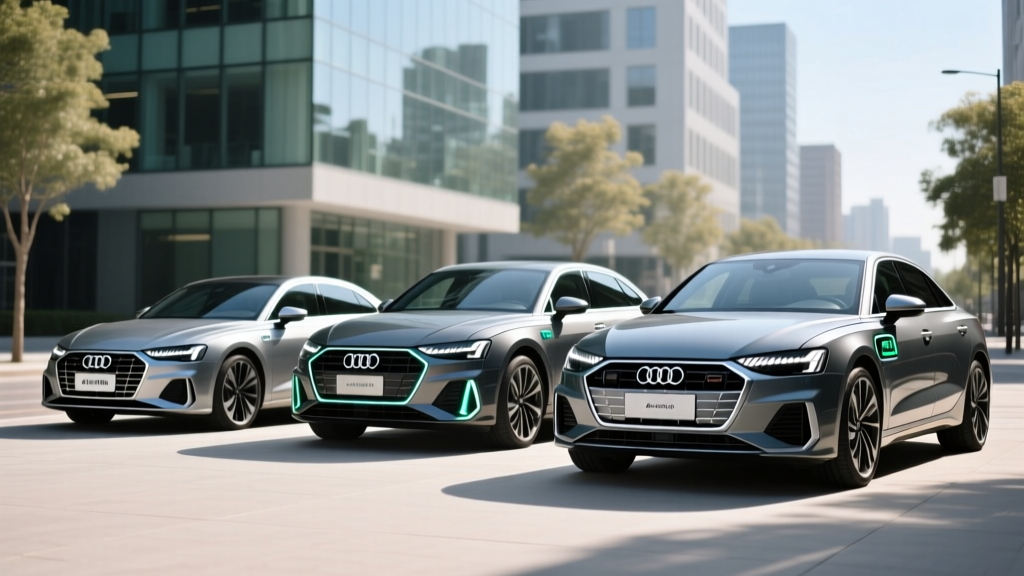
If you're searching for a "hybrid Audi" in 2026, here's what you need to know immediately: Audi does not sell conventional self-charging hybrids (HEVs) in the United States. Every electrified Audi on the market is a plug-in hybrid electric vehicle (PHEV) — meaning it carries a larger battery you charge from an external source, delivers meaningful electric-only driving range, and pairs an electric motor with a turbocharged gasoline engine.
This is a deliberate engineering choice. Audi's PHEV architecture prioritizes short-to-medium commutes on battery power alone while retaining a gas engine for long road trips. For buyers who want Audi luxury and quattro all-wheel drive but aren't ready for a full battery-electric vehicle like the Q8 e-tron, the PHEV lineup fills a specific niche.
HEV vs. PHEV — What's the Difference?
| Feature | Conventional Hybrid (HEV) | Plug-In Hybrid (PHEV) |
|---|---|---|
| Plugs in to charge? | No — charges via regen & engine | Yes — Level 1 or Level 2 |
| Battery size | ~1–2 kWh | ~14–26 kWh (Audi range) |
| Electric-only range | 0–1 mile at low speed | 20–40+ miles (EPA) |
| Federal tax credit | Not eligible (§30D) | Potentially eligible (up to $7,500) |
| Does Audi sell in US? | No | Yes — multiple models |
Because Audi exclusively offers PHEVs in the US, this guide focuses entirely on their plug-in hybrid lineup. If you're looking for a self-charging hybrid that never needs a plug, you'll need to look at competitors like the Toyota RAV4 Hybrid or Lexus RX Hybrid.
The 2026 Audi PHEV Lineup: Model-by-Model Breakdown
Audi's US PHEV offerings for the 2026 model year span from the compact Q5 SUV to the executive A7 sedan. Below is a consolidated spec table covering the key numbers every buyer needs.
| Model | Powertrain | Combined HP | Battery (kWh usable) | EPA EV Range | EPA MPG (gas) | 0–60 mph | Base MSRP |
|---|---|---|---|---|---|---|---|
| Q5 55 TFSI e | 2.0L I4 turbo + electric motor | 362 hp | ~14.1 kWh | 23 mi | 25/27/26 | 5.0 sec | $61,195 |
| A7 55 TFSI e | 2.0L I4 turbo + electric motor | 362 hp | ~14.1 kWh | 24 mi | 24/28/25 | 5.1 sec | $78,495 |
| Q5 Sportback 55 TFSI e | 2.0L I4 turbo + electric motor | 362 hp | ~14.1 kWh | 22 mi | 25/27/26 | 5.0 sec | $63,695 |
Sources: fueleconomy.gov (EPA), Audi USA official specifications. MSRP reflects 2026 base pricing before destination charges.
Electric-Only Range and Charging: What to Expect
Audi's PHEVs use a ~17.9 kWh gross battery pack (approximately 14.1 kWh usable to preserve longevity via a charge buffer). This yields an EPA-rated electric-only range of 22–24 miles depending on the model and its aerodynamic profile.
Real-World EV Range vs. EPA Sticker
EPA rated: 23 miles (Q5 55 TFSI e)
Real-world expectation: 18–22 miles in mixed driving; 15–18 miles in cold weather (below 40°F) or sustained highway speeds above 70 mph. PHEV electric range drops noticeably with heater use, as most Audi PHEVs rely on resistive heating rather than a heat pump for cabin warmth.
Charging Speed and Options
| Charging Level | Power (kW) | Time (0–100%) | Availability |
|---|---|---|---|
| Level 1 (120V household) | ~1.4 kW | ~10–12 hours | Any standard outlet |
| Level 2 (240V home/public) | 7.4 kW | ~2.5 hours | Home wallbox, public Level 2 |
| DC Fast Charge | Not supported | N/A | N/A |
Critical detail: Audi's US PHEV lineup does not support DC fast charging. Maximum charge rate is 7.4 kW on Level 2. This means a full charge takes roughly 2.5 hours from a 240V source — perfectly adequate for overnight or workplace charging, but you cannot top up quickly on a road trip. Once the battery depletes, the gasoline engine takes over seamlessly.
Fuel Economy: EPA Numbers vs. Real-World MPG
| Model | City MPG (gas) | Highway MPG (gas) | Combined MPG (gas) | Combined MPGe (EV+gas) |
|---|---|---|---|---|
| Q5 55 TFSI e | 25 | 27 | 26 | 61 MPGe |
| A7 55 TFSI e | 24 | 28 | 25 | 60 MPGe |
| Q5 Sportback 55 TFSI e | 25 | 27 | 26 | 61 MPGe |
Source: fueleconomy.gov
The MPGe figure (miles-per-gallon-equivalent) blends electric and gasoline operation and is most relevant if your daily driving stays within the EV range. Once the battery is depleted, you're driving a heavy luxury SUV or sedan on gas alone — and 25–26 combined MPG is respectable but not class-leading compared to a Lexus RX 500h (which achieves 29 combined as a conventional hybrid).
Real-World MPG Patterns
PHEV fuel economy is highly dependent on your charging habits:
- Charge nightly, commute under 20 miles: You may use almost no gasoline for weeks. Your effective "MPG" approaches infinity for daily driving.
- Charge occasionally, mixed driving: Expect the EPA combined figure of ~26 MPG on gas-only segments, with better results around town thanks to regenerative braking.
- Never charge, highway-heavy: Expect 23–25 MPG. You're carrying ~400 lbs of battery and electric motor mass without using the electric advantage — the worst-case scenario for a PHEV.
Hybrid and PHEV powertrains typically exceed their EPA city rating in stop-and-go traffic because regenerative braking recovers energy that a gas-only car wastes as heat. Highway driving is where PHEVs lose ground, since electric motors are less efficient at sustained high speeds.
Battery Longevity, Warranty, and Replacement Costs
Audi PHEV Battery Warranty
Hybrid battery warranty: 8 years / 100,000 miles (whichever comes first)
Capacity retention threshold: Audi warrants the high-voltage battery against defects and excessive capacity loss. If the battery drops below approximately 70% of original capacity within the warranty period, Audi will repair or replace it at no cost.
Powertrain warranty: 4 years / 50,000 miles (standard Audi coverage)
Source: Audi USA warranty documentation
How Long Will the Battery Last?
Audi PHEV batteries use lithium-ion NMC (nickel-manganese-cobalt) chemistry, which offers good energy density but is more susceptible to calendar degradation than LFP (lithium iron phosphate) chemistry used in some full EVs. Based on industry data from similar PHEV platforms:
- Years 1–5: Expect 3–8% capacity loss under normal use. Most owners won't notice a meaningful range reduction.
- Years 5–10: Total degradation of 10–18% is typical. A 23-mile EV range might become 19–20 miles.
- Beyond 10 years: Degradation continues but at a slower rate. Many PHEV batteries remain functional at 75–80% capacity at 12–15 years.
Battery Replacement Cost
Out-of-warranty replacement for an Audi PHEV high-voltage battery is estimated at $8,000–$14,000 including parts and labor. This is significantly less than a full EV battery replacement (which can exceed $20,000) because the PHEV pack is much smaller. However, it's still a meaningful cost if it occurs outside the 8-year/100,000-mile warranty window.
Practical tip: Keeping your PHEV battery between 20% and 80% state of charge when possible, avoiding frequent full charges to 100% overnight, and not leaving the vehicle at very low SoC in extreme heat will maximize longevity.
Federal Tax Credit Eligibility for Audi PHEVs
Under the current IRS §30D Clean Vehicle Credit rules, qualifying PHEVs can receive up to $7,500 in federal tax credits. However, eligibility is complex and model-specific. Here's the checklist:
- Battery capacity: Must be ≥7 kWh — all Audi PHEVs qualify (17.9 kWh gross).
- MSRP cap: SUVs (Q5, Q5 Sportback) must be ≤$80,000; sedans (A7) must be ≤$55,000. The A7 55 TFSI e at $78,495 exceeds the sedan cap and is NOT eligible for the federal credit. The Q5 55 TFSI e at $61,195 is under the $80,000 SUV cap.
- Buyer income cap: Modified AGI must not exceed $150,000 (single), $225,000 (head of household), or $300,000 (joint filing).
- Battery sourcing & critical minerals: A percentage of battery components must be manufactured or assembled in North America, and critical minerals must be sourced from the US or FTA partners. These thresholds increase annually. Verify current-year compliance on the fueleconomy.gov tax credit page.
- Point-of-sale transfer: As of 2024, eligible buyers can transfer the credit to the dealer at purchase, reducing the purchase price directly rather than waiting for a tax refund.
Bottom line for 2026: The Q5 55 TFSI e may qualify for a partial or full $7,500 credit depending on battery-sourcing compliance in the current model year. The A7 55 TFSI e is disqualified by its MSRP exceeding the $55,000 sedan cap. Always verify eligibility on fueleconomy.gov and consult a tax professional before relying on the credit.
Who Should Choose an Audi PHEV (and Who Shouldn't)
Pros
- 20+ miles of silent, zero-emission electric commuting
- No range anxiety — gas engine covers long trips
- 362 hp with standard quattro AWD
- Luxury interior, strong build quality
- Potential $7,500 federal tax credit (Q5)
- Lower daily fuel cost if you charge regularly
Cons
- No DC fast charging capability
- EV range is modest vs. newer PHEV competitors (RAV4 Prime: 42 mi)
- 25–26 MPG gas-only is unremarkable for the class
- Heavy: battery + motor add ~400 lbs
- A7 exceeds sedan MSRP cap for tax credit
- No conventional hybrid (HEV) option if you can't plug in
Choose an Audi PHEV If:
- Your daily commute is under 25 miles round-trip and you can charge at home or work
- You want Audi luxury and quattro AWD but take road trips too often for a full EV
- You value the combination of electric daily driving and gas-engine flexibility
Choose a Full EV (e.g., Audi Q8 e-tron) If:
- You can install Level 2 home charging and your daily driving is under 200 miles
- You want to eliminate gasoline entirely and access DC fast charging for road trips
- You want lower maintenance costs (no oil changes, no engine)
Choose a Conventional Hybrid (e.g., Lexus RX 500h) If:
- You cannot charge at home (apartment, street parking)
- You want maximum MPG without any plug-in behavior
- You want a simpler ownership experience with no charging logistics
Frequently Asked Questions
How many MPG does a hybrid Audi get?
The 2026 Audi Q5 55 TFSI e achieves an EPA-rated 25 city / 27 highway / 26 combined MPG when operating on gasoline alone after the battery is depleted. The MPGe rating (blending electric and gas operation) is 61 MPGe. Real-world MPG varies significantly based on charging frequency — owners who charge daily and commute within EV range may use very little gasoline.
How far can an Audi PHEV go on electric only?
The Q5 55 TFSI e delivers an EPA-rated 23 miles of electric-only range. The A7 55 TFSI e achieves 24 miles. In real-world driving, expect 18–22 miles in mild weather and 15–18 miles in cold conditions or at sustained highway speeds. This is sufficient for many daily commutes but shorter than class leaders like the Toyota RAV4 Prime (42 miles) or the BMW X5 xDrive50e (38 miles).
Does Audi make a conventional hybrid that doesn't plug in?
No. Audi does not currently sell a conventional self-charging hybrid (HEV) in the United States. All electrified Audis in the US are plug-in hybrids (PHEVs) or full battery-electric vehicles (BEVs). If you need a luxury hybrid that never requires plugging in, consider the Lexus RX 500h or BMW X5 xDrive45e's hybrid mode.
Is the Audi PHEV reliable, and what does battery replacement cost?
Audi's PHEV powertrain is mechanically complex — combining a turbocharged engine, electric motor, and high-voltage battery — but benefits from Audi's 8-year/100,000-mile hybrid battery warranty. Out-of-warranty battery replacement is estimated at $8,000–$14,000. Long-term reliability data is moderate; J.D. Power and Consumer Reports have rated Audi's overall brand reliability as average to below-average in recent years. The hybrid-specific components have generally proven durable within the warranty period.
Does the Audi Q5 PHEV qualify for the $7,500 federal tax credit?
The Q5 55 TFSI e (MSRP $61,195) falls under the $80,000 SUV MSRP cap and meets the battery capacity requirement. Eligibility for the full $7,500 depends on current-year battery component sourcing and critical mineral requirements under IRS §30D. The A7 55 TFSI e (MSRP $78,495) exceeds the $55,000 sedan cap and does not qualify. Always verify current eligibility at fueleconomy.gov and consult a tax professional.
Can I DC fast charge an Audi PHEV?
No. Audi's US PHEV models do not support DC fast charging. The maximum charge rate is 7.4 kW on a Level 2 (240V) connection, which fully charges the battery in approximately 2.5 hours. On a standard 120V outlet (Level 1), a full charge takes 10–12 hours.