Quick Verdict: The Honda Prelude Hybrid at a Glance
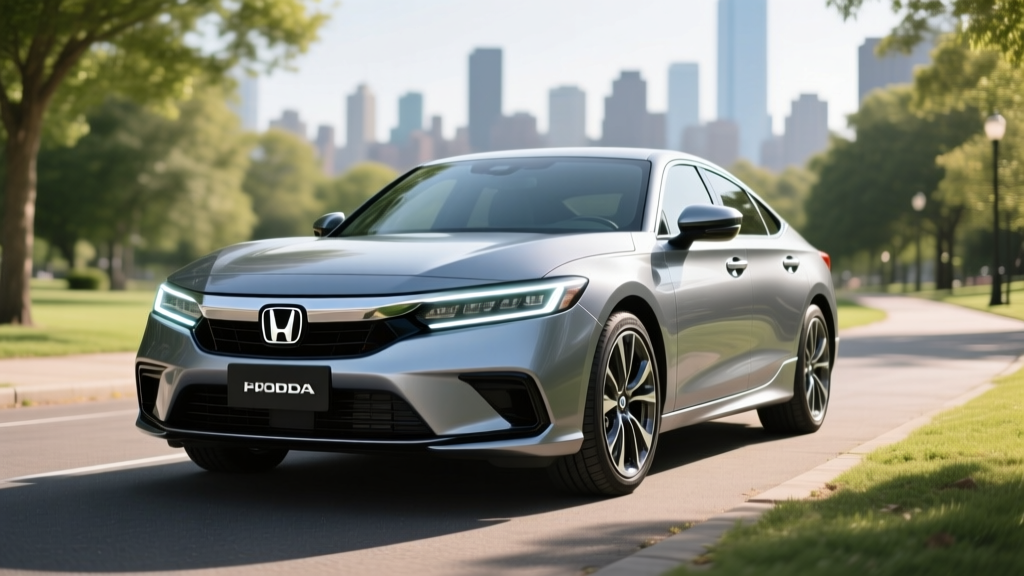
The 2026 Honda Prelude marks the return of a nameplate dormant since 2001, but this isn't a nostalgia exercise. Honda has positioned the new Prelude as a two-door hybrid coupe built on the Civic platform, powered by the fourth-generation two-motor hybrid system also found in the Accord Hybrid and CR-V Hybrid. It's a conventional hybrid (HEV) — not a plug-in — meaning there's no charging port, no electric-only range to manage, and no range anxiety. You fill it with gas and drive.
For buyers who want coupe styling and genuine fuel economy without committing to a full EV or the plug-in routine, the Prelude hybrid occupies a specific niche: sporty, efficient, and mechanically straightforward.
| Specification | 2026 Honda Prelude Hybrid |
|---|---|
| Powertrain | 2.0L Atkinson-cycle 4-cyl + dual-motor hybrid system |
| Combined Horsepower | ~200 hp (estimated, final TBD) |
| Transmission | e-CVT (direct-drive, no fixed gears) |
| EPA Fuel Economy (Combined) | ~50 MPG (estimated based on Accord Hybrid system) |
| EPA City / Highway | ~51 city / ~48 highway (est.) |
| Fuel Tank Capacity | ~12.4 gallons (est.) |
| Total Driving Range | ~600+ miles per tank |
| Drivetrain | Front-wheel drive |
| 0-60 mph | ~7.0 seconds (est.) |
| Battery Type | Lithium-ion (small, under 2 kWh, not plug-in) |
| Plug-In / PHEV? | No — conventional HEV only |
| Starting MSRP | ~$33,000 (estimated) |
| Federal EV Tax Credit (§30D) | Not eligible (not a PHEV or BEV) |
| Hybrid Battery Warranty | 8 years / 100,000 miles (minimum, per federal emissions mandate) |
Note: Honda has confirmed the Prelude for production but final EPA figures and pricing remain preliminary as of early 2026. Estimates above are based on the shared hybrid powertrain in the Accord Hybrid. We'll update this page when official numbers are published on fueleconomy.gov.
HEV vs. PHEV: What the Honda Prelude Actually Is
This distinction matters because search results often blur it. The 2026 Honda Prelude is a conventional hybrid electric vehicle (HEV). It does not plug in. It does not have a meaningful electric-only driving range. It recovers energy through regenerative braking and uses a small lithium-ion battery buffer (likely under 2 kWh) to assist the gasoline engine and enable brief low-speed electric-only creeping.
| Feature | Conventional Hybrid (HEV) Honda Prelude | Plug-In Hybrid (PHEV) e.g., Toyota Prius Prime | Battery Electric (BEV) e.g., Tesla Model 3 |
|---|---|---|---|
| Plug-in charging? | No | Yes (Level 1/2) | Yes (Level 1/2/DC) |
| Electric-only range | ~1 mile or less (creep only) | 25-50 miles typical | 250-400+ miles |
| Gas engine? | Yes — primary power | Yes — backup/extended range | No |
| Fuel needed? | Yes | Yes (but less if you charge) | No |
| Federal tax credit (§30D)? | No | Up to $7,500 if eligible | Up to $7,500 if eligible |
| Home charging install? | Not needed | Recommended (Level 2) | Strongly recommended |
| Best for | No home charging, simplicity | Short commutes + road trips | Full electric, home charging |
If you were hoping the Prelude offered a plug-in variant with 30 miles of electric-only commuting, it doesn't — at least not at launch. Honda's PHEV technology currently lives in the Clarity (discontinued) and may appear in future models, but the Prelude is strictly HEV.
Fuel Economy: How Many MPG Does the Honda Prelude Hybrid Get?
Honda hasn't released final EPA figures for the Prelude as of this writing, but we can project with high confidence. The car shares Honda's fourth-generation two-motor hybrid system with the Accord Hybrid, which is EPA-rated at 51 city / 48 highway / 50 combined MPG in its most efficient trim (source: fueleconomy.gov).
| Driving Scenario | EPA Estimate (Projected) | Real-World Expectation |
|---|---|---|
| City (stop-and-go) | 51 MPG | 50-55 MPG — hybrids excel here; regen braking recovers energy at every stop |
| Highway (70 mph cruise) | 48 MPG | 42-46 MPG — aerodynamic drag and sustained speed reduce hybrid advantage |
| Combined | 50 MPG | 45-50 MPG depending on driving mix |
| Cold weather (below 30°F) | N/A (not EPA-rated separately) | 38-44 MPG — engine runs more often for cabin heat and warm-up enrichment |
Why hybrids often beat their EPA city number: The EPA city cycle includes many stops, which is exactly where regenerative braking recovers the most energy. In real-world city driving with frequent stops, you may see 52-55 MPG. Conversely, sustained highway driving at 75+ mph will drop you below the EPA highway estimate — a pattern that's the opposite of conventional gas cars.
Cold-weather reality: Expect a 10-15% MPG drop in winter. The gasoline engine must run more frequently to generate cabin heat (unlike an EV with a heat pump, the Prelude uses engine waste heat) and to maintain catalyst temperature for emissions compliance. This is normal hybrid behavior, not a defect.
Powertrain Deep Dive: The Two-Motor Hybrid System
The Prelude's powertrain is Honda's proven architecture, and understanding it helps set performance expectations:
- Gasoline engine: A 2.0-liter Atkinson-cycle four-cylinder. The Atkinson cycle sacrifices some low-end torque for higher thermal efficiency (roughly 40% — far above a typical gas engine's 25-30%). Output is approximately 146 hp and 134 lb-ft of torque from the engine alone.
- Drive motor: A primary electric traction motor producing roughly 184 hp and 247 lb-ft of torque. This motor does most of the actual driving — the gas engine often acts as a generator rather than directly turning the wheels.
- Generator motor: A second, smaller motor that starts the engine, generates electricity, and smooths power delivery.
- Combined system output: Approximately 200 hp. Honda rates the system as a whole, not as a simple sum of engine + motor, because they don't peak simultaneously.
The e-CVT transmission is a direct-drive unit with a lock-up clutch for highway cruising. Unlike a traditional belt-and-pulley CVT, there are no rubber bands here — it's a gear-reduction unit that connects the drive motor (or, at highway speed, the engine directly) to the wheels. The result is smooth, linear acceleration without the drone typical of older CVTs.
Performance note: A 0-60 mph time around 7.0 seconds is respectable for a fuel-economy-focused coupe. The instant torque from the electric drive motor gives strong off-the-line response, even if the car isn't a sports car in the traditional sense. Think of it as "efficient quick" rather than "fast."
Battery, Warranty, and Long-Term Reliability
Honda Hybrid Battery Warranty: 8 years / 100,000 miles (10 years / 150,000 miles in CARB states including CA, NY, MA, and others that follow California emissions standards). Coverage applies if battery capacity drops below a defined threshold — typically around 60-70% of original capacity, though Honda's exact threshold should be confirmed in your purchase documents.
The hybrid battery in the Prelude is small — likely between 1.0 and 1.5 kWh of usable capacity. This is fundamentally different from an EV's 60-100 kWh pack or a PHEV's 10-20 kWh pack. Because the battery is small and the hybrid system manages charge cycles conservatively (never fully depleting or fully charging it), degradation is minimal over the vehicle's life.
Real-world reliability data: Honda's hybrid systems in the Accord and CR-V have proven durable. The lithium-ion packs in third-generation systems (2017-2022 Accords) have shown negligible capacity loss at 100,000+ miles in owner-reported data. The fourth-generation system in the Prelude uses an updated lithium-ion chemistry with improved thermal management.
Battery replacement cost: If the hybrid battery does fail outside warranty, expect a replacement cost of approximately $2,000-$4,000 including labor. This is far less than an EV battery replacement ($10,000-$20,000+) because the pack is small. Independent hybrid battery specialists can often refurbish or replace individual cells for $1,000-$2,000, and salvage-yard packs from low-mileage wrecks are increasingly available.
Other maintenance advantages: Regenerative braking significantly reduces brake pad wear — many hybrid owners report original brake pads lasting 80,000-100,000 miles. There's no traditional alternator or starter motor to fail (the hybrid system handles both functions). Oil change intervals remain at Honda's standard ~10,000 miles or annually.
Pricing, Trims, and Tax Credit Eligibility
Honda has not announced final trim levels or pricing for the 2026 Prelude. Based on its positioning between the Civic and Accord, and considering the Accord Hybrid starts around $33,000, we project:
- Base trim (likely "LX" or "Sport"): ~$33,000-$35,000 MSRP
- Mid trim: ~$36,000-$38,000 MSRP
- Top trim (likely "Touring" or "Sport Touring"): ~$39,000-$42,000 MSRP
Federal tax credit (§30D): The Honda Prelude hybrid does not qualify for the federal plug-in vehicle tax credit. Under current IRS rules, the §30D credit applies only to battery electric vehicles (BEVs) and plug-in hybrids (PHEVs) with a minimum battery capacity of 7 kWh. The Prelude's sub-2 kWh hybrid battery doesn't meet this threshold.
State-level incentives: A handful of states offer rebates or HOV lane access for conventional hybrids, but these are uncommon and vary by jurisdiction. Check your state's energy or environmental agency website. Some employers and utilities also offer small incentives for any electrified vehicle, including HEVs.
Total cost of ownership perspective: At 50 MPG and $3.25/gallon gas (2026 national average), the Prelude costs roughly $0.065 per mile in fuel. Compare that to a 30 MPG gas coupe at $0.108/mile — the Prelude saves approximately $650 per year for a driver covering 15,000 miles annually. Over five years, that's ~$3,250 in fuel savings, which partially offsets the hybrid premium over a gas-only equivalent.
Who Should Buy the Honda Prelude Hybrid — and Who Shouldn't
Choose the Honda Prelude Hybrid if:
- You want a stylish two-door coupe without sacrificing fuel economy
- You don't have access to home or workplace charging (making a PHEV or EV impractical)
- You take regular road trips and don't want to plan around charging stops
- You value simplicity — no charging cables, no apps, no plug-in routine
- You want Honda's proven hybrid reliability with strong warranty coverage
- Your daily commute involves stop-and-go city driving where hybrids shine
Look elsewhere (PHEV or BEV) if:
- You have home charging and a short commute — a PHEV like the Toyota Prius Prime (44 miles electric-only) would eliminate gas entirely on weekdays
- You want the federal $7,500 tax credit — only PHEVs and BEVs qualify
- You need four doors and more cargo space — the Accord Hybrid sedan offers the same powertrain with more practicality
- You want true electric-only driving for emissions or HOV lane reasons
- You want all-wheel drive — the Prelude is front-wheel drive only; consider the CR-V Hybrid or RAV4 Hybrid for AWD
How the Prelude Hybrid Compares
The Prelude doesn't have many direct rivals — the two-door hybrid coupe segment is essentially a category Honda is creating. But cross-shopping will likely include:
| Vehicle | Type | EPA Combined | Est. Starting Price | Doors |
|---|---|---|---|---|
| Honda Prelude Hybrid | HEV | ~50 MPG | ~$34,000 | 2 |
| Honda Accord Hybrid | HEV | 50 MPG | $33,670 | 4 |
| Toyota Prius | HEV | 57 MPG | $28,545 | 4 (hatch) |
| Toyota Prius Prime | PHEV | 52 MPG + 44 mi electric | $33,445 | 4 (hatch) |
| Hyundai Ioniq 6 | BEV | 140 MPGe / 361 mi range | $39,650 | 4 |
The Prius delivers better MPG but in a very different package. The Accord Hybrid gives you the same powertrain with four doors and more room. The Prelude's value proposition is the coupe form factor with no efficiency compromise — if that's what you want, it has no direct competitor.
Pros
- Estimated 50 MPG combined with no plug-in required
- Proven Honda hybrid powertrain with strong reliability history
- Distinctive coupe styling in a segment with no alternatives
- Strong low-end torque from electric drive motor
- Minimal maintenance costs (long brake life, no starter/alternator)
- 8-year/100,000-mile hybrid battery warranty
Cons
- No plug-in / no electric-only driving range
- Not eligible for federal §30D tax credit
- Two-door coupe limits rear-seat and cargo practicality
- Front-wheel drive only — no AWD option
- Final EPA figures and pricing still preliminary
- Highway MPG drops more noticeably than city — not ideal for all-highway commuters
Frequently Asked Questions
How many MPG does the Honda Prelude hybrid get?
Based on the shared Accord Hybrid powertrain, we project approximately 51 city / 48 highway / 50 combined MPG. Real-world city driving often exceeds the EPA estimate (52-55 MPG) thanks to regenerative braking, while sustained highway driving at 75+ mph typically returns 42-46 MPG. Cold weather reduces efficiency by roughly 10-15%.
Does the Honda Prelude plug in? Is it a PHEV?
No. The 2026 Honda Prelude is a conventional hybrid (HEV). It has no charging port, no plug, and no meaningful electric-only range. You refuel it with gasoline like any other car. The hybrid system uses regenerative braking and engine power to charge its small internal battery automatically.
Does the Honda Prelude hybrid qualify for any tax credit?
No. The federal §30D clean vehicle credit applies only to plug-in hybrids (PHEVs) and battery electric vehicles (BEVs) with at least 7 kWh of battery capacity. The Prelude's sub-2 kWh hybrid battery does not qualify. Some states may offer minor hybrid incentives — check your state's energy office for current programs.
How long will the Honda Prelude hybrid battery last?
Honda's hybrid battery warranty covers 8 years / 100,000 miles (10 years / 150,000 miles in CARB states). In practice, Honda's hybrid batteries in the Accord and CR-V have shown minimal degradation at well beyond 100,000 miles. The small battery in an HEV undergoes shallow charge/discharge cycles, which is far less stressful than the deep cycles in an EV. Many hybrid batteries last the lifetime of the vehicle.
What does it cost to replace the hybrid battery?
Out-of-warranty replacement for a Honda hybrid battery typically runs $2,000-$4,000 including dealer labor. Independent hybrid specialists can often refurbish the pack or replace individual modules for $1,000-$2,000. This is significantly less expensive than EV battery replacement.
Hybrid vs. PHEV vs. EV — which is right for me?
HEV (Prelude): Best if you lack home charging, drive long distances, or want zero lifestyle change. No plug, no apps, just gas up and go with better MPG.
PHEV (Prius Prime, RAV4 Prime): Best if you have home charging and a commute under 40 miles. You'll drive electric most days and use gas only for longer trips.
BEV (Model 3, Ioniq 6): Best if you have reliable home charging, want the lowest fuel/maintenance costs, and your typical trips fit within 250-300 miles or you're willing to plan DC fast-charging stops.
Is the Honda Prelude hybrid reliable?
Honda's two-motor hybrid system is among the most proven in the industry, with over a decade of real-world deployment in the Accord, CR-V, and Insight. The system has fewer wear components than a conventional gas car (no traditional transmission, starter, or alternator). IIHS and NHTSA safety ratings will be published closer to the on-sale date. Based on Honda's track record, we expect above-average reliability.
When will the Honda Prelude hybrid be available?
Honda confirmed the Prelude for production, with availability expected in the 2025-2026 timeframe. Final specs, EPA ratings, and pricing will be published closer to launch. Check Honda's official newsroom and fueleconomy.gov for confirmed data.