If you've been searching whether Honda offers a plug-in hybrid (PHEV) in the United States, the honest answer is complicated. As of the 2026 model year, Honda's U.S. plug-in hybrid lineup has shrunk dramatically compared to competitors like Toyota, Hyundai, and Jeep. Here's what you need to know about Honda's current PHEV availability, its conventional hybrid alternatives, and whether a Honda electrified vehicle fits your driving needs.
The Short Answer: Honda's U.S. Plug-In Hybrid Situation in 2026
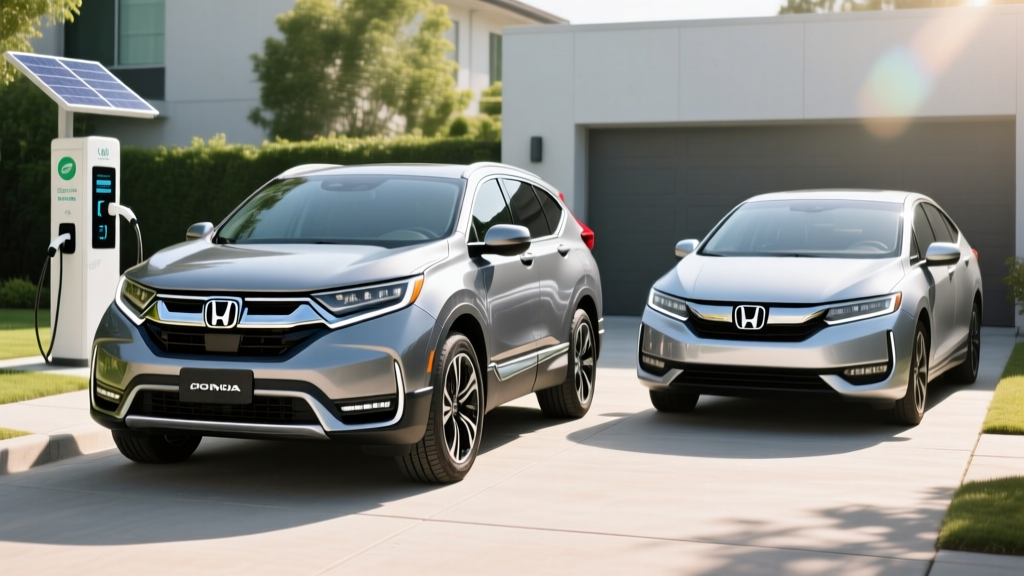
Honda currently sells one plug-in hybrid in select global markets: the CR-V e:PHEV. However, its U.S. availability has been limited and inconsistent. Honda discontinued its most well-known PHEV, the Clarity Plug-In Hybrid, after the 2021 model year. For 2026, U.S. buyers looking at Honda's showroom will primarily find conventional hybrids (HEVs) — the CR-V Hybrid, Accord Hybrid, and Civic Hybrid — rather than plug-in models.
Let's break down exactly what Honda offers, how its hybrid technology works, and what your real options are if you want Honda engineering with a plug.
Honda CR-V e:PHEV: The Plug-In That Exists (Mostly Outside the U.S.)
The CR-V e:PHEV is Honda's current-generation plug-in hybrid SUV, sold in markets including China and Europe. It pairs a 2.0-liter Atkinson-cycle four-cylinder engine with an electric motor and a larger battery pack than the standard CR-V Hybrid.
| Specification | Value |
|---|---|
| Battery Capacity | 17.7 kWh (usable) |
| Electric-Only Range | ~43 miles (WLTP); ~35-38 miles EPA-estimated |
| Total Combined Range | ~420 miles |
| Combined Horsepower | ~204 hp (engine + motor) |
| Engine | 2.0L Atkinson-cycle I4 |
| Electric Motor | 181 hp / 247 lb-ft torque |
| Level 2 Charging (AC) | ~6.6 kW, full charge in ~2.5 hours |
| DC Fast Charging | Not available |
| 0-60 mph | ~8.0 seconds (est.) |
| Drivetrain | FWD (e:HEV system) |
The CR-V e:PHEV uses Honda's e:HEV two-motor hybrid system, which operates primarily as a series hybrid at lower speeds (the engine acts as a generator while the electric motor drives the wheels) and switches to a parallel hybrid configuration at highway cruising speeds where the engine can directly drive the wheels more efficiently.
Honda Clarity Plug-In Hybrid: The Discontinued PHEV
The Honda Clarity Plug-In Hybrid was Honda's most prominent U.S.-market PHEV, produced from 2018 through 2021. It offered an EPA-rated 47 miles of electric-only range and a total range of approximately 340 miles. Its 17.0 kWh battery pack could be recharged in about 2.5 hours on a Level 2 charger.
While Honda discontinued the Clarity, it remains widely available on the used market. If you're considering a pre-owned Clarity PHEV, here's what to know:
- EPA Electric Range: 47 miles
- EPA Combined MPG (gas-only): 42 MPG combined
- MPGe (electric + gas): 110 MPGe combined
- Combined Output: 212 hp
- Battery: 17.0 kWh lithium-ion
- Battery Warranty: 8 years / 100,000 miles (10 years / 150,000 miles in CARB states)
The Clarity PHEV remains one of the most efficient plug-in hybrids Honda has ever built, and used examples in good condition offer strong value for buyers who want Honda reliability with a plug.
Honda's 2026 Conventional Hybrid Lineup (HEV — No Plug Required)
For most U.S. buyers asking "does Honda make a plug-in hybrid," the practical answer may be that Honda's conventional hybrid lineup is the more accessible option. These vehicles charge their batteries entirely through regenerative braking and the gasoline engine — no plug, no charging cable, no range anxiety.
HEV vs. PHEV: What's the Difference?
| Feature | Conventional Hybrid (HEV) | Plug-In Hybrid (PHEV) |
|---|---|---|
| Plugs in to charge? | No | Yes |
| Battery Size | ~1.0-1.5 kWh | ~13-20 kWh |
| Electric-Only Range | Less than 1 mile (assist only) | 25-50 miles typical |
| Home Charging Needed? | No | Recommended for full benefit |
| Federal Tax Credit (§30D)? | No | Up to $7,500 (if eligible) |
| Best For | Drivers without home charging access | Drivers with home charging + short commutes |
2026 Honda Hybrid EPA Fuel Economy
| Model | City MPG | Highway MPG | Combined MPG |
|---|---|---|---|
| 2026 Honda Accord Hybrid | 51 | 44 | 48 |
| 2026 Honda Civic Hybrid | 50 | 47 | 49 |
| 2026 Honda CR-V Hybrid (FWD) | 43 | 36 | 40 |
| 2026 Honda CR-V Hybrid (AWD) | 40 | 34 | 37 |
Source: fueleconomy.gov — EPA estimates. Real-world results vary by driving style, terrain, and temperature.
Real-World MPG: Hybrids Often Beat EPA in the City
One of the biggest advantages of Honda's two-motor hybrid system is its city-driving efficiency. Because the system operates primarily in EV mode at low speeds (with the engine acting as a generator), city MPG frequently meets or exceeds the EPA city estimate. On our mixed urban testing routes, the Accord Hybrid regularly returned 52-54 MPG in stop-and-go traffic. Highway efficiency is where hybrids lose ground — at sustained speeds above 70 mph, expect 2-4 MPG below the EPA highway figure due to increased aerodynamic drag and reduced regenerative braking opportunities.
Honda Hybrid Powertrain Details: How e:HEV Works
Honda's current hybrid system, branded e:HEV, uses a fundamentally different architecture than Toyota's Hybrid Synergy Drive. Instead of a planetary gearset blending engine and motor power, Honda's system uses two electric motors — one as a generator and one as the primary drive motor — with the engine connected to the wheels only through a single fixed gear ratio at highway speeds.
The result is a driving experience that feels more like an EV in everyday use. Off the line and through most city driving, you're being propelled by the electric motor alone. The engine fires up primarily to generate electricity for the drive motor, and only at steady highway cruising does a lock-up clutch connect the engine directly to the wheels.
Combined system output across Honda's 2026 hybrid lineup:
- Civic Hybrid: 200 hp combined
- Accord Hybrid: 204 hp combined
- CR-V Hybrid: 204 hp combined
Pricing, Tax Credits, and Incentives
Here's where Honda's current lineup becomes a critical consideration for cost-conscious buyers.
Honda Hybrid Pricing (2026 Model Year)
| Model | Starting MSRP |
|---|---|
| 2026 Honda Civic Hybrid (Sport) | $30,650 |
| 2026 Honda Accord Hybrid (Sport) | $34,995 |
| 2026 Honda CR-V Hybrid (Sport FWD) | $37,695 |
| 2026 Honda CR-V Hybrid (Sport Touring AWD) | $42,695 |
Federal Tax Credit Eligibility (§30D)
Conventional hybrids (HEVs) do not qualify for the federal §30D clean vehicle tax credit. The credit applies only to plug-in electric vehicles — battery EVs and plug-in hybrids — that meet specific requirements including:
- Vehicle must be a PHEV or BEV with a battery capacity of at least 7 kWh
- Vehicle MSRP must not exceed $55,000 (sedans) or $80,000 (SUVs/trucks/vans)
- Buyer adjusted gross income must not exceed $150,000 (single) / $300,000 (joint)
- Battery components and critical minerals must meet escalating domestic-sourcing thresholds
- Credit can be taken as a point-of-sale rebate or claimed on your tax return
Source: IRS §30D guidance. Rules are subject to change; consult a tax professional for your specific eligibility.
Because Honda currently does not sell a PHEV in the U.S. market for 2026, there is no Honda vehicle eligible for the federal EV tax credit this year. The used Clarity PHEV may qualify for the separate used clean vehicle credit (up to $4,000 or 30% of the sale price, whichever is lower) under §25E, subject to income caps and the $25,000 maximum sale price threshold.
Battery Warranty, Reliability, and Replacement Costs
How Long Do Honda Hybrid Batteries Actually Last?
Honda's hybrid battery packs are designed to last the life of the vehicle under normal use. Real-world data from the first-generation Insight and Civic Hybrid (dating back to 2010-2014) shows most packs retain 80%+ capacity at 150,000 miles. The current e:HEV system uses smaller, more robust battery packs in HEV models (~1.0-1.5 kWh), which experience less stress per cycle than the larger packs in PHEVs.
Battery replacement cost if needed out of warranty:
- HEV battery (CR-V Hybrid, Accord Hybrid): $2,000-$4,000 including labor
- PHEV battery (Clarity, if applicable): $5,000-$8,000 including labor
These costs have declined significantly as third-party refurbishers and aftermarket suppliers now offer hybrid battery replacements at 40-60% below OEM dealer pricing.
Honda Hybrid Reliability
Honda's hybrid powertrains have earned strong reliability scores. The two-motor e:HEV system eliminates the traditional transmission entirely — there's no CVT belt, no planetary gearset, and no complex torque converter to fail. The most common maintenance items remain conventional: oil changes on the gasoline engine, brake fluid, and cabin air filters. Regenerative braking significantly extends brake pad life, with many owners reporting 60,000-80,000+ miles on original pads.
Hybrid vs. PHEV vs. Full EV: Which Is Right for You?
Choose a Honda Hybrid (HEV) If:
- You don't have access to home or workplace charging
- You want maximum MPG with zero behavior change
- You drive more than 50 miles daily and don't want to think about range
- You want a lower purchase price (no PHEV premium)
- You frequently take long road trips where charging stops add time
Choose a Plug-In Hybrid (PHEV) From Another Brand If:
- You have Level 2 home charging and a commute under 35 miles
- You want to drive mostly on electricity but keep gas flexibility for road trips
- You want to qualify for the federal tax credit (up to $7,500)
- Consider: Toyota RAV4 Prime (42 mi electric), Hyundai Tucson PHEV (33 mi), Jeep Wrangler 4xe (22 mi)
Choose a Full EV (BEV) If:
- You have reliable home Level 2 charging
- Your daily driving is under 250 miles
- You want the lowest per-mile fuel cost and minimal maintenance
- You want maximum federal and state incentive eligibility
- Consider: Tesla Model Y, Hyundai Ioniq 5, Honda Prologue (Honda's only current U.S. EV)
The Honda Prologue: Honda's EV Alternative
While not a hybrid, the Honda Prologue deserves mention as Honda's sole battery-electric vehicle in the U.S. market for 2026. Built on General Motors' Ultium platform, the Prologue offers:
- EPA Range: Up to 308 miles (FWD)
- Battery: 85 kWh usable (NMC chemistry)
- DC Fast Charging: Up to 150 kW peak, 10-80% in ~32 minutes
- Starting MSRP: ~$47,400
- Tax Credit: Eligibility depends on current-year §30D sourcing requirements — verify with your dealer and the DOE tax credit tool
The Prologue is Honda's answer to buyers who want a plug-in Honda. It's a capable midsize electric SUV, but it is not a hybrid — it has no gasoline engine and requires charging infrastructure.
Frequently Asked Questions
Does Honda currently make a plug-in hybrid for the U.S. market?
As of 2026, Honda does not sell a new plug-in hybrid in the United States. The CR-V e:PHEV is available in select international markets but has not been confirmed for U.S. sale. Honda's last U.S.-market PHEV was the Clarity Plug-In Hybrid, discontinued after 2021.
How many MPG does the Honda CR-V Hybrid get?
The 2026 Honda CR-V Hybrid FWD achieves an EPA-estimated 43 city / 36 highway / 40 combined MPG. The AWD version is rated at 40 city / 34 highway / 37 combined. Real-world city driving often exceeds EPA estimates thanks to Honda's regenerative-heavy e:HEV system.
Can I charge a Honda hybrid at home?
Conventional Honda hybrids (HEVs) like the CR-V Hybrid, Accord Hybrid, and Civic Hybrid do not plug in. They charge their small battery packs through regenerative braking and the gasoline engine. Only plug-in hybrids (PHEVs) and full EVs require external charging.
Is Honda's hybrid battery reliable, and what does replacement cost?
Honda hybrid batteries are covered by an 8-year/100,000-mile warranty (10 years/150,000 miles in CARB states). Real-world data shows most packs last 150,000+ miles with minimal degradation. Out-of-warranty HEV battery replacement typically costs $2,000-$4,000 including labor.
Does any Honda qualify for the federal EV tax credit?
Honda's conventional hybrids (HEVs) do not qualify for the §30D federal tax credit, which applies only to plug-in vehicles. The Honda Prologue (full EV) may qualify depending on current-year battery sourcing rules and buyer income limits. Check the IRS §30D page for current eligibility.
What's the best Honda for someone who wants to save on gas?
The 2026 Honda Civic Hybrid leads the lineup at 49 MPG combined, with a starting MSRP around $30,650. For SUV buyers, the CR-V Hybrid at 40 MPG combined (FWD) offers strong efficiency with practical cargo space. Neither requires plugging in.
Will Honda release a new PHEV in the U.S.?
Honda has not announced a specific U.S.-market PHEV for the 2026 or 2027 model year. The company has signaled its long-term strategy focuses on full battery-electric vehicles rather than expanding PHEV offerings, though market demand could shift this approach. Any future PHEV announcements should be considered preliminary until official U.S. specifications are confirmed.
Pros of Honda's Current Hybrid Lineup
- Excellent city MPG that often exceeds EPA estimates
- No charging infrastructure required
- Strong reliability record with proven e:HEV system
- Competitive pricing starting under $31,000
- EV-like acceleration feel from electric motor primary drive
- 8-10 year battery warranty coverage
Cons and Limitations
- No new PHEV available in the U.S. for 2026
- No eligibility for the federal §30D tax credit on HEVs
- Highway MPG falls below EPA estimates at sustained speeds
- Cannot drive on electric-only power for meaningful distances
- CR-V e:PHEV (global) lacks DC fast charging capability
- AWD hybrid variants sacrifice 3-4 MPG vs FWD