Quick Verdict: Honda Finally Electrifies the Passport
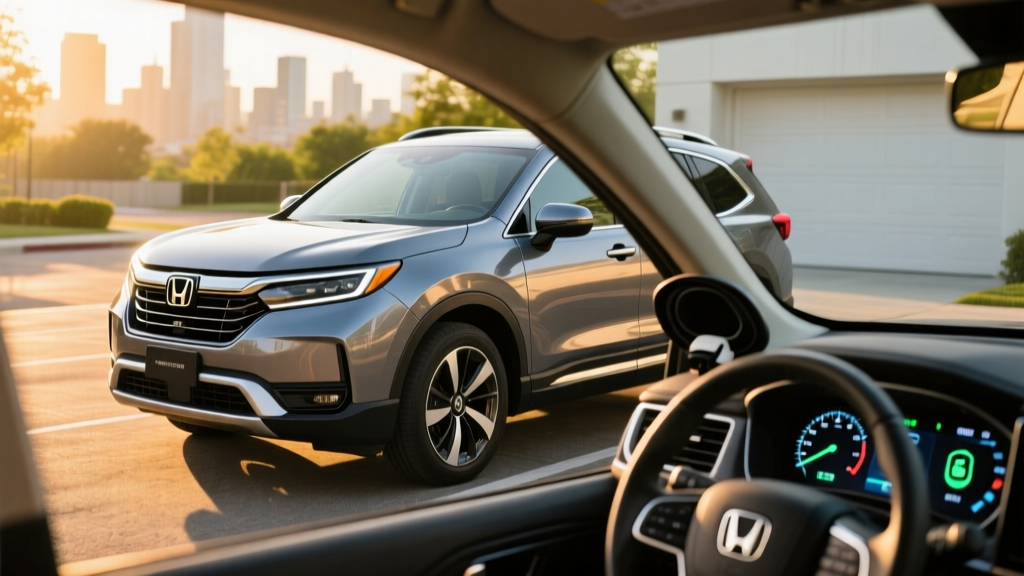
For the 2026 model year, Honda has introduced a hybrid variant of its midsize two-row SUV, the Passport. The 2026 Honda Passport Hybrid utilizes a version of Honda's two-motor hybrid system paired with a 3.5-liter V6 engine, aiming to improve the fuel economy of an otherwise thirsty, adventure-oriented vehicle. As a conventional hybrid (HEV), it requires no plug-in charging, making it a practical choice for buyers who want better efficiency without altering their daily routine.
While it won't match the city efficiency of a smaller crossover like the CR-V Hybrid, the Passport Hybrid offers a meaningful improvement over the standard gas-only V6, particularly in stop-and-go traffic where hybrid systems thrive.
HEV vs. PHEV: Why the Passport is a Conventional Hybrid
It is critical to distinguish between a conventional hybrid (HEV) and a plug-in hybrid (PHEV). The 2026 Honda Passport Hybrid is an HEV. It captures energy through regenerative braking and the engine to charge a small battery pack (typically under 2 kWh). It cannot be plugged in, and it does not offer a dedicated electric-only driving range of any significant distance (usually less than 1 mile at low speeds).
Hybrid (HEV) vs. Plug-In Hybrid (PHEV)
- HEV (Passport Hybrid): Self-charging via gas engine and regen. No plug. Improves MPG by 20-30% vs. gas models. No federal tax credit.
- PHEV (e.g., Toyota RAV4 Prime): Larger battery (15-20 kWh). Plugs in for 30-40 miles of EV range. Qualifies for up to $7,500 federal credit if eligible.
Fuel Economy: EPA Estimates and Real-World MPG
According to Honda's preliminary specifications and fueleconomy.gov projections for the 2026 model year, the Passport Hybrid targets an EPA-estimated 28 MPG combined. This is a significant bump over the standard gas model's 21 MPG combined.
| Model | City MPG | Highway MPG | Combined MPG |
|---|---|---|---|
| 2026 Passport Hybrid (HEV) | 29 | 27 | 28 |
| 2026 Passport (Gas V6 AWD) | 19 | 24 | 21 |
Real-World Expectation: Honda's two-motor system is excellent in urban environments. Drivers in heavy city traffic may see 30-32 MPG, while sustained highway driving at 75+ mph may drop to 25-26 MPG due to the aerodynamic profile of the SUV and the nature of hybrid systems being less beneficial at constant high speeds.
Powertrain Specs: V6 Meets Electric Motors
The 2026 Passport Hybrid utilizes a 3.5-liter V6 engine paired with a two-motor hybrid system. This setup provides the low-end torque of electric motors for smooth acceleration from a stop, while the V6 handles high-speed cruising and towing.
| Combined Horsepower | 290 hp (est.) |
|---|---|
| Engine | 3.5L V6 + Two-Motor Hybrid System |
| Transmission | e-CVT (Electronic Continuously Variable) |
| Drivetrain | Standard AWD (i-VTM4) |
| Towing Capacity | 5,000 lbs (when properly equipped) |
Pricing and Tax Credit Eligibility
The 2026 Honda Passport Hybrid is expected to start at an MSRP of approximately $47,500 for the TrailSport Hybrid trim. Because this is a conventional hybrid (HEV), it does not qualify for the federal §30D tax credit. The IRS §30D credit is reserved for plug-in electric vehicles (BEVs and PHEVs) with specific battery capacity and sourcing requirements.
However, some states offer minor incentives for high-efficiency vehicles or HOV lane access; check your local DMV for specific hybrid benefits in your area.
Battery Warranty and Long-Term Reliability
One of the primary concerns for hybrid buyers is the longevity of the battery pack. Honda has a long history of reliable hybrid systems, dating back to the early 2000s Insight and Civic Hybrid models.
Honda Hybrid Battery Warranty
Honda covers the hybrid battery and related components for 8 years or 100,000 miles (10 years/150,000 miles in states that follow California Air Resources Board (CARB) standards). Replacement costs for a Honda hybrid battery typically range from $2,500 to $4,000 out of warranty, though many units last well beyond 150,000 miles with proper maintenance.
Who Should Choose the Passport Hybrid?
The 2026 Honda Passport Hybrid is ideal for buyers who need a midsize SUV for weekend adventures and daily commuting but aren't ready to manage the charging logistics of a full EV or PHEV. It's also a strong choice for those who live in apartments or areas where home charging installation is impossible.
Pros
- Significant MPG gains in city driving (29 MPG vs 19 MPG)
- Smooth, quiet acceleration from electric motors
- No charging infrastructure required
- Maintains 5,000-lb towing capacity
Cons
- Higher upfront cost vs. gas model
- No federal tax credit eligibility
- Highway MPG gains are less dramatic than city
Frequently Asked Questions
Does the 2026 Honda Passport Hybrid need to be plugged in?
No. It is a conventional hybrid (HEV) and charges its battery through the gas engine and regenerative braking.
How much will I save on fuel?
Assuming 15,000 miles a year and $3.50/gallon gas, the Hybrid (28 MPG) saves approximately $550 annually compared to the gas model (21 MPG).
Is the Passport Hybrid slower than the gas version?
No. The electric motors provide instant torque, often making the hybrid feel quicker in daily driving despite having similar peak horsepower.