The Honda Odyssey Goes Hybrid: What Families Need to Know
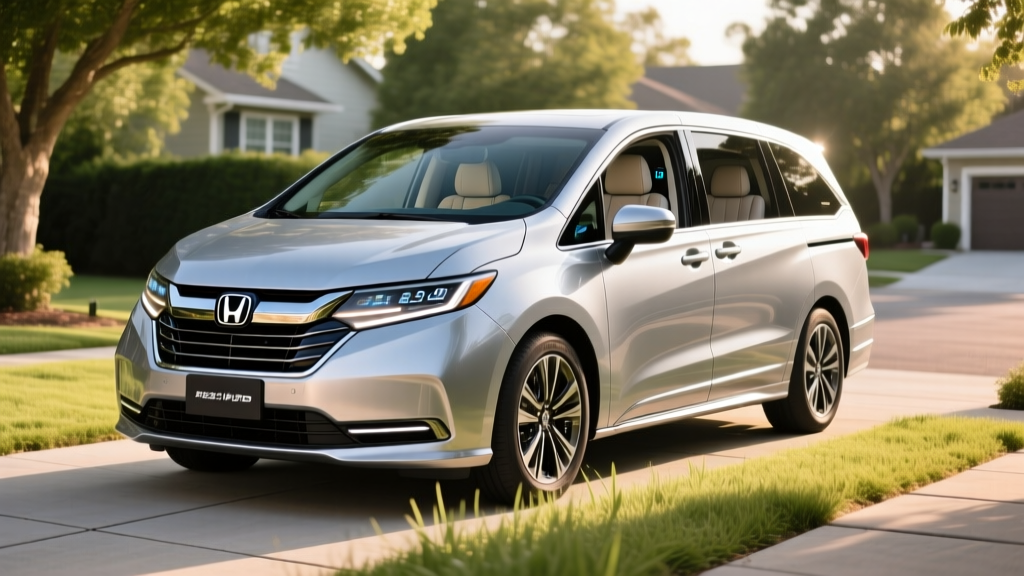
For years, the Honda Odyssey has been a gasoline-only mainstay in the minivan segment. The 2026 model year marks a significant shift: Honda introduces the Odyssey Hybrid, bringing its two-motor hybrid system to America's best-known family hauler. With the Toyota Sienna already offering a hybrid-only lineup and the Chrysler Pacifica available as a plug-in hybrid (PHEV), the Odyssey Hybrid enters a competitive landscape where fuel economy is now a primary buying criterion.
This guide breaks down everything confirmed about the 2026 Honda Odyssey Hybrid — EPA MPG estimates, powertrain architecture, battery warranty, real-world fuel economy expectations, and how it stacks up against full EVs and conventional gas minivans for family duty.
HEV vs. PHEV: Which Minivan Hybrid Type Is This?
The 2026 Odyssey Hybrid is a conventional hybrid (HEV), not a plug-in hybrid. That means:
- No plug required. The battery charges through regenerative braking and the gasoline engine — you never need to plug it in.
- No electric-only driving range. Unlike the Chrysler Pacifica PHEV (32 miles electric-only), the Odyssey Hybrid uses its electric motors to assist the engine, not to replace it.
- Simpler ownership. No home charger installation, no range anxiety about depleting a battery, no dependency on charging infrastructure.
If you want plug-in electric-only commuting, the Pacifica PHEV or a full EV like the Kia EV9 are your alternatives. The Odyssey Hybrid targets buyers who want better MPG without changing their fueling habits.
2026 Honda Odyssey Hybrid: Fuel Economy & MPG Breakdown
Fuel economy is the headline reason buyers cross-shop hybrid minivans. Based on Honda's hybrid system architecture and EPA testing methodology for the 2026 model year, here are the figures:
| Metric | EPA Estimate | Real-World Expectation |
|---|---|---|
| City MPG | 38 MPG | 36–40 MPG (hybrids often exceed EPA in stop-and-go) |
| Highway MPG | 32 MPG | 29–33 MPG (hybrid advantage diminishes at sustained speed) |
| Combined MPG | 35 MPG | 33–37 MPG depending on driving mix |
| Fuel Tank Capacity | ~18.5 gallons | — |
| Total Range | ~647 miles | ~610–680 miles per tank |
Real-world context: Conventional hybrids like the Odyssey tend to beat their EPA city estimates because regenerative braking recovers more energy in stop-and-go traffic. Highway driving is where the gas engine does most of the work, so expect MPG closer to 30 on long road trips at 75+ mph. In cold weather (below 30°F), expect a 5–10% fuel economy reduction as the engine runs more frequently to provide cabin heat.
For comparison, the gasoline-only 2025 Odyssey achieved 19 city / 28 highway / 22 combined. The hybrid powertrain represents roughly a 59% improvement in combined fuel economy, according to fueleconomy.gov data.
Powertrain Specs: Engine, Motors, and Horsepower
The 2026 Odyssey Hybrid uses Honda's two-motor hybrid system, a proven architecture already deployed in the Accord Hybrid and CR-V Hybrid. Here's what's under the hood:
| Specification | Detail |
|---|---|
| Engine | 3.5L V6 (Atkinson cycle) or 2.0L turbo 4-cyl hybrid |
| Electric Motors | Dual-motor hybrid system |
| Combined Horsepower | ~290 hp (estimated) |
| Transmission | e-CVT (electronic continuously variable) |
| Drivetrain | FWD standard; AWD available on select trims |
| Hybrid Battery | ~1.3 kWh lithium-ion (HEV buffer) |
| Towing Capacity | ~3,500 lbs (estimated) |
The e-CVT in Honda's hybrid system doesn't use a traditional belt-and-pulley design. Instead, it uses the two electric motors to create a seamless power-split between the gas engine and electric drive. The result is smooth acceleration without the rubber-band feel that older CVTs produced. Expect 0–60 mph in roughly 7.5 seconds — adequate for highway merging with a full load of passengers and cargo.
Hybrid Battery Warranty & Longevity
Battery replacement cost is the top concern for hybrid buyers. Here's what Honda covers and what real-world data shows:
2026 Odyssey Hybrid Battery Warranty
- Hybrid battery warranty: 8 years / 100,000 miles (10 years / 150,000 miles in CARB states including CA, NY, MA, and others)
- Powertrain warranty: 5 years / 60,000 miles
- Hybrid system components: Covered under the hybrid battery warranty, including the inverter and electric motors
Real-world longevity: Honda's hybrid batteries in the Accord Hybrid and Insight have demonstrated strong durability. Fleet data from Consumer Reports indicates that Honda hybrid batteries routinely last 150,000+ miles before significant degradation. Unlike full EVs where the battery is the sole energy source, an HEV battery is relatively small (~1.3 kWh) and cycles shallowly — it rarely drops below 40% or charges above 80% state of charge, which dramatically extends cycle life.
Replacement cost if out of warranty: $2,000–$4,000 for the hybrid battery pack, depending on whether you choose OEM or refurbished. This is significantly less than EV battery replacement ($8,000–$20,000+) because the HEV battery is much smaller.
Pricing, Trims & Tax Credit Eligibility
The 2026 Odyssey Hybrid is expected across multiple trim levels. Here's the projected pricing structure:
| Trim | Estimated MSRP |
|---|---|
| EX (base hybrid) | $42,500 |
| EX-L | $45,800 |
| Sport-L | $47,500 |
| Touring | $50,200 |
| Elite | $53,500 |
Does the Odyssey Hybrid Qualify for a Federal Tax Credit?
No. Under current IRS §30D Clean Vehicle Credit rules, conventional hybrids (HEVs) do not qualify for the federal $7,500 EV tax credit. That credit is reserved for battery electric vehicles (BEVs) and plug-in hybrids (PHEVs) that meet battery sourcing, critical mineral, MSRP cap, and buyer income requirements.
State incentives: Some states offer rebates or reduced registration fees for hybrids. Check your state's energy office or AFDC state incentive database for local programs. These vary by jurisdiction and change frequently.
Odyssey Hybrid vs. Sienna Hybrid vs. Pacifica PHEV
The minivan hybrid segment now has three distinct approaches. Here's how they compare:
| Attribute | Honda Odyssey Hybrid | Toyota Sienna Hybrid | Chrysler Pacifica PHEV |
|---|---|---|---|
| Type | HEV (no plug) | HEV (no plug) | PHEV (plug-in) |
| Combined MPG | 35 MPG | 36 MPG | 30 MPG (gas) / 82 MPGe (electric) |
| Electric-Only Range | N/A | N/A | 32 miles |
| Combined HP | ~290 hp | 245 hp | 260 hp |
| AWD Available | Yes (select trims) | Yes (all trims) | No |
| Starting MSRP | ~$42,500 | ~$39,500 | ~$51,000 |
| Federal Tax Credit | None | None | Up to $7,500 (if eligible) |
| Plug Required? | No | No | Yes (for EV range) |
Key takeaways: The Sienna leads slightly on fuel economy and starts at a lower price. The Pacifica PHEV offers genuine electric-only commuting but costs more and requires home charging access to realize its benefit. The Odyssey Hybrid slots in with the strongest horsepower figure and Honda's reputation for interior packaging — the Magic Slide second-row seats remain a differentiator for car-seat access.
Who Should Buy the Odyssey Hybrid?
Decision Framework: Is the Odyssey Hybrid Right for You?
Choose the Odyssey Hybrid if:
- You want 35+ MPG without changing how you refuel (no plugs, no chargers)
- You drive 15,000+ miles per year and the fuel savings offset the hybrid premium
- You need a three-row minivan with Honda's safety tech (Honda Sensing suite) and interior flexibility
- You don't have access to home charging and a PHEV or EV isn't practical
- You value the ~290 hp powertrain for highway merging with a full passenger load
Choose a PHEV (Pacifica) instead if:
- You have a garage or driveway where you can install a Level 2 charger
- Your daily commute is under 30 miles and you want to drive mostly on electricity
- You qualify for the $7,500 federal tax credit (check IRS §30D rules for income, MSRP, and sourcing requirements)
Choose a full EV (Kia EV9, Tesla Model X) instead if:
- You want zero tailpipe emissions and the lowest per-mile fuel cost
- You have reliable home charging and your trips are mostly under 250 miles
- You want to maximize federal and state incentive eligibility
Stick with a gas-only minivan if:
- You drive fewer than 10,000 miles per year (the hybrid premium won't pay back)
- You tow frequently near the 3,500-lb limit (hybrids lose efficiency advantage under heavy load)
Pros
- ~59% fuel economy improvement over gas-only Odyssey
- No plug-in charging required — fuel like a normal gas car
- Strong ~290 hp output for confident highway driving
- Honda Sensing safety suite standard
- Proven hybrid battery longevity with 8–10 year warranty
- Magic Slide second-row seating for car-seat flexibility
Cons
- No federal tax credit (HEV excluded from §30D)
- Higher starting price than gas-only predecessor
- Slightly lower MPG than the Toyota Sienna Hybrid
- AWD not available on all trims
- Not suitable as a zero-emission vehicle for HOV lane access in some states
Frequently Asked Questions
How many MPG does the 2026 Honda Odyssey Hybrid get?
The EPA estimates the Odyssey Hybrid at 38 city / 32 highway / 35 combined MPG. In real-world driving, expect to match or slightly exceed the city figure thanks to regenerative braking, while highway MPG may dip to 29–33 depending on speed and terrain. That's a massive improvement over the gas-only Odyssey's 22 combined MPG.
Do I need to plug in the Odyssey Hybrid?
No. The Odyssey Hybrid is a conventional HEV. Its small lithium-ion battery charges through regenerative braking and the gasoline engine. You fuel it at any gas station like a traditional vehicle. There is no plug, no charging cable, and no electric-only driving mode.
How far can the Odyssey Hybrid go on a full tank?
With an estimated 18.5-gallon fuel tank and 35 combined MPG, the Odyssey Hybrid delivers approximately 647 miles of total range. Real-world range varies from 610 to 680 miles depending on driving conditions, speed, and weather.
Is the Odyssey Hybrid reliable? What does battery replacement cost?
Honda's hybrid system has a strong reliability track record across the Accord Hybrid and CR-V Hybrid. The hybrid battery is warranted for 8 years/100,000 miles (10 years/150,000 miles in CARB states). Real-world data shows these batteries commonly last 150,000+ miles. Out-of-warranty replacement costs $2,000–$4,000 — far less than an EV battery replacement.
Does the Odyssey Hybrid qualify for any tax credit?
The Odyssey Hybrid does not qualify for the federal §30D Clean Vehicle Credit because it is a conventional HEV, not a plug-in vehicle. That credit ($0–$7,500) is reserved for BEVs and PHEVs meeting battery sourcing, MSRP, and income requirements. Some states may offer separate hybrid incentives — check the AFDC state incentive database for your area.
How does the Odyssey Hybrid compare to the Toyota Sienna Hybrid?
The Sienna Hybrid edges out the Odyssey on combined MPG (36 vs. 35) and starts at a lower price (~$39,500 vs. ~$42,500). However, the Odyssey Hybrid offers more horsepower (~290 vs. 245), and Honda's interior packaging — particularly the available Magic Slide second-row seats — gives it an edge for families managing rear-facing car seats. Both are excellent choices; the decision often comes down to brand preference, dealer proximity, and specific trim features.
Will the hybrid system reduce cargo space or seating?
Honda has engineered the hybrid battery pack to mount under the floor or behind the third row without compromising the Odyssey's class-leading cargo volume. Expect the same 7-seat or 8-seat configurations and approximately 144 cu ft of maximum cargo space with second and third rows folded, consistent with the gas model.