Quick Verdict: The Honda Insight 2010 Hybrid in 2026
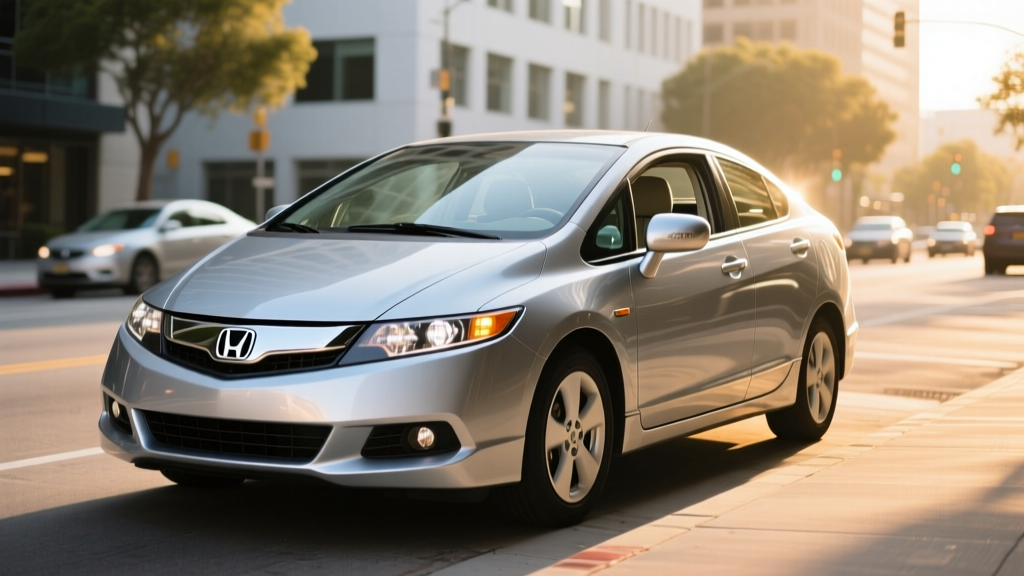
The Honda Insight 2010 hybrid occupies a specific niche in today's used-car market: an ultra-affordable, lightweight, conventional hybrid (HEV) that prioritizes city fuel economy above all else. Originally launched as a direct competitor to the Toyota Prius, the second-generation Insight uses Honda's Integrated Motor Assist (IMA) system — a mild-hybrid architecture that pairs a small electric motor with a 1.3L gasoline engine. In 2026, this car is best understood as a budget commuter for buyers who want hybrid efficiency without EV charging infrastructure, plug-in complexity, or a five-figure price tag.
Let's be direct about what the Insight is and isn't. It is not a plug-in hybrid (PHEV) — you never plug it in, and it has no meaningful electric-only driving range. It is a conventional self-charging hybrid that recovers energy through regenerative braking and assists the gas engine during acceleration. If you're cross-shopping modern PHEVs or full EVs, this car operates on an entirely different principle.
Conventional Hybrid (HEV) vs. Plug-In Hybrid (PHEV) — Where the Insight Fits
| Feature | Honda Insight 2010 (HEV) | Modern PHEV (e.g., Toyota RAV4 Prime) | Full EV (e.g., Tesla Model 3) |
|---|---|---|---|
| Plug-in charging? | No — self-charging only | Yes — Level 1/2 charging | Yes — Level 1/2/DC fast |
| Electric-only range | None (motor assists engine only) | 25–42 miles typical | 250–360+ miles |
| Battery size | 0.6 kWh (NiMH) | 13–22 kWh (Li-ion) | 50–100 kWh (Li-ion) |
| Fuel required? | Yes — regular unleaded | Yes — regular or premium | No |
| Tailpipe emissions | Low, not zero | Low when charged, higher when not | Zero at tailpipe |
The 2010 Insight's 0.6 kWh nickel-metal hydride (NiMH) battery is roughly 1/30th the size of a modern PHEV battery. It exists to smooth engine operation and recapture braking energy — not to drive the car on electricity alone.
Fuel Economy: EPA Ratings vs. Real-World MPG
The headline number for the 2010 Honda Insight is its fuel efficiency. According to fueleconomy.gov, the EPA rates the 2010 Insight at:
| Driving Cycle | EPA MPG | Real-World Expectation |
|---|---|---|
| City | 40 MPG | 42–48 MPG (hybrids often exceed EPA city) |
| Highway | 43 MPG | 38–42 MPG (aero drag and A/C load) |
| Combined | 41 MPG | 39–45 MPG depending on driving mix |
Why real-world city MPG often beats the sticker: Conventional hybrids like the Insight thrive in stop-and-go traffic. Every brake application regenerates energy into the battery, and the electric motor handles low-speed crawling where gasoline engines are least efficient. Owners who drive predominantly in urban environments routinely report 44–48 MPG in warm weather. Highway driving, by contrast, offers fewer regeneration opportunities and higher aerodynamic drag, which is why real-world highway numbers tend to fall slightly below the EPA estimate.
Cold-weather impact: Expect a 5–10% drop in fuel economy during winter months. The gasoline engine runs longer to maintain cabin heat and battery temperature, and winter fuel blends carry slightly less energy per gallon. Northern-climate owners typically see 36–40 MPG combined from December through February.
Powertrain: Honda's IMA System Explained
The 2010 Insight uses Honda's fifth-generation Integrated Motor Assist (IMA) — a parallel hybrid system fundamentally different from Toyota's power-split Hybrid Synergy Drive. Here's what's under the hood:
| Specification | Detail |
|---|---|
| Engine | 1.3L i-VTEC inline-4 (SOHC, 8-valve) |
| Engine output | 88 hp @ 5,800 rpm / 88 lb-ft @ 1,000–3,500 rpm |
| Electric motor | 10 kW (13 hp) / 58 lb-ft, integrated between engine and transmission |
| Combined system output | 98 hp @ 5,800 rpm / 123 lb-ft @ 1,000–1,500 rpm |
| Transmission | Continuously Variable Transmission (CVT) |
| Battery | 0.6 kWh NiMH (nickel-metal hydride), 11 modules |
| Drivetrain | Front-wheel drive |
| 0–60 mph | ~10.5 seconds |
| Curb weight | ~2,735 lbs |
| Fuel tank | 10.6 gallons |
| Total driving range | ~430 miles (at combined EPA) |
How IMA differs from Toyota's system: Honda's IMA places a thin electric motor directly on the engine's crankshaft. The motor cannot drive the car independently at meaningful speeds — it only assists the gasoline engine during acceleration and acts as a generator during braking. Toyota's system, by contrast, can drive the vehicle on electric power alone at low speeds. The result is that the Insight feels more like a conventional gas car with a fuel-economy boost, while the Prius leverages electric torque more noticeably in city driving.
Performance reality: With 98 combined horsepower pushing 2,735 pounds, the Insight is not quick. The 10.5-second 0–60 time means highway merging requires planning, and steep grades will generate engine noise as the CVT holds high RPMs. This car rewards patience, not aggression.
Hybrid Battery: Lifespan, Warranty, and Replacement Cost
2010 Insight Hybrid Battery — Key Facts
- Original warranty: 8 years / 80,000 miles (10 years / 150,000 miles in CARB states including CA, NY, MA, and others)
- Chemistry: Nickel-Metal Hydride (NiMH) — not lithium-ion
- Capacity: 0.6 kWh nominal
- Expected lifespan: 10–15 years / 150,000–200,000 miles with proper use
- Current status (2026): Most 2010 Insights are past original warranty — budget for potential replacement
The 2010 Insight's NiMH battery is now 16 years old. Honda's original hybrid battery warranty has expired for the vast majority of these vehicles on the road. This is the single most important ownership consideration for anyone shopping a 2010 Insight today.
Signs of battery degradation: As the NiMH pack ages, you'll notice reduced assist during acceleration, more frequent engine cycling, lower regenerative braking capture, and ultimately a drop in fuel economy — often from the low 40s down into the mid-30s. The IMA warning light on the dashboard signals that the system has detected a battery fault.
Replacement cost breakdown:
- New OEM Honda battery pack: $2,000–$3,000 (parts only, increasingly scarce)
- Refurbished/remanufactured pack: $1,000–$1,800 (most common choice for a car of this age)
- Aftermarket NiMH replacement (e.g., BumbleBee Batteries): $1,200–$1,600 installed
- DIY individual cell replacement: $200–$400 in cells, but requires technical skill and carries safety risk
- Labor (dealer or hybrid specialist): $300–$600
Is it worth replacing? A 2010 Insight in good condition trades for $3,500–$6,000 in the 2026 used market. A $1,500 battery replacement represents 25–40% of the car's value. For owners who plan to keep the car for several more years of commuting, the math still works — you're spending $1,500 to restore 41+ MPG efficiency on a car that costs virtually nothing else to run. For buyers evaluating a pre-purchase inspection, a confirmed battery health check or recent replacement is a significant value-add.
Pricing, Tax Credits, and Ownership Economics
Original MSRP (2010): $19,800 (base LX) to $23,100 (EX with navigation)
2026 used market price: $3,500–$6,000 depending on mileage, condition, and battery health
Federal tax credit status: The Honda Insight 2010 hybrid does not qualify for the current IRS §30D clean vehicle tax credit. That credit applies exclusively to new plug-in electric vehicles and fuel-cell vehicles meeting battery-sourcing, critical-mineral, MSRP, and buyer-income requirements. Conventional hybrids (HEVs) like the Insight have not qualified for any federal purchase incentive since the original Hybrid Vehicle Tax Credit expired for Honda in 2008. Some states offer minor used-vehicle rebates or emissions-reduction incentives — check your state's energy office for current programs.
Total cost of ownership (annual estimate for a 2010 Insight):
- Fuel: ~$1,050/year at 12,000 miles, 41 MPG combined, $3.60/gallon
- Insurance: ~$800–$1,100/year (low-value vehicle, liability-focused policies)
- Maintenance: ~$400–$600/year (standard Honda reliability, CVT fluid, brakes last longer due to regen)
- Registration/taxes: ~$100–$300/year (varies by state)
- Total annual operating cost: ~$2,350–$3,050
Compare this to a 2026 compact gas car averaging 30 MPG combined: fuel alone would cost ~$1,440/year. The Insight saves roughly $400–$600 annually in fuel, which adds up over a multi-year ownership period — enough to offset a battery replacement.
Reliability and Common Issues
Honda's reputation for reliability extends to the Insight, but the IMA system has known quirks that buyers should understand. Based on owner reports and NHTSA data:
Common issues:
- IMA battery degradation: The most frequent and costly issue, as detailed above. NiMH cells lose capacity with age and heat exposure.
- 12V auxiliary battery drain: The Insight's small 12V battery can discharge if the car sits for extended periods, since the IMA system draws standby power. A dead 12V battery will prevent the car from starting, even though the hybrid pack may be fine.
- CVT shudder: Some owners report a slight shudder during low-speed acceleration. Often resolved with CVT fluid replacement (Honda HMMF fluid, every 30,000–60,000 miles).
- A/C compressor cycling: The electric A/C compressor draws from the hybrid battery. In hot weather, aggressive A/C use can reduce fuel economy by 3–5 MPG.
- Brake actuator recalls: Honda issued recalls for certain 2010–2011 Insight models related to the brake system. Verify recall completion via NHTSA VIN lookup.
What holds up well: The 1.3L engine is understressed and routinely reaches 200,000+ miles with basic maintenance. The CVT, when properly serviced, is durable. Suspension, interior, and electronics are typical Honda quality from this era — functional and long-lasting if not exciting.
Who Should Buy the 2010 Insight vs. a Modern Hybrid or EV?
Choose the 2010 Insight If:
- Your budget is under $6,000 and you need a reliable daily commuter
- You drive primarily in city/stop-and-go traffic where hybrids shine
- You have no access to home or workplace charging (rules out EVs and PHEVs)
- You want the lowest possible fuel cost without any plug-in infrastructure
- You plan to drive the car 3–5 more years and accept potential battery replacement
Look at a Modern Hybrid, PHEV, or EV If:
- You want modern safety features (AEB, lane-keeping, blind-spot monitoring — absent on the 2010 Insight)
- You need more power, cargo space, or passenger room
- You have home charging access and could benefit from a PHEV's 30+ mile electric range
- You want a new-vehicle warranty and zero battery-degradation risk
- You qualify for the §30D tax credit (up to $7,500 for new EVs/PHEVs meeting requirements)
Decision Framework
Choose the 2010 Insight if you're a budget-conscious urban commuter with no charging access, you accept a 16-year-old vehicle's limitations, and your priority is minimizing fuel spend per mile.
Choose a modern PHEV (e.g., Toyota Prius Prime, Hyundai Tucson PHEV) if you have home Level 2 charging, want 30–40 miles of electric-only commuting with gas-engine backup for road trips, and value modern safety tech.
Choose a full EV (e.g., Chevrolet Equinox EV, Tesla Model 3) if you have reliable charging access, want zero tailpipe emissions, minimal maintenance, and qualify for federal/state EV incentives that bring the effective price closer to a hybrid.
Frequently Asked Questions
How many MPG does the 2010 Honda Insight hybrid get?
The EPA rates the 2010 Insight at 40 city / 43 highway / 41 combined MPG. In real-world city driving, many owners achieve 44–48 MPG thanks to regenerative braking. Highway driving typically yields 38–42 MPG. Cold weather reduces economy by 5–10%.
Does the 2010 Honda Insight have electric-only range?
No. The Insight is a conventional hybrid (HEV), not a plug-in hybrid. Its 0.6 kWh battery and 13-hp electric motor exist only to assist the gasoline engine and recapture braking energy. The car cannot drive on electric power alone at any meaningful speed. If electric-only driving is a priority, look at a PHEV like the Toyota Prius Prime (44 miles electric) or a full EV.
Is the 2010 Honda Insight hybrid reliable?
The mechanical components (engine, CVT, suspension) are generally reliable with proper maintenance. The primary risk is hybrid battery degradation — at 16 years old, most original NiMH packs are near end-of-life or have already been replaced. Budget $1,200–$2,500 for a battery replacement if the current pack hasn't been serviced. Verify IMA system health during a pre-purchase inspection.
What does it cost to replace the hybrid battery?
A refurbished or aftermarket NiMH replacement pack runs $1,200–$1,800 installed at a hybrid specialist. A new OEM Honda pack (if available) costs $2,000–$3,000. DIY cell-level repair is possible for $200–$400 but requires electrical knowledge and carries risk.
Does the 2010 Honda Insight qualify for any tax credit in 2026?
No. The federal §30D clean vehicle credit applies only to new plug-in electric and fuel-cell vehicles. Conventional hybrids like the Insight do not qualify. The original hybrid tax credit for Honda vehicles expired in 2008. Check your state energy office for any local used-vehicle or emissions-reduction incentives.
How does the Insight compare to a 2010 Toyota Prius?
The 2010 Prius (third generation) offers 50 MPG combined versus the Insight's 41 MPG, along with more interior space, a more sophisticated power-split hybrid system with genuine electric-only low-speed driving, and a larger 1.3 kWh NiMH battery. The Prius typically costs $1,000–$2,000 more on the used market. The Insight is lighter and slightly more engaging to drive, but the Prius is the more capable hybrid overall.
Can I convert the 2010 Insight to a plug-in hybrid?
There is no commercially supported PHEV conversion kit for the 2010 Insight. Aftermarket plug-in conversions exist for some vehicles but are expensive ($8,000–$15,000), void all remaining warranties, may not meet emissions certification requirements, and rarely provide a return on investment for a vehicle of this value. If you want plug-in capability, purchase a factory PHEV or EV instead.