Short Answer: Yes, Honda Makes Six Hybrids in 2026
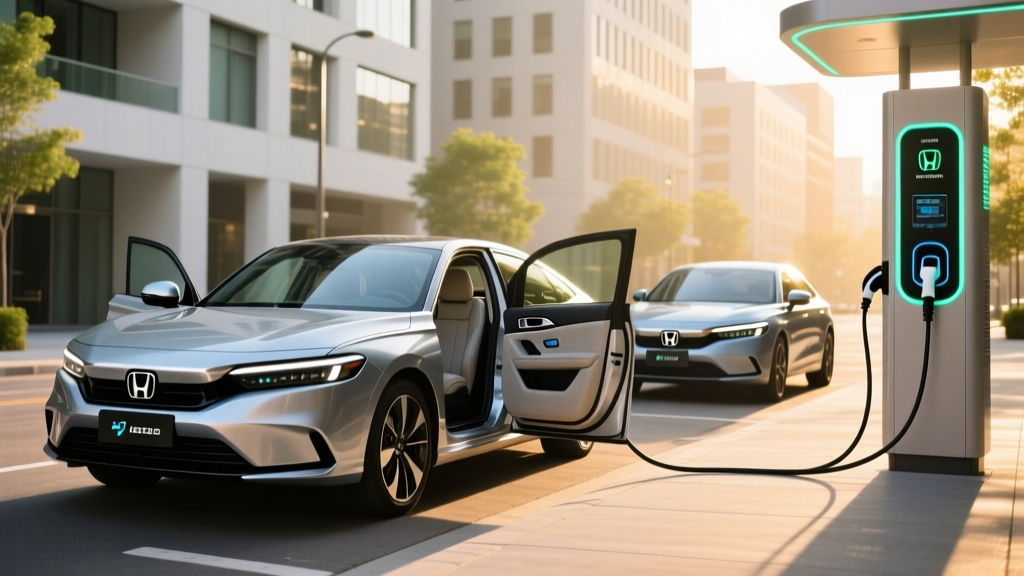
If you're asking "does Honda make a hybrid," the answer is a definitive yes. For the 2026 model year, Honda sells five conventional hybrids (HEVs) — the Accord Hybrid, CR-V Hybrid, Civic Hybrid, Civic Hatchback Hybrid, and the all-new Prelude Hybrid — plus one plug-in hybrid (PHEV), the CR-V e:FCEV hydrogen-electric model sold exclusively in California. There is no mainstream Honda PHEV you can plug in at home nationwide, which is a critical distinction if you're shopping for electric-only commuting.
Honda's hybrid strategy centers on its fourth-generation two-motor hybrid system, which pairs a 2.0-liter Atkinson-cycle four-cylinder engine with dual electric motors. Unlike Toyota's planetary-gear approach, Honda's system operates primarily in EV mode at low speeds, switches to hybrid mode for acceleration, and engages a direct mechanical clutch at highway cruising speeds. The result is strong city MPG that often beats EPA estimates in real-world stop-and-go driving.
HEV vs. PHEV: What's the Difference?
Conventional Hybrid (HEV): Charges its small battery (~1.1 kWh) through regenerative braking and the gas engine. You never plug it in. It improves fuel economy by 30-50% over a gas-only car.
Plug-in Hybrid (PHEV): Has a larger battery (typically 15-20 kWh) that you plug into a wall outlet or charger. It drives 25-45 miles on electricity alone before the gas engine kicks in. Honda does not currently sell a PHEV in the US market.
Honda Hybrid Lineup: MPG, Power, and Pricing
Here's how the 2026 Honda hybrid lineup breaks down by model, with EPA fuel economy, powertrain specs, and starting MSRP figures sourced from fueleconomy.gov and Honda's official specifications.
| Model | Combined HP | EPA City | EPA Hwy | EPA Combined | Battery | Starting MSRP |
|---|---|---|---|---|---|---|
| Accord Hybrid | 204 hp | 51 MPG | 44 MPG | 48 MPG | ~1.1 kWh Li-ion | $34,495 |
| CR-V Hybrid (AWD) | 204 hp | 40 MPG | 34 MPG | 37 MPG | ~1.1 kWh Li-ion | $36,695 |
| Civic Hybrid Sedan | 200 hp | 50 MPG | 47 MPG | 49 MPG | ~1.1 kWh Li-ion | $30,145 |
| Civic Hatchback Hybrid | 200 hp | 50 MPG | 45 MPG | 48 MPG | ~1.1 kWh Li-ion | $31,145 |
| Prelude Hybrid | 200 hp | 45 MPG | 38 MPG | 42 MPG | ~1.1 kWh Li-ion | $36,995 |
Real-World MPG: How Honda Hybrids Actually Perform
EPA estimates are measured on controlled dyno cycles. In real-world ownership, Honda hybrids tend to deliver their best numbers in city driving — exactly where the electric motors do the heavy lifting and regenerative braking recovers the most energy.
| Model | EPA Combined | Real-World City (Est.) | Real-World Highway (Est.) | Real-World Combined (Est.) |
|---|---|---|---|---|
| Accord Hybrid | 48 MPG | 50-54 MPG | 40-43 MPG | 45-48 MPG |
| CR-V Hybrid (AWD) | 37 MPG | 36-39 MPG | 32-34 MPG | 34-37 MPG |
| Civic Hybrid Sedan | 49 MPG | 52-56 MPG | 42-46 MPG | 46-50 MPG |
| Civic Hatchback Hybrid | 48 MPG | 50-54 MPG | 41-44 MPG | 45-48 MPG |
| Prelude Hybrid | 42 MPG | 43-46 MPG | 35-38 MPG | 39-42 MPG |
Why city MPG often exceeds EPA: Honda's hybrid system defaults to EV-mode propulsion below ~45 mph, using the gas engine only as a generator. Stop-and-go traffic triggers heavy regenerative braking, which recharges the battery. On the highway, the engine must work harder to maintain speed, and aerodynamic drag dominates. Expect highway numbers to fall 5-8 MPG below city figures — the opposite of a conventional gas car.
Cold-weather caveat: In sub-freezing temperatures, expect a 5-10% drop in MPG across the lineup. The engine runs more frequently to provide cabin heat and keep the battery in its optimal temperature range. This penalty is far smaller than the 20-35% range loss a full BEV experiences in winter cold.
Powertrain Deep Dive: Honda's Two-Motor Hybrid System
Honda's fourth-generation hybrid powertrain is used across the entire lineup. Here's how it works mechanically:
- Engine: 2.0L Atkinson-cycle DOHC 4-cylinder, producing ~146 hp and 134 lb-ft of torque on its own
- Propulsion motor: ~181 hp / 247 lb-ft (peak electric output)
- Generator motor: Charges the battery and starts the engine
- Combined system output: 200-204 hp depending on model tuning
- Transmission: No traditional gearbox — uses an e-CVT with a lockup clutch for direct engine-to-wheel coupling at steady highway speeds
The Accord Hybrid and CR-V Hybrid use the higher-output 204 hp tune, while the Civic and Prelude use a slightly detuned 200 hp variant. All models feature standard regenerative braking with selectable levels via steering-wheel paddles, though none offer true one-pedal driving (the car will not come to a complete stop on regen alone).
Battery Warranty, Lifespan, and Replacement Cost
Honda Hybrid Battery Warranty
Coverage: 8 years / 100,000 miles (10 years / 150,000 miles in CARB states including CA, CO, CT, ME, MD, MA, NJ, NY, OR, RI, VT, WA)
What's covered: Defects and capacity loss below a functional threshold that triggers a check-engine light
Estimated replacement cost (out of warranty): $2,000 - $4,000 for the hybrid battery pack, plus $500-$1,000 labor
Honda's hybrid batteries are small (~1.1 kWh usable) and operate within a conservative state-of-charge window, which significantly reduces degradation stress. Unlike full EV batteries that cycle through 80-100% of their capacity daily, Honda's hybrid battery typically cycles between 40% and 80% SoC — a sweet spot that minimizes lithium-ion wear.
Real-world longevity data from earlier-generation Honda hybrids (2014-2020 Accord Hybrid, Insight) suggests these batteries routinely last 150,000-200,000 miles before any significant capacity loss. Failure rates within the warranty period are low, and Honda's hybrid system has earned strong reliability ratings from both Consumer Reports and J.D. Power across the lineup.
If you do face an out-of-warranty replacement, the cost is modest compared to a full EV battery. The ~1.1 kWh pack in a Honda hybrid contains far fewer cells than a 60-100 kWh BEV battery, keeping replacement costs in the $2,000-$4,000 range rather than the $10,000-$20,000+ range of a full EV battery swap.
Tax Credits and Incentives: What Honda Hybrids Qualify For
This is where Honda hybrids differ significantly from plug-in hybrids and full EVs:
- Federal §30D Clean Vehicle Credit ($7,500): NOT eligible. Honda's HEVs have no plug and do not meet the minimum 4 kWh battery capacity requirement. Per IRS guidelines, only plug-in electric vehicles qualify.
- Federal Used Clean Vehicle Credit (§25E, up to $4,000): NOT eligible for the same reason — no plug-in capability.
- State incentives: Most state EV rebates and HOV lane access programs require plug-in capability. Honda HEVs generally do not qualify for state purchase incentives, though a handful of states have offered small hybrid rebates historically (check your state's energy office for current programs).
- Insurance discounts: Some insurers offer 5-10% discounts for hybrid vehicles — check with your provider.
Bottom line on incentives: If federal or state tax credits are a primary purchase driver, Honda's conventional hybrids won't deliver them. A PHEV like the Toyota RAV4 Prime (300 hp, 42 miles electric-only, eligible for partial credits depending on sourcing) or a full BEV like the Hyundai Ioniq 5 would qualify. Honda's hybrid advantage is the lower upfront price — no $7,500 credit needed when the car starts at $30,145 and gets 49 MPG.
Honda Hybrid vs. PHEV vs. Full EV: Which Fits You?
Choose a Honda Hybrid (HEV) If:
- You can't install a home charger (apartment, street parking, no garage)
- You want maximum MPG with zero behavioral change — just drive like normal
- Your budget is $30,000-$40,000 and you want strong value without relying on tax credits
- You drive 12,000+ miles per year, mostly city/suburban, and fuel savings matter
- You want Toyota-rivaling reliability with no range anxiety or charging planning
Choose a PHEV (Non-Honda) If:
- You can charge at home and want 25-45 miles of daily electric-only driving
- Your commute is under 40 miles round-trip (you'd rarely burn gas)
- You want a tax credit and HOV lane access in your state
- You take road trips and don't want to plan DC fast-charging stops
Choose a Full EV If:
- You have reliable home Level 2 charging
- You want the lowest per-mile "fuel" cost (~$0.04/mile vs. ~$0.08/mile for a 48 MPG hybrid at $3.50/gal)
- You qualify for the full $7,500 federal credit (income and MSRP caps apply)
- You drive under 300 miles between charging opportunities or have access to DC fast charging
Pros and Cons of Honda's Hybrid Lineup
Pros
- Class-leading city MPG (Civic Hybrid at 50/47/49 beats most competitors)
- No plug-in required — zero charging infrastructure needed
- Strong 200-204 hp output; not sluggish like older hybrids
- 10-year/150,000-mile battery warranty in CARB states
- Competitive pricing starting at $30,145 (Civic Hybrid)
- Available AWD on CR-V Hybrid for snow-belt buyers
- Proven reliability track record from Honda's 4th-gen hybrid system
Cons
- No PHEV option — zero electric-only miles
- No federal or state tax credit eligibility
- Highway MPG drops noticeably vs. city (40-43 real-world for Accord Hybrid)
- Small ~1.1 kWh battery limits regenerative braking capacity on long descents
- No one-pedal driving mode (car creeps at low speed)
- Hybrid trims carry a $1,000-$2,500 premium over gas-only equivalents
- Prelude Hybrid limited to 2-door coupe — impractical for families
Frequently Asked Questions
How many MPG does a Honda hybrid get?
The 2026 Civic Hybrid Sedan leads the lineup at 50 city / 47 highway / 49 combined MPG. The Accord Hybrid achieves 51/44/48 MPG. The CR-V Hybrid AWD rates at 40/34/37 MPG. In real-world city driving, expect the Civic and Accord to exceed their EPA numbers by 2-5 MPG thanks to Honda's EV-mode-biased hybrid system.
Does Honda make a plug-in hybrid?
Not for the US mainstream market. Honda discontinued the Clarity Plug-In Hybrid after the 2021 model year. For 2026, Honda offers the CR-V e:FCEV, a hydrogen fuel-cell vehicle available only in California. If you need a PHEV, look at the Toyota RAV4 Prime, Chrysler Pacifica Hybrid, or Hyundai Tucson PHEV.
Is the Honda hybrid battery reliable, and what does replacement cost?
Honda's hybrid batteries have a strong reliability record, typically lasting 150,000-200,000 miles. The warranty covers 8 years/100,000 miles (10 years/150,000 miles in CARB states). Out-of-warranty replacement runs $2,000-$4,000 for the battery pack plus $500-$1,000 labor — far less than a full EV battery replacement.
Does a Honda hybrid qualify for any tax credit?
No. Honda's conventional hybrids do not qualify for the federal §30D Clean Vehicle Credit or the used EV credit. These incentives require plug-in capability and a minimum battery capacity. Check with your state energy office for any local hybrid-specific rebates, but most state incentive programs also require plug-in vehicles.
Do I need to plug in a Honda hybrid?
No. Honda's 2026 hybrids are conventional (HEV), meaning the battery charges exclusively through regenerative braking and the gas engine. You fuel up at a gas station like any other car — there is no charging port and no plug-in requirement.
How does a Honda hybrid compare to a Toyota hybrid?
Honda and Toyota are the two strongest hybrid lineups in the market. The Honda Civic Hybrid (49 MPG combined) trades blows with the Toyota Corolla Hybrid (50 MPG combined). The CR-V Hybrid (37 MPG) competes closely with the RAV4 Hybrid (39 MPG). Honda's system favors electric-motor-dominant driving feel with stronger acceleration, while Toyota's system is slightly more efficient on the highway. Both brands offer excellent hybrid battery warranties and reliability.
Sources: fueleconomy.gov (EPA estimates), Honda Official Specifications, IRS Clean Vehicle Credits. All specifications reflect 2026 model year data as published. Tax credit eligibility rules are subject to change — consult a tax professional before purchasing.