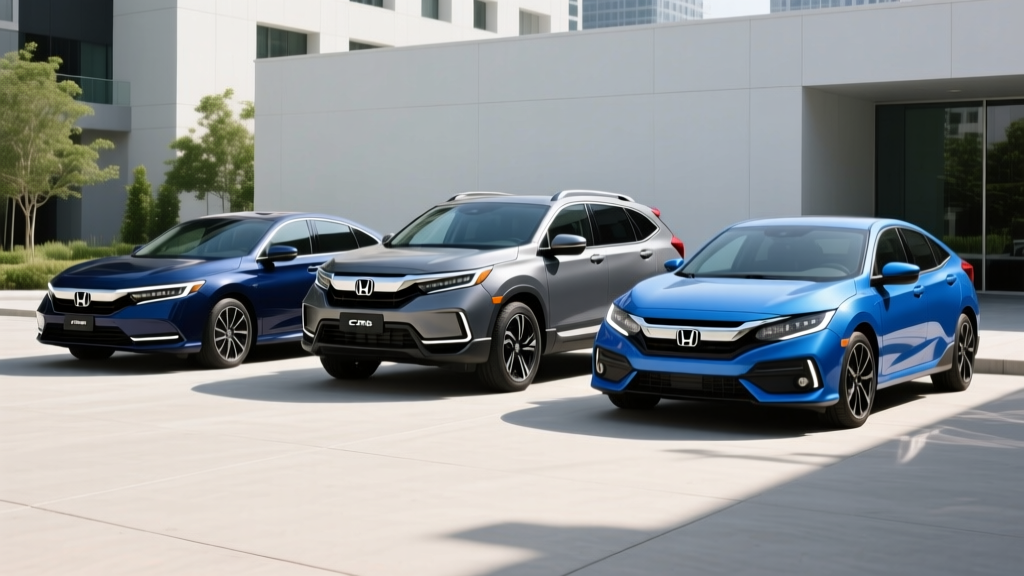
If you're researching a Honda hybrid in 2026, you're looking at one of the broadest electrified lineups from any mainstream automaker — without a single plug in sight. Honda's current hybrid strategy centers on conventional hybrid electric vehicles (HEVs) across its best-selling nameplates: the Accord, CR-V, and Civic. Unlike plug-in hybrids (PHEVs) from competitors like Toyota's RAV4 Prime, Honda's hybrids never need to be plugged in. They generate and recapture all their own electricity, delivering substantial fuel savings with zero change to your daily routine.
This guide breaks down every 2026 Honda hybrid model with exact EPA fuel economy figures, real-world MPG expectations, powertrain specs, pricing, battery warranty coverage, and a clear framework for deciding whether a Honda HEV, a competitor's PHEV, or a full battery-electric vehicle (BEV) is the right move for your situation.
HEV vs PHEV vs EV: Where Honda Hybrids Fit
Before diving into specific models, it's critical to understand what Honda's hybrids are — and aren't. Every Honda hybrid sold in 2026 is a conventional hybrid (HEV). This distinction matters because buyers frequently confuse HEVs with plug-in hybrids.
Conventional Hybrid (HEV) — Honda's Approach
- No plug required. The battery charges via the gasoline engine and regenerative braking.
- Battery size: Small — typically 1.0 to 1.5 kWh. It buffers energy, not stores miles of electric-only driving.
- Electric-only driving: Very limited, usually under 1 mile at low speeds. The electric motor assists the gas engine rather than replacing it.
- Fuel economy edge: 30–50% better MPG than a comparable gas-only model, especially in stop-and-go city traffic.
Plug-In Hybrid (PHEV) — What Honda Doesn't Currently Offer in the US
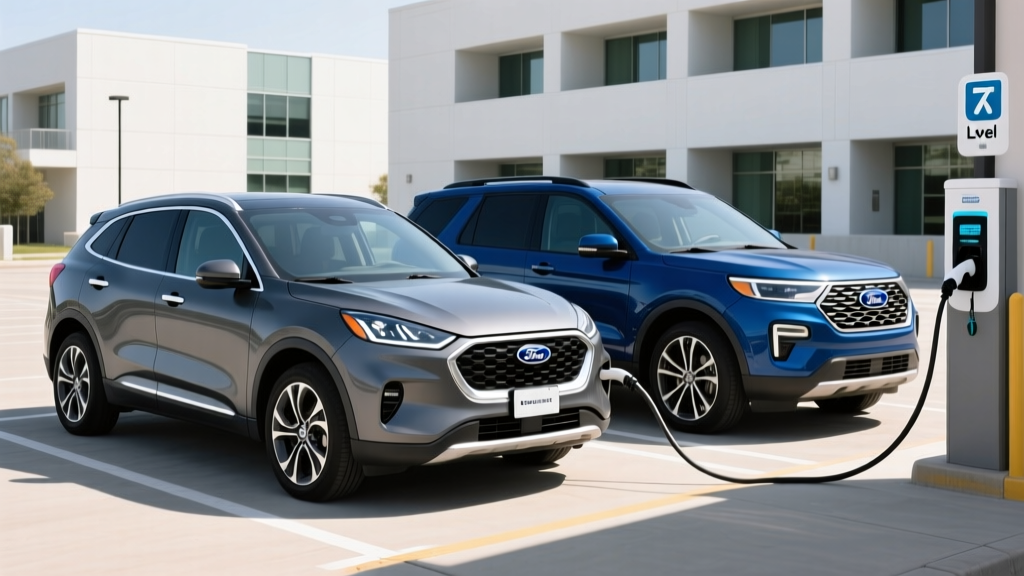
- Plugs in to a standard 120V outlet or Level 2 charger for 20–40 miles of electric-only range.
- Battery size: Larger — typically 13–20 kWh.
- Gas engine kicks in once battery depletes, functioning as a conventional hybrid.
- May qualify for a federal tax credit under IRS §30D if battery sourcing and MSRP/income caps are met.
Battery Electric Vehicle (BEV) — Honda's Prologue and Upcoming Models
- No gasoline engine. 100% electric, requiring home or public charging infrastructure.
- Battery size: 60–100+ kWh.
- Range: 250–320+ miles EPA depending on model.
- Eligible for up to $7,500 federal tax credit (subject to §30D sourcing, MSRP, and income rules).
Honda discontinued the Clarity Plug-In Hybrid after the 2021 model year and has not introduced a US-market PHEV successor as of 2026. If plug-in capability is a must-have, you'll need to look at competitors like the Toyota RAV4 Prime, Hyundai Tucson PHEV, or Jeep Wrangler 4xe.
2026 Honda Accord Hybrid: MPG, Powertrain & Pricing
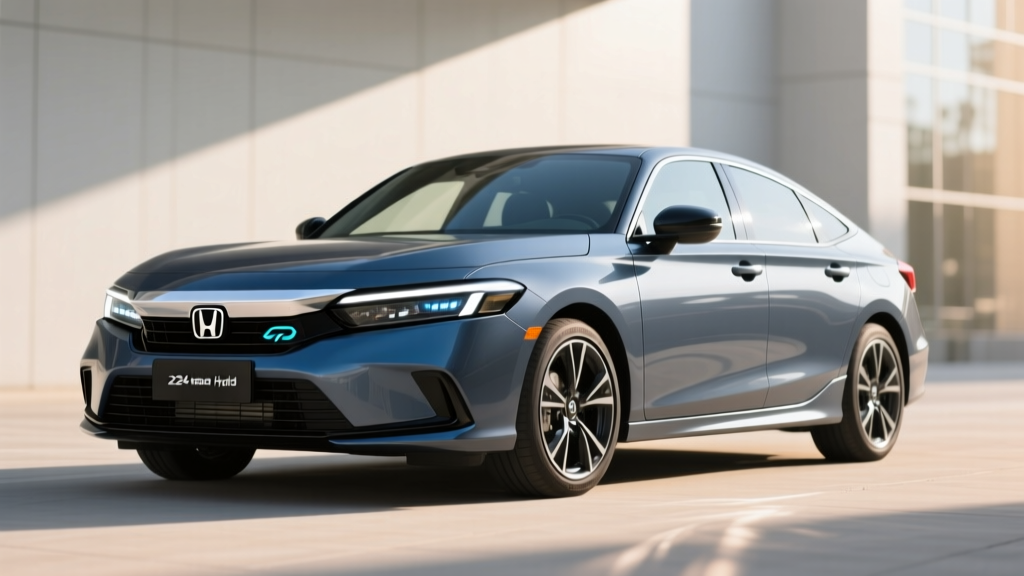
The Accord Hybrid remains Honda's most fuel-efficient sedan and one of the best-selling hybrid midsize cars in America. For 2026, it continues with Honda's two-motor hybrid system paired with a 2.0-liter Atkinson-cycle four-cylinder engine.
| Specification | Value |
|---|---|
| Combined Horsepower | 204 hp |
| Engine | 2.0L Atkinson-cycle 4-cylinder + 2 electric motors |
| EPA City MPG | 51 MPG |
| EPA Highway MPG | 44 MPG |
| EPA Combined MPG | 48 MPG |
| Fuel Tank Capacity | 12.8 gallons |
| Total Driving Range | ~614 miles (EPA combined) |
| 0–60 mph | ~7.2 seconds |
| Drivetrain | Front-wheel drive |
| Starting MSRP (Sport Hybrid) | $34,990 |
| Top Trim MSRP (Sport Touring Hybrid) | $40,890 |
Real-world MPG note: Honda's two-motor hybrid system excels in city driving, where the electric motor handles most low-speed propulsion and the gas engine acts primarily as a generator. Owners consistently report exceeding the EPA city figure of 51 MPG in moderate-temperature urban commuting. Highway fuel economy tends to land closer to the 44 MPG EPA sticker — or slightly below at sustained 75+ mph speeds. In cold weather (below 30°F), expect a 5–10% drop across the board as the engine runs more frequently for cabin heat.
2026 Honda CR-V Hybrid: MPG, Powertrain & Pricing
The CR-V Hybrid is Honda's best-selling electrified vehicle, accounting for roughly half of all CR-V sales. The 2026 model carries forward the fourth-generation two-motor hybrid system with a 2.0L engine, available in both front-wheel and all-wheel drive.
| Specification | FWD | AWD |
|---|---|---|
| Combined Horsepower | 204 hp | |
| EPA City MPG | 43 MPG | 40 MPG |
| EPA Highway MPG | 36 MPG | 34 MPG |
| EPA Combined MPG | 40 MPG | 37 MPG |
| Total Driving Range | ~560 miles | ~518 miles |
| 0–60 mph | ~7.8 seconds | |
| Starting MSRP (Sport Hybrid FWD) | $38,390 | |
| Top Trim MSRP (Sport Touring Hybrid AWD) | $44,890 | |
Real-world MPG note: The CR-V Hybrid's real-world fuel economy tracks closely with EPA estimates in mixed driving. City-heavy commuters in temperate climates often see 42–45 MPG combined with FWD. AWD models sacrifice roughly 3 MPG combined — a worthwhile trade for buyers in snow-belt states. Towing (maximum 1,000 lbs for the hybrid) will significantly reduce fuel economy, as will roof cargo boxes at highway speed.
2026 Honda Civic Hybrid: MPG, Powertrain & Pricing
Reintroduced for the 2025 model year after a long hiatus, the Civic Hybrid returns for 2026 as the most affordable entry point into Honda's hybrid lineup. It uses the same two-motor system as the Accord but tuned for the lighter Civic platform.
| Specification | Value |
|---|---|
| Combined Horsepower | 200 hp |
| Engine | 2.0L Atkinson-cycle 4-cylinder + 2 electric motors |
| EPA City MPG | 50 MPG |
| EPA Highway MPG | 47 MPG |
| EPA Combined MPG | 49 MPG |
| Total Driving Range | ~570 miles |
| 0–60 mph | ~6.8 seconds |
| Body Styles | Sedan |
| Starting MSRP (Sport Hybrid) | $30,490 |
| Top Trim MSRP (Sport Touring Hybrid) | $34,490 |
Real-world MPG note: The Civic Hybrid's lighter weight and smaller frontal area give it an edge in real-world highway efficiency over the Accord. Owners in mixed suburban/highway driving commonly report 47–52 MPG combined, with city-only commutes occasionally touching 55 MPG in warm weather. This makes it one of the most fuel-efficient non-plug-in vehicles available in 2026.
Honda Hybrid MPG Comparison Table
| Model | City MPG | Highway MPG | Combined MPG | Total Range | Starting MSRP |
|---|---|---|---|---|---|
| Civic Hybrid Sedan | 50 | 47 | 49 | ~570 mi | $30,490 |
| Accord Hybrid | 51 | 44 | 48 | ~614 mi | $34,990 |
| CR-V Hybrid FWD | 43 | 36 | 40 | ~560 mi | $38,390 |
| CR-V Hybrid AWD | 40 | 34 | 37 | ~518 mi | $40,390 |
Data sourced from fueleconomy.gov (EPA estimates). Real-world results vary with driving style, temperature, terrain, and vehicle load.
Battery Warranty, Lifespan & Replacement Cost
Battery longevity is the top concern among hybrid buyers, and Honda addresses it with robust warranty coverage. Every 2026 Honda hybrid includes:
Honda Hybrid Battery Warranty
- Coverage: 8 years / 100,000 miles (10 years / 150,000 miles in CARB states including CA, CO, CT, MA, ME, MD, NJ, NY, OR, RI, VT, WA)
- What's covered: Hybrid battery pack and all hybrid-system components (power control unit, electric motors, DC-DC converter)
- Capacity threshold: Honda warrants against defects and abnormal degradation; there is no published minimum capacity-retention percentage (unlike BEV warranties that guarantee 70% SoH)
- Replacement cost out of warranty: Approximately $2,000–$4,000 for the battery pack, depending on model and labor rates — a fraction of BEV battery replacement costs
Real-world lifespan data: Honda's hybrid battery packs use proven nickel-metal hydride (NiMH) and lithium-ion chemistry in relatively small capacities that are rarely deeply cycled. Because the system never fully depletes or fully charges the battery (maintaining a roughly 40–80% state of charge window), degradation is minimal. Data from long-term Honda hybrid owners and fleet operators shows battery packs routinely lasting 150,000–200,000+ miles before any capacity concern arises. Outright failure before 100,000 miles is rare.
The hybrid system's electric motors and power electronics carry the same warranty coverage. The gasoline engine is covered under Honda's standard 5-year/60,000-mile powertrain warranty.
Tax Credits and Incentives for Honda Hybrids
This is where Honda's HEV-only strategy has a cost disadvantage versus PHEVs and BEVs:
- Federal §30D Clean Vehicle Credit: Conventional hybrids (HEVs) do not qualify for the federal EV tax credit. The §30D credit applies only to plug-in vehicles (PHEVs and BEVs) meeting battery-capacity, sourcing, MSRP, and buyer-income requirements. Since Honda's hybrids cannot be plugged in, they are ineligible regardless of price.
- State incentives: A small number of states offer modest rebates or HOV-lane access for conventional hybrids, but these programs are increasingly focused on plug-in vehicles. Check your state's energy office or department of environmental quality for current programs.
- Insurance discounts: Some insurers (Geico, Liberty Mutual) offer hybrid/electric vehicle discounts of 5–10%. Check with your provider.
- Total-cost-of-ownership advantage: Despite no tax credit, Honda hybrids often beat gas-only competitors on 5-year ownership cost through fuel savings alone. At $3.30/gallon gas and 12,000 miles/year, an Accord Hybrid (48 MPG combined) saves roughly $1,100/year versus a 28 MPG gas midsize sedan — approximately $5,500 over five years.
For current federal incentive rules, refer to the IRS Clean Vehicle Credits page.
Honda Hybrid vs PHEV vs BEV: Decision Framework
Choose a Honda Hybrid (HEV) if:
- You don't have access to home or workplace charging (apartment, street parking, no garage)
- You want maximum fuel savings with zero lifestyle change — no plugging in, no route planning
- You regularly take long road trips and don't want to plan around charging stops
- Your budget is $30,000–$45,000 and you want proven reliability with low maintenance costs
- You live in a region with extreme cold, where BEV range loss is a genuine concern
Choose a Plug-In Hybrid (PHEV) if:
- You can install a Level 2 home charger and most daily trips are under 30 miles
- You want electric-only commuting but also need gas-engine range for weekend trips
- You want to qualify for the federal §30D tax credit (up to $7,500, subject to eligibility)
- You're willing to pay a $3,000–$7,000 price premium over a conventional hybrid
Choose a Battery Electric Vehicle (BEV) if:
- You have reliable home Level 2 charging and want the lowest per-mile fuel cost
- Your daily driving is predictable and within the vehicle's range
- You want zero tailpipe emissions and minimal maintenance (no oil changes, fewer brake replacements)
- You qualify for the federal tax credit and your state offers additional EV incentives
Pros and Cons: 2026 Honda Hybrid Lineup
Pros
- Best-in-class city MPG — Accord Hybrid hits 51 EPA city, Civic Hybrid 50 city
- No plug-in required — zero infrastructure investment or behavior change
- Strong 8-year/100,000-mile hybrid battery warranty (10yr/150k in CARB states)
- Proven two-motor hybrid system with excellent long-term reliability data
- Competitive pricing starting at $30,490 for the Civic Hybrid
- 600+ mile total range on the Accord Hybrid — fewer fuel stops on road trips
- Honda Sensing ADAS suite standard on all trims
Cons
- No PHEV option — can't drive on electric-only power for daily commutes
- No federal tax credit eligibility (HEVs excluded from §30D)
- Highway MPG advantage over gas models is smaller than city MPG advantage
- AWD only available on CR-V Hybrid (not Accord or Civic)
- No DC fast charging capability (not applicable — no plug)
- Engine drone under hard acceleration (CVT-like behavior from the e-CVT system)
Frequently Asked Questions
How many MPG does a Honda hybrid get?
The 2026 Honda hybrid lineup ranges from 37 MPG combined (CR-V Hybrid AWD) to 49 MPG combined (Civic Hybrid Sedan). The Accord Hybrid achieves 48 MPG combined with a standout 51 MPG city rating. Real-world results frequently exceed EPA city estimates in moderate-temperature stop-and-go driving, while highway mileage tends to match or fall slightly below the sticker.
Do Honda hybrids need to be plugged in?
No. All 2026 Honda hybrids are conventional hybrids (HEVs). They charge their own batteries through regenerative braking and the gasoline engine. You fuel them like any other car — at a gas station. Honda does not currently sell a plug-in hybrid (PHEV) in the US market.
How far can a Honda hybrid drive on electric only?
Less than one mile, at very low speeds. Honda's two-motor system uses the electric motor to assist the gasoline engine and to propel the car at low speeds in stop-and-go traffic, but the small battery (roughly 1.0–1.5 kWh) does not store enough energy for meaningful electric-only range. If electric-only commuting is a priority, you need a PHEV or BEV.
Is the Honda hybrid battery reliable and what does replacement cost?
Honda's hybrid battery packs have an excellent reliability record, routinely lasting 150,000–200,000+ miles. They're covered by an 8-year/100,000-mile warranty (10 years/150,000 miles in CARB states). Out-of-pocket replacement, should it ever be needed, typically costs $2,000–$4,000 — significantly less than a BEV battery replacement.
Does the Honda hybrid qualify for any tax credit?
No. The federal §30D Clean Vehicle Credit applies only to plug-in electric vehicles (PHEVs and BEVs). Conventional hybrids like Honda's lineup are not eligible because they lack plug-in capability and have battery capacities below the 7 kWh threshold. Some states may offer minor hybrid incentives — check your state energy office for current programs.
How does Honda's hybrid system compare to Toyota's?
Honda's two-motor system and Toyota's Hybrid Synergy Drive are fundamentally different architectures that achieve similar results. Honda's system uses one motor primarily as a generator and one as a drive motor, with the gas engine connecting directly to the wheels only at highway cruising speeds. Toyota's system uses a planetary gearset to blend engine and motor power continuously. Both are proven and reliable. Honda's system tends to deliver slightly stronger acceleration feel (the electric motor provides most of the thrust), while Toyota's system is marginally more efficient in some highway scenarios. According to EPA data, the Accord Hybrid's 48 MPG combined slightly edges the Toyota Camry Hybrid's 44–52 MPG depending on trim.
Can I tow with a Honda hybrid?
The CR-V Hybrid has a maximum towing capacity of 1,000 pounds — adequate for a small utility trailer or a pair of dirt bikes but not for a boat or camper. The Accord and Civic Hybrid are not rated for towing. If you need serious towing capacity with hybrid efficiency, you'll need to look at body-on-frame hybrid trucks like the Ford F-150 PowerBoost or Toyota Tacoma i-FORCE MAX.