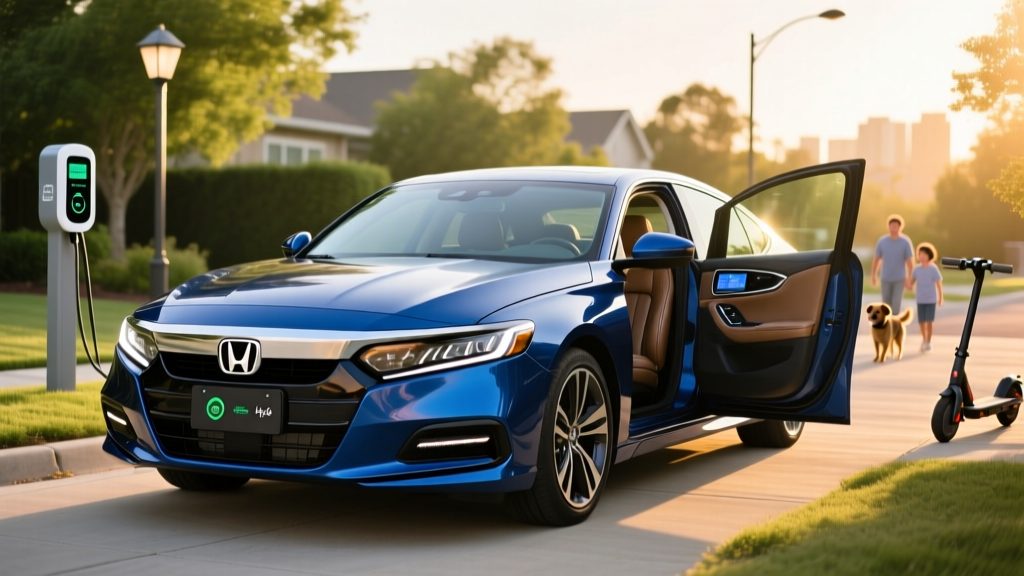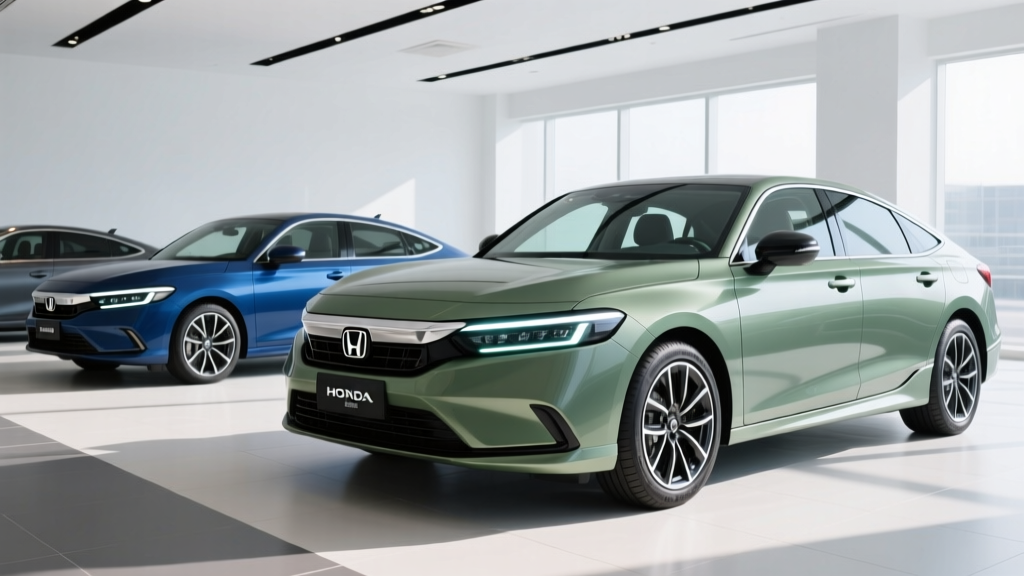
Honda's 2026 lineup leans heavily on its two-motor hybrid system, now standard on the Accord, CR-V, and Civic. Unlike Toyota's power-split architecture, Honda's e:HEV setup runs primarily on electric motors at low and moderate speeds, with the 2.0-liter gasoline engine acting as a generator — or engaging directly via a lockup clutch only at steady highway cruising. The result is a driving feel closer to an EV than a conventional hybrid, with strong low-end torque and minimal engine drone in city driving.
But Honda's hybrid strategy in 2026 is exclusively conventional hybrid (HEV). There are no plug-in hybrid (PHEV) variants in the US lineup — a deliberate choice that simplifies the buyer decision but eliminates any electric-only commuting capability. Below, we break down every Honda hybrid car available for 2026, with exact EPA figures, real-world expectations, pricing, and ownership economics.
HEV vs PHEV: Where Honda Stands in 2026
| Feature | Honda HEV (2026) | Typical PHEV (e.g., Toyota RAV4 Prime) |
|---|---|---|
| Plug-in charging required | No — refuels at gas station only | Yes — 120V or 240V outlet |
| Electric-only range | 0 miles (EV mode limited to ~1 mi at low speed) | 25–42 miles typical |
| Battery size | ~1.06 kWh (lithium-ion) | 13.6–18.1 kWh |
| Federal §30D tax credit | Not eligible | Up to $7,500 (if sourcing/income rules met) |
| Home charging install needed | No | Yes — Level 2 recommended |
| DC fast charging | No | Rarely — most PHEVs are AC-only |
| Complexity / maintenance | Lower — no charging hardware | Higher — onboard charger, larger battery |
Honda's decision to skip PHEVs in the US market means buyers who want electric-only commuting must look elsewhere (Toyota's RAV4 Prime, Chrysler Pacifica PHEV) or jump to a full BEV. The trade-off: Honda hybrids are simpler, lighter, cheaper to buy, and never require plug-in infrastructure.
2026 Honda Accord Hybrid: MPG, Specs & Pricing
| Spec | Accord Hybrid (Sport/L/EX-L/Sport-L/Touring) |
|---|---|
| Powertrain | 2.0L 4-cyl + dual-motor hybrid (e:HEV) |
| Combined horsepower | 204 hp / 247 lb-ft torque |
| EPA MPG (city / hwy / combined) | 51 / 44 / 48 mpg (Sport trim: 46 combined) |
| 0–60 mph | ~7.2 seconds |
| Fuel tank | 12.4 gallons |
| Total range | ~595 miles (EX-L, 48 combined) |
| Battery | 1.06 kWh lithium-ion (under rear seat) |
| Starting MSRP | $33,990 (Sport) – $40,390 (Touring) |
| Federal tax credit | Not eligible (HEV, not PHEV/BEV) |
The Accord Hybrid is Honda's efficiency flagship. The EX-L and Sport-L trims hit the 48 mpg combined EPA figure, while the Sport trim's larger 19-inch wheels and sportier tuning drop it to 46 combined. EPA data on fueleconomy.gov confirms the 51 mpg city rating — and in real-world driving, Honda hybrids often exceed their EPA city estimates because regenerative braking recovers more energy in stop-and-go traffic than the test cycle captures.
2026 Honda CR-V Hybrid: MPG, Specs & Pricing
| Spec | CR-V Hybrid (Sport / Sport Touring AWD) |
|---|---|
| Powertrain | 2.0L 4-cyl + dual-motor hybrid (e:HEV), AWD standard |
| Combined horsepower | 204 hp / 247 lb-ft torque |
| EPA MPG (city / hwy / combined) | 43 / 36 / 40 mpg (Sport AWD) |
| 0–60 mph | ~7.8 seconds |
| Fuel tank | 14.0 gallons |
| Total range | ~560 miles |
| Battery | 1.06 kWh lithium-ion |
| Towing capacity | 1,000 lbs |
| Starting MSRP | $37,290 (Sport) – $41,790 (Sport Touring) |
| Federal tax credit | Not eligible |
The CR-V Hybrid accounts for nearly half of all CR-V sales in the US, and it's easy to see why: AWD comes standard on hybrid trims, cargo space is only marginally reduced versus the gas model, and the 40 mpg combined figure beats the gas CR-V AWD by roughly 12 mpg. The Sport Touring trim adds leather, a Bose audio system, and wireless CarPlay/Android Auto for under $42,000 — a compelling value in the compact SUV segment.
Real-world expectations: expect 38–42 mpg combined in temperate conditions. Cold-weather driving (below 30°F) typically drops efficiency by 8–12%, as the engine runs more frequently to provide cabin heat — a limitation shared by all hybrids without dedicated heat-pump HVAC systems.
2026 Honda Civic Hybrid: MPG, Specs & Pricing
| Spec | Civic Hybrid (Sport Sedan / Sport Touring Sedan) |
|---|---|
| Powertrain | 2.0L 4-cyl + dual-motor hybrid (e:HEV) |
| Combined horsepower | 200 hp / 232 lb-ft torque |
| EPA MPG (city / hwy / combined) | 50 / 47 / 49 mpg |
| 0–60 mph | ~6.8 seconds |
| Fuel tank | 10.6 gallons |
| Total range | ~519 miles |
| Battery | 1.06 kWh lithium-ion |
| Starting MSRP | $30,390 (Sport) – $33,390 (Sport Touring) |
| Federal tax credit | Not eligible |
The Civic Hybrid is the newest addition to Honda's electrified lineup and arguably the most compelling. At 49 mpg combined EPA and under $31,000 to start, it undercuts the Toyota Prius on price while delivering nearly identical real-world fuel economy. The 200 hp output also makes it the quickest Civic short of the Type R — a fact that surprises buyers expecting a slow eco-box.
Real-world owners report 48–54 mpg in mixed driving, with city-dominant commutes regularly exceeding the 50 mpg EPA city figure. Highway cruising at 70 mph yields roughly 44–46 mpg. EPA listings on fueleconomy.gov confirm these class-leading numbers.
Honda Hybrid Battery Warranty, Lifespan & Replacement Cost
Every 2026 Honda hybrid carries the same battery warranty coverage:
- 8 years / 100,000 miles (most states)
- 10 years / 150,000 miles (CARB states: CA, CO, CT, ME, MA, NJ, NY, OR, RI, VT, WA, and others adopting California emissions standards)
- Coverage: defects, premature capacity loss below ~70% of original capacity
Honda's hybrid battery packs are small (~1.06 kWh) and operate within a conservative state-of-charge window — typically between 40% and 80% SoC — which dramatically reduces degradation stress compared to a full EV battery cycling through wider ranges. Data from earlier-generation Honda hybrids (2014–2020 Accord Hybrid, Insight) shows battery packs routinely lasting 150,000–200,000+ miles before meaningful capacity loss.
Replacement cost if out of warranty: A Honda hybrid battery replacement runs approximately $2,000–$4,000 including labor at a dealership. Third-party refurbished packs are available for $1,200–$2,500. Given the small pack size and conservative cycling, unplanned replacement before 150,000 miles is uncommon — a far cry from the $10,000–$20,000 EV battery replacement costs that sometimes concern buyers.
Honda Hybrid vs Full EV vs Gas: Which Should You Buy?
Choose a Honda Hybrid If:
- You want 40–50 mpg without changing your fueling habits
- You lack access to home or workplace charging (apartment, street parking)
- You regularly drive 300+ mile trips where charging infrastructure is sparse
- You want lower upfront cost ($30K–$42K) vs a comparable EV ($40K–$55K+)
- You live in a region with extreme cold where EV range loss is significant
Choose a Full EV If:
- You can install a Level 2 home charger and want $0.04–$0.12/mile "fuel" cost
- Your daily commute is under 60 miles round-trip
- You qualify for the §30D federal tax credit (up to $7,500) and state incentives
- You want zero tailpipe emissions and minimal drivetrain maintenance
- You plan to keep the vehicle 8+ years and want the lowest total cost of ownership
The math is straightforward: a Honda Civic Hybrid at 49 mpg with gas at $3.40/gallon costs roughly $0.069 per mile in fuel. A comparable EV like the Hyundai Ioniq 6 at 3.5 mi/kWh with electricity at $0.14/kWh costs $0.04 per mile — saving about $435/year over 15,000 miles. But the EV's higher purchase price, insurance premiums, and charging-infrastructure needs can erase that savings for many buyers. A Honda hybrid occupies the pragmatic middle ground: dramatically better fuel economy than a gas car, zero lifestyle changes required.
Tax Credits & Incentives for Honda Hybrids
Here's the critical point for budget-conscious buyers: conventional hybrids like every Honda hybrid car do not qualify for the federal §30D clean vehicle tax credit. That credit — up to $7,500 — is reserved for battery electric vehicles (BEVs) and plug-in hybrids (PHEVs) meeting specific battery-sourcing, critical-mineral, MSRP, and buyer-income requirements as outlined by the IRS clean vehicle tax credit rules.
Some states offer modest hybrid incentives (typically $250–$1,000 rebates), but these vary widely and change frequently. Check your state's energy office or the Alternative Fuels Data Center for current local programs.
2026 Honda Hybrid Lineup: Side-by-Side Comparison
| Model | EPA Combined | City | Highway | HP | Starting MSRP | Best For |
|---|---|---|---|---|---|---|
| Civic Hybrid Sport | 49 mpg | 50 | 47 | 200 | $30,390 | Commuters, lowest cost per mile |
| Accord Hybrid EX-L | 48 mpg | 51 | 44 | 204 | $36,390 | Families, highway comfort |
| CR-V Hybrid Sport AWD | 40 mpg | 43 | 36 | 204 | $37,290 | SUV buyers, all-weather driving |
| Accord Hybrid Sport | 46 mpg | 48 | 43 | 204 | $33,990 | Sport-tuned sedan, value |
| CR-V Hybrid Sport Touring | 40 mpg | 43 | 36 | 204 | $41,790 | Loaded compact SUV |
Frequently Asked Questions
How many MPG does a Honda hybrid get in real-world driving?
The 2026 Civic Hybrid averages 48–54 mpg combined in owner-reported driving, often exceeding its 49 mpg EPA rating in city-heavy commutes. The Accord Hybrid delivers 46–52 mpg depending on trim, and the CR-V Hybrid achieves 38–42 mpg. Cold weather (below 30°F) reduces these figures by 8–12% across the lineup due to increased engine runtime for cabin heating.
Do Honda hybrids need to be plugged in?
No. Every Honda hybrid car is a conventional hybrid (HEV), not a plug-in hybrid (PHEV). The small 1.06 kWh battery recharges through regenerative braking and the gasoline engine. You fuel it at a gas station exactly like a conventional car — no charging cable, no home charger installation, no public charging dependency.
Does any Honda hybrid qualify for a federal tax credit?
No. The federal §30D clean vehicle credit applies only to plug-in electric vehicles (BEVs and PHEVs) with battery packs of at least 7 kWh. Honda's hybrid system uses a ~1.06 kWh pack and does not plug in, making it ineligible. Honda currently offers no PHEV models in the US market for 2026.
How long will a Honda hybrid battery last, and what does replacement cost?
Honda warranties the hybrid battery for 8 years/100,000 miles (10 years/150,000 miles in CARB states). Real-world data from prior-generation Honda hybrids shows packs routinely lasting 150,000–200,000+ miles without significant degradation, thanks to conservative state-of-charge management. Out-of-warranty replacement costs approximately $2,000–$4,000 at a dealer, or $1,200–$2,500 for a refurbished pack from a third-party supplier.
Is the Honda hybrid system reliable compared to Toyota's?
Yes. Honda's two-motor e:HEV system has proven highly reliable since its 2014 introduction, with fewer moving parts than Toyota's planetary-gear power-split design (no traditional transmission, no complex gearset). IIHS safety ratings consistently award Honda hybrid models Top Safety Pick designations. Long-term reliability data from Consumer Reports and J.D. Power places Honda hybrids in the above-average tier, closely trailing Toyota's benchmark hybrid reliability.
Should I buy a Honda hybrid or wait for a Honda EV?
Honda's US EV offerings remain limited as of 2026 (the Prologue, built on GM's Ultium platform, is the sole BEV). If you need a vehicle now and lack reliable home charging access, a Honda hybrid is the pragmatic choice — it delivers 40–50 mpg with zero infrastructure requirements. If you have home charging and a commute under 60 miles, a BEV will deliver lower per-mile fuel costs and qualify for federal tax credits that a Honda hybrid cannot.