Quick Verdict: The Hybrid Accord Is the Midsize Sedan to Beat
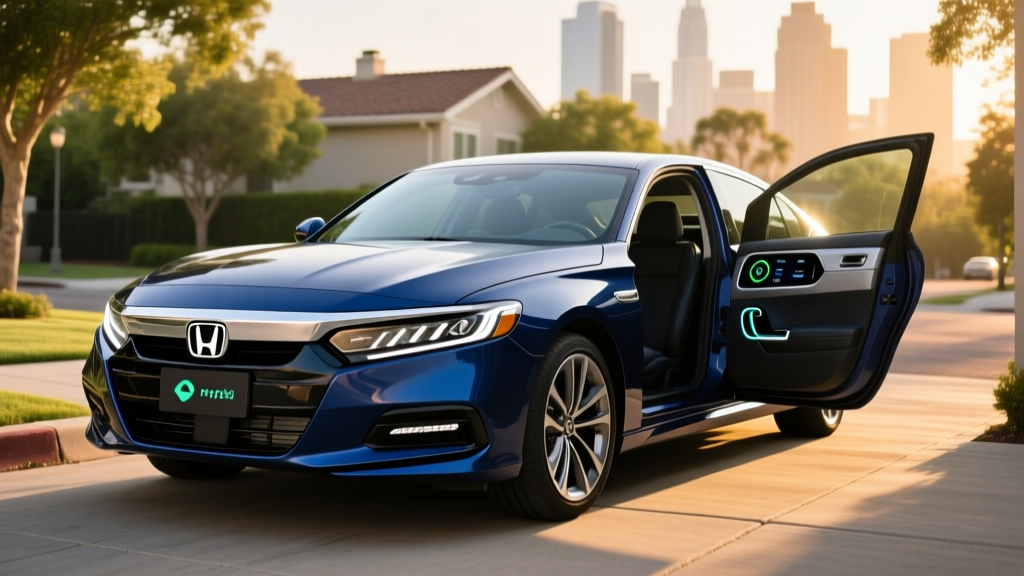
The Honda Accord has offered a hybrid powertrain for over a decade, and the 2026 Honda hybrid Accord continues that tradition as a conventional hybrid electric vehicle (HEV) — meaning it charges its own battery through regenerative braking and the gasoline engine. You never plug it in. With an EPA-estimated 51 MPG city, a spacious cabin, and Honda's proven two-motor hybrid system, the Accord Hybrid remains one of the most practical ways to cut fuel costs without changing your driving habits or installing home charging equipment.
This guide covers every number that matters: EPA fuel economy across trims, real-world MPG expectations, the powertrain under the hood, battery longevity and warranty, pricing, and how the Accord Hybrid stacks up against plug-in hybrid (PHEV) and full battery-electric (BEV) alternatives. If you're cross-shopping the Toyota Camry Hybrid, Hyundai Sonata Hybrid, or wondering whether to stretch for a PHEV instead, the data below will settle the question.
HEV vs PHEV vs EV: Where the Accord Hybrid Fits
Before examining specs, it's essential to distinguish the three electrified powertrain types — because confusion here leads to wrong purchases.
| Attribute | HEV (Accord Hybrid) | PHEV (e.g., Toyota Prius Prime) | BEV (e.g., Tesla Model 3) |
|---|---|---|---|
| Plug in to charge? | No — self-charging | Yes — Level 1 or Level 2 | Yes — Level 1, 2, or DC fast |
| Electric-only range | ~1 mile at low speed | 25–44 miles typical | 250–360+ miles (full battery) |
| Gasoline engine | Yes — primary power + charging | Yes — kicks in after battery depletes | No engine at all |
| Fuel economy | 48–51 MPG combined | 48–52 MPG combined (after EV range) | N/A — electricity only |
| Home charging needed | No | Recommended (Level 2 ideal) | Essential (Level 2 strongly recommended) |
| Federal tax credit (§30D) | Not eligible | Up to $7,500 if eligible | Up to $7,500 if eligible |
| Starting MSRP range | $29,690–$39,990 | $33,000–$43,000 | $38,990–$55,000+ |
The Accord Hybrid is an HEV. It uses a small lithium-ion battery (roughly 1.06 kWh usable) paired with Honda's two-motor hybrid system. The engine and regenerative braking keep that battery charged. You simply drive it like any other car — fill up at a gas station and go. There is no plug, no charging cable, and no range anxiety.
For 2026, Honda does not offer a plug-in hybrid version of the Accord in the United States. If you want PHEV capability in a midsize sedan, you'd look at competitors like the Toyota Prius Prime or the Hyundai Sonata Plug-in Hybrid (availability varies by model year). Honda reserves its PHEV technology for other markets and models like the Clarity (discontinued in the U.S.).
EPA Fuel Economy and Real-World MPG
Fuel economy is the Accord Hybrid's headline feature. Here's the official EPA data by trim, sourced from fueleconomy.gov:
| Trim | City MPG | Highway MPG | Combined MPG | Annual Fuel Cost* |
|---|---|---|---|---|
| Sport / Sport-L Hybrid | 51 | 44 | 48 | ~$1,350 |
| EX-L Hybrid | 51 | 44 | 48 | ~$1,350 |
| Sport Touring Hybrid | 51 | 44 | 48 | ~$1,350 |
*Based on 15,000 miles/year, 55% city / 45% highway, and $3.50/gallon regular unleaded. Your costs will vary with local fuel prices and driving mix.
Hybrids typically exceed their EPA city estimates in stop-and-go traffic because regenerative braking recaptures energy that a gas car wastes as heat. Expect 50–55 MPG in city driving. Highway efficiency is the weak point — at sustained 70–80 MPH, the Accord Hybrid returns closer to 40–43 MPG because the gasoline engine does most of the work without regen assistance. On a mixed commute of suburban and highway driving, most owners report 46–50 MPG combined over a full tank. In cold weather (below 30°F), expect a 3–5 MPG drop due to engine warm-up cycles and reduced battery efficiency.
For comparison, the gas-only 2026 Accord with the 1.5L turbocharged engine rates at 29 city / 37 highway / 32 combined. The hybrid powertrain saves roughly 3–4 gallons per 100 miles in mixed driving — translating to approximately $500–$700 in annual fuel savings depending on your mileage and local gas prices.
Powertrain: What's Under the Hood
The 2026 Accord Hybrid uses Honda's fourth-generation two-motor hybrid system, which pairs a 2.0-liter Atkinson-cycle four-cylinder engine with two electric motors and an e-CVT (electronically controlled continuously variable transmission). There is no traditional geared transmission — the system uses motor-generator units to manage power delivery seamlessly.
| Specification | 2026 Accord Hybrid |
|---|---|
| Engine | 2.0L Atkinson-cycle inline-4 |
| Engine horsepower | 146 hp @ 6,100 RPM |
| Drive motor output | 181 hp / 247 lb-ft torque |
| Combined system output | 204 hp |
| Transmission | e-CVT (no traditional gears) |
| Drivetrain | Front-wheel drive |
| 0–60 MPH | ~6.5 seconds |
| Battery type | Lithium-ion |
| Battery capacity (usable) | ~1.06 kWh |
| Fuel tank | 12.8 gallons |
| Total driving range | ~614 miles (EPA combined) |
| Curb weight | ~3,477–3,570 lbs (varies by trim) |
The Accord Hybrid's powertrain operates in three modes automatically: EV Drive (battery-only, at low speeds and light loads), Hybrid Drive (engine generates electricity to power the drive motor), and Engine Drive (engine directly powers the wheels at highway cruising speeds). The transitions are nearly imperceptible from the driver's seat.
The 204 combined horsepower is adequate for confident highway merging and passing. The 247 lb-ft of electric motor torque is available instantly, which gives the Accord Hybrid a responsive feel off the line that the gas-only 1.5T model (192 hp) can't match. Honda does not offer an all-wheel-drive variant of the Accord Hybrid — if AWD is a priority, you'd need to look at the Toyota Camry Hybrid (which offers AWD) or a crossover.
Battery Longevity, Warranty, and Replacement Cost
Battery reliability is the number-one concern among hybrid shoppers, and for good reason — a failed hybrid battery is a significant repair. Here's what Honda provides and what the data shows:
- Coverage: 8 years / 100,000 miles (10 years / 150,000 miles in CARB states including California, New York, Massachusetts, and others that follow California emissions standards)
- What's covered: Hybrid battery pack, battery control module, and related hybrid system components
- Capacity threshold: Honda does not publish a specific degradation percentage trigger, but the warranty covers defects and failures that impair normal operation
- Transferable: Yes — the hybrid battery warranty transfers to subsequent owners at no cost
In practice, Honda's hybrid batteries have demonstrated strong longevity. The current-generation Accord Hybrid (introduced for the 2023 model year) uses a lithium-ion pack that is smaller and more thermally stable than the nickel-metal hydride (NiMH) batteries in earlier Honda hybrids. Third-party fleet data and owner reports suggest that lithium-ion hybrid batteries in vehicles like the Accord and Toyota Camry Hybrid retain well over 90% of their original capacity after 100,000 miles — largely because the battery operates within a narrow state-of-charge window (roughly 40–80%) and never sees the deep discharge cycles that stress EV batteries.
Replacement cost if out of warranty: A new OEM hybrid battery pack for the Accord Hybrid currently runs between $2,000 and $4,000 including labor at a Honda dealer. Independent hybrid specialists can sometimes source refurbished packs for $1,200–$2,000. Given the warranty coverage and real-world reliability data, most owners will never face this expense.
Pricing, Trims, and Tax Credit Eligibility
The 2026 Honda Accord Hybrid is available in four trims. Pricing below reflects MSRP including destination charge:
| Trim | MSRP | Key Features |
|---|---|---|
| Sport Hybrid | $29,690 | 19" wheels, wireless Apple CarPlay/Android Auto, Honda Sensing suite, 10.2" touchscreen |
| Sport-L Hybrid | $32,090 | Leather-trimmed seats, heated front seats, wireless phone charger |
| EX-L Hybrid | $34,690 | Power moonroof, heated rear seats, leather interior, premium audio |
| Sport Touring Hybrid | $39,990 | Adaptive dampers, Bose 12-speaker audio, heated/ventilated front seats, navigation, Wi-Fi hotspot |
The Accord Hybrid is a conventional hybrid (HEV), not a plug-in hybrid or battery-electric vehicle. Under current IRS §30D rules, conventional hybrids do not qualify for the federal Clean Vehicle Credit (up to $7,500). That credit is reserved for plug-in vehicles with a battery capacity of at least 7 kWh — the Accord Hybrid's ~1.06 kWh pack is far below that threshold.
Some states offer rebates or reduced registration fees for hybrids, but these vary by jurisdiction. Check your state's energy office or department of environmental quality for current programs. Do not rely on dealer claims about hybrid tax credits — verify eligibility with a tax professional.
The lack of a federal tax credit is a meaningful cost disadvantage versus PHEVs and BEVs. A qualifying buyer purchasing a Tesla Model 3 or a PHEV like the Toyota Prius Prime could receive up to $7,500 at point of sale (subject to income caps, MSRP limits, and battery sourcing requirements). That credit can narrow or even erase the Accord Hybrid's base-price advantage. Factor this into your total cost comparison.
Who Should Buy the Accord Hybrid — And Who Shouldn't
- You want 48+ MPG without changing your routine — no plugs, no charging apps, no route planning
- Your commute is mostly city and suburban, where regen braking maximizes efficiency
- You need a spacious rear seat and a large trunk (16.7 cu ft) for family duty
- You don't have access to home or workplace charging and aren't ready for an EV or PHEV
- You want proven reliability with a long warranty on the hybrid battery
- You drive 12,000–18,000 miles per year and want to cut fuel costs by $500–$700 annually versus a gas car
- You have reliable home Level 2 charging and a short commute (under 30 miles) — a PHEV could let you drive months without using gas
- You want to qualify for the $7,500 federal tax credit to offset a higher purchase price
- You want zero tailpipe emissions for daily driving (a BEV eliminates gasoline entirely)
- You frequently drive in HOV lanes that require a clean-air vehicle sticker (PHEVs and BEVs qualify in many states; HEVs typically do not)
- You're willing to pay more upfront for lower long-term fuel and maintenance costs
How the Accord Hybrid Compares to Key Rivals
| Spec | 2026 Honda Accord Hybrid | 2026 Toyota Camry Hybrid | 2026 Hyundai Sonata Hybrid |
|---|---|---|---|
| Combined MPG (EPA) | 48 | 52 | 47 |
| Combined HP | 204 | 225 | 192 |
| AWD available? | No | Yes | No |
| Starting MSRP | $29,690 | $29,495 | $31,250 |
| Trunk volume | 16.7 cu ft | 15.1 cu ft | 16.0 cu ft |
| Battery warranty | 8 yr / 100k mi | 10 yr / 150k mi | 10 yr / 100k mi |
| Federal tax credit | No | No | No |
The Camry Hybrid edges out the Accord on EPA combined MPG and offers AWD, but the Accord provides more rear legroom and cargo volume. The Sonata Hybrid undercuts on price in some configurations but trails on power. All three are strong choices — the decision typically comes down to whether you prioritize fuel economy (Camry), space (Accord), or warranty length (Toyota and Hyundai both offer 10-year hybrid battery warranties).
Frequently Asked Questions
How many MPG does the Honda hybrid Accord get?
The 2026 Accord Hybrid is EPA-rated at 51 MPG city, 44 MPG highway, and 48 MPG combined across all trims. In real-world city driving, many owners see 50–55 MPG thanks to aggressive regenerative braking. Highway-only driving at 75+ MPH yields closer to 40–43 MPG. Cold weather reduces efficiency by roughly 3–5 MPG.
Do I need to plug in the Accord Hybrid to charge it?
No. The Accord Hybrid is a conventional hybrid (HEV), not a plug-in hybrid. The battery charges itself through regenerative braking and the gasoline engine. There is no charging port and no plug. You refuel at a standard gas station.
How far can the Accord Hybrid drive on electric power alone?
Only about 1 mile at very low speeds (under 25 MPH) under light load. The small ~1.06 kWh battery is designed for assist, not for sustained electric driving. If electric-only commuting is your goal, you need a PHEV (25–44 miles electric) or a full BEV (250+ miles).
Is the Honda Accord Hybrid reliable?
Honda's hybrid system has a strong reliability track record. The current-generation two-motor system has been in production since 2023, and earlier Honda hybrid systems (in the Insight, CR-Z, and prior Accord Hybrid) have demonstrated longevity well beyond 150,000 miles with proper maintenance. The hybrid battery is covered for 8 years / 100,000 miles (10 years / 150,000 miles in CARB states). IIHS has historically rated the Accord as a Top Safety Pick, and the hybrid variant shares the same structural safety performance.
What does a hybrid Accord battery replacement cost?
If the hybrid battery fails outside of warranty, expect to pay $2,000–$4,000 for a new OEM replacement at a Honda dealer, including labor. Refurbished or aftermarket packs may cost $1,200–$2,000 through independent hybrid specialists. In practice, lithium-ion hybrid batteries in the Accord rarely fail prematurely — the battery operates in a shallow charge window that minimizes degradation.
Does the Accord Hybrid qualify for any tax credits?
No. Under current IRS rules, the federal Clean Vehicle Credit (§30D) requires a plug-in vehicle with at least 7 kWh of battery capacity. The Accord Hybrid's ~1.06 kWh pack does not meet this threshold. Some states may offer minor incentives for hybrids, but there is no federal tax credit for conventional HEVs. Check IRS.gov for the latest eligibility rules.
Hybrid vs PHEV vs EV — which is right for me?
If you lack home charging access and want maximum simplicity, the Accord Hybrid (HEV) is the right call — it requires zero behavior change. If you have a garage with a 240V outlet and a short commute, a PHEV lets you drive on electricity daily while keeping a gas engine for road trips. If you have reliable home charging, drive under 250 miles daily, and want the lowest operating cost and zero tailpipe emissions, a full BEV is the most future-proof choice — but it demands the most upfront investment and lifestyle adjustment.
Does the Accord Hybrid have all-wheel drive?
No. Honda offers the Accord Hybrid exclusively with front-wheel drive. If AWD is a must-have in a hybrid sedan, the Toyota Camry Hybrid offers an electronic AWD system with a rear-mounted electric motor.