The subcompact crossover segment is packed with gas-only options, but buyers hunting for serious fuel efficiency without plugging in keep asking: does a Honda HR-V hybrid exist, and if so, is it worth the money? For the 2026 model year, Honda has expanded electrified options across its lineup, and the HR-V is part of that conversation. Below, we dissect every relevant number — EPA MPG, powertrain output, pricing, warranty coverage, and tax-credit eligibility — so you can decide whether this hybrid subcompact fits your garage or whether a plug-in hybrid (PHEV) or full battery-electric vehicle (BEV) makes more sense.
Does a 2026 Honda HR-V Hybrid Actually Exist?
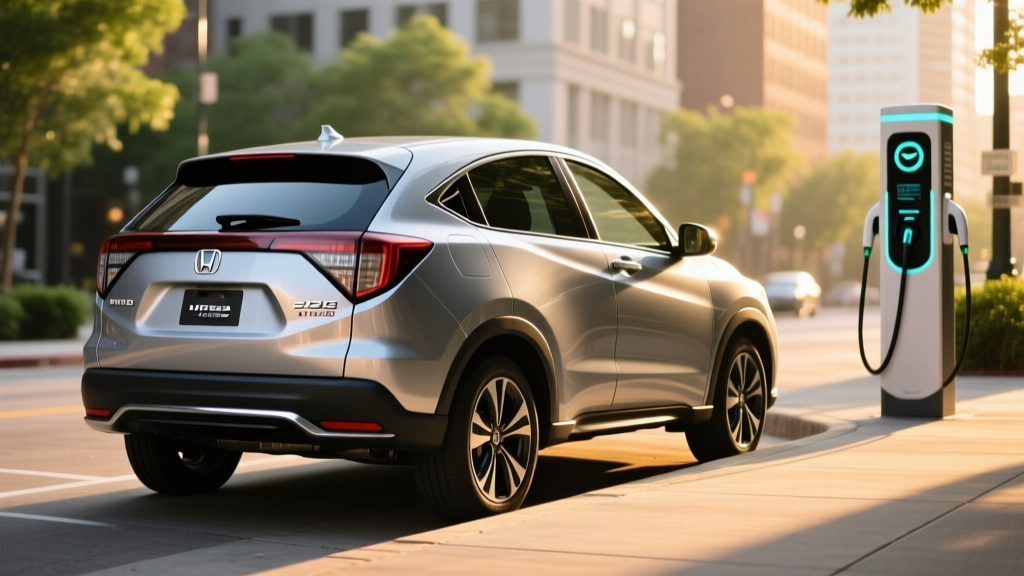
Let's clear up the confusion immediately. In the United States, Honda has offered the HR-V exclusively with a conventional gasoline powertrain — a 2.0-liter four-cylinder paired with a continuously variable transmission (CVT). As of the 2026 model year, Honda has not introduced a dedicated hybrid (HEV) or plug-in hybrid (PHEV) variant of the HR-V for the U.S. market. This is a critical distinction because in some international markets (notably Japan and parts of Asia), Honda sells a smaller HR-V-based vehicle with the e:HEV hybrid system.
For American buyers, the closest Honda electrified crossover experience comes from the CR-V Hybrid, which uses Honda's two-motor hybrid system and achieves up to an EPA-estimated 40 MPG combined. If you're cross-shopping a Honda HR-V hybrid, the CR-V Hybrid is the model you'll actually encounter on U.S. dealer lots. Below, we cover both the HR-V's gas-only efficiency and the CR-V Hybrid as the realistic alternative, so you have the full picture.
Honda HR-V (Gas) vs. CR-V Hybrid: The Numbers Side by Side
| Spec | 2026 Honda HR-V (Gas, AWD) | 2026 Honda CR-V Hybrid (AWD) |
|---|---|---|
| Powertrain | 2.0L I-4 + CVT | 2.0L I-4 + two-motor hybrid system |
| Combined Horsepower | 158 hp | 204 hp |
| EPA City MPG | 25 MPG | 40 MPG |
| EPA Highway MPG | 30 MPG | 34 MPG |
| EPA Combined MPG | 27 MPG | 37 MPG |
| Fuel Tank | 14.0 gal | 15.3 gal |
| Total Range (est.) | ~378 miles | ~566 miles |
| 0–60 mph | ~9.2 sec | ~7.6 sec |
| Cargo Volume (rear seats up) | 24.4 cu ft | 36.3 cu ft |
| Starting MSRP | ~$26,400 | ~$36,395 |
| Hybrid Battery Warranty | N/A | 8 yr / 100,000 mi (10 yr / 150,000 mi in CARB states) |
Sources: EPA fueleconomy.gov, Honda CR-V Hybrid official page.
HEV vs. PHEV vs. BEV: Which Electrified Crossover Fits You?
Conventional Hybrid (HEV) — The CR-V Hybrid is an HEV. It has a small battery (typically ~1.1 kWh) that recharges through regenerative braking and the gas engine. You never plug it in. It delivers strong city MPG (the electric motor handles low-speed driving) and seamless gas-engine operation on the highway. Ideal if you lack home charging access or want zero behavior change.
Plug-in Hybrid (PHEV) — A PHEV has a larger battery (typically 12–20 kWh) that you plug in to charge. It offers 25–50 miles of electric-only driving before the gas engine kicks in. Honda does not currently offer a PHEV crossover in the U.S. (the Clarity PHEV was discontinued). Competitors like the Toyota RAV4 Prime (42 mi electric-only) fill this niche.
Battery Electric (BEV) — Zero gas, zero tailpipe emissions. Models like the Hyundai Ioniq 5 (EPA 303 mi range) or Honda Prologue (EPA ~296 mi) offer full electric driving. Best if you have reliable home Level 2 charging and want the lowest per-mile fuel cost, but requires planning for road trips and cold-weather range loss.
Choose an HEV (CR-V Hybrid) if: You want dramatically better MPG with no charging hassle, no range anxiety, and a lower purchase price than a PHEV or BEV.
Choose a PHEV if: You have home charging and a short commute (<40 mi) but also take long road trips and don't want to rely on public DC fast-charging networks.
Choose a BEV if: You have home Level 2 charging, want the lowest operating cost, and your daily driving stays within ~250 miles (or you're willing to plan DC fast-charge stops on road trips).
Real-World MPG: What to Actually Expect
EPA sticker: 37 MPG combined (CR-V Hybrid AWD)
Real-world expectation: Hybrid efficiency shines in stop-and-go city driving, where the electric motor does the heavy lifting. Many owners report 38–42 MPG in city-heavy commutes, exceeding the EPA city estimate. However, sustained highway driving at 75+ mph drops efficiency to roughly 32–34 MPG because the gas engine runs continuously and aerodynamic drag dominates. In cold weather (below 30°F), expect a 5–10% reduction as the engine runs more often for cabin heat and battery conditioning.
| Driving Scenario | Expected MPG (CR-V Hybrid AWD) | Notes |
|---|---|---|
| City commute (stop-and-go) | 38–42 MPG | Electric motor dominates at low speed |
| Mixed suburban | 35–38 MPG | Close to EPA combined estimate |
| Highway (70–75 mph) | 32–34 MPG | Engine runs continuously; aero drag increases |
| Cold weather (below 30°F, mixed) | 33–35 MPG | Engine runs for cabin heat; battery less efficient |
| Hot weather (A/C heavy, mixed) | 34–37 MPG | Less penalty than cold; A/C compressor draws from hybrid battery |
Hybrid Battery Warranty, Lifespan, and Replacement Cost
Honda backs the CR-V Hybrid's lithium-ion hybrid battery pack with an 8-year/100,000-mile warranty nationwide. In states that follow California Air Resources Board (CARB) emissions rules — including California, New York, Massachusetts, and over a dozen others — that coverage extends to 10 years/150,000 miles.
The warranty guarantees the battery will retain sufficient capacity to operate the hybrid system as designed. If the battery degrades beyond the threshold (typically below ~60–70% of original capacity), Honda covers replacement or refurbishment.
Out-of-warranty replacement cost: Based on current Honda hybrid battery pricing and independent shop data, a CR-V Hybrid battery replacement runs $2,000–$4,000 for the battery pack plus labor. However, hybrid battery failures before 150,000 miles are statistically uncommon. Honda's two-motor hybrid system is less stressful on the battery than older single-motor designs because it uses shallower charge/discharge cycles.
Pricing and Tax Credit Eligibility
The 2026 Honda CR-V Hybrid starts at approximately $36,395 (Sport trim, FWD) and climbs to around $42,000 for the fully loaded Sport Touring AWD. The gas-only HR-V, by comparison, starts near $26,400.
| Trim | Drivetrain | MSRP (est.) |
|---|---|---|
| CR-V Hybrid Sport | FWD | $36,395 |
| CR-V Hybrid Sport | AWD | $37,895 |
| CR-V Hybrid Sport-L | AWD | $39,845 |
| CR-V Hybrid Sport Touring | AWD | $42,195 |
Federal tax credit (§30D): The conventional CR-V Hybrid does not qualify for the federal plug-in EV tax credit. The IRS §30D credit applies only to plug-in vehicles (PHEVs and BEVs) with sufficient battery capacity. Since the CR-V Hybrid is an HEV — it cannot be plugged in — it is ineligible for the up-to-$7,500 credit.
State incentives: Some states offer smaller rebates or HOV-lane access for hybrids, but these vary widely and change frequently. Check your state's energy office or AFDC incentive database for current programs.
Total cost of ownership advantage: Even without a tax credit, the CR-V Hybrid's fuel savings are substantial. At 15,000 miles/year and $3.40/gallon gas, the CR-V Hybrid (37 MPG combined) costs roughly $1,378/year in fuel versus $1,889/year for the gas HR-V (27 MPG combined) — saving about $511 per year or $2,555 over five years. That nearly closes the ~$10,000 price gap when you factor in the Hybrid's stronger resale value and lower brake wear (regenerative braking extends pad life).
Pros and Cons at a Glance
Pros
- 37 MPG combined EPA — real-world city driving often exceeds 40 MPG
- 204 hp hybrid powertrain delivers confident acceleration (0–60 in ~7.6 sec)
- No plug-in charging required — zero behavior change from a gas car
- 566-mile total range means fewer fill-ups
- Strong 8yr/100k mi battery warranty (10yr/150k in CARB states)
- Regenerative braking extends brake pad life significantly
Cons
- ~$10,000 more expensive than the gas-only HR-V at base trim
- No federal tax credit for conventional hybrids
- Highway MPG drops to ~32–34 at sustained 75+ mph speeds
- Not available in the smaller HR-V body — you step up to CR-V size and price
- No electric-only driving mode (unlike a PHEV)
- Hybrid battery replacement ($2k–$4k) is an eventual out-of-warranty cost
Frequently Asked Questions
How many MPG does the Honda HR-V hybrid get?
There is no Honda HR-V hybrid sold in the United States for the 2026 model year. The gas-only HR-V achieves an EPA-estimated 27 MPG combined (25 city / 30 highway with AWD). The closest Honda hybrid crossover is the CR-V Hybrid, rated at 37 MPG combined (40 city / 34 highway with AWD).
Does the Honda HR-V hybrid need to be plugged in?
No. Honda's hybrid crossovers (like the CR-V Hybrid) are conventional hybrids (HEVs). The battery recharges automatically through regenerative braking and the gas engine. You never plug it in. Only plug-in hybrids (PHEVs) and full EVs (BEVs) require external charging.
Is the CR-V Hybrid reliable, and what does a battery replacement cost?
Honda's two-motor hybrid system has a strong reliability track record across the Accord Hybrid, CR-V Hybrid, and Civic Hybrid lineups. The hybrid battery is warrantied for 8 years/100,000 miles (10 years/150,000 miles in CARB states). Out-of-warranty replacement costs range from $2,000 to $4,000. Failures before 150,000 miles are uncommon based on owner-reported data.
Does any Honda hybrid qualify for a federal tax credit?
No Honda hybrid (HEV) qualifies for the federal §30D plug-in vehicle tax credit, which requires a plug-in capable vehicle with a minimum battery capacity. Honda does not currently sell a PHEV in the U.S. market. If Honda introduces a PHEV or you consider a competitor like the Toyota RAV4 Prime, that model may qualify for partial or full credit depending on battery sourcing and MSRP caps per IRS §30D rules.
Should I buy the CR-V Hybrid or wait for a full EV?
If you lack reliable home Level 2 charging, drive more than 300 miles between stops regularly, or live in an area with sparse DC fast-charging infrastructure, the CR-V Hybrid is the pragmatic choice — you get 37+ MPG with zero charging logistics. If you have home charging and your daily driving is under 250 miles, a BEV like the Honda Prologue or Hyundai Ioniq 5 offers lower per-mile energy costs (~$0.04/mi on home electricity vs. ~$0.09/mi on gas at 37 MPG) and zero tailpipe emissions. The decision comes down to charging access and trip patterns, not just fuel economy.
Will Honda release an HR-V hybrid in the future?
Honda has not announced a U.S.-market HR-V Hybrid as of early 2026. Honda's global electrification strategy includes expanding e:HEV hybrid systems across more models, but U.S. introductions depend on market demand and emissions regulations. If a hybrid HR-V arrives, it would likely use a version of the e:HEV two-motor system found in the Civic Hybrid (which achieves an EPA-estimated 49 MPG combined). We'll update this guide if Honda makes an official announcement.