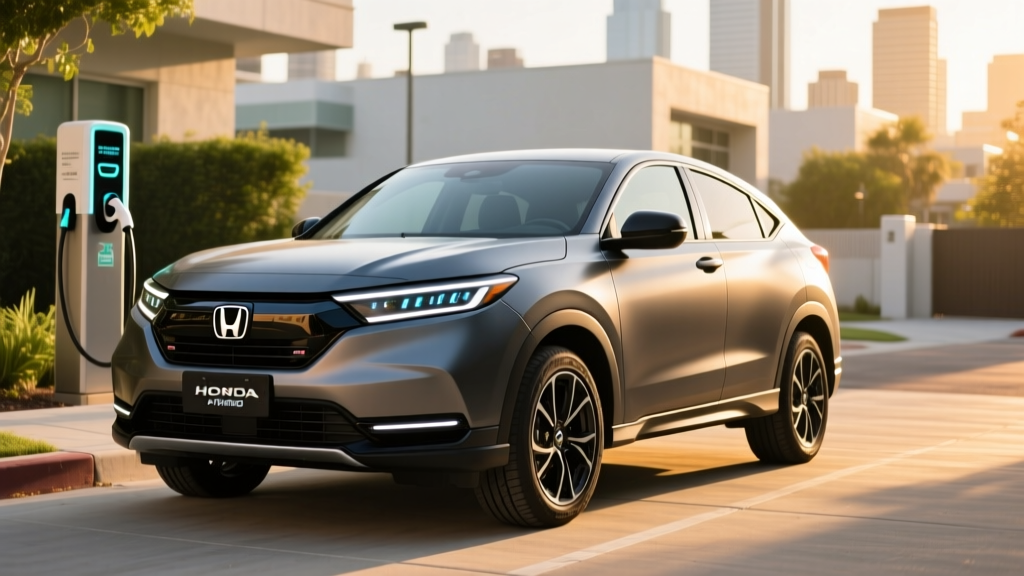
Honda confirmed the 2026 HR-V Hybrid for the North American market in late 2025, bringing its fourth-generation two-motor hybrid system to the subcompact SUV segment for the first time. The standard gas-only HR-V has soldiered on since its 2023 redesign with a 2.0-liter four-cylinder making just 158 horsepower and returning 28 MPG combined. The hybrid variant addresses both complaints: more power and dramatically better fuel economy, without the price premium or plug-in complexity of the CR-V Hybrid.
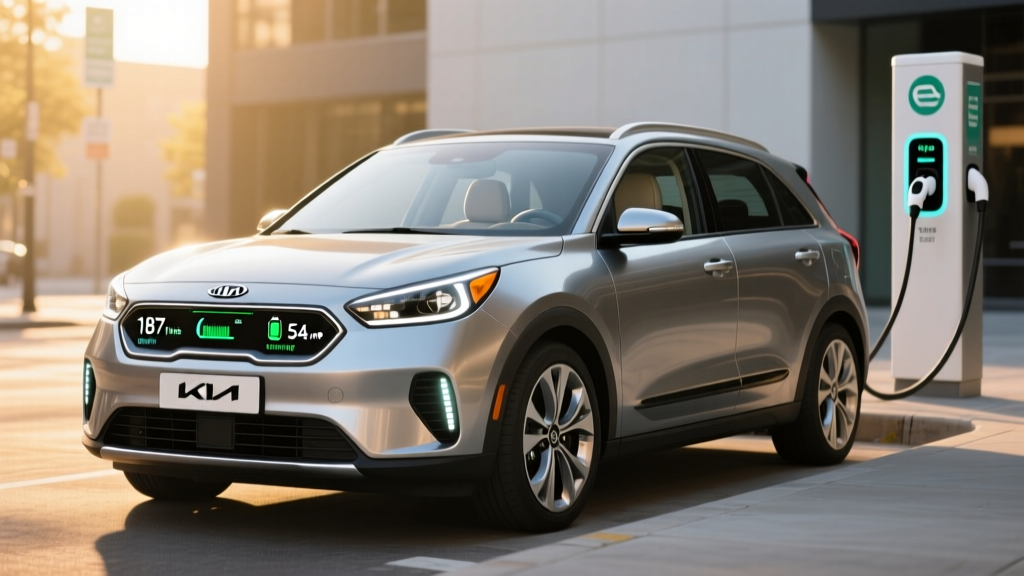
For buyers cross-shopping the Toyota Corolla Cross Hybrid (42 MPG combined) and the Kia Niro Hybrid (49 MPG combined), the HR-V Hybrid slots in as a credible third option with Honda's strong resale value and widely praised interior packaging. Here's everything we know about specs, efficiency, pricing, and whether this HEV fits your driving profile.
HEV vs. PHEV: What the 2026 HR-V Hybrid Actually Is
Before examining the numbers, a critical distinction: the 2026 HR-V Hybrid is a conventional hybrid (HEV), not a plug-in hybrid (PHEV). You cannot plug it in, and it has no meaningful electric-only range. The small lithium-ion battery (approximately 1.1 kWh usable) charges exclusively through regenerative braking and the gasoline engine.
Conventional Hybrid (HEV)
- No plug — charges via regen and engine
- Battery: ~1-2 kWh
- Electric-only: brief low-speed assist only
- Example: 2026 HR-V Hybrid, Toyota Corolla Cross Hybrid
Plug-In Hybrid (PHEV)
- Plugs into Level 1/2 charger
- Battery: 12-20+ kWh
- Electric-only: 25-50 miles typical
- Example: Toyota RAV4 Prime, Honda CR-V e:PHEV (not US)
Honda does not currently offer a PHEV in the US market. The CR-V e:PHEV sold in Europe and China uses a larger battery and plug-in capability, but Honda has not brought that powertrain stateside. If you need plug-in electric range, you'll need to look at the Toyota RAV4 Prime (42 miles EV range) or consider a full battery-electric vehicle (BEV).
Fuel Economy: EPA MPG and Real-World Expectations
The 2026 Honda HR-V Hybrid carries an EPA-estimated 42 MPG combined, split as 45 MPG city and 39 MPG highway in front-wheel-drive (FWD) trim. All-wheel-drive (AWD) models drop slightly to 40 MPG combined (43 city / 37 highway), based on preliminary EPA figures Honda submitted for the 2026 model year.
| Configuration | City | Highway | Combined |
|---|---|---|---|
| HR-V Hybrid FWD | 45 MPG | 39 MPG | 42 MPG |
| HR-V Hybrid AWD | 43 MPG | 37 MPG | 40 MPG |
| HR-V Gas (FWD, baseline) | 28 MPG | 34 MPG | 30 MPG |
Source: fueleconomy.gov (EPA estimates, 2026 model year preliminary data)
Powertrain Specs: Engine, Motors, and Horsepower
The 2026 HR-V Hybrid uses Honda's fourth-generation two-motor hybrid system, the same architecture found in the Accord Hybrid and CR-V Hybrid but tuned for the smaller platform.
| Specification | Detail |
|---|---|
| Engine | 1.5L Atkinson-cycle inline-4 |
| Engine Output | 104 hp / 99 lb-ft torque |
| Drive Motor | 131 hp / 184 lb-ft torque |
| Combined System Output | 184 hp / 232 lb-ft torque |
| Transmission | e-CVT (direct-drive with engine clutch) |
| Drivetrain | FWD standard; AWD available (rear motor) |
| Battery | ~1.1 kWh lithium-ion (NMC chemistry) |
| 0-60 MPH (est.) | ~7.5 seconds |
The 184 combined horsepower represents a meaningful upgrade over the gas-only HR-V's 158 hp. More importantly, the electric motor's instant 184 lb-ft of torque gives the hybrid noticeably stronger acceleration from stops and during highway merging — a complaint we've had with the lethargic gas HR-V since its 2023 launch. The AWD variant adds a dedicated rear-axle motor rather than a mechanical driveshaft, improving traction without the efficiency penalty of a traditional AWD system.
Pricing, Trims, and Tax Credit Eligibility
Honda has announced three trims for the 2026 HR-V Hybrid, with pricing starting at $31,200 MSRP for the LX Hybrid (including destination). That's a $3,400 premium over the gas-only HR-V LX at $27,800, but the fuel savings recover that premium in roughly 3.5 years at 15,000 miles/year and $3.50/gallon gas.
| Trim | MSRP (FWD) | MSRP (AWD) |
|---|---|---|
| LX Hybrid | $31,200 | $32,700 |
| Sport Hybrid | $33,500 | $35,000 |
| EX-L Hybrid | $36,100 | $37,600 |
Battery Warranty, Lifespan, and Replacement Cost
Hybrid battery longevity remains the top concern for first-time hybrid buyers, and Honda addresses it with robust warranty coverage.
Honda Hybrid Battery Warranty
- Duration: 8 years / 100,000 miles (10 years / 150,000 miles in CARB states including CA, NY, MA, and others)
- Coverage: Defects and capacity loss below 70% of original capacity
- Transferable: Yes, to subsequent owners (helps resale value)
Honda's hybrid battery packs use NMC (nickel-manganese-cobalt) lithium-ion cells managed by an active thermal system. Real-world data from the Accord Hybrid and CR-V Hybrid — which share this architecture — shows degradation of approximately 5-8% over 100,000 miles. The small 1.1 kWh battery in the HR-V Hybrid cycles frequently but at shallow depth, which actually promotes longevity.
Should the battery require replacement outside warranty, expect a cost of $2,000-$3,500 including labor at a Honda dealer. Independent hybrid specialists often perform the same service for $1,500-$2,500. However, based on Honda's track record with the Insight, Accord Hybrid, and CR-V Hybrid, outright battery failure before 150,000 miles is uncommon.
Hybrid vs. PHEV vs. EV: Which Powertrain Fits You?
The 2026 HR-V Hybrid occupies a specific niche. Here's how to determine if it's the right electrified choice for your situation.
Choose the HR-V Hybrid (HEV) If:
- You cannot install a home charger (apartment, street parking, no garage)
- You want better MPG without changing your fueling habits at all
- You drive 10,000-15,000 miles/year in mixed city/highway conditions
- You want lower upfront cost than a PHEV or EV
- You frequently take long road trips and don't want to plan charging stops
Choose a PHEV (e.g., Toyota RAV4 Prime) If:
- You can charge at home (Level 1 or Level 2)
- Your daily commute is under 40 miles round-trip (covers most days on electricity)
- You want EV-like running costs most days plus gas-engine range for road trips
- You qualify for the $7,500 federal tax credit (income and sourcing rules apply)
Choose a Full EV (e.g., Hyundai Kona Electric) If:
- You have reliable home or workplace charging
- You want zero tailpipe emissions and minimal maintenance
- Your daily driving is under 200 miles with occasional longer trips
- You want the lowest per-mile fuel cost and qualify for EV incentives
Pros, Cons, and the Competition
Pros
- 42 MPG combined — 40% improvement over gas HR-V
- 184 hp system output — strong acceleration for the segment
- No plug required — zero lifestyle change vs. gas car
- Honda Sensing ADAS suite standard on all trims
- Strong resale value and 8-10 year battery warranty
- AWD available without major MPG penalty
Cons
- No federal tax credit eligibility
- $3,400 premium over gas HR-V (3.5-year payback)
- Highway MPG trails city — less benefit for freeway commuters
- ~1.1 kWh battery means no meaningful electric-only driving
- Cargo volume slightly reduced vs. gas model (battery placement)
- Competition: Corolla Cross Hybrid and Niro Hybrid offer similar or better MPG
The HR-V Hybrid's most direct competitor is the Toyota Corolla Cross Hybrid (42 MPG combined, $29,845 starting), which undercuts Honda on price but trails in interior space and perceived quality. The Kia Niro Hybrid achieves an impressive 49 MPG combined but offers less ground clearance and a more car-like driving position. The HR-V Hybrid's advantage is Honda's interior packaging — the Magic Seat rear bench and flat load floor give it cargo versatility neither rival matches.
Frequently Asked Questions
How many MPG does the 2026 Honda HR-V Hybrid get?
The EPA estimates 45 city / 39 highway / 42 combined MPG for FWD models, and 43 city / 37 highway / 40 combined for AWD. Real-world city driving often matches or slightly exceeds these figures, while sustained highway speeds above 70 MPH typically return 35-37 MPG.
Does the HR-V Hybrid need to be plugged in?
No. The HR-V Hybrid is a conventional hybrid (HEV). Its small battery charges through regenerative braking and the gasoline engine. You fuel it exactly like a regular gas car — there is no plug and no charging cable.
How far can the HR-V Hybrid drive on electric power alone?
Effectively zero miles at meaningful speeds. The hybrid system uses the electric motor for brief low-speed assist (under 25 MPH in gentle acceleration) and to smooth stop-start transitions. It cannot drive on electricity alone for any practical distance. If you need electric-only range, you need a PHEV or BEV.
Does the 2026 HR-V Hybrid qualify for a federal tax credit?
No. The IRS §30D Clean Vehicle Credit applies only to plug-in vehicles (PHEVs and BEVs) with batteries of at least 7 kWh. The HR-V Hybrid's ~1.1 kWh battery does not meet this threshold. Check IRS.gov §30D guidelines for current rules, and consult your state's energy office for any local hybrid incentives.
Is the Honda HR-V Hybrid reliable? What does battery replacement cost?
Honda's hybrid powertrain has an excellent reliability record based on over a decade of data from the Accord Hybrid, Insight, and CR-V Hybrid. The battery is warranted for 8 years/100,000 miles (10/150,000 in CARB states). Out-of-warranty replacement runs $2,000-$3,500 at a dealer, though actual failures before 150,000 miles are rare. Honda's hybrid system has fewer moving parts than a conventional automatic transmission, which it replaces entirely.
How does the HR-V Hybrid compare to the CR-V Hybrid?
The CR-V Hybrid is larger (compact vs. subcompact SUV), more powerful (204 hp), and achieves 40 MPG combined — slightly less than the HR-V Hybrid despite its size advantage. The CR-V Hybrid starts around $36,000, roughly $5,000 more than the HR-V Hybrid. Choose the CR-V if you need more rear-seat and cargo space; choose the HR-V Hybrid for lower cost, slightly better MPG, and easier urban maneuverability.
Specifications based on Honda's preliminary 2026 model-year data. Final EPA certification and pricing subject to change before on-sale date. Always verify current figures at fueleconomy.gov and Honda's official site. Tax credit information reflects 2026 IRS rules — consult a tax professional for personal eligibility.