Quick Verdict: The 2026 Honda CR-V Sport Hybrid at a Glance
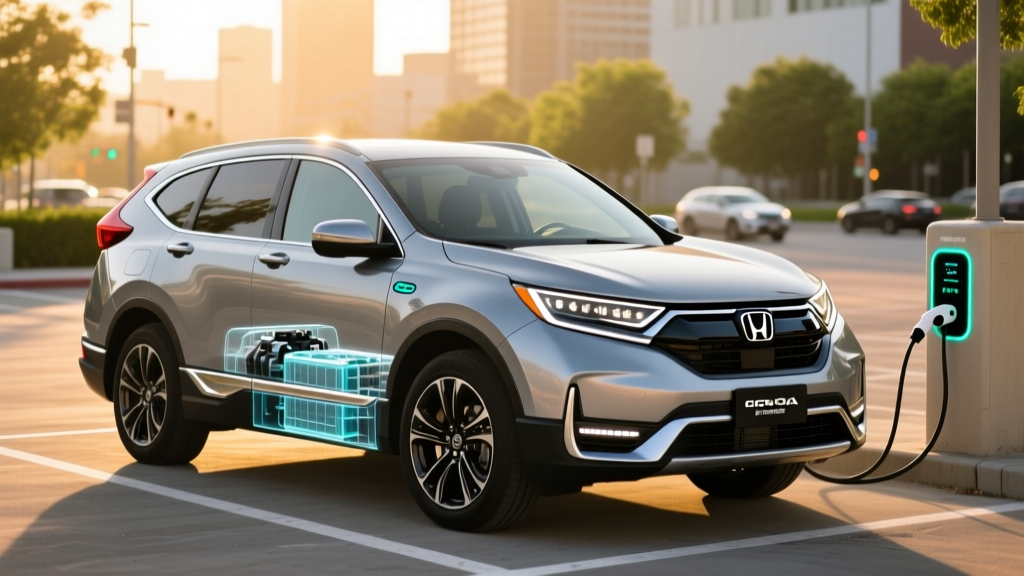
The 2026 Honda CR-V Sport Hybrid occupies a practical sweet spot in the compact crossover segment: it delivers the cargo versatility and all-wheel-drive confidence buyers expect from the CR-V, paired with a two-motor hybrid system that returns an EPA-estimated 40 MPG combined. For the 2026 model year, Honda continues to position the Sport Hybrid trim as the value-oriented electrified option — undercutting the Sport Touring Hybrid on price while retaining the same powertrain and fuel economy.
This is a conventional hybrid electric vehicle (HEV), meaning it never needs to be plugged in. The gasoline engine and regenerative braking handle all battery charging automatically. If you're looking for plug-in electric-only driving, Honda discontinued the CR-V Plug-In Hybrid in the US market after the 2022 model year, so the 2026 lineup is HEV-only. We'll break down exactly what that means for your daily driving and wallet below.
Conventional Hybrid (HEV): Charges its small battery (~1–2 kWh) through the engine and regenerative braking. Never plugs in. Improves fuel economy by 30–50% over a gas-only equivalent.
Plug-In Hybrid (PHEV): Has a larger battery (typically 12–25 kWh) that charges via a plug and provides 20–45 miles of electric-only driving before the gas engine kicks in. Qualifies for partial or full federal tax credits depending on battery capacity and sourcing.
The 2026 CR-V Sport Hybrid is an HEV. No plug, no electric-only range, no federal tax credit — but also no charging hassle.
Fuel Economy: EPA Ratings and Real-World MPG
Fuel efficiency is the headline reason buyers choose the CR-V Hybrid over the standard turbocharged gas model. Here's how the numbers break down according to fueleconomy.gov:
| Metric | FWD | AWD |
|---|---|---|
| City MPG | 43 | 40 |
| Highway MPG | 36 | 34 |
| Combined MPG | 40 | 37 |
| Annual Fuel Cost (est.) | ~$1,550 | ~$1,700 |
Real-World MPG: What to Actually Expect
Honda's two-motor hybrid system excels in stop-and-go city driving, where the electric motor handles low-speed propulsion and regenerative braking recaptures energy that a gas-only car would waste as heat. In real-world city driving, many CR-V Hybrid owners report matching or slightly exceeding the EPA city rating — 41–44 MPG is achievable with moderate acceleration and regular regen use.
Highway driving tells a different story. At sustained 70–80 mph speeds, the aerodynamic drag of a boxy crossover works against efficiency, and the gasoline engine does most of the work. Expect 32–35 MPG on the highway with AWD engaged, roughly matching or falling 1–2 MPG below the EPA estimate. In cold weather (below 35°F), the engine runs more frequently to provide cabin heat and maintain operating temperature, which can drop city MPG by 3–5 MPG until the system warms up.
Over a 15,000-mile annual driving mix, the AWD CR-V Sport Hybrid at 37 MPG combined saves approximately $450–$550 per year in fuel costs compared to the gas-only CR-V AWD (which rates 27 MPG combined), based on $3.50/gallon regular unleaded.
Powertrain Specs: Engine, Motors, and Horsepower
The 2026 CR-V Sport Hybrid uses Honda's fourth-generation two-motor hybrid system, pairing a 2.0-liter Atkinson-cycle four-cylinder engine with two electric motors and a lithium-ion battery pack. Here are the key specifications:
| Component | Specification |
|---|---|
| Engine | 2.0L DOHC Atkinson-cycle I-4 |
| Engine Power | 145 hp @ 6,100 rpm |
| Engine Torque | 138 lb-ft @ 4,500 rpm |
| Drive Motor Output | 181 hp / 247 lb-ft |
| Combined System Output | 204 hp / 247 lb-ft |
| Transmission | e-CVT (direct-drive with lock-up clutch) |
| Hybrid Battery | ~1.06 kWh lithium-ion |
| 0–60 mph (est.) | ~7.6 seconds |
| Drivetrain | FWD or Real-Time AWD™ |
| Towing Capacity | 1,000 lbs |
The combined 204 horsepower represents a meaningful upgrade over the gas-only CR-V's 190 hp turbocharged 1.5L engine. More importantly, the hybrid's 247 lb-ft of torque is available almost instantly from the drive motor, giving the CR-V Hybrid stronger low-speed acceleration and more confident highway merging than the gas model's CVT-dependent power delivery.
Honda's e-CVT is not a traditional belt-and-pulley CVT. It uses a planetary gearset to blend engine and motor power, with a lock-up clutch that creates a direct mechanical connection at highway cruising speeds. The result is smoother, more linear acceleration with less of the "rubber band" drone associated with older CVT designs.
Pricing, Trims, and Tax Credit Eligibility
The 2026 Honda CR-V Hybrid is available in three trims. The Sport Hybrid sits in the middle of the lineup:
| Trim | MSRP (AWD) | Key Features |
|---|---|---|
| Sport Hybrid | ~$36,350 | 18" wheels, heated seats, wireless CarPlay/Android Auto, Honda Sensing |
| Sport-L Hybrid | ~$38,700 | Leather-trimmed seats, power liftgate, wireless charging pad |
| Sport Touring Hybrid | ~$41,850 | Bose audio, navigation, heated steering wheel, hands-free liftgate |
Does the 2026 CR-V Sport Hybrid Qualify for a Federal Tax Credit?
No. The federal §30D Clean Vehicle Credit under current IRS rules applies only to plug-in electric vehicles (BEVs and PHEVs) with a battery capacity of at least 7 kWh. The CR-V Sport Hybrid's ~1.06 kWh battery does not meet this threshold, and as a conventional HEV, it is ineligible by definition.
Some states offer their own incentives for hybrid purchases, though these are increasingly rare as state programs shift focus to zero-emission vehicles. Check your state's energy or environmental agency website for current programs. There is no federal income-cap or MSRP-cap concern here because the vehicle simply doesn't qualify for the credit at all.
Battery Warranty, Reliability, and Replacement Cost
Honda covers the CR-V Hybrid's lithium-ion battery pack for 8 years or 100,000 miles (whichever comes first) under the standard hybrid system warranty. In California Air Resources Board (CARB) states — which include CA, CO, CT, ME, MD, MA, NJ, NY, OR, RI, VT, and WA — the hybrid battery warranty extends to 10 years or 150,000 miles under emissions-related coverage.
What's covered: Battery capacity loss below a functional threshold, cell failure, and hybrid system component defects.
What's not covered: Normal gradual capacity reduction that doesn't affect drivability, damage from accidents or modifications.
Long-Term Reliability
Honda's two-motor hybrid system has been in production since 2014 (Accord Hybrid) and has proven durable in high-mileage fleet and taxi use. The lithium-ion battery pack is relatively small (~1.06 kWh), meaning it operates within a narrow state-of-charge window — typically between 20% and 80% SoC — which is the least stressful operating range for lithium-ion chemistry. This shallow-cycling approach significantly extends battery lifespan compared to BEVs that regularly cycle from 10% to 90%.
Based on historical data from the Accord Hybrid and prior CR-V Hybrid generations, battery degradation is minimal over the first 150,000 miles. Most reported hybrid battery failures in Honda vehicles have occurred due to manufacturing defects (covered under warranty) rather than age-related degradation.
Battery Replacement Cost
If the hybrid battery does need replacement outside of warranty, expect to pay between $2,000 and $4,000 for a refurbished or new OEM battery pack, including labor. This is significantly less than a BEV battery replacement (which can run $10,000–$20,000+) because the CR-V Hybrid's battery is small. Third-party refurbished batteries are available for $1,500–$2,500, though these may carry shorter warranties. Independent hybrid specialists in most metro areas can perform the swap in 2–3 hours.
Who Should Choose the CR-V Sport Hybrid vs. an EV or Gas Car?
✓ Choose the CR-V Sport Hybrid If:
- You don't have access to home or workplace charging
- You want 35–40+ MPG without changing your fueling habits
- You regularly drive in cold climates where BEV range drops 20–30%
- You take frequent road trips over 300 miles and don't want to plan charging stops
- You want a lower purchase price than a comparable BEV crossover
- You live in an apartment or rent and can't install a Level 2 charger
✓ Choose a Full EV Instead If:
- You can charge at home (Level 2) and have a predictable daily commute under 250 miles
- You want to qualify for the $7,500 federal tax credit (income and sourcing rules apply)
- You want zero tailpipe emissions and lower per-mile energy costs
- You want minimal maintenance — no oil changes, fewer moving parts
- You drive primarily in stop-and-go city traffic where EVs are most efficient
- Electricity rates in your area are low (<$0.15/kWh)
✓ Choose the Gas CR-V Instead If:
- You drive fewer than 8,000 miles per year (the hybrid premium won't pay back)
- You want the lowest possible upfront purchase price (~$3,500 less than hybrid)
- You plan to keep the vehicle under 4 years
- You prioritize maximum towing capacity (gas model: 1,500 lbs vs. hybrid: 1,000 lbs)
Payback Math: Hybrid vs. Gas CR-V
The Sport Hybrid AWD carries approximately a $1,500–$1,800 premium over the comparably equipped gas CR-V EX AWD. At 15,000 miles per year and $3.50/gallon fuel, the hybrid saves roughly $500 annually in fuel. That means the hybrid premium pays for itself in about 3 to 3.5 years — after which you're saving money every mile. Over a typical 7-year ownership period, total fuel savings reach approximately $2,500–$3,000, not accounting for the hybrid's slightly higher resale value.
Driving Impressions and Daily Practicality
The CR-V Sport Hybrid drives noticeably differently from its gas-only sibling. Off the line, the electric drive motor delivers its 247 lb-ft of torque immediately, making the hybrid feel quicker in city driving than the 0–60 time suggests. Merging onto highways is confident, and the transition between electric-only, hybrid, and engine-direct-drive modes is seamless — most drivers won't notice the handoffs.
Honda Sensing, the brand's ADAS suite, comes standard on all 2026 CR-V trims and includes adaptive cruise control with low-speed follow, lane-keeping assist, road departure mitigation, and traffic sign recognition. This is a SAE Level 2 driver-assistance system — it supports the driver but requires continuous attention and hands-on-wheel engagement. It does not make the vehicle self-driving.
Cargo volume remains unchanged from the gas CR-V at approximately 36.3 cubic feet behind the rear seats and 76.5 cubic feet with the rear seats folded. The hybrid battery pack is mounted under the cargo floor and does not intrude on interior space. However, there is no spare tire — Honda provides a tire repair kit instead.
Frequently Asked Questions
How many MPG does the 2026 Honda CR-V Sport Hybrid get?
The EPA rates the 2026 CR-V Sport Hybrid AWD at 40 city / 34 highway / 37 combined MPG. The FWD version rates slightly higher at 43 city / 36 highway / 40 combined. In real-world driving, expect to match or exceed city ratings in warm weather, with highway MPG running 1–2 MPG below the EPA sticker at sustained 75+ mph speeds.
Does the CR-V Sport Hybrid need to be plugged in?
No. The 2026 CR-V Sport Hybrid is a conventional hybrid (HEV). It charges its battery automatically through the gasoline engine and regenerative braking. You fuel it exactly like a gas car — at a gas station. Honda does not currently offer a plug-in hybrid (PHEV) CR-V in the US market.
Is the CR-V Hybrid reliable long-term?
Honda's two-motor hybrid system has been in production since 2014 and has demonstrated strong reliability. The hybrid battery operates in a shallow charge cycle (roughly 20–80% SoC), which minimizes degradation. The battery is warranted for 8 years/100,000 miles (10 years/150,000 miles in CARB states). Out-of-warranty replacement costs $2,000–$4,000, which is modest for a hybrid battery.
Does the 2026 CR-V Sport Hybrid qualify for any tax credit?
No federal tax credit applies. The IRS §30D Clean Vehicle Credit is available only for plug-in vehicles (BEVs and PHEVs) with at least 7 kWh of battery capacity. The CR-V Hybrid's ~1.06 kWh battery does not qualify. Some states may offer minor incentives for hybrids — check your state energy office for current programs.
How does the CR-V Hybrid compare to the Toyota RAV4 Hybrid?
The 2026 Toyota RAV4 Hybrid AWD rates at 41 city / 38 highway / 39 combined MPG — slightly better on the highway due to Toyota's series-parallel hybrid architecture. The CR-V Hybrid offers more cargo space (36.3 vs. 37.6 cu ft is competitive), a more refined interior, and slightly more horsepower (204 vs. 219 hp for the RAV4). The RAV4 Hybrid starts around $33,500, undercutting the CR-V Sport Hybrid by roughly $2,500. Both are strong choices; the decision often comes down to brand preference and dealer pricing in your area.
Can the CR-V Hybrid drive on electric power alone?
Briefly, yes. Under light loads at low speeds (typically under 25 mph), the CR-V Hybrid can operate in EV mode for short distances — usually under one mile. This happens automatically in parking lots and stop-and-go traffic. However, there is no EV mode button and no meaningful electric-only range. This is fundamentally different from a PHEV, which can travel 20–45 miles on electricity alone.