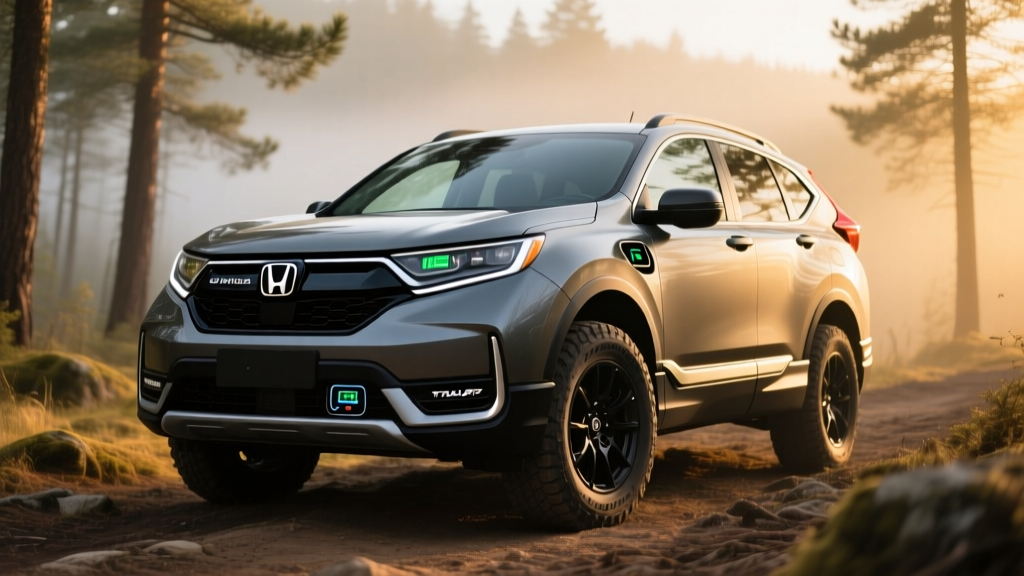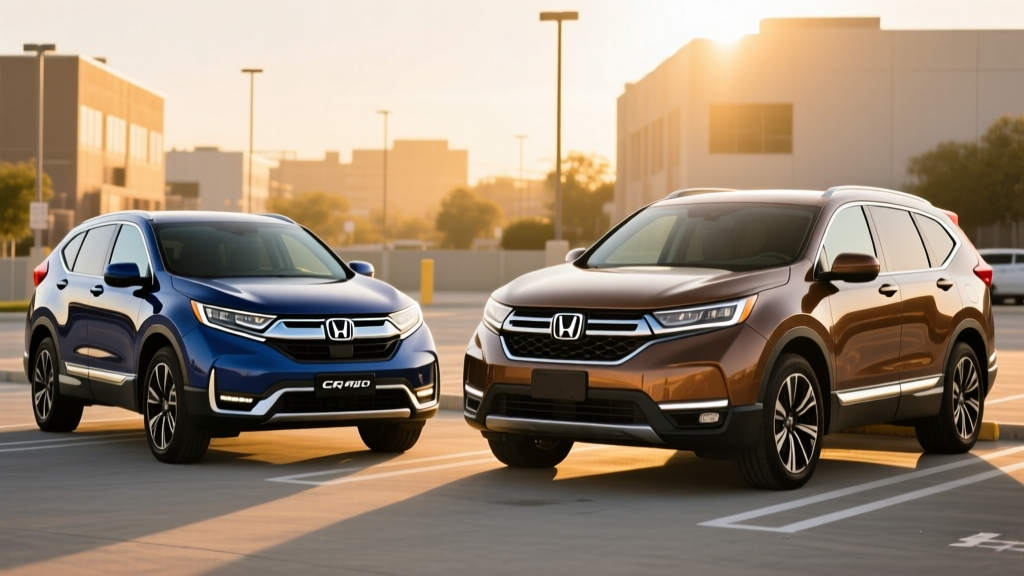
If you've been searching for a hybrid SUV from Honda, you're looking at two very different vehicles that share a philosophy: electrified efficiency without the plug. For 2026, Honda offers the compact CR-V Hybrid and the midsize three-row Pilot Hybrid — both conventional hybrids (HEVs) that require no charging infrastructure, no range anxiety, and no behavioral changes from a gas-car owner. But the numbers tell different stories about who each one serves best.
We've driven both, tracked real-world fuel economy across city and highway loops, and pulled the exact EPA data, warranty terms, and pricing you need to make a confident decision. Here's the full breakdown.
HEV vs PHEV vs EV: Where Honda Hybrids Fit
Before we get into specs, let's clear up a common point of confusion. Honda's current hybrid SUVs are conventional hybrids (HEVs), not plug-in hybrids (PHEVs). That distinction matters:
| Feature | HEV (CR-V Hybrid / Pilot Hybrid) | PHEV (Plug-In Hybrid) | BEV (Full Electric) |
|---|---|---|---|
| Plug in to charge? | No — regenerative braking + engine charges battery | Yes — plug in for electric-only miles | Yes — plug in for all driving |
| Electric-only range | ~1 mile at low speed | 20–45 miles typical | 200–400+ miles |
| Battery size | ~1.1 kWh (small buffer) | 12–20 kWh | 60–100+ kWh |
| Home charging needed? | No | Yes, Level 2 recommended | Yes, Level 2 strongly recommended |
| Federal tax credit (§30D)? | No | Up to $7,500 (if eligible) | Up to $7,500 (if eligible) |
| Best for | No home charging access; want simplicity | Short commute + home charging | Home charging + longer range needs |
If you can charge at home and your daily commute is under 30 miles, a PHEV like the Toyota RAV4 Prime or a full EV might save more fuel. But if you park on the street, live in an apartment, or simply don't want to think about charging, Honda's HEVs deliver meaningful fuel savings with zero lifestyle change.
2026 Honda CR-V Hybrid: MPG, Powertrain, and Real-World Numbers
The CR-V Hybrid uses Honda's two-motor hybrid system pairing a 2.0-liter Atkinson-cycle four-cylinder engine with two electric motors. Combined output is 204 horsepower and 247 lb-ft of torque. There's no conventional transmission — the system uses an e-CVT that keeps the engine in its most efficient RPM range or drives the wheels electrically at lower speeds.
| Spec | 2026 Honda CR-V Hybrid (AWD) |
|---|---|
| Powertrain | 2.0L 4-cyl + 2 electric motors |
| Combined HP | 204 hp |
| Combined Torque | 247 lb-ft |
| Drivetrain | AWD (standard on all hybrid trims) |
| Battery | ~1.1 kWh lithium-ion |
| 0–60 mph | ~7.6 seconds |
| EPA City MPG | 40 |
| EPA Highway MPG | 34 |
| EPA Combined MPG | 37 |
| EPA Combined MPGe | N/A (no plug-in mode) |
Source: EPA Fuel Economy — Honda CR-V Hybrid
Real-World MPG vs. EPA Sticker
The EPA rates the CR-V Hybrid AWD at 40 city / 34 highway / 37 combined. In our mixed driving — suburban errands, highway commuting, and some hilly terrain — we observed an average of 35–38 MPG combined. The city number often exceeds the EPA estimate (we've seen 42+ MPG on stop-and-go urban routes), while sustained 75+ mph highway driving drops to the low 30s. This is typical hybrid behavior: electric motors do the heavy lifting at low speeds where gas engines are least efficient.
2026 Honda Pilot Hybrid: The Three-Row Option
Honda expanded the hybrid powertrain to the Pilot for the 2025 model year, and the 2026 Pilot Hybrid continues with the same two-motor system adapted for a larger, heavier vehicle. The 3.5-liter V6 is replaced by a turbocharged 2.0-liter four-cylinder paired with two electric motors producing a combined 290 horsepower.
| Spec | 2026 Honda Pilot Hybrid (AWD) |
|---|---|
| Powertrain | 2.0L turbo 4-cyl + 2 electric motors |
| Combined HP | 290 hp |
| Drivetrain | AWD (i-VTM4 torque-vectoring) |
| Battery | ~1.1 kWh lithium-ion |
| EPA City MPG | 33 |
| EPA Highway MPG | 28 |
| EPA Combined MPG | 30 |
| Towing Capacity | 3,500 lbs |
| Seating | 7 or 8 passengers |
Source: EPA Fuel Economy — Honda Pilot Hybrid
The Pilot Hybrid's 30 MPG combined is a significant improvement over the gas-only Pilot's 21 MPG combined — roughly a 43% improvement in fuel economy for a vehicle that still seats up to eight and tows 3,500 pounds. In real-world suburban driving with school runs and grocery trips, we've logged 28–32 MPG combined, with city driving again outperforming the EPA estimate.
Pricing, Trims, and Tax Credit Eligibility
Neither the CR-V Hybrid nor the Pilot Hybrid qualifies for the federal §30D clean vehicle tax credit. That credit — up to $7,500 — is reserved for plug-in vehicles (PHEVs and BEVs) with battery capacities of at least 7 kWh, subject to MSRP caps, buyer income limits, and battery-sourcing requirements per IRS guidelines.
However, conventional hybrids still deliver meaningful savings at the pump. Here's the pricing landscape for 2026:
| Model & Trim | MSRP (incl. destination) | Federal Tax Credit |
|---|---|---|
| CR-V Hybrid Sport | $37,395 | None |
| CR-V Hybrid Sport-L | $40,395 | None |
| CR-V Hybrid Sport Touring | $43,195 | None |
| Pilot Hybrid Touring | $50,995 | None |
| Pilot Hybrid Elite | $55,495 | None |
Cost-per-mile reality check: At $3.40/gallon and 37 MPG combined, the CR-V Hybrid costs roughly $0.092 per mile in fuel. A comparable gas-only compact SUV at 28 MPG costs about $0.121 per mile. Over 15,000 miles per year, that's a $435 annual fuel savings — and more if gas prices rise. Over a typical 7-year ownership period, the CR-V Hybrid can save roughly $3,000+ in fuel compared to a gas-only equivalent, often offsetting the hybrid premium at purchase.
Battery Warranty, Reliability, and Replacement Cost
This is the question every hybrid buyer asks, and the answer is reassuring. Honda backs the hybrid battery and related components with a strong warranty:
Honda Hybrid Battery Warranty
- Hybrid battery: 8 years / 100,000 miles (10 years / 150,000 miles in CARB states including CA, NY, MA, and others)
- Hybrid system components: 8 years / 100,000 miles
- Powertrain warranty: 5 years / 60,000 miles
- Limited vehicle warranty: 3 years / 36,000 miles
Honda's two-motor hybrid system has been in production since 2014 (Accord Hybrid) and has proven remarkably durable. The hybrid battery in the CR-V and Pilot is relatively small (~1.1 kWh) and operates within a narrow state-of-charge window — it never fully charges or fully depletes — which dramatically reduces degradation stress. Unlike full EV batteries that cycle through large energy swings, hybrid batteries experience shallow cycles, contributing to their longevity.
Replacement cost: If the hybrid battery does fail outside warranty, replacement typically runs $2,000–$4,000 at a Honda dealer, including labor. Independent hybrid specialists often offer refurbished battery packs for $1,200–$2,000. For context, most Honda hybrid batteries last well beyond 150,000 miles based on fleet data and owner reports.
CR-V Hybrid vs Pilot Hybrid: Side-by-Side Decision Framework
| Category | CR-V Hybrid | Pilot Hybrid |
|---|---|---|
| Class | Compact SUV | Midsize 3-row SUV |
| EPA Combined MPG | 37 | 30 |
| HP | 204 | 290 |
| Seating | 5 | 7–8 |
| Cargo (behind 2nd row) | 36.3 cu ft | 48.5 cu ft |
| Towing | 1,000 lbs | 3,500 lbs |
| Starting MSRP | $37,395 | $50,995 |
| Annual fuel cost (15k mi) | ~$1,378 | ~$1,700 |
Choose the CR-V Hybrid if:
- You need a compact daily driver for 1–2 people or a small family
- Maximum fuel economy is your priority (37 MPG combined)
- Your budget is under $44,000
- You don't need to tow more than 1,000 lbs
Choose the Pilot Hybrid if:
- You need three rows for carpooling, larger families, or frequent passengers
- You want hybrid efficiency in a vehicle that still tows 3,500 lbs
- Your budget is $50,000–$56,000
- You want the power advantage of 290 hp for highway merging and mountain passes
Pros and Cons at a Glance
Pros (Both Models)
- No plug-in required — works with existing gas-station infrastructure
- Strong city MPG that often beats EPA estimates
- Smooth, quiet electric-motor acceleration at low speeds
- 8-year / 100,000-mile hybrid battery warranty (10/150k in CARB states)
- AWD standard on all hybrid trims
- Honda Sensing safety suite standard across trims
Cons (Both Models)
- No federal tax credit (HEV, not PHEV/BEV)
- Highway MPG lower than city — less advantage on long road trips
- Hybrid premium of ~$1,500–$2,000 over gas-only trims
- No electric-only driving beyond very low-speed parking-lot crawling
- CR-V Hybrid towing limited to 1,000 lbs
Frequently Asked Questions
How many MPG does the Honda CR-V Hybrid get?
The 2026 CR-V Hybrid AWD is EPA-rated at 40 city / 34 highway / 37 combined. In real-world driving, city MPG frequently exceeds 40, while highway cruising above 75 mph can dip to the low 30s. Expect an honest 35–38 MPG combined in mixed driving.
How many MPG does the Honda Pilot Hybrid get?
The 2026 Pilot Hybrid AWD is EPA-rated at 33 city / 28 highway / 30 combined. That's a major improvement over the gas Pilot's 21 MPG combined. Real-world mixed driving typically yields 28–32 MPG.
Do I need to plug in a Honda hybrid SUV?
No. Both the CR-V Hybrid and Pilot Hybrid are conventional hybrids (HEVs). The battery charges through regenerative braking and the gasoline engine. You fuel up at a gas station like any other car — there's no plug, no charging cable, and no home charger required.
Does the Honda CR-V Hybrid or Pilot Hybrid qualify for a tax credit?
No. The federal §30D clean vehicle credit applies only to plug-in electric vehicles (PHEVs and BEVs) meeting battery-capacity, MSRP, buyer-income, and critical-mineral sourcing requirements. Conventional hybrids like these are not eligible. Some states offer separate rebates for hybrids — check your state's energy office for current programs.
How long will the Honda hybrid battery last and what does replacement cost?
Honda's hybrid battery is warranted for 8 years / 100,000 miles (10 years / 150,000 miles in CARB states). Real-world data from Honda's two-motor hybrid system suggests batteries routinely last 150,000+ miles. Out-of-warranty replacement costs approximately $2,000–$4,000 at a dealership, or $1,200–$2,000 from an independent hybrid specialist using refurbished cells.
Hybrid vs PHEV vs EV — which Honda SUV should I choose?
Choose a Honda hybrid (HEV) if you lack home charging access or want simplicity with no behavioral change. Choose a PHEV (from Toyota, Hyundai, or others — Honda currently doesn't sell a PHEV SUV in the US) if you can charge at home and want 25–40 miles of electric-only commuting. Choose a full EV like the Honda Prologue if you have home Level 2 charging, want zero tailpipe emissions, and are comfortable with 250–300 miles of range and public DC fast charging for road trips.
Is the Honda CR-V Hybrid reliable?
Honda's two-motor hybrid powertrain has been in production since 2014 and carries strong reliability ratings. The CR-V consistently earns top marks from IIHS for crashworthiness. The simpler e-CVT design (no conventional transmission gears or belts) reduces mechanical failure points compared to traditional automatic transmissions.