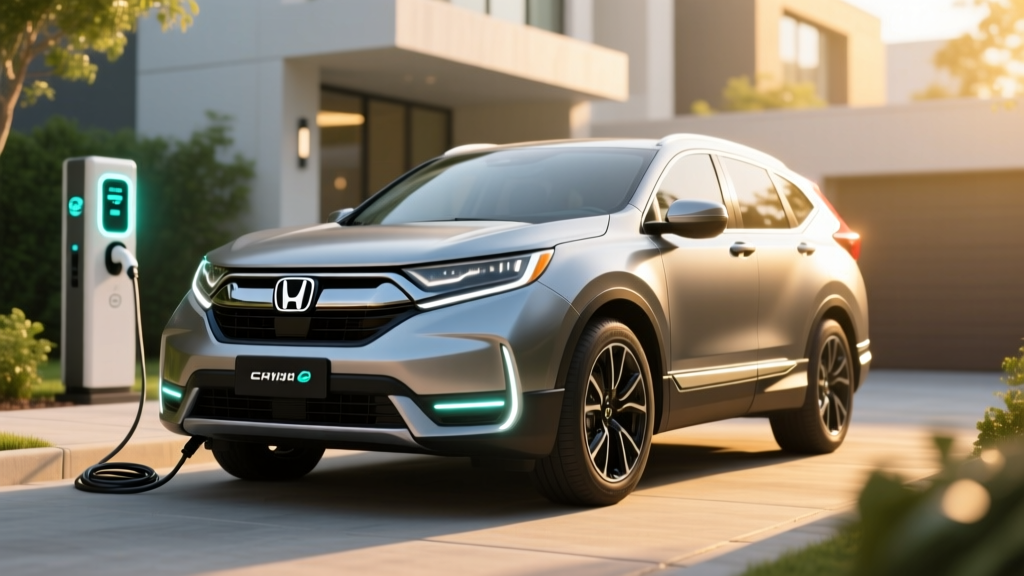
The Honda CR-V Hybrid has become one of the best-selling electrified compact SUVs in the U.S., and for buyers researching Honda CR-V Hybrid reliability, the data is encouraging. Honda's two-motor hybrid system has matured over multiple generations, the powertrain carries strong warranty coverage, and real-world fuel economy often exceeds the EPA sticker in city driving. For 2026, the CR-V Hybrid continues with the proven fourth-generation two-motor hybrid architecture — no plug required — delivering up to 40 MPG combined across the Sport, Sport Touring, and Sport-L trims.
This guide covers everything a reliability-focused buyer needs: exact EPA and real-world MPG, the hybrid battery's warranty and expected lifespan, powertrain durability data, total cost of ownership, and how the CR-V Hybrid stacks up against plug-in hybrid and full EV alternatives.
2026 Honda CR-V Hybrid Powertrain and Efficiency Specs
Before evaluating reliability, it helps to understand what's under the hood. The 2026 CR-V Hybrid uses Honda's fourth-generation two-motor hybrid system paired with a 2.0-liter Atkinson-cycle four-cylinder engine. Unlike turbocharged gas models, the hybrid powertrain eliminates the traditional transmission entirely — the drive motor handles propulsion directly at low and medium speeds, while the engine acts primarily as a generator. At highway cruising speeds, a lock-up clutch connects the engine directly to the wheels for efficiency.
| Spec | Value |
|---|---|
| Powertrain | 2.0L Atkinson-cycle I4 + two-motor hybrid system |
| Combined Horsepower | 204 hp |
| Combined Torque | 247 lb-ft (drive motor) |
| Drivetrain | FWD or AWD (Real Time AWD with torque vectoring) |
| Transmission | None (direct-drive motor + engine lock-up clutch) |
| EPA MPG (FWD) | 43 city / 36 highway / 40 combined |
| EPA MPG (AWD) | 40 city / 34 highway / 37 combined |
| Fuel Tank | 14.0 gallons |
| Total Range (FWD) | ~560 miles |
| 0–60 mph | ~7.6 seconds |
| Battery Type | Lithium-ion (sealed, no plug-in) |
| Towing Capacity | 1,000 lbs |
Source: EPA fueleconomy.gov, Honda Newsroom
How Many MPG Does the Honda CR-V Hybrid Actually Get?
The EPA rates the front-wheel-drive CR-V Hybrid at 43 city / 36 highway / 40 combined MPG. All-wheel-drive trims drop slightly to 40 city / 34 highway / 37 combined. But EPA stickers don't tell the full story with hybrids.
Hybrids consistently outperform their EPA city rating in stop-and-go traffic because regenerative braking recovers energy that gas cars waste as heat. Owners on fueleconomy.gov report averaging 38–42 MPG combined in mixed driving with the AWD model. In warm-weather city conditions, 44–47 MPG is achievable. Highway-only road trips at 75+ mph will pull figures down to 32–34 MPG, since the electric motor's advantage diminishes at sustained high speed and the engine carries more of the load.
| Driving Scenario | FWD (EPA) | FWD (Real-World) | AWD (EPA) | AWD (Real-World) |
|---|---|---|---|---|
| City (stop-and-go) | 43 MPG | 44–47 MPG | 40 MPG | 41–44 MPG |
| Highway (65–70 mph) | 36 MPG | 34–36 MPG | 34 MPG | 32–34 MPG |
| Combined (mixed) | 40 MPG | 39–42 MPG | 37 MPG | 36–39 MPG |
| Cold weather (below 32°F) | — | 34–37 MPG | — | 31–34 MPG |
Cold weather reduces MPG by roughly 8–12% because the engine runs more frequently to provide cabin heat and the battery's charge/discharge efficiency drops at low temperatures. This is normal for all hybrids and is far less severe than the 20–40% range loss EVs experience in winter.
Is the Honda CR-V Hybrid Reliable? Battery and Powertrain Data
Reliability is where the CR-V Hybrid has a structural advantage over turbocharged gas vehicles. The hybrid system eliminates the conventional transmission — historically one of the most failure-prone components in any vehicle. The two-motor hybrid unit has far fewer moving parts than a multi-speed automatic or CVT, and the 2.0L Atkinson-cycle engine runs under less stress than a turbocharged 1.5L because it's supplemented by electric torque.
Honda Hybrid Battery Warranty and Expected Lifespan
Honda covers the CR-V Hybrid's lithium-ion battery pack for 8 years / 100,000 miles (10 years / 150,000 miles in CARB-emission states including California, New York, Massachusetts, and others). This warranty covers capacity loss below a defined threshold and any defects in the battery management system, hybrid control unit, or power electronics.
Regarding long-term battery health: Honda's hybrid batteries are relatively small (roughly 1.1 kWh usable capacity) compared to EV or PHEV packs. This small size means the battery cycles through a shallow depth of discharge — it never fully depletes or fully charges during normal operation. The battery management system maintains a tight state-of-charge window, which dramatically reduces degradation. Based on historical data from Honda's hybrid lineup (Insight, Accord Hybrid, CR-V Hybrid since 2020), hybrid battery replacements before 150,000 miles are uncommon.
Hybrid Battery Replacement Cost
If a battery replacement is needed out of warranty, expect to pay between $2,000 and $4,000 for a new OEM pack including labor. Refurbished or aftermarket options may be available for $1,200–$2,500. This is significantly less than EV battery replacements ($5,000–$20,000+) because the CR-V Hybrid's battery is small. For context, the hybrid system's power electronics and drive motor are also covered under the 8-year/100,000-mile warranty.
Common Reliability Considerations
Based on owner reports and NHTSA data, the CR-V Hybrid's major reliability strengths include:
- No transmission failures — the direct-drive hybrid unit has no gears, belts, or torque converter to fail
- Reduced brake wear — regenerative braking handles most deceleration, extending pad life to 80,000–100,000+ miles
- Engine longevity — the Atkinson-cycle 2.0L runs at lower stress; timing chain (not belt) eliminates a maintenance item
Minor issues reported across model years have included infotainment software glitches and occasional 12V battery drain from parasitic loads (common in modern vehicles with always-on telematics). Neither affects the hybrid powertrain.
Conventional Hybrid (HEV) vs. Plug-In Hybrid (PHEV): Where the CR-V Fits
The Honda CR-V Hybrid is a conventional hybrid (HEV) — it cannot be plugged in and has no electric-only driving range. Honda does not currently offer a CR-V plug-in hybrid in the U.S. market. Here's what that means for buyers comparing options:
- No plug-in charging needed
- ~1.1 kWh battery (self-charging via engine + regen)
- 40 MPG combined, no electric-only range
- No federal tax credit eligibility
- Lower purchase price, simpler ownership
- Plugs into Level 1 or Level 2 charger
- 18.1 kWh battery, ~42 miles electric-only
- 94 MPGe combined (electric + gas)
- May qualify for partial federal/state credits
- Higher purchase price, needs charging access
The CR-V Hybrid's conventional setup is ideal for buyers who want maximum fuel efficiency without changing their fueling habits. You simply fill up at a gas station — the hybrid system handles the rest. If you have home charging access and a short commute, a PHEV competitor like the Toyota RAV4 Prime or Hyundai Tucson PHEV may deliver lower running costs by covering daily miles on electricity alone.
2026 Honda CR-V Hybrid Pricing and Tax Credit Eligibility
| Trim | Drivetrain | MSRP |
|---|---|---|
| Sport | FWD | $35,395 |
| Sport | AWD | $36,895 |
| Sport-L | AWD | $38,995 |
| Sport Touring | AWD | $41,995 |
Does the CR-V Hybrid Qualify for a Federal Tax Credit?
No. The Honda CR-V Hybrid is a conventional hybrid (HEV), not a plug-in vehicle. Under current IRS §30D rules, only battery electric vehicles (BEVs) and plug-in hybrid electric vehicles (PHEVs) with at least 7 kWh of battery capacity are eligible for the federal clean vehicle credit (up to $7,500). The CR-V Hybrid's ~1.1 kWh battery does not qualify.
Some states and local utilities offer rebates for conventional hybrids, but these vary widely by jurisdiction. Check your state energy office or utility provider for current programs. The federal credit's MSRP caps, income limits, and battery-sourcing requirements apply only to plug-in vehicles regardless.
CR-V Hybrid vs. Full EV vs. Gas: Which Should You Choose?
Choose the CR-V Hybrid if: You want 40 MPG without changing your fueling routine, don't have reliable home or workplace charging access, take frequent road trips where charging infrastructure is uncertain, or want lower upfront cost than a comparable EV.
Choose a full EV (e.g., Hyundai Ioniq 5, Tesla Model Y) if: You have Level 2 home charging, your daily commute is under 250 miles round-trip, you want zero tailpipe emissions, and you're eligible for the $7,500 federal credit that narrows the price gap.
Choose the gas CR-V (1.5T) if: Your budget is strictly under $32,000, you drive fewer than 8,000 miles per year (where fuel savings don't offset the hybrid premium), or you need the 1,500-lb towing capacity of the turbo model.
Total Cost of Ownership: 5-Year Comparison
| Cost Factor | CR-V Hybrid (AWD) | CR-V Gas 1.5T (AWD) | EV (e.g., Ioniq 5) |
|---|---|---|---|
| Purchase Price (base) | $36,895 | $33,395 | $42,600 |
| Federal Tax Credit | $0 | $0 | Up to $7,500 |
| Effective Purchase Price | $36,895 | $33,395 | $35,100 |
| Fuel/Energy (5 yr) | $5,100 | $7,480 | $2,700 |
| Maintenance (5 yr) | $2,200 | $3,100 | $1,500 |
| Estimated Insurance (5 yr) | $7,800 | $7,200 | $8,400 |
| 5-Year Total | $51,995 | $51,175 | $47,700 |
Fuel costs based on EPA combined MPG and 15,000 miles/year. EV charging at $0.13/kWh national average. Insurance estimates vary significantly by driver profile and state. Source: fueleconomy.gov, AAA Your Driving Costs.
The CR-V Hybrid nearly closes the cost gap with the gas model over five years through fuel and maintenance savings, while requiring zero behavioral change. A full EV with the federal credit wins on pure economics if you qualify and have home charging.
Honda CR-V Hybrid Reliability: Frequently Asked Questions
How long will the Honda CR-V Hybrid battery last?
Based on Honda's hybrid track record and the shallow-cycling battery management strategy, the CR-V Hybrid battery is designed to last the life of the vehicle — typically 150,000 to 200,000+ miles. Honda's warranty covers it for 8 years/100,000 miles (10 years/150,000 miles in CARB states). Out-of-warranty replacements run $2,000–$4,000, which is manageable compared to EV battery costs.
Does the CR-V Hybrid need to be plugged in?
No. The CR-V Hybrid is a conventional (HEV) hybrid. It charges its small battery through regenerative braking and the gasoline engine. You fuel it exclusively at gas stations — no plug, no charger, no range anxiety.
Is the CR-V Hybrid slower than the gas model?
The hybrid makes 204 hp combined versus the gas 1.5T's 190 hp. The hybrid's electric motor delivers instant torque, making it feel quicker in city driving and merging. The 0–60 mph time of ~7.6 seconds is comparable to the gas model. The trade-off is towing capacity: 1,000 lbs for the hybrid versus 1,500 lbs for the gas turbo.
How does the CR-V Hybrid compare to the Toyota RAV4 Hybrid for reliability?
Both are strong. Toyota has a longer hybrid history (since the 2001 Prius) and slightly larger real-world sample sizes. Honda's two-motor system is newer but has proven robust since its 2020 CR-V Hybrid debut. Both offer 8-year/100,000-mile hybrid battery warranties. The RAV4 Hybrid rates 41 MPG combined (AWD) versus the CR-V Hybrid's 37 MPG combined (AWD). The CR-V counters with a more refined interior and slightly better highway ride quality.
Does the CR-V Hybrid qualify for any tax credits in 2026?
Not at the federal level. The IRS §30D clean vehicle credit requires a plug-in vehicle with at least 7 kWh of battery capacity. The CR-V Hybrid's ~1.1 kWh pack doesn't meet this threshold. Some states and utilities offer hybrid-specific rebates — check your local programs. If tax credit eligibility is a priority, consider a PHEV or full EV.
What maintenance does the CR-V Hybrid require?
Routine maintenance is minimal: oil changes every 7,500–10,000 miles (the engine runs less than in a gas car, so oil stays cleaner longer), cabin air filter, tire rotations, and brake fluid inspection. Brake pads last significantly longer thanks to regenerative braking. There is no transmission fluid to change (no conventional transmission), no spark plugs to replace at short intervals, and no timing belt (the 2.0L uses a timing chain).