Honda CR-V Hybrid Gas Mileage: What the EPA Says vs. What You'll Actually Get
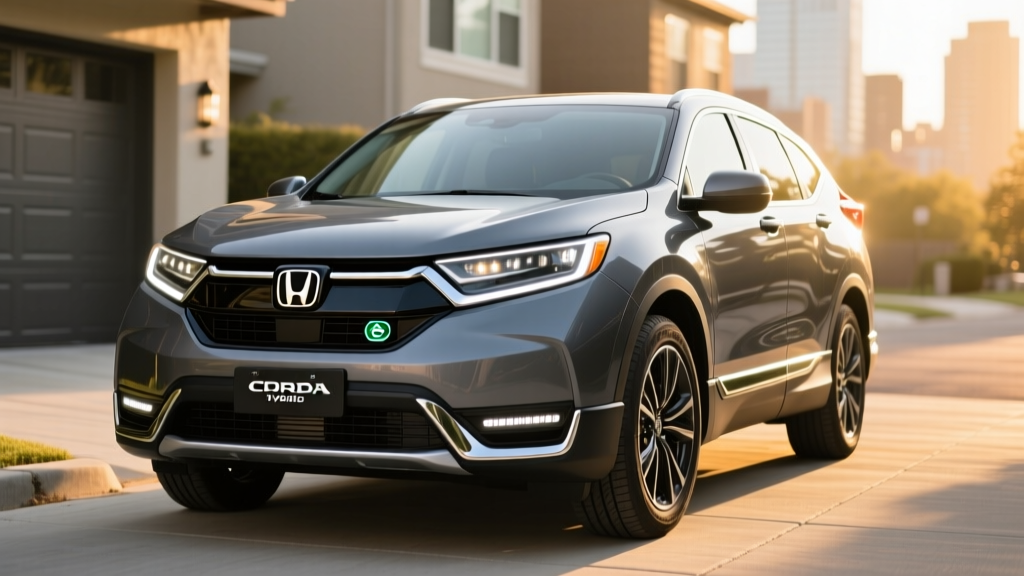
The Honda CR-V Hybrid remains one of the best-selling electrified compact SUVs in the US, and for good reason: it delivers strong fuel economy without requiring any change in driving habits or home charging infrastructure. For the 2026 model year, Honda continues the sixth-generation CR-V Hybrid with the proven two-motor hybrid system, refined efficiency, and a starting price that undercuts many rivals.
If you're researching Honda CR-V hybrid gas mileage, this guide covers everything — EPA ratings, real-world fuel economy, the powertrain behind the numbers, battery longevity, and whether this hybrid is the right choice versus a PHEV or full EV.
| Drivetrain | City MPG | Highway MPG | Combined MPG |
|---|---|---|---|
| FWD (Sport, Sport-L) | 43 | 36 | 40 |
| AWD (Sport, Sport-L, Sport Touring) | 40 | 34 | 37 |
Source: EPA fueleconomy.gov
The front-wheel-drive CR-V Hybrid achieves an EPA-estimated 40 MPG combined — a 43/36 city/highway split that reflects how hybrid systems excel in stop-and-go driving where regenerative braking recovers the most energy. The all-wheel-drive variant drops to 37 MPG combined (40 city / 34 highway), a reasonable trade for year-round traction.
Real-World MPG: How Does the CR-V Hybrid Perform Beyond the Sticker?
EPA estimates are a starting point, not a guarantee. In real-world driving, the CR-V Hybrid's fuel economy varies meaningfully based on conditions:
- City and suburban driving: Many owners report exceeding the EPA city estimate, seeing 44–46 MPG on FWD models. The two-motor system runs on electric power extensively at low speeds, only engaging the 2.0L engine under heavier acceleration or when the battery depletes.
- Highway cruising at 70–80 mph: Expect 32–35 MPG on AWD models. Hybrids lose their advantage at sustained high speeds because the engine runs continuously and aerodynamic drag dominates. This is where a diesel or efficient gas car might match or beat a hybrid.
- Cold weather (below 35°F): Fuel economy drops 10–20% in winter. The engine runs more frequently to provide cabin heat (the CR-V Hybrid lacks a heat pump, which is a BEV feature), and the battery's charge/discharge efficiency decreases in cold temperatures.
- Mountainous terrain: Short-term MPG can dip into the mid-20s on steep climbs, though regenerative braking on descents partially recovers the loss.
Real-world fuel economy expectation: EPA combined 40 MPG (FWD) / 37 MPG (AWD). Plan for 35–42 MPG in mixed driving, 30–34 MPG on sustained highway trips, and a 10–20% reduction in freezing weather.
HEV vs. PHEV: The Honda CR-V Is a Conventional Hybrid — Here's What That Means
A common source of confusion: the Honda CR-V Hybrid is a conventional hybrid (HEV), not a plug-in hybrid (PHEV). Honda does not currently offer a CR-V plug-in hybrid in the US market. Understanding this distinction is critical before you buy.
| Feature | HEV (CR-V Hybrid) | PHEV (e.g., Toyota RAV4 Prime) | BEV (e.g., Tesla Model Y) |
|---|---|---|---|
| Plug-in charging | No — self-charging via engine + regen | Yes — Level 1/Level 2 | Yes — Level 1/2/DC fast |
| Electric-only range | ~1 mile at low speed | 35–42 miles typical | 250–330 miles typical |
| Gas engine | Yes, primary power + charging | Yes, backup + highway | None |
| Battery size | ~1.1 kWh (small buffer) | 13–18 kWh usable | 60–90 kWh usable |
| Federal tax credit (§30D) | Not eligible | Up to $7,500 (if eligible) | Up to $7,500 (if eligible) |
| Fuel cost per mile | ~$0.09 (at $3.50/gal, 40 MPG) | ~$0.04 electric / $0.09 gas | ~$0.04 (at $0.15/kWh) |
The CR-V Hybrid's small ~1.1 kWh lithium-ion battery acts as a buffer — it captures energy from regenerative braking and the engine, then deploys it for electric assist during acceleration and low-speed driving. You never plug it in. You simply fill up at a gas station like any conventional car, but the hybrid system squeezes significantly more miles from each gallon.
Powertrain: What Drives the CR-V Hybrid's Efficiency
| Specification | Detail |
|---|---|
| Engine | 2.0L Atkinson-cycle 4-cylinder |
| Engine output | 145 hp / 138 lb-ft torque |
| Electric motors | Dual-motor system (propulsion + generator) |
| Propulsion motor output | 184 hp / 247 lb-ft torque |
| Combined system output | 204 hp / 247 lb-ft torque |
| Transmission | Direct-drive (no traditional CVT/gears) |
| Drivetrain | FWD standard, AWD available (mechanical rear axle) |
| 0–60 mph | ~7.6 seconds (FWD), ~7.8 seconds (AWD) |
| Towing capacity | 1,000 lbs |
| Hybrid battery | ~1.1 kWh lithium-ion |
Honda's fourth-generation two-motor hybrid system is one of the most refined in the industry. Unlike Toyota's planetary gear-set approach, Honda uses a series-parallel layout: at low speeds, the propulsion motor drives the wheels while the engine acts solely as a generator. At highway speeds, a lock-up clutch connects the engine directly to the wheels for efficiency. This means the electric motor handles the heavy lifting in city driving — exactly where it's most effective.
The AWD system uses a mechanical driveshaft to the rear axle (not a separate rear electric motor, as some competitors use), which provides confident traction but adds weight and slightly reduces fuel economy versus FWD.
Pricing, Trims, and Tax Credit Eligibility
The 2026 Honda CR-V Hybrid is available in three trims, all positioned in the upper half of the CR-V lineup:
- Sport (FWD): ~$35,950 MSRP
- Sport (AWD): ~$37,450 MSRP
- Sport-L (AWD): ~$39,450 MSRP
- Sport Touring (AWD): ~$42,350 MSRP
Prices are approximate and may vary by dealer. Destination charge additional.
Federal Tax Credit Status
The Honda CR-V Hybrid does NOT qualify for the federal §30D clean vehicle tax credit. Under current IRS rules, the §30D credit applies only to plug-in electric vehicles (PHEVs and BEVs) with a minimum battery capacity of 7 kWh. The CR-V Hybrid's ~1.1 kWh battery falls far below this threshold.
Some states and local utilities offer rebates for conventional hybrids, though these are increasingly rare as incentive programs shift toward plug-in vehicles. Check your state energy office or utility provider for current programs.
Battery Longevity, Warranty, and Replacement Costs
Hybrid battery reliability is consistently the top concern for first-time hybrid buyers. Here's what the data shows:
Honda Hybrid Battery Warranty
- Coverage: 8 years / 100,000 miles (10 years / 150,000 miles in CARB states including CA, NY, MA, and others)
- What's covered: Defects and capacity loss below a defined threshold (typically ~70% of original capacity)
- Hybrid system components: Also covered under the 8yr/100k warranty, including the inverter, electric motors, and control systems
Honda's hybrid battery packs are engineered for the life of the vehicle. The ~1.1 kWh battery operates in a narrow state-of-charge window (roughly 40–60%), which dramatically reduces degradation compared to a full EV battery that cycles from 10% to 90%. Real-world data from earlier-generation Honda hybrids (Insight, Accord Hybrid) shows battery packs routinely lasting 150,000–200,000+ miles without significant capacity loss.
If replacement is needed out of warranty, a Honda CR-V Hybrid battery pack typically costs $2,000–$3,500 including labor at a dealership. Independent hybrid specialists often offer refurbished packs for $1,200–$2,000. This is far less than a full EV battery replacement ($8,000–$20,000+), reflecting the CR-V's much smaller battery.
Who Should Buy the CR-V Hybrid — And Who Should Look Elsewhere
Choose the CR-V Hybrid if:
- You want better fuel economy with zero lifestyle changes — no plugs, no apps, no charging planning
- Your commute is city-heavy or suburban (where the hybrid system delivers peak MPG)
- You want a mainstream SUV with strong resale value, Honda reliability, and widely available service
- You don't have access to home or workplace charging (apartment, street parking)
- You want AWD for snow/rain without the range penalty of a full EV in cold weather
Look at a PHEV or BEV instead if:
- You have home charging and want to drive on electricity for daily commutes (a PHEV like the RAV4 Prime gives 42 miles electric-only)
- You want to qualify for the $7,500 federal tax credit (only available on plug-in vehicles)
- Your daily driving is under 40 miles round-trip and you want near-zero fuel costs on electricity
- You want to minimize your carbon footprint as much as possible (BEVs produce significantly less lifecycle emissions in regions with clean grids)
- You need more than 1,000 lbs of towing capacity
CR-V Hybrid vs. Key Competitors
| Model | Combined MPG | Combined HP | Starting MSRP | AWD MPG |
|---|---|---|---|---|
| Honda CR-V Hybrid | 40 (FWD) / 37 (AWD) | 204 | ~$35,950 | 37 |
| Toyota RAV4 Hybrid | 41 (AWD) | 219 | ~$33,800 | 41 |
| Hyundai Tucson Hybrid | 38 (AWD) | 226 | ~$34,500 | 38 |
| Ford Escape Hybrid | 39 (FWD) / 37 (AWD) | 198 | ~$34,000 | 37 |
| Kia Sportage Hybrid | 38 (FWD) / 34 (AWD) | 227 | ~$32,500 | 34 |
The Toyota RAV4 Hybrid edges the CR-V on combined MPG (41 vs. 37 for AWD models) and starts slightly lower, making it the efficiency leader in the segment. However, the CR-V Hybrid offers a more refined interior, better ride quality, and a more intuitive infotainment system in higher trims. The Hyundai Tucson Hybrid delivers strong power (226 hp) but trails slightly on fuel economy.
Frequently Asked Questions
How many MPG does the Honda CR-V Hybrid get?
The 2026 Honda CR-V Hybrid gets an EPA-estimated 40 MPG combined (43 city / 36 highway) with front-wheel drive, and 37 MPG combined (40 city / 34 highway) with all-wheel drive. In real-world city driving, many owners exceed the EPA city estimate, seeing 44–46 MPG.
Does the Honda CR-V Hybrid need to be plugged in?
No. The CR-V Hybrid is a conventional hybrid (HEV). It charges its own small battery through regenerative braking and the gasoline engine. You simply fill it with gas like a regular car — there is no plug, no charging cable, and no need for a home charger.
Is there a Honda CR-V plug-in hybrid (PHEV)?
Honda does not currently offer a CR-V PHEV in the United States. The CR-V e:PHEV is sold in China and some other markets, but not in North America. If you need a plug-in hybrid compact SUV, consider the Toyota RAV4 Prime (42 miles electric range) or Hyundai Tucson PHEV (33 miles electric range).
Does the Honda CR-V Hybrid qualify for a tax credit?
No. The federal §30D clean vehicle tax credit requires a minimum 7 kWh battery and plug-in capability. The CR-V Hybrid's ~1.1 kWh battery does not qualify. No current federal incentive exists for conventional hybrids. Check your state and utility for possible local rebates.
How long will the Honda CR-V Hybrid battery last?
Honda covers the hybrid battery for 8 years / 100,000 miles (10 years / 150,000 miles in CARB states). Based on long-term data from Honda's hybrid fleet, these batteries routinely last 150,000–200,000+ miles. The small battery operates in a narrow charge window, which significantly extends its lifespan. Replacement cost, if needed out of warranty, is approximately $2,000–$3,500.
Is the CR-V Hybrid good for highway driving?
It's adequate but not where the hybrid system shines. At sustained highway speeds (70–80 mph), expect 32–35 MPG on AWD models — only marginally better than the non-hybrid CR-V's highway economy. The hybrid's biggest advantage is in city and suburban driving, where regenerative braking and electric-only low-speed operation deliver 40+ MPG.
How does the CR-V Hybrid compare to a full EV?
A full EV like the Tesla Model Y or Hyundai Ioniq 5 offers dramatically lower fuel costs (~$0.04/mile vs. ~$0.09/mile), zero tailpipe emissions, and eligibility for the $7,500 federal tax credit. However, EVs require home or workplace charging access, cost more upfront, and involve range planning on long road trips. The CR-V Hybrid is ideal if you can't charge at home or want zero lifestyle changes while still improving fuel economy by ~40% over a gas-only compact SUV.