The Real Cost of Owning a 2026 Honda CR-V Hybrid
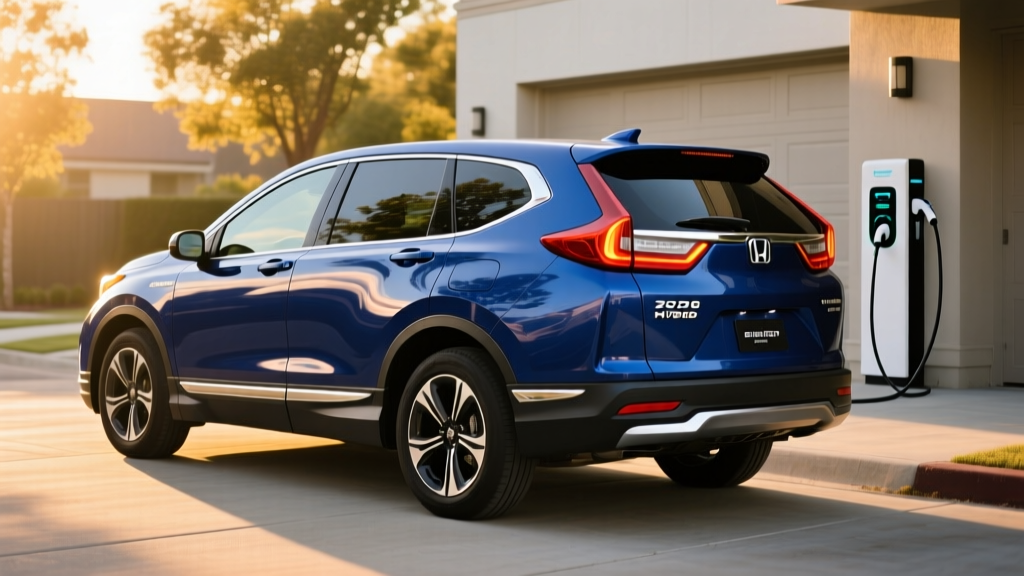
The Honda CR-V Hybrid remains one of the best-selling electrified compact SUVs in America, and for good reason: it delivers 40 MPG combined without requiring a plug, a charger, or any change in driving habits. But when buyers search for the true Honda CR-V Hybrid cost, the sticker price is only the beginning. Between trim-level pricing, fuel savings versus the gas-only CR-V, insurance premiums, and long-term battery reliability, the total picture matters far more than the MSRP alone.
This guide breaks down every dollar — from the base LX Hybrid at $35,395 to the fully loaded Sport Touring Hybrid at $42,895 — and shows exactly how the hybrid's fuel economy translates into real-world savings over five years of ownership.
2026 Honda CR-V Hybrid Pricing by Trim
Honda offers the hybrid powertrain across four trims for the 2026 model year. Every hybrid trim comes standard with all-wheel drive (AWD), which is a key differentiator from some competitors that charge extra for AWD on hybrid models.
| Trim | MSRP | Key Additions Over Base |
|---|---|---|
| Sport Hybrid AWD | $35,395 | Hybrid powertrain, 19" wheels, sport styling, heated front seats |
| Sport-L Hybrid AWD | $37,895 | Leather-trimmed seats, power tailgate, wireless Apple CarPlay/Android Auto |
| Sport Touring Hybrid AWD | $42,895 | Bose 12-speaker audio, navigation, heated rear seats, hands-free tailgate, front/rear parking sensors |
For comparison, the gas-only 2026 CR-V EX AWD starts at $35,045 — just $350 less than the Sport Hybrid AWD. That narrow price gap makes the hybrid an easy recommendation for nearly every buyer cross-shopping the two.
Fuel Economy: EPA MPG and Real-World Numbers
The 2026 CR-V Hybrid uses Honda's two-motor hybrid system paired with a 2.0-liter Atkinson-cycle four-cylinder engine. The EPA rates it at:
| Cycle | EPA MPG |
|---|---|
| City | 40 MPG |
| Highway | 39 MPG |
| Combined | 40 MPG |
Source: EPA Fuel Economy
The gas-only CR-V AWD is rated at 27 city / 32 highway / 29 combined. That 11 MPG combined gap means the hybrid uses roughly 27% less fuel per mile — a significant advantage that compounds over years of ownership.
Powertrain Specs: What Powers the CR-V Hybrid
| Specification | Value |
|---|---|
| Engine | 2.0L Atkinson-cycle DOHC 4-cylinder |
| Engine Output | 146 hp / 134 lb-ft torque |
| Drive Motors | Twin electric motors (propulsion + generator) |
| Combined System Output | 204 hp / 247 lb-ft torque |
| Transmission | Direct-drive (no traditional CVT or gears) |
| Drivetrain | Real Time AWD (standard on all hybrid trims) |
| 0–60 mph | ~7.6 seconds (estimated) |
| Towing Capacity | 1,000 lbs |
Honda's two-motor hybrid system operates primarily in EV mode at low speeds and switches seamlessly to hybrid or engine-direct drive at higher speeds. There's no plug — the small lithium-ion battery (approximately 1.06 kWh) recharges through regenerative braking and the engine acting as a generator. This is a conventional hybrid (HEV), not a plug-in hybrid (PHEV).
HEV vs PHEV vs EV: Which Powertrain Fits You?
The CR-V lineup currently offers a conventional hybrid. Honda does not sell a plug-in hybrid (PHEV) version of the CR-V in the US market. Here's how to decide which electrified powertrain type is right for your situation:
| Factor | HEV (CR-V Hybrid) | PHEV (e.g., Toyota RAV4 Prime) | BEV (e.g., Tesla Model Y) |
|---|---|---|---|
| Plug-in Required? | No | Yes (for EV range) | Yes |
| Electric-Only Range | ~1 mile at low speed | 35–42 miles | 260–330 miles |
| Home Charging Needed? | No | Recommended (120V or 240V) | Essential (240V Level 2) |
| Combined MPG / MPGe | 40 MPG | 94 MPGe (electric) / 38 MPG (gas) | 110–122 MPGe |
| Starting Price Range | $35,395 | $43,000–$47,000 | $44,000–$52,000 |
| Federal Tax Credit | None | Up to $7,500 (§30D, if eligible) | Up to $7,500 (§30D, if eligible) |
| Best For | No home charging access; want simplicity | Home charging + short commute | Home charging + low operating cost |
Fuel Cost Savings: Hybrid vs Gas CR-V Over 5 Years
Using the EPA's annual fuel cost estimates and assuming 15,000 miles per year with regular unleaded at $3.40/gallon:
| Model | Combined MPG | Annual Fuel Cost | 5-Year Fuel Cost |
|---|---|---|---|
| CR-V Hybrid AWD | 40 MPG | $1,275 | $6,375 |
| CR-V Gas AWD | 29 MPG | $1,760 | $8,800 |
| 5-Year Savings (Hybrid) | $2,425 | ||
That $2,425 in fuel savings over five years nearly covers the $350 price premium of the hybrid over the gas model in the first year alone. Factor in the hybrid's stronger resale value — typically 3–5% higher than the gas version at trade-in — and the hybrid is the more economical choice for most buyers.
Tax Credits and Incentives: What the CR-V Hybrid Qualifies For
The conventional Honda CR-V Hybrid does not qualify for the federal §30D Clean Vehicle Credit. That credit — up to $7,500 — is reserved for plug-in electric vehicles (BEVs and PHEVs) that meet battery sourcing, MSRP cap, and buyer income requirements set by the IRS.
- Federal §30D credit: Not eligible (HEV, not a plug-in vehicle)
- Federal Alternative Fuel Infrastructure credit: N/A for vehicle purchase
- State incentives: Some states offer rebates for hybrids — check your state's energy office or Alternative Fuels Data Center for current programs
- Insurance discounts: Some insurers offer 5–10% discounts for hybrid vehicles; check with your provider
If the federal tax credit is a priority for your purchase, you would need to look at a PHEV or BEV. The IRS §30D rules detail the current income caps ($150K single / $300K joint), MSRP limits ($80K for SUVs), and critical mineral/battery component sourcing requirements.
Battery Warranty, Reliability, and Replacement Cost
- Hybrid battery (IPU): 8 years / 100,000 miles (10 years / 150,000 miles in CARB states including CA, NY, MA, and others)
- Hybrid system components: 8 years / 100,000 miles
- Powertrain warranty: 5 years / 60,000 miles
- Bumper-to-bumper: 3 years / 36,000 miles
Honda's hybrid battery replacement cost typically ranges from $2,000 to $4,000 including parts and labor at a dealership, depending on the specific battery module configuration. However, Honda's two-motor hybrid system has proven highly durable. The lithium-ion battery pack is relatively small (~1.06 kWh) and operates within a conservative state-of-charge window, which significantly reduces degradation compared to the larger batteries in PHEVs and BEVs.
Real-world data from CR-V Hybrid owners shows minimal capacity loss over 100,000+ miles. Unlike BEV batteries that may degrade to 80–90% capacity over a decade, the CR-V Hybrid's small battery is rarely stressed — it buffers aggressively and the engine takes over when needed. Most hybrid battery failures before warranty expiry are isolated cell issues, not full-pack replacements.
The CR-V Hybrid earned top safety marks from the IIHS and a 5-Star overall rating from NHTSA, adding to its long-term ownership appeal.
Pros, Cons, and the Bottom Line
Pros
- 40 MPG combined — real-world city often exceeds EPA
- Only $350 premium over gas CR-V AWD
- Standard AWD on every hybrid trim
- No plug, no charging infrastructure needed
- Strong reliability record; conservative battery management
- Spacious cabin: 39.3 cu ft cargo (rear seats up)
- Honda Sensing ADAS suite standard on all trims
Cons
- No federal tax credit (HEV, not PHEV/BEV)
- Towing limited to 1,000 lbs
- Engine drone under hard acceleration (no geared transmission)
- No PHEV variant available in the US
- Base Sport Hybrid lacks wireless phone charging
- Highway MPG drops to ~35–37 at speeds above 75 mph
Frequently Asked Questions
How many MPG does the 2026 Honda CR-V Hybrid get?
The EPA rates the CR-V Hybrid AWD at 40 city / 39 highway / 40 combined MPG. In real-world city and suburban driving, many owners report 41–43 MPG thanks to frequent electric-only operation at low speeds. Highway cruising above 75 mph typically yields 35–37 MPG.
Does the CR-V Hybrid need to be plugged in?
No. The CR-V Hybrid is a conventional hybrid (HEV), not a plug-in hybrid. Its small lithium-ion battery recharges through regenerative braking and the gasoline engine. You fuel it exactly like a gas car — no charging cable, no plug, no home charger installation required.
Is the Honda CR-V Hybrid reliable, and what does battery replacement cost?
Honda's two-motor hybrid system has an excellent reliability track record. The hybrid battery is covered for 8 years/100,000 miles (10 years/150,000 miles in CARB states). Out-of-warranty replacement costs $2,000–$4,000 at a dealer, but most hybrid batteries last well beyond the warranty period because the system operates the battery in a narrow, conservative charge window.
Does the 2026 CR-V Hybrid qualify for any tax credit?
The CR-V Hybrid does not qualify for the federal §30D Clean Vehicle Credit because it is not a plug-in vehicle. Some states and utilities offer small rebates for hybrid purchases — check the Alternative Fuels Data Center for programs in your area. If a federal tax credit is essential to your budget, consider a PHEV or BEV instead.
How does the CR-V Hybrid compare to the Toyota RAV4 Hybrid?
The 2026 RAV4 Hybrid is rated at 41 city / 38 highway / 40 combined MPG — nearly identical to the CR-V Hybrid. The RAV4 Hybrid starts slightly lower at ~$33,575 but charges extra for AWD on some trims. The CR-V Hybrid offers slightly more rear-seat legroom and cargo volume, while the RAV4 Hybrid has a more powerful engine option and a PHEV variant (RAV4 Prime) available for buyers who want plug-in capability.
Should I buy the CR-V Hybrid or wait for a PHEV version?
Honda has not announced a US-market CR-V PHEV. If plug-in electric range is a priority, the Toyota RAV4 Prime (42 miles EV range, ~$43,000) or Hyundai Tucson PHEV (33 miles EV range, ~$39,000) are the closest alternatives. For buyers who don't need plug-in capability, the CR-V Hybrid's low price premium, strong fuel economy, and proven reliability make waiting unnecessary.