The Honda CR-V Hybrid AWD remains one of the most popular compact crossover choices for buyers who want electrified efficiency without plugging in. For the 2026 model year, Honda continues its two-motor hybrid system across Sport, Sport-L, and Sport Touring trims — all standard with all-wheel drive and delivering an EPA-estimated 37 MPG combined. If you're cross-shopping the CR-V Hybrid AWD against plug-in hybrids or full EVs, this guide breaks down exactly what you get, what you'll spend, and where it fits in the broader electrified-vehicle landscape.
Quick Verdict: Who the CR-V Hybrid AWD Is For
The 2026 CR-V Hybrid AWD is best understood as a fuel-sipping conventional hybrid (HEV) — not a plug-in. You never plug it in; the gasoline engine and regenerative braking keep the small battery charged. It's ideal for drivers who want better fuel economy than a gas-only compact SUV, don't have access to home charging, or simply don't want to think about plugging in. It's not the right pick if you want any meaningful electric-only driving or if you're aiming to eliminate tailpipe emissions entirely.
| Spec | Value |
|---|---|
| Powertrain | 2.0L 4-cyl Atkinson-cycle + two-motor hybrid |
| Combined Horsepower | 204 hp |
| Combined Torque | 247 lb-ft (electric motor) |
| Drivetrain | AWD (standard on all hybrid trims) |
| EPA MPG (City / Hwy / Combined) | 40 / 34 / 37 |
| Fuel Tank | 14.0 gallons |
| EPA Total Range | ~518 miles |
| Hybrid Battery | Lithium-ion (~1.1 kWh usable, non-plug-in) |
| 0-60 mph (est.) | ~7.6 seconds |
| Cargo Volume (behind rear seats) | 36.3 cu ft |
| Towing Capacity | 1,000 lbs |
| Starting MSRP (Sport AWD) | $36,395 |
| Battery Warranty | 8 years / 100,000 miles |
EPA MPG and Real-World Fuel Economy
The 2026 CR-V Hybrid AWD carries EPA ratings of 40 MPG city, 34 MPG highway, and 37 MPG combined across all hybrid trims, per fueleconomy.gov. These figures are consistent with the previous model year, as Honda has not revised the hybrid powertrain for 2026.
| Driving Cycle | EPA MPG | Real-World Expectation |
|---|---|---|
| City | 40 MPG | 38–43 MPG (hybrids often beat EPA in stop-and-go) |
| Highway | 34 MPG | 31–35 MPG (aero drag limits hybrid advantage at speed) |
| Combined | 37 MPG | 35–39 MPG depending on driving mix |
Conventional hybrids like the CR-V typically exceed their EPA city rating in real-world urban driving. The two-motor system recaptures energy during frequent stops, and the engine shuts off at idle — conditions the EPA city cycle captures but doesn't fully reward. On long highway trips at 75+ mph, expect the number to dip toward the low 30s as the gasoline engine does more of the work directly. In cold weather (below 30°F), fuel economy may drop 5–10% due to increased engine warm-up time and cabin heating demands.
For context, the gas-only 2026 CR-V AWD is rated at 27/32/29 MPG (city/highway/combined) — meaning the hybrid delivers roughly a 28% improvement in combined fuel economy.
HEV vs. PHEV vs. EV: Where the CR-V Hybrid Fits
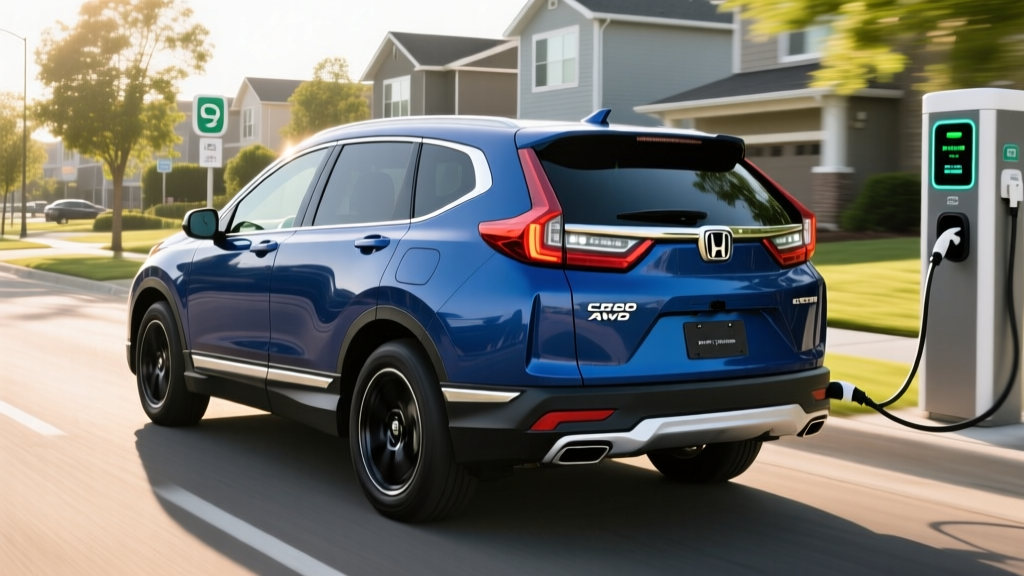
A common point of confusion is whether the CR-V Hybrid is a plug-in. It is not. Honda does not currently offer a plug-in hybrid (PHEV) version of the CR-V in the United States. Here's how the three electrified options compare for a compact SUV buyer:
| Factor | HEV (CR-V Hybrid AWD) | PHEV (e.g., Toyota RAV4 Prime) | BEV (e.g., Hyundai Ioniq 5) |
|---|---|---|---|
| Plug-in Required? | No | Yes (for EV range) | Yes |
| Electric-Only Range | ~1 mile at low speed | 35–42 miles | 250–310+ miles |
| Combined MPG / MPGe | 37 MPG | 38 MPG + 94 MPGe | 114–132 MPGe |
| Home Charging Needed? | No | Recommended (Level 2) | Essential |
| Tailpipe Emissions | Reduced | Low (if charged regularly) | Zero (at tailpipe) |
| Federal Tax Credit | None | Up to $7,500 (§30D) | Up to $7,500 (§30D) |
| Typical Starting Price | $36,395 | $44,000+ | $42,000+ |
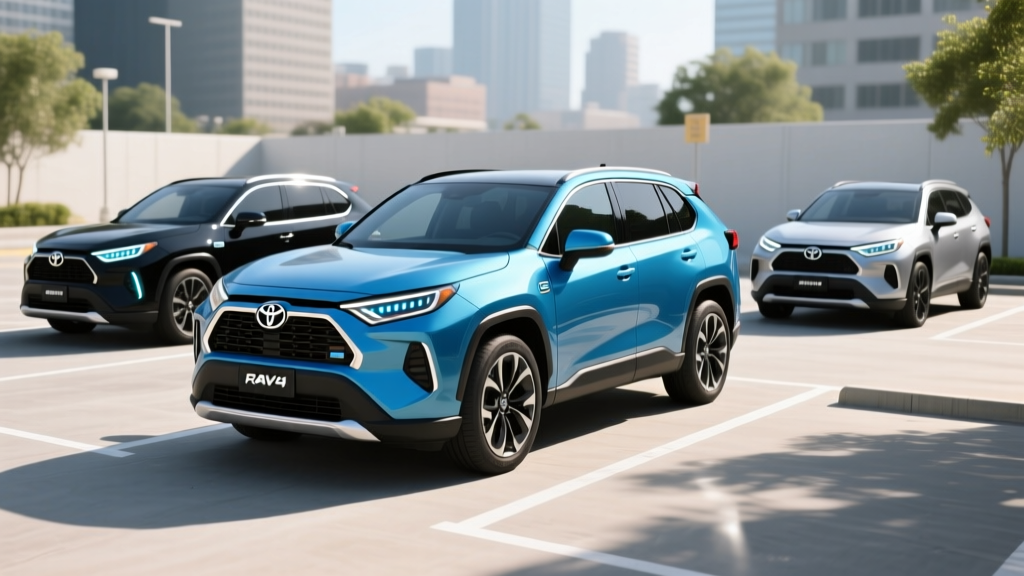
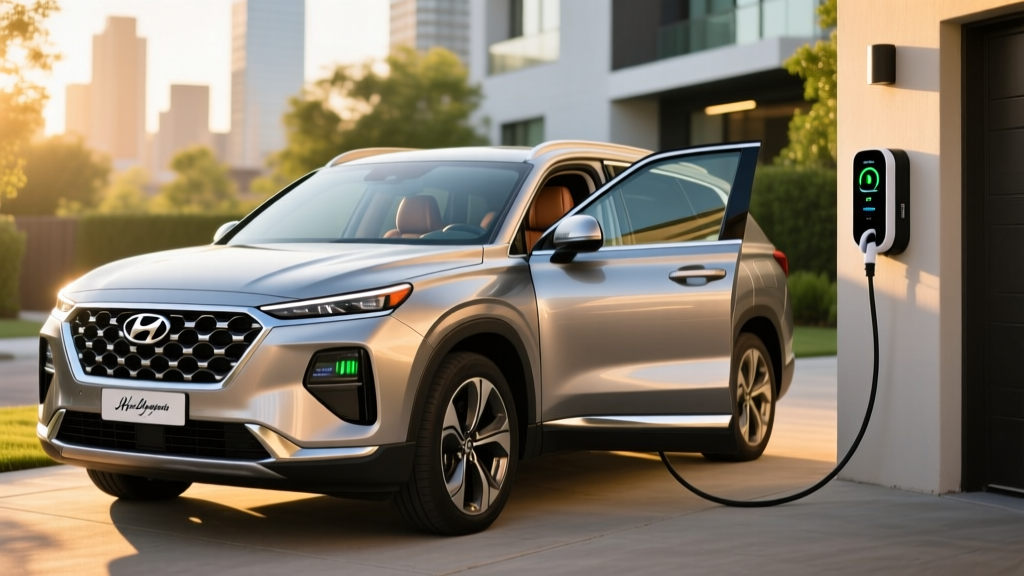
The CR-V Hybrid AWD makes sense if you want lower fuel costs without changing your refueling habits. A PHEV like the Toyota RAV4 Prime or Ford Escape PHEV is better if you have home charging and a short commute — you'd drive most days on electricity and use the gas engine for road trips. A full battery-electric vehicle (BEV) is the right move if you want to eliminate gasoline entirely, have reliable home charging, and are comfortable with public charging for longer trips.
Powertrain Deep Dive: How the CR-V Hybrid System Works
Honda's hybrid powertrain in the CR-V pairs a 2.0-liter Atkinson-cycle four-cylinder engine with two electric motors mounted in a direct-drive configuration (no traditional multi-speed transmission). The system produces a combined 204 horsepower and 247 lb-ft of torque, with the electric motor delivering its peak torque instantly from low RPM.
The system operates in three modes seamlessly:
- EV Drive: Battery powers the electric motor alone — used for low-speed launches and brief coasting. The small ~1.1 kWh lithium-ion battery means this mode lasts only about a mile at very low speeds.
- Hybrid Drive: The gasoline engine generates electricity that powers the electric motor, which drives the wheels. This is the primary mode for city and suburban driving.
- Engine Drive: At steady highway speeds, a lock-up clutch connects the engine directly to the wheels for maximum efficiency — bypassing the electric conversion step.
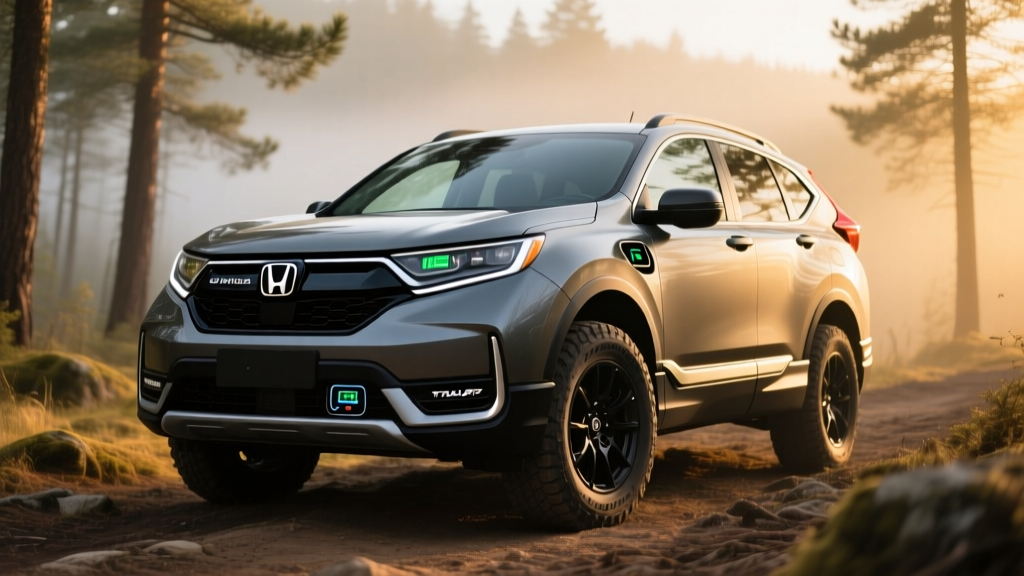
The AWD system uses a separate rear-mounted electric motor that engages when additional traction is needed — during acceleration, on slippery surfaces, or when the system detects front-wheel slip. Unlike mechanical AWD systems, there's no driveshaft connecting front and rear axles; the rear motor is powered electrically. This keeps weight down but means the rear motor isn't continuously active, which is fine for rain and light snow but not designed for serious off-road use.
Pricing, Trims, and Tax Credit Eligibility
The 2026 Honda CR-V Hybrid AWD is offered in three trims, all with standard AWD:
| Trim | MSRP (incl. destination) | Key Features |
|---|---|---|
| Sport | $36,395 | 18" wheels, 7" touchscreen, wireless CarPlay/Android Auto, Honda Sensing suite |
| Sport-L | $38,795 | Leather-trimmed seats, 9" touchscreen, wireless charging, heated front seats, power liftgate |
| Sport Touring | $42,195 | 19" wheels, Bose 12-speaker audio, navigation, heated steering wheel, hands-free liftgate, ventilated front seats |
Does the CR-V Hybrid Qualify for a Federal Tax Credit?
No. The CR-V Hybrid is a conventional HEV, not a plug-in vehicle. The IRS §30D New Clean Vehicle Credit applies only to battery-electric vehicles (BEVs) and plug-in hybrids (PHEVs) with a battery capacity of at least 7 kWh. The CR-V Hybrid's ~1.1 kWh battery does not qualify. There is currently no federal tax credit for conventional hybrids.
Some states and local utilities offer rebates or incentives for hybrid purchases, but these vary widely by jurisdiction. Check your state energy office or utility provider for current programs. A tax professional can confirm any applicable local benefits.
Reliability, Battery Lifespan, and Warranty
Honda's hybrid system has been in production across multiple models since the early 2000s, and the two-motor architecture used in the current CR-V dates to the 2020 model year. Honda's hybrid components are covered by an 8-year / 100,000-mile warranty (whichever comes first) in most states. In California Air Resources Board (CARB) states, hybrid-system coverage extends to 10 years / 150,000 miles.
Battery Replacement Cost and Longevity
The CR-V Hybrid's lithium-ion traction battery is significantly smaller than a PHEV or BEV battery — roughly 1.1 kWh versus 18+ kWh in a PHEV or 60–80+ kWh in a BEV. This smaller size means:
- Lower replacement cost: If the hybrid battery fails out of warranty, replacement typically runs $2,000–$3,500 (parts and labor), far less than the $10,000–$20,000+ cost of a BEV battery pack.
- Less degradation impact: The battery buffers are managed conservatively, and because it's constantly cycling through shallow charges (never fully depleted or fully charged), longevity is generally strong. Most Honda hybrid batteries last well beyond 150,000 miles in normal use.
- 12V battery separate: The CR-V Hybrid still uses a conventional 12V auxiliary battery for accessories and starting logic — this is a standard maintenance item (~$200 replacement every 4–5 years) and is unrelated to the hybrid traction battery.
Honda's reliability reputation is strong, and the CR-V Hybrid carries favorable ratings from both IIHS and NHTSA. The hybrid system adds mechanical complexity versus the gas-only CR-V (two motors, power electronics, regenerative braking), but eliminates the traditional transmission — a common failure point in conventional vehicles. Net reliability is comparable to or better than the gas model based on historical data.
Driving Impressions and Practical Ownership
The CR-V Hybrid AWD's 204 hp and 247 lb-ft of electric torque make it noticeably quicker off the line than the 190-hp gas-only CR-V. The electric motor's instant torque gives it a responsive, almost punchy feel in city driving — merging onto highways and passing at moderate speeds is confident. The 0-60 mph time of roughly 7.6 seconds isn't sporty by EV standards, but it's competitive for the compact SUV segment.
Ride quality is comfortable and composed, with the hybrid battery pack mounted low and not intruding on cargo or passenger space. Cargo volume is identical to the gas model at 36.3 cu ft behind the rear seats. One trade-off: towing capacity drops to 1,000 lbs on the hybrid versus 1,500 lbs on the gas AWD model — if you plan to tow even a small trailer, the gas model has an edge here.
The Honda Sensing safety suite is standard across all trims: adaptive cruise control, lane-keeping assist, collision mitigation braking, and traffic sign recognition. These are SAE Level 1–2 driver-assist features — the driver must remain fully engaged at all times. This is not a hands-free or "self-driving" system.
Pros
- 40 MPG city — excellent for a compact AWD SUV
- Standard AWD on all hybrid trims
- No plugging in — zero behavior change from gas ownership
- Strong electric torque for responsive city driving
- Proven Honda hybrid reliability with 8–10 year battery warranty
- Spacious cabin and cargo area unchanged from gas model
Cons
- No federal tax credit (HEV, not PHEV)
- Highway MPG drops to 34 — less advantage over gas at speed
- 1,000-lb towing limit (500 lbs less than gas AWD)
- No PHEV option in the CR-V lineup for EV-range seekers
- Starting price ~$4,000 higher than base gas-only CR-V AWD
- Rear electric AWD motor is traction-assist only, not for off-roading
CR-V Hybrid AWD vs. the Competition
| Model | EPA Combined MPG | HP | Starting MSRP | Federal Credit |
|---|---|---|---|---|
| Honda CR-V Hybrid AWD | 37 MPG | 204 | $36,395 | No |
| Toyota RAV4 Hybrid AWD | 39 MPG | 219 | $35,050 | No |
| Hyundai Tucson Hybrid AWD | 38 MPG | 226 | $34,275 | No |
| Toyota RAV4 Prime PHEV AWD | 38 MPG + 94 MPGe | 302 | $44,590 | Up to $7,500* |
*RAV4 Prime PHEV eligibility for the §30D credit depends on battery sourcing, buyer income caps, and MSRP limits under current IRS rules. Confirm at irs.gov before purchasing.
The CR-V Hybrid AWD sits in the middle of this competitive set on price and efficiency. The RAV4 Hybrid edges it out by 2 MPG combined; the Tucson Hybrid undercuts on price. The CR-V's advantages are interior space, refinement, and Honda's long-term reliability track record. If you want plug-in capability with electric-only commuting range, you'll need to look at the RAV4 Prime or a dedicated PHEV — Honda doesn't offer one in this segment.
Decision Framework: Should You Buy the CR-V Hybrid AWD?
Choose the CR-V Hybrid AWD if:
- You want 37+ MPG combined in an AWD compact SUV without plugging in
- You don't have access to home or workplace Level 2 charging
- You prioritize Honda's reliability and resale value
- Your driving is primarily city and suburban (where the hybrid advantage is largest)
- You want AWD for rain and snow but don't need serious towing or off-road capability
Look elsewhere if:
- You have home charging and want electric-only commuting → consider a PHEV (RAV4 Prime) or BEV
- You want to claim the $7,500 federal tax credit → you need a PHEV or BEV
- You need more than 1,000 lbs towing capacity → gas CR-V AWD or a larger SUV
- Highway miles dominate your driving → the hybrid advantage shrinks; the fuel savings gap narrows
Frequently Asked Questions
How many MPG does the 2026 CR-V Hybrid AWD get?
The EPA rates it at 40 MPG city, 34 MPG highway, and 37 MPG combined. In real-world city driving, many owners report 38–43 MPG. Highway-only driving at higher speeds may return 31–35 MPG.
Can I plug in the CR-V Hybrid to charge?
No. The CR-V Hybrid is a conventional HEV, not a plug-in hybrid. It charges its small battery through regenerative braking and the gasoline engine. There is no charging port.
Does the CR-V Hybrid qualify for any federal tax credit?
No. The IRS §30D New Clean Vehicle Credit applies only to plug-in vehicles (BEVs and PHEVs) with a battery capacity of 7 kWh or more. The CR-V Hybrid's ~1.1 kWh battery does not meet this threshold. Check your state and utility for possible local incentives.
How long will the CR-V Hybrid battery last, and what does replacement cost?
Honda covers the hybrid battery for 8 years/100,000 miles (10 years/150,000 miles in CARB states). Real-world data suggests Honda hybrid batteries routinely last 150,000+ miles. Out-of-warranty replacement costs approximately $2,000–$3,500 — far less than a PHEV or BEV battery.
Is the CR-V Hybrid AWD good in snow?
Yes, for typical winter conditions. The rear electric motor provides AWD traction when the system detects slip, and the hybrid's low-speed electric torque helps with smooth launches on slippery surfaces. Ground clearance is 8.2 inches. It's not a dedicated off-roader, but it handles snow-covered roads competently.
How does the CR-V Hybrid compare to a full EV like the Hyundai Ioniq 5?
The Ioniq 5 offers 250–310 miles of EPA range, zero tailpipe emissions, and federal tax credit eligibility — but requires home charging infrastructure, costs more upfront, and demands planning for longer road trips. The CR-V Hybrid is lower-cost, zero-behavior-change, and better for drivers without charging access. Total cost of ownership favors the EV if you charge at home and drive 12,000+ miles/year; the hybrid wins for lower-mileage drivers or those who can't charge at home.
What's the difference between the CR-V Hybrid Sport, Sport-L, and Sport Touring?
All three share the same 204-hp hybrid AWD powertrain and 37 MPG combined rating. The Sport ($36,395) is well-equipped with a 7" screen and Honda Sensing. The Sport-L ($38,795) adds leather, a 9" screen, and heated seats. The Sport Touring ($42,195) tops the range with 19" wheels, Bose audio, navigation, and ventilated seats. None qualify for a federal tax credit.
Sources: EPA fuel economy data via fueleconomy.gov, Honda manufacturer specifications, IRS §30D New Clean Vehicle Credit guidelines. Pricing and specs reflect 2026 model year at time of publication. Verify current tax credit eligibility with a tax professional and irs.gov before purchasing.