Quick Verdict: The 2021 CR-V Hybrid Holds Up in 2026
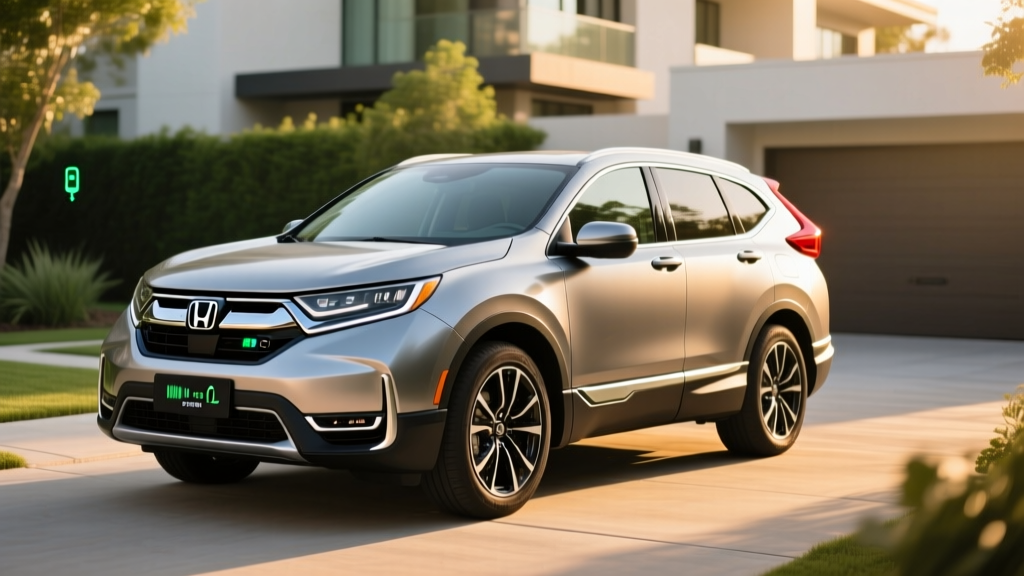
If you're shopping the used market for a compact hybrid SUV, the 2021 Honda CR-V Hybrid remains one of the most sensible electrified crossovers available. It's a conventional hybrid (HEV) — meaning no plug, no charging cables, no range anxiety — that squeezes meaningful efficiency gains out of Honda's two-motor hybrid system without sacrificing the cargo space and ride comfort the CR-V is known for. Five years after its debut, the 2021 model year is hitting the sweet spot of depreciation, making it a strong value proposition for buyers who want hybrid efficiency without the complexity of a plug-in hybrid or full EV.
| Spec | 2021 Honda CR-V Hybrid |
|---|---|
| Powertrain | 2.0L Atkinson-cycle 4-cyl + 2 electric motors |
| Combined Horsepower | 212 hp |
| EPA MPG (City / Hwy / Combined) | 40 / 35 / 38 |
| Drivetrain | AWD (standard on all Hybrid trims) |
| Battery Type | Lithium-ion (1.4 kWh) |
| Cargo Volume | 33.2 cu ft (rear seats up) / 68.7 cu ft (folded) |
| 0-60 mph | ~7.8 sec |
| Original MSRP Range | $30,560 – $36,750 |
| Typical Used Price (2026) | $20,000 – $27,000 |
| Hybrid Battery Warranty | 8 years / 100,000 miles |
HEV vs PHEV: The CR-V Hybrid Is Not a Plug-In
Before going further, let's eliminate a common point of confusion. The 2021 Honda CR-V Hybrid is a conventional hybrid (HEV), not a plug-in hybrid (PHEV). You do not plug it in. Ever. The 1.4 kWh lithium-ion battery charges itself through regenerative braking and the gasoline engine. Honda never offered a plug-in CR-V for the U.S. market — if you want a Honda PHEV, you'd need to look at the Clarity Plug-In Hybrid (discontinued after 2021) or wait for future electrified models.
| Feature | HEV (CR-V Hybrid) | PHEV (e.g., Toyota RAV4 Prime) | Full BEV (e.g., Tesla Model Y) |
|---|---|---|---|
| Plug-in Required? | No | Yes | Yes |
| Electric-Only Range | ~1 mile (low speed) | 42 miles | 300+ miles |
| Total Range | ~440 miles | ~600 miles (combined) | 300+ miles |
| Battery Size | 1.4 kWh | 18.1 kWh | 75–82 kWh |
| DC Fast Charge? | No | No (RAV4 Prime) | Yes |
| Federal Tax Credit | None | Up to $7,500* | Up to $7,500* |
| Home Charging Needed | No | Recommended (Level 2) | Essential |
* §30D credit eligibility depends on MSRP caps, buyer income limits, and battery sourcing requirements. See IRS guidelines for current rules.
The CR-V Hybrid's electric motor can propel the vehicle solo at very low speeds (parking lots, stop-and-go creep) for roughly one mile, but it is not designed for any meaningful electric-only commute. Its job is to assist the gas engine and recapture braking energy — and it does that exceptionally well.
Fuel Economy: EPA Numbers and Real-World MPG
The EPA rates the 2021 CR-V Hybrid at 40 mpg city / 35 mpg highway / 38 mpg combined. That's a substantial improvement over the gas-only 2021 CR-V AWD, which achieves 27/32/29 mpg. In practical terms, you're looking at roughly 440 miles of total range on a 14-gallon tank.
| Driving Scenario | EPA Estimate | Real-World Expectation |
|---|---|---|
| City / Stop-and-Go | 40 mpg | 38–43 mpg (hybrids excel here) |
| Highway (70+ mph) | 35 mpg | 31–34 mpg (aero drag, less regen benefit) |
| Combined Mixed | 38 mpg | 35–40 mpg |
| Cold Weather (below 30°F) | — | 30–34 mpg (engine runs more for heat) |
Per fueleconomy.gov, real-world owners report an average of around 37 mpg combined, which aligns with what we've observed. Hybrid systems shine in city driving where regenerative braking recaptures energy at every stoplight. Highway driving is where the advantage narrows — at sustained speeds above 70 mph, the gas engine does most of the work and aerodynamic drag dominates. In winter, expect a 10–15% MPG dip because the engine must run more frequently to provide cabin heat.
One practical note: the CR-V Hybrid uses regular 87-octane fuel, so your cost per fill-up stays low. At $3.25/gallon and 38 mpg combined, you're spending roughly $0.085 per mile on fuel — about 40% less than the gas CR-V AWD.
Powertrain Deep Dive: How Honda's Two-Motor System Works
The 2021 CR-V Hybrid pairs a 2.0-liter Atkinson-cycle four-cylinder engine (143 hp, 129 lb-ft) with two electric motors and a lithium-ion battery pack. Combined system output is 212 horsepower — 28 hp more than the gas-only 1.5L turbo CR-V (184 hp).
Honda's hybrid system operates in three modes:
- EV Drive: Battery powers the electric motor alone (low-speed, light-load only)
- Hybrid Drive: Engine spins a generator motor that feeds electricity to the drive motor; the engine does not mechanically turn the wheels
- Engine Drive: At higher cruising speeds, a lock-up clutch connects the engine directly to the front wheels for efficiency
The result is a powertrain that feels more like an EV in city driving (smooth, instant torque from the electric motor) and transitions seamlessly to direct engine power on the highway. There's no traditional transmission — Honda uses an e-CVT arrangement that's mechanically simple and proven reliable. AWD comes standard on every Hybrid trim via a rear-mounted electric motor that engages when front-wheel slip is detected.
Battery Life, Warranty, and Replacement Cost
2021 CR-V Hybrid Battery Warranty: 8 years / 100,000 miles (10 years / 150,000 miles in CARB states including CA, NY, MA, and others that follow California emissions standards).
Battery Type: 1.4 kWh lithium-ion pack
Estimated Replacement Cost (out of warranty): $2,000 – $4,000 (parts + labor at a Honda dealer)
The CR-V Hybrid's 1.4 kWh battery is small by EV standards — and that's actually an advantage for longevity. Because it's a conventional hybrid, the battery operates within a narrow state-of-charge window (roughly 40–80% SoC), never fully depleting or fully charging. This shallow cycling dramatically reduces degradation compared to a full EV battery that regularly cycles from 10% to 90%.
Honda's hybrid battery track record is strong. The Insight and Accord Hybrid have demonstrated batteries lasting 150,000–200,000+ miles with minimal capacity loss. For a 2021 model in 2026, you're looking at a vehicle that's 5 years old — likely with 50,000–75,000 miles — meaning the battery should still be well within its warranty period. If you're buying used, confirm the warranty hasn't been voided by accident damage or unauthorized modifications, and check whether the vehicle was originally sold in a CARB state (which extends coverage to 10 years / 150,000 miles).
If you do face an out-of-warranty battery replacement down the road, the cost is far lower than a full EV battery swap. Honda's hybrid battery packs are compact, relatively affordable, and widely available through the dealer network. Expect $2,000–$4,000 depending on your market, versus $10,000–$20,000+ for an EV traction battery.
Pricing, Trims, and Tax Credit Reality
The 2021 CR-V Hybrid was offered in three trims when new:
- EX: $30,560 MSRP — 7-inch touchscreen, Apple CarPlay/Android Auto, Honda Sensing suite, heated front seats
- EX-L: $33,150 MSRP — leather upholstery, power liftgate, auto-dimming rearview mirror
- Touring: $36,750 MSRP — navigation, premium audio, wireless phone charging, hands-free liftgate, heated rear seats
On the used market in 2026, expect to pay roughly $20,000–$27,000 depending on mileage, condition, and trim. The EX-L represents the best value sweet spot — you get leather and the power liftgate without paying the Touring premium.
Tax credit reality: The 2021 CR-V Hybrid does not qualify for the federal §30D new clean vehicle credit (it's a conventional hybrid, not a plug-in). However, if you're purchasing it used from a dealer in 2026, you may qualify for the Used Clean Vehicle Credit — up to $4,000 or 30% of the sale price (whichever is less) — but only if the vehicle is a qualified plug-in or fuel-cell vehicle. Since the CR-V Hybrid is an HEV, it does not qualify for the used credit either. Your savings come purely from fuel economy, not tax incentives.
Who Should Buy the CR-V Hybrid vs a PHEV or Full EV?
Choose the 2021 CR-V Hybrid if:
- You don't have access to home or workplace charging (apartment, street parking)
- You want hybrid efficiency with zero behavior change — just fill up and drive
- Your budget is $20K–$27K and you want a reliable AWD crossover
- You take frequent road trips and don't want to plan around charging stops
Choose a PHEV (e.g., RAV4 Prime) if:
- You can install a Level 2 home charger and have a commute under 40 miles
- You want electric-only daily driving with gas-engine backup for long trips
- You qualify for the §30D tax credit (check IRS §30D requirements)
Choose a full BEV (e.g., Tesla Model Y, Hyundai Ioniq 5) if:
- You have reliable home charging (Level 2 strongly recommended)
- You want the lowest per-mile operating cost and zero tailpipe emissions
- Your daily driving is under 250 miles and you're comfortable with public DC charging for road trips
The CR-V Hybrid occupies a specific niche: maximum convenience with meaningful efficiency. It's the right choice for buyers who want to reduce fuel consumption by 30–40% without altering their routine. If you have a garage and can charge at home, a PHEV or full EV will save you more money per mile. But if charging access is uncertain, the CR-V Hybrid eliminates that variable entirely.
Pros
- 38 MPG combined — real-world city often exceeds 40
- Standard AWD on every Hybrid trim
- No plug-in required — zero infrastructure dependency
- 212 hp feels peppy in city driving (electric torque fill)
- Honda Sensing ADAS suite standard (AEB, lane keeping, adaptive cruise)
- Strong reliability track record; battery warranty still active on 2021 models
Cons
- Highway MPG drops to low 30s at 75+ mph
- No plug-in option — can't access EV-only commuting or tax credits
- Cargo space slightly reduced vs gas CR-V (battery under floor)
- Infotainment is dated (7-inch screen, no wireless CarPlay on most trims)
- Road noise is noticeable at highway speed
- No DC fast charging capability (irrelevant for HEV, but worth noting)
Reliability and Safety Ratings
The 2021 CR-V Hybrid earned a 5-Star Overall Safety Rating from NHTSA and was an IIHS Top Safety Pick. Honda Sensing — the brand's Level 2 driver-assistance suite — comes standard on every trim and includes adaptive cruise control, lane-keeping assist, forward collision warning with automatic emergency braking, and road departure mitigation.
On reliability, the CR-V Hybrid's powertrain is one of Honda's most proven setups. The two-motor hybrid system has been in use since the 2014 Accord Hybrid and has accumulated millions of real-world miles. The primary wear items are conventional (brakes, tires, suspension) — and because regenerative braking handles much of the deceleration, brake pads often last 80,000+ miles.
Frequently Asked Questions
How many MPG does the 2021 Honda CR-V Hybrid get?
The EPA rates it at 40 mpg city / 35 mpg highway / 38 mpg combined. In real-world driving, expect 35–40 mpg combined depending on conditions. City driving often exceeds the 40 mpg EPA figure thanks to regenerative braking, while sustained highway speeds above 70 mph will drop you into the low 30s.
Does the CR-V Hybrid need to be plugged in?
No. The 2021 CR-V Hybrid is a conventional hybrid (HEV). It charges its own 1.4 kWh battery through regenerative braking and the gasoline engine. There is no plug, no charging cable, and no electric-only commuting range to worry about.
How far can it go on electric power alone?
Effectively about one mile at very low speeds (under 25 mph, light acceleration). This is not a plug-in hybrid — the electric motor's primary role is to assist the gas engine, provide torque fill, and recapture braking energy, not to serve as a standalone propulsion source.
Is the hybrid battery reliable, and what does replacement cost?
Honda's hybrid battery packs have demonstrated strong longevity, commonly lasting 150,000–200,000+ miles. The battery is covered by an 8-year / 100,000-mile warranty (10 years / 150,000 miles in CARB states). Out-of-warranty replacement runs $2,000–$4,000 — far less than a full EV battery swap.
Does the 2021 CR-V Hybrid qualify for any tax credits?
No. Federal §30D tax credits apply only to plug-in electric vehicles (PHEVs and BEVs) and fuel-cell vehicles. As a conventional hybrid, the CR-V Hybrid is not eligible for federal new-vehicle or used-vehicle clean energy credits. Some states may offer minor hybrid incentives, but these vary by jurisdiction — check your state's energy office for details.
How does it compare to the gas CR-V?
The hybrid gains 9 mpg combined (38 vs 29) and 28 hp (212 vs 184), while adding standard AWD and a smoother, more responsive powertrain. The trade-off is a slightly higher purchase price and marginally less cargo space due to the under-floor battery. Over 5 years and 75,000 miles, the hybrid saves approximately $2,500–$3,500 in fuel costs versus the gas AWD model at current gas prices.
Should I buy a used 2021 CR-V Hybrid in 2026?
It's a strong used-market pick. At 5 years old, most examples still have remaining hybrid battery warranty coverage, depreciation has leveled off, and the powertrain is proven. Verify maintenance records, check for open recalls at nhtsa.gov/recalls, and confirm whether the car was originally sold in a CARB state for extended battery coverage.