Quick Verdict: The CR-V Hybrid's Real Story in Numbers
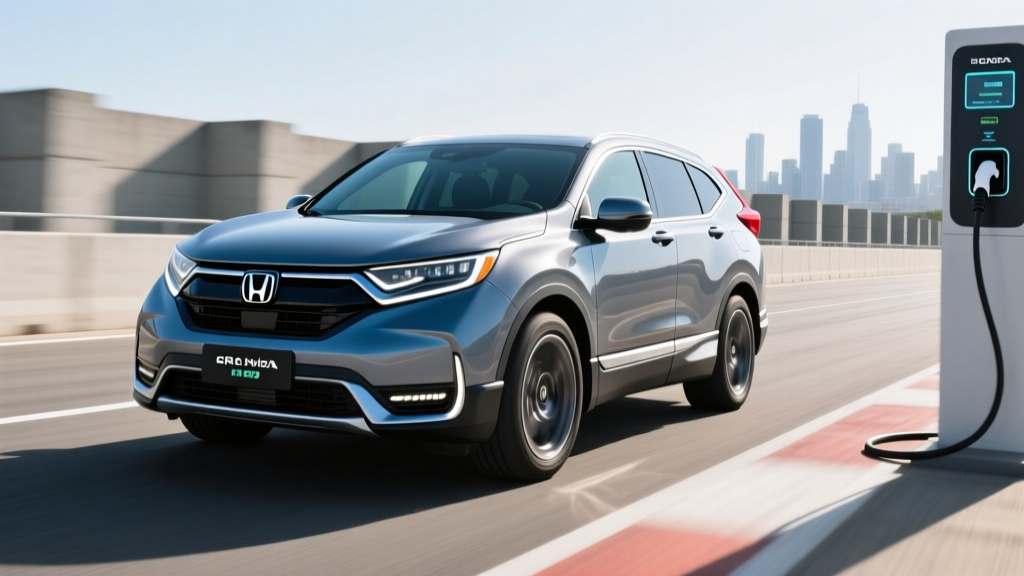
The 2026 Honda CR-V Hybrid pairs a 2.0-liter Atkinson-cycle four-cylinder with a two-motor hybrid system to produce 204 combined horsepower and 247 lb-ft of torque. The result is a Honda CR-V Hybrid 0-60 time of approximately 7.6 seconds — quick enough for confident highway merging and passing, though not sporty by turbocharged standards. More importantly for daily driving, this powertrain delivers an EPA-estimated 40 MPG combined, making it one of the most efficient compact SUVs on the market without requiring a plug.
This guide covers the CR-V Hybrid's full performance envelope — acceleration, braking, efficiency, powertrain mechanics, battery longevity, and pricing — with the exact figures you need to decide whether this HEV (conventional hybrid) fits your garage better than a PHEV or full BEV.
| Specification | Value |
|---|---|
| Powertrain | 2.0L Atkinson 4-cyl + 2-motor hybrid (HEV) |
| Combined Horsepower | 204 hp |
| Combined Torque | 247 lb-ft (electric motor) |
| 0-60 mph | ~7.6 seconds |
| EPA Fuel Economy (FWD) | 43 city / 36 highway / 40 combined MPG |
| EPA Fuel Economy (AWD) | 40 city / 34 highway / 37 combined MPG |
| Drivetrain | FWD standard; Real Time AWD available |
| Hybrid Battery | ~1.06 kWh lithium-ion (self-charging HEV) |
| Towing Capacity | 1,000 lbs |
| Cargo Volume | 36.3 cu ft (rear up) / 76.5 cu ft (rear folded) |
| Base MSRP (Sport FWD) | $36,395 |
| Battery Warranty | 8 years / 100,000 miles (10 yr/150,000 mi in CARB states) |
Acceleration Deep Dive: Honda CR-V Hybrid 0-60 and Drivetrain Behavior
The 7.6-second 0-60 mph time places the CR-V Hybrid in the middle of the compact hybrid SUV pack. The Toyota RAV4 Hybrid clocks a similar 7.4 seconds with 219 hp, while the Ford Escape Hybrid trails slightly at around 8.0 seconds. The CR-V's electric motors deliver instant torque from a standstill, which gives it a responsive feel in stop-and-go traffic that the raw 0-60 number doesn't fully capture.
Honda's two-motor hybrid system operates in three modes: EV Drive (electric motor only at low speeds), Hybrid Drive (engine generates electricity to power the motor), and Engine Drive (engine directly powers wheels at highway cruising). The transition between modes is nearly imperceptible — a mark of Honda's refined e-CVT calibration. There's no traditional geared transmission; the direct-drive ratio and electric motor torque fill eliminate the rubber-band effect that plagued early CVTs.
Real-world acceleration note: The 0-60 time holds in moderate temperatures. In extreme heat or at high altitude, expect a marginal 0.2-0.5 second increase due to reduced engine output and battery thermal management demands. At highway speeds (50-70 mph passing), the CR-V Hybrid responds promptly thanks to electric motor torque assist — no turbo lag or downshift delay.
Fuel Economy: EPA Ratings vs. What You'll Actually See
| Drivetrain | City MPG | Highway MPG | Combined MPG |
|---|---|---|---|
| FWD | 43 | 36 | 40 |
| AWD (Real Time) | 40 | 34 | 37 |
The FWD CR-V Hybrid's 43 city / 36 highway split is characteristic of Honda's hybrid system, which relies heavily on electric-motor propulsion at low speeds where the engine is least efficient. This means real-world city driving often meets or slightly exceeds the EPA city estimate, particularly in moderate climates with frequent stops that maximize regenerative braking. Data from fueleconomy.gov and owner-reported logs show many FWD owners averaging 41-44 MPG in mixed suburban commuting.
Highway efficiency is the tradeoff. At sustained 75-80 mph speeds, the engine operates in direct-drive mode without electric assist, and aerodynamic drag dominates. Expect 33-35 MPG highway in real-world cruising — slightly below the EPA sticker. In cold weather (below 30°F), the engine runs more frequently to maintain cabin heat and battery temperature, reducing combined economy by roughly 3-5 MPG until the system reaches operating temperature.
Annual fuel cost estimate: At 15,000 miles/year and $3.40/gallon regular unleaded, the FWD CR-V Hybrid costs approximately $1,275 per year in fuel — roughly $600-$800 less than the turbocharged gas-only CR-V (28 MPG combined) over the same distance.
HEV vs. PHEV vs. EV: Which Powertrain Fits Your Life?
The CR-V is available only as a conventional hybrid (HEV) in the US market. Honda discontinued the Clarity PHEV years ago and does not currently offer a CR-V plug-in hybrid stateside. Here's how the three electrification levels compare for a compact SUV buyer:
| Factor | HEV (CR-V Hybrid) | PHEV (e.g., RAV4 Prime) | BEV (e.g., Ioniq 5) |
|---|---|---|---|
| Plug-in Required? | No — self-charging | Yes — for EV range | Yes — only power source |
| Electric-Only Range | ~1 mile at low speed | 35-42 miles typical | 250-320 miles (EPA) |
| Combined MPG / MPGe | 37-40 MPG | 38 MPG + 94 MPGe | 110-132 MPGe |
| Home Charging Needed | No | Recommended (Level 2) | Essential (Level 2) |
| Federal Tax Credit | None | Up to $7,500 (if eligible) | Up to $7,500 (if eligible) |
| Base Price Range | $36,000-$42,000 | $44,000-$50,000 | $42,000-$55,000+ |
| Best For | No plug access, simple ownership | Short commute + home charging | Full electric, home charging access |
Choose the CR-V Hybrid (HEV) if: You don't have access to home or workplace charging, you want a proven powertrain with zero behavior change from a gas car, and your priority is reducing fuel cost without range planning. The HEV is the path of least resistance.
Consider a PHEV if: You can install a Level 2 charger at home, your daily commute is under 40 miles round-trip (covering most days on electricity alone), and you still want gas-engine freedom for road trips. The IRS §30D tax credit may offset the higher purchase price — but note that eligibility depends on MSRP caps ($80,000 for SUVs), buyer income limits ($300,000 joint / $150,000 single), and battery critical-mineral sourcing requirements that change annually.
Go full BEV if: You have reliable home Level 2 charging, your daily driving is under 250 miles, and you want to eliminate fuel stops entirely while maximizing per-mile energy cost savings.
Powertrain Engineering: How Honda's Two-Motor System Works
The CR-V Hybrid uses Honda's fourth-generation two-motor hybrid system. The setup pairs a 2.0-liter DOHC Atkinson-cycle inline-four (producing roughly 146 hp on its own) with two electric motors — one primarily a generator, the other the primary drive motor producing up to 181 hp and 247 lb-ft of torque. Combined system output is rated at 204 hp.
The lithium-ion hybrid battery pack stores approximately 1.06 kWh of energy. This is a small pack by design — it buffers energy from regenerative braking and engine generation to feed the drive motor during acceleration. Unlike a PHEV's 15-20 kWh pack, this battery is not designed for sustained electric-only driving. It charges exclusively through regenerative braking and engine-generated electricity. You never plug in a conventional HEV.
The AWD variant adds a rear-mounted electric motor that provides torque to the rear axle when slip is detected or during hard acceleration. This system is not a mechanical driveshaft connection — it's an electrically actuated rear axle, which means the rear motor engages only when needed, minimizing efficiency losses.
Battery Longevity, Warranty, and Replacement Cost
Honda CR-V Hybrid Battery Warranty
Standard coverage: 8 years / 100,000 miles
CARB-state coverage: 10 years / 150,000 miles (California, Colorado, Connecticut, Maine, Maryland, Massachusetts, New Jersey, New York, Oregon, Rhode Island, Vermont, Virginia, Washington, and others adopting CARB standards)
What's covered: Hybrid battery capacity loss below functional thresholds, defective cells, and hybrid system components including the power control unit and drive motor.
Hybrid battery degradation in Honda's system is gradual and well-managed. The 1.06 kWh pack operates within a narrow state-of-charge window (roughly 40-80% SoC), which dramatically reduces stress on the cells compared to a BEV that regularly cycles from 10-90%. Real-world data from high-mileage Honda hybrid owners shows the battery pack typically retains sufficient capacity well beyond the warranty period, with many units lasting 150,000-200,000+ miles before any notable performance decline.
Replacement cost if out of warranty: A new OEM hybrid battery pack for the CR-V Hybrid runs approximately $2,500-$4,000 including labor at a Honda dealer. Independent hybrid specialists may offer refurbished packs for $1,500-$2,500. This is dramatically less than a BEV traction battery replacement ($8,000-$20,000+) because the HEV pack is small and simpler.
According to NHTSA records, the CR-V Hybrid has not been subject to battery-related safety recalls as of early 2026, and IIHS has awarded the CR-V line strong crash-test ratings, which supports long-term ownership confidence.
Pricing, Trims, and Tax Credit Reality
The 2026 Honda CR-V Hybrid is offered in three trims, all built on the same 204-hp powertrain:
- Sport (FWD): $36,395 MSRP — the entry point with 18-inch wheels, Honda Sensing suite, 7-inch touchscreen, wireless Apple CarPlay/Android Auto
- Sport-L (FWD): $38,895 MSRP — adds leather-trimmed seats, power liftgate, wireless charging pad, heated front seats
- Sport Touring (AWD standard): $41,895 MSRP — adds Bose 12-speaker audio, navigation, heated steering wheel, hands-free liftgate, standard AWD
Adding AWD to Sport or Sport-L trims costs approximately $1,500.
Tax credit eligibility: The conventional CR-V Hybrid (HEV) does not qualify for the federal §30D New Clean Vehicle Credit. That credit applies only to plug-in vehicles (PHEVs and BEVs) meeting battery sourcing and critical mineral requirements. There is no federal tax incentive for purchasing a self-charging hybrid. Some states or local utilities may offer minor rebates for high-efficiency vehicles, but these vary by jurisdiction — check your state energy office or utility provider for current programs.
If the tax credit is a priority, you'd need to look at a qualifying PHEV or BEV. But factor in the higher purchase price and home charging installation cost ($500-$2,000 for Level 2) before assuming a PHEV nets out cheaper than the CR-V Hybrid's lower MSRP and no-plug simplicity.
Pros and Cons at a Glance
Pros
- 40 MPG combined (FWD) with no plug-in requirement
- Smooth, linear acceleration from electric motor torque
- Proven Honda hybrid reliability with strong battery warranty
- Competitive 0-60 time (7.6 sec) for the segment
- Generous cargo space (36.3 cu ft) unchanged from gas model
- Honda Sensing ADAS suite standard on all trims
- Low hybrid battery replacement cost vs. BEV
Cons
- No PHEV variant available — cannot drive on electricity alone for commutes
- No federal tax credit eligibility
- AWD drops combined MPG to 37
- Highway fuel economy falls below EPA in real-world 75+ mph driving
- 1,000-lb towing limit (less than some turbo gas competitors)
- Hybrid battery limits cargo under-floor storage vs. some rivals
Frequently Asked Questions
How fast is the Honda CR-V Hybrid from 0 to 60 mph?
The 2026 Honda CR-V Hybrid reaches 0-60 mph in approximately 7.6 seconds. The electric drive motor's instant torque provides strong initial acceleration, making the SUV feel quicker from a stop than the raw number suggests. The AWD variant's time is nearly identical thanks to rear motor traction assist.
How many MPG does the CR-V Hybrid actually get in real driving?
FWD models are EPA-rated at 43 city / 36 highway / 40 combined. In real-world mixed suburban driving, many owners report 41-44 MPG, exceeding the EPA combined figure. Highway-only driving at 75+ mph typically yields 33-35 MPG. Cold weather reduces combined economy by 3-5 MPG due to increased engine runtime for cabin heat.
Does the Honda CR-V Hybrid need to be plugged in?
No. The CR-V Hybrid is a conventional HEV (hybrid electric vehicle). Its small lithium-ion battery charges exclusively through regenerative braking and the onboard engine-generator. You fuel it like a normal gasoline vehicle — the hybrid system operates entirely automatically.
Is the CR-V Hybrid reliable, and what does a battery replacement cost?
Honda's hybrid system has a strong reliability track record across multiple model lines. The hybrid battery is warranted for 8 years/100,000 miles (10 years/150,000 miles in CARB states). Out-of-warranty replacement runs $2,500-$4,000 at a dealer — far less than a BEV battery. Most packs last 150,000+ miles based on owner data.
Does the CR-V Hybrid qualify for any federal tax credit?
No. The federal §30D New Clean Vehicle Credit applies only to plug-in vehicles (PHEVs and BEVs). As a self-charging HEV, the CR-V Hybrid is not eligible. Check with your state energy office or utility for any local efficiency rebates, which vary by jurisdiction.
Should I get the CR-V Hybrid or wait for a plug-in version?
Honda has not announced a US-market CR-V PHEV as of 2026. If you need plug-in capability now, competitors like the Toyota RAV4 Prime (42 miles electric-only, ~$44,000 base) or the Hyundai Tucson PHEV (33 miles electric-only, ~$38,000 base) fill that niche. But if you lack home charging access, the CR-V Hybrid's no-plug efficiency remains the more practical choice.
How does the CR-V Hybrid compare to the Toyota RAV4 Hybrid?
The RAV4 Hybrid produces 219 hp with a 7.4-second 0-60 and is EPA-rated at 41 city / 38 highway / 41 combined (slightly better highway efficiency). The CR-V Hybrid counters with a more refined interior, slightly more cargo volume, and a lower starting price. Both are segment leaders — the choice often comes down to brand preference and which dealership is closer to you for service.