Quick Verdict: The Adventure Hybrid That Actually Delivers
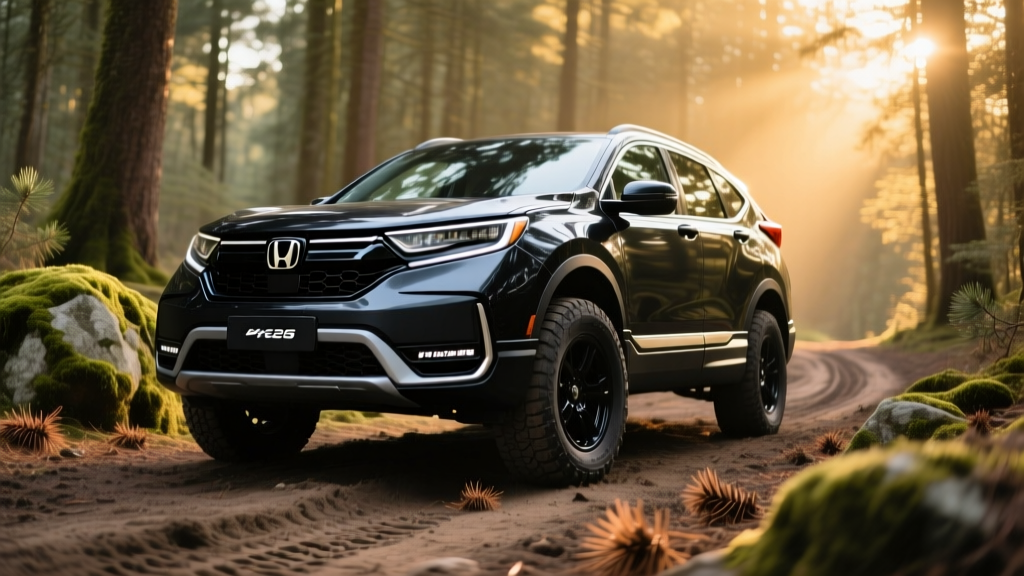
The 2026 Honda CR-V TrailSport Hybrid occupies a specific niche: buyers who want the rugged styling and light off-road capability of an adventure-oriented SUV without sacrificing the fuel economy that made the CR-V Hybrid one of America's best-selling electrified vehicles. With an EPA-estimated 40 MPG combined, standard all-wheel drive, and 204 combined horsepower from Honda's two-motor hybrid system, the TrailSport Hybrid proves you don't need a plug to meaningfully cut fuel costs.
This is a conventional hybrid (HEV), not a plug-in hybrid (PHEV). You never plug it in — the 2.0-liter Atkinson-cycle engine and regenerative braking handle all battery charging automatically. For buyers confused by the alphabet soup of electrified powertrains, that's actually a feature: zero charging infrastructure required, zero range anxiety, and a sticker price thousands less than comparable PHEVs or full EVs.
| Spec | Value |
|---|---|
| Powertrain | 2.0L Atkinson 4-cyl + two-motor hybrid system |
| Combined Horsepower | 204 hp |
| Combined Torque | 247 lb-ft (electric motor) |
| Drivetrain | Real Time AWD™ (standard) |
| EPA MPG (City / Hwy / Combined) | 43 / 36 / 40 |
| Fuel Tank Capacity | 14.0 gallons |
| Total Driving Range | ~560 miles |
| 0–60 mph | ~7.8 seconds (est.) |
| Ground Clearance | 8.3 inches |
| Towing Capacity | 1,000 lbs |
| Cargo Volume (behind rear seats) | 36.3 cu ft |
| Base MSRP | $40,850 (incl. destination) |
| Hybrid Battery Warranty | 8 years / 100,000 miles |
HEV vs PHEV vs EV: Where the TrailSport Hybrid Fits
Before diving into MPG and trail capability, it's worth clarifying exactly what the CR-V TrailSport Hybrid is — and isn't. Honda does not currently offer a plug-in hybrid (PHEV) version of the CR-V in the United States. The TrailSport Hybrid is a self-charging conventional hybrid.
| Feature | HEV (CR-V TrailSport Hybrid) | PHEV (e.g., Toyota RAV4 Prime) | BEV (e.g., Tesla Model Y) |
|---|---|---|---|
| Plug-in Required? | No — self-charging | Yes — 120V or 240V | Yes — 240V home or DC fast |
| Electric-Only Range | ~1 mile at low speed | 35–42 miles typical | 250–330+ miles |
| Total Range | ~560 miles | ~550–600 miles | 250–330+ miles |
| Federal Tax Credit (§30D) | Not eligible | Up to $7,500 (if eligible) | Up to $7,500 (if eligible) |
| Starting Price Range | $38,000–$42,000 | $44,000–$48,000 | $44,000–$55,000+ |
| Home Charging Needed? | No | Recommended | Essential |
| Best For | No garage/outlet access; want simplicity | Short commute + home charging | Home charging + low running cost |
The decision framework is straightforward: if you lack access to home or workplace charging, a conventional hybrid like the CR-V TrailSport Hybrid is your most practical electrified option. You get meaningful fuel savings — roughly 45% better than the gas-only CR-V AWD — with zero lifestyle changes. If you do have a garage with a 240V outlet and a short commute, a PHEV or full EV will save you more on fuel, but at a higher purchase price.
Fuel Economy: EPA Numbers and Real-World MPG
The EPA rates the 2026 CR-V TrailSport Hybrid at 43 MPG city, 36 MPG highway, and 40 MPG combined (fueleconomy.gov). These numbers are identical to other AWD CR-V Hybrid trims because the TrailSport's mechanical hybrid hardware is unchanged — the off-road styling and slightly retuned suspension don't meaningfully affect aerodynamics or weight.
| Driving Condition | EPA Estimate | Real-World Expectation |
|---|---|---|
| City | 43 MPG | 42–46 MPG (hybrids excel in stop-and-go) |
| Highway (70 mph) | 36 MPG | 33–36 MPG (less regen benefit at steady speed) |
| Combined | 40 MPG | 37–42 MPG depending on driving mix |
| Cold Weather (below 30°F) | — | 34–38 MPG (engine runs more for cabin heat) |
Like all conventional hybrids, the CR-V TrailSport Hybrid actually tends to exceed its EPA city rating in real-world stop-and-go driving. That's because the electric motor handles low-speed propulsion while regenerative braking recaptures energy that a gas car would waste as heat. On the highway, where the gasoline engine does most of the work, expect numbers closer to the EPA estimate or slightly below — especially with roof racks, all-terrain tires, or aggressive driving.
At 40 MPG combined and current national gas prices (~$3.25/gallon in early 2026), the TrailSport Hybrid costs roughly $1,138 per year to fuel at 15,000 miles annually. The gas-only CR-V AWD (28 MPG combined) would cost approximately $1,741 per year — a savings of about $600 annually with the hybrid.
Powertrain Deep Dive: Honda's Two-Motor Hybrid System
Honda's fourth-generation two-motor hybrid system pairs a 2.0-liter Atkinson-cycle four-cylinder engine with two electric motors and a compact lithium-ion battery pack mounted under the rear seats. Combined system output is 204 horsepower, with the electric drive motor producing 247 lb-ft of torque — available nearly instantly from a stop.
Here's how the system works in practice:
- EV Drive: At low speeds and light loads, the electric motor propels the vehicle using battery energy alone. The engine stays off. This is common in parking lots and city traffic below ~25 mph.
- Hybrid Drive: Under acceleration, the engine spins a generator motor that feeds electricity to the drive motor. The engine doesn't directly turn the wheels in this mode — it acts as a range extender.
- Engine Drive: At steady highway speeds, a lock-up clutch connects the engine directly to the front wheels for maximum efficiency. This is the most fuel-efficient mode for sustained cruising.
- Regenerative Braking: Lift off the accelerator or press the brake pedal, and the drive motor reverses direction to act as a generator, slowing the vehicle and recharging the battery. Paddle shifters behind the steering wheel let you select from four levels of regen intensity.
The Real Time AWD™ system sends power to the rear wheels when the front wheels lose traction — useful on gravel roads, wet pavement, and light snow. It's not a locking-differential 4WD system for serious rock crawling, but it handles forest service roads and campground access trails confidently.
TrailSport-Specific Features: What You Actually Get
The TrailSport badge on the CR-V Hybrid isn't just an appearance package. While it won't challenge a Subaru Outback Wilderness or Ford Bronco Sport Badlands on technical trails, Honda has made genuine capability upgrades:
- All-terrain tires: 18-inch wheels wrapped in all-terrain rubber with more aggressive sidewall and tread pattern than standard CR-V Hybrid trims.
- 8.3 inches of ground clearance: Identical to other CR-V trims, but paired with revised approach and departure angles.
- Retuned suspension: Slightly firmer damping for better body control on unpaved surfaces.
- Underbody skid plates: Engine and fuel tank protection for gravel and rutted roads.
- Orange TrailSport stitching and badging: Interior and exterior visual differentiation.
- Heated front seats and steering wheel: Standard — useful for cold-weather adventures.
The TrailSport Hybrid's 1,000-pound towing capacity is modest — enough for a small utility trailer or a pair of dirt bikes, but not a camping trailer. If you need serious towing, you'll want to look elsewhere.
Pricing, Trims, and Tax Credit Reality
The 2026 Honda CR-V TrailSport Hybrid starts at $40,850 including destination charges. It's offered as a single, well-equipped trim — Honda doesn't fragment the TrailSport into sub-trims the way it does with the Sport Touring Hybrid.
Standard equipment includes a 9-inch touchscreen with wireless Apple CarPlay and Android Auto, a 10.2-inch digital instrument cluster, Honda Sensing® suite (adaptive cruise control, lane-keeping assist, automatic emergency braking, traffic sign recognition), wireless phone charging, four USB-C ports, a power moonroof, and a power tailgate with hands-free access.
Pros
- 40 MPG combined — exceptional for an AWD SUV with off-road pretensions
- Smooth, quiet hybrid powertrain with strong low-speed torque
- Spacious cabin: 36.3 cu ft cargo, comfortable rear seat
- Honda Sensing safety suite standard — top IIHS ratings
- No plug-in charging required — works for apartment dwellers
- Strong resale value and Honda reliability reputation
Cons
- $40,850 starting price is steep for a compact SUV
- Not eligible for the federal §30D EV tax credit
- 1,000-lb towing capacity limits utility
- TrailSport off-road upgrades are moderate, not extreme
- No PHEV option for electric-only commuting
- Highway MPG drops noticeably above 75 mph
Does the CR-V TrailSport Hybrid Qualify for Any Tax Credit?
No. Under current IRS §30D rules, the federal clean vehicle credit applies only to plug-in electric vehicles (BEVs and PHEVs) with battery packs of at least 7 kWh. Conventional hybrids like the CR-V TrailSport Hybrid do not qualify for the $7,500 federal credit or the $4,000 used-EV credit.
Some states offer their own hybrid incentives — check your state energy office or department of environmental quality. A handful of states offer small rebates ($500–$1,500) for conventional hybrids, but these programs are less common than EV incentives and often have income caps. A few states also reduce registration fees for hybrids or grant HOV lane access, though these perks vary widely by jurisdiction.
Battery Warranty, Lifespan, and Replacement Cost
Honda backs the CR-V TrailSport Hybrid's lithium-ion battery pack with an 8-year / 100,000-mile warranty (10 years / 150,000 miles in California Air Resources Board states, which include CA, CO, CT, ME, MA, NJ, NY, OR, RI, VT, and WA). The warranty covers battery capacity loss below a specified threshold and any manufacturing defects.
Hybrid Battery Warranty Summary
- Coverage: 8 years / 100,000 miles (federal); 10 years / 150,000 miles (CARB states)
- What's covered: Battery cell failure, capacity degradation below threshold, control module defects
- Replacement cost (out of warranty): $2,000–$4,000 for the hybrid battery pack (aftermarket options available for less)
- Real-world lifespan data: Honda's two-motor hybrid system has been in production since 2014; widespread battery failures are rare. Most hybrid batteries last 150,000+ miles with normal use.
The CR-V Hybrid's battery pack is relatively small (approximately 1.1 kWh usable capacity) compared to a PHEV or BEV. This is actually an advantage for longevity: the battery operates in a narrow, shallow state-of-charge window (roughly 40–60% SoC most of the time), which dramatically reduces degradation stress. Honda's battery management system actively prevents deep discharge and overcharge — the two biggest killers of lithium-ion cells.
If the battery does need replacement outside of warranty, the cost is significantly lower than a full EV battery replacement. Independent hybrid battery specialists offer refurbished packs for $1,500–$2,500, and Honda's OEM replacement runs $2,000–$4,000 depending on labor rates. For context, a full EV battery replacement can exceed $10,000–$18,000.
Reliability and Safety
The CR-V Hybrid powertrain has accumulated strong reliability data since its introduction in the 2020 model year. The IIHS has awarded the CR-V its Top Safety Pick+ rating (the highest honor) when equipped with specific headlights, reflecting excellent crash-test performance. The Honda Sensing suite provides robust active safety: automatic emergency braking with pedestrian detection, lane-departure warning with lane-keeping assist, adaptive cruise control with low-speed follow, and traffic sign recognition.
Common owner-reported concerns are minor: some drivers note a slight drone from the engine under hard acceleration (a characteristic of the Atkinson-cycle engine operating at high RPM while the electric motor handles propulsion) and occasional infotainment lag on the 9-inch screen. Neither issue affects reliability or safety.
Who Should Buy the CR-V TrailSport Hybrid — And Who Shouldn't
Choose the CR-V TrailSport Hybrid If:
- You want 40 MPG without changing your fueling habits (no plug-in needed)
- You regularly drive on unpaved roads, forest service roads, or in light snow
- You value cargo space (36.3 cu ft) and a comfortable rear seat for family use
- You live in an apartment or lack home charging access
- You want strong resale value and proven Honda hybrid reliability
- You drive 12,000–20,000 miles per year and want to cut fuel costs by ~$600/year vs. gas
Look Elsewhere If:
- You have a short commute with home charging — a PHEV (RAV4 Prime, Tucson PHEV) or BEV will save you more on fuel
- You need to tow more than 1,000 lbs
- You want serious off-road capability (locking diffs, low range) — consider a Bronco Sport Badlands or 4Runner
- You want the lowest possible purchase price — the gas CR-V LX AWD starts ~$8,000 less
- You need third-row seating — look at the Honda Pilot Hybrid or Toyota Highlander Hybrid
Frequently Asked Questions
How many MPG does the Honda CR-V TrailSport Hybrid get?
The EPA rates it at 43 MPG city, 36 MPG highway, and 40 MPG combined. In real-world driving, expect 37–42 MPG combined depending on your driving mix. City-heavy commutes often return 42–46 MPG thanks to regenerative braking and electric-only low-speed driving. Highway-heavy trips at 75+ mph may drop to 33–35 MPG.
Do I need to plug in the CR-V TrailSport Hybrid?
No. This is a conventional hybrid (HEV), not a plug-in hybrid. The battery charges automatically through regenerative braking and the gasoline engine. You fuel it like any other car — just pump gas and go.
How far can it go on electric only?
Approximately 1 mile at very low speeds (under 25 mph) on a fully charged battery. The CR-V TrailSport Hybrid's battery is too small for meaningful electric-only driving. If you want 30+ miles of electric-only range, you need a PHEV or a full EV.
Is the hybrid battery reliable and what does replacement cost?
Honda's hybrid battery packs have proven highly reliable, with most lasting well beyond 150,000 miles. The battery is warranted for 8 years/100,000 miles (10 years/150,000 miles in CARB states). Out-of-warranty replacement costs $2,000–$4,000 for an OEM pack, or $1,500–$2,500 from independent hybrid specialists.
Does the CR-V TrailSport Hybrid qualify for any federal tax credit?
No. The federal §30D clean vehicle credit applies only to plug-in vehicles (BEVs and PHEVs). Conventional hybrids are not eligible. Some states may offer small hybrid rebates — check your state energy office for current programs.
How does the TrailSport Hybrid compare to the gas-only CR-V TrailSport?
The gas CR-V AWD gets 28 MPG combined vs. the hybrid's 40 MPG — a 43% improvement. The hybrid also delivers smoother acceleration from a stop (247 lb-ft of electric torque vs. 179 lb-ft from the turbo gas engine) and is noticeably quieter in city driving. The trade-off is a higher purchase price (~$3,000–$4,000 more) and a slightly lower towing capacity (1,000 lbs vs. 1,500 lbs for the gas model).
Can the CR-V TrailSport Hybrid handle real off-road trails?
It handles light off-road duty well: gravel roads, forest service roads, muddy campground access, and light snow. The all-terrain tires, skid plates, and AWD system provide genuine capability. It is not designed for rock crawling, deep mud, or technical trails — it lacks a low-range transfer case, locking differentials, or the ground clearance of a dedicated off-roader.
What is the total driving range?
With a 14.0-gallon fuel tank and 40 MPG combined, expect approximately 560 miles between fill-ups. In real-world mixed driving, 500–540 miles is typical before the low-fuel warning.