The Short Answer: No Federal Tax Credit for the CR-V Hybrid
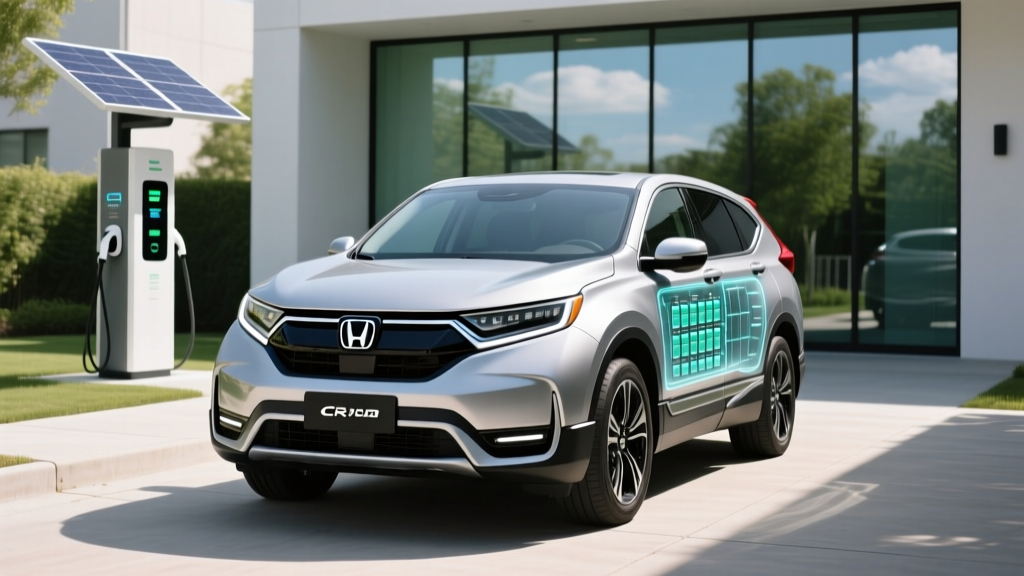
If you're researching whether the Honda CR-V Hybrid qualifies for a tax credit, the answer is straightforward: the conventional CR-V Hybrid (HEV) does not qualify for the federal §30D Clean Vehicle Credit. That credit — worth up to $7,500 — is reserved for battery electric vehicles (BEVs) and plug-in hybrids (PHEVs) that meet strict battery-sourcing, MSRP, and buyer-income requirements set by the IRS.
The CR-V Hybrid is a self-charging hybrid. It has no plug, no external charging capability, and a relatively small battery pack that recharges through regenerative braking and the gasoline engine. Because it cannot operate in pure electric mode for any meaningful distance and doesn't meet the minimum battery-capacity threshold under §30D, it falls outside the credit's scope entirely.
That doesn't make the CR-V Hybrid a bad purchase — it remains one of the most fuel-efficient compact SUVs on the market. But if a tax credit is a dealbreaker, you'll need to look elsewhere. Below, we break down exactly what the CR-V Hybrid offers, what it costs, and how it stacks up against PHEV and full-EV alternatives.
HEV vs PHEV vs EV: Where the CR-V Hybrid Fits
Understanding the CR-V Hybrid's tax-credit ineligibility starts with knowing the difference between hybrid types. Honda currently sells the CR-V only as a conventional hybrid (HEV) in the U.S. — there is no plug-in hybrid (PHEV) variant offered stateside.
| Feature | HEV (CR-V Hybrid) | PHEV (e.g., Toyota RAV4 Prime) | BEV (e.g., Tesla Model Y) |
|---|---|---|---|
| Plug-in charging? | No | Yes | Yes |
| Electric-only range | < 1 mile (low-speed assist) | 25–42 miles typical | 250–330+ miles |
| Battery capacity | ~1.0–1.5 kWh | 15–20 kWh usable | 60–90 kWh |
| Federal §30D credit? | No | Up to $7,500 (if eligible) | Up to $7,500 (if eligible) |
| Gasoline required? | Yes, always | Yes, for longer trips | No |
| Home charger needed? | No | Recommended (Level 2) | Essential (Level 2) |
The CR-V Hybrid's small battery exists solely to buffer energy recovered from braking and to assist the gasoline engine during acceleration. You never plug it in, and you never need to. This is the simplest path to better fuel economy — but it also means zero federal incentive eligibility.
Fuel Economy: EPA MPG and Real-World Results
The 2026 Honda CR-V Hybrid pairs a 2.0-liter Atkinson-cycle four-cylinder engine with a two-motor hybrid system for a combined output of 204 horsepower and 247 lb-ft of torque. All-wheel drive is standard on most trims.
| Drivetrain | City MPG | Highway MPG | Combined MPG |
|---|---|---|---|
| AWD (Sport, Sport Touring) | 40 | 34 | 37 |
Source: EPA fueleconomy.gov
Real-world note: Conventional hybrids like the CR-V often exceed their EPA city rating in stop-and-go driving because regenerative braking recovers energy that gas-only vehicles waste as heat. In mixed suburban driving, many owners report 38–42 MPG. Highway driving at sustained 75+ mph typically yields 31–34 MPG — slightly below the EPA figure, since the engine does more of the work at higher speeds where regen opportunities are minimal.
With a 14.0-gallon fuel tank, real-world total range lands between 475 and 530 miles depending on driving conditions — competitive with any compact SUV and far better than the gas-only CR-V's ~30 MPG combined.
Powertrain, Battery, and Warranty Details
The CR-V Hybrid uses Honda's fourth-generation two-motor hybrid system. Here's what's under the hood:
| Engine | 2.0L Atkinson-cycle 4-cylinder |
| Combined horsepower | 204 hp |
| Combined torque | 247 lb-ft |
| Hybrid battery | ~1.06 kWh lithium-ion |
| Transmission | e-CVT (no traditional gearbox) |
| Drivetrain | AWD standard (Sport, Sport Touring) |
| 0–60 mph | ~7.6 seconds |
| Towing capacity | 1,000 lbs |
| Cargo volume | 36.3 cu ft (rear seats up) |
Hybrid Battery Warranty
Honda covers the CR-V Hybrid's battery pack and hybrid-system components for 8 years / 100,000 miles (whichever comes first) under the federal emissions warranty. In California Air Resources Board (CARB) states, coverage extends to 10 years / 150,000 miles.
If the hybrid battery fails outside warranty, replacement costs typically range from $2,000 to $4,000 including labor at a dealership. Third-party hybrid-battery refurbishers offer reconditioned units for $1,000–$2,000. In practice, Honda's hybrid batteries have shown strong longevity — many owners report 150,000+ miles with minimal degradation, since the battery is small and rarely cycled to full depth.
Pricing and the Tax Credit Reality
Here's where the tax-credit question becomes concrete. The 2026 CR-V Hybrid is offered in two trims:
- CR-V Hybrid Sport (AWD): Starting MSRP ~$36,395
- CR-V Hybrid Sport Touring (AWD): Starting MSRP ~$40,895
Under IRS §30D rules, the Clean Vehicle Credit applies only to new BEVs and PHEVs that meet these requirements:
- Battery capacity of at least 7 kWh
- External recharging capability (a plug)
- MSRP below $80,000 (SUVs/pickups) or $55,000 (sedans)
- Buyer AGI below $150,000 (single) / $300,000 (joint)
- Battery components and critical minerals sourced from qualifying trade partners
The CR-V Hybrid's ~1.06 kWh battery and lack of a charging port disqualify it on multiple counts. No amount of paperwork or income-level optimization will change this — it simply isn't a plug-in vehicle.
State-level exceptions: A handful of states offer modest rebates or HOV-lane access for conventional hybrids, but these programs are increasingly rare and typically small ($250–$500). Check your state's energy office or DMV for current programs. These are not substitutes for the federal credit.
CR-V Hybrid vs PHEV and EV Alternatives
If a tax credit matters to your purchase decision, here are three electrified alternatives in the compact SUV segment that may qualify:
| Model | Type | MPG / Range | Starting MSRP | §30D Credit Eligible? |
|---|---|---|---|---|
| Honda CR-V Hybrid | HEV | 37 MPG combined | ~$36,395 | No |
| Toyota RAV4 Prime | PHEV | 94 MPGe / 42 mi EV range | ~$44,500 | Limited (sourcing rules) |
| Hyundai Tucson PHEV | PHEV | 80 MPGe / 33 mi EV range | ~$39,500 | No (assembled in Korea) |
| Tesla Model Y (Long Range) | BEV | 310 mi EPA range | ~$44,990 | Up to $7,500 (check sourcing) |
Note: §30D eligibility depends on final assembly location (must be in North America), battery-component sourcing, critical-mineral sourcing, MSRP caps, and buyer income. Always verify current-year rules on irs.gov and confirm VIN eligibility at fueleconomy.gov before purchasing.
Choose the CR-V Hybrid If…
- You want maximum fuel economy with zero lifestyle change — no plug, no charging apps, no range planning
- You drive 10,000–15,000 miles/year and want to cut fuel costs by ~30% vs the gas CR-V
- You live in an apartment or lack home-charging access, making a PHEV or BEV impractical
- You value Honda's reliability reputation and strong resale value
- Your budget is under $41,000 and you don't want to stretch for a PHEV premium
Look at a PHEV or BEV Instead If…
- A $3,750–$7,500 federal tax credit would meaningfully reduce your effective purchase price
- You have home-charging access and want to drive most daily miles on electricity
- You want HOV-lane access (available in CA, CO, and other states for PHEVs/BEVs)
- Your daily commute is under 35 miles and you want near-zero gasoline use on weekdays
- You're motivated by reducing tailpipe emissions, not just saving on fuel
Who Should Buy the CR-V Hybrid?
The Honda CR-V Hybrid makes the most sense for buyers who want a practical, efficient compact SUV without the complexity or infrastructure requirements of plug-in vehicles. It's an excellent choice if:
- You can't charge at home. If you park on the street or in a garage without a dedicated 240V circuit, a conventional hybrid gives you real fuel savings without any installation cost.
- You take frequent road trips. With 500+ miles of range and the ability to refuel in five minutes at any gas station, the CR-V Hybrid has zero range anxiety on long drives.
- You want simplicity. No charging apps, no adapter dongles, no preconditioning — just get in and drive.
- You want proven reliability. Honda's hybrid system has been in production for years with strong long-term durability data. The IIHS has historically rated the CR-V highly for safety.
The CR-V Hybrid won't save you $7,500 at tax time, but over five years and 75,000 miles, the fuel savings versus a gas-only compact SUV (at ~28 MPG combined) can total $1,800–$2,500 depending on local gas prices. That's a meaningful return, just not an incentive-driven one.
Frequently Asked Questions
Does the Honda CR-V Hybrid qualify for any federal tax credit?
No. The CR-V Hybrid is a conventional (self-charging) hybrid with no plug and a battery too small to meet §30D requirements. Only plug-in hybrids (PHEVs) and battery electric vehicles (BEVs) can qualify for the federal Clean Vehicle Credit.
How many MPG does the CR-V Hybrid actually get?
The EPA rates it at 40 city / 34 highway / 37 combined MPG (AWD). In real-world suburban driving with moderate stop-and-go traffic, many owners see 38–42 MPG. Sustained highway driving at 75+ mph typically returns 31–34 MPG.
Is there a plug-in version of the Honda CR-V?
Not in the U.S. market as of the 2026 model year. Honda sells a CR-V e:PHEV in China and Europe, but it has not been introduced in North America. If Honda adds a PHEV variant in the future, it would likely become eligible for at least a partial federal credit.
How long does the CR-V Hybrid battery last?
Honda's hybrid battery is warrantied for 8 years/100,000 miles (10 years/150,000 miles in CARB states). Real-world data from earlier Honda hybrid systems suggests these batteries routinely last 150,000+ miles with gradual capacity loss. The small battery is never deeply cycled, which aids longevity.
What does it cost to replace the CR-V Hybrid battery?
Dealership replacement typically costs $2,000–$4,000 including labor. Independent hybrid-battery specialists offer reconditioned replacements for $1,000–$2,000. Given the battery's small size and Honda's track record, this is a low-probability expense for most owners.
Are there any state incentives for buying a hybrid?
Most state EV incentives target plug-in vehicles. A few states may offer small rebates, reduced registration fees, or emissions-testing exemptions for hybrids, but these are modest ($100–$500 typically) and vary by jurisdiction. Check your state's energy or environmental agency for current programs.
How does the CR-V Hybrid compare to a PHEV for daily commuting?
If your commute is under 30 miles round-trip and you can charge at home, a PHEV like the Toyota RAV4 Prime lets you do most daily driving on electricity alone — using zero gasoline on weekdays. The CR-V Hybrid always burns gas, but it burns less of it (~37 MPG vs ~28 MPG for a gas SUV). The PHEV's advantage is larger if electricity is cheap and your commute is short; the HEV's advantage is zero infrastructure cost and simpler ownership.