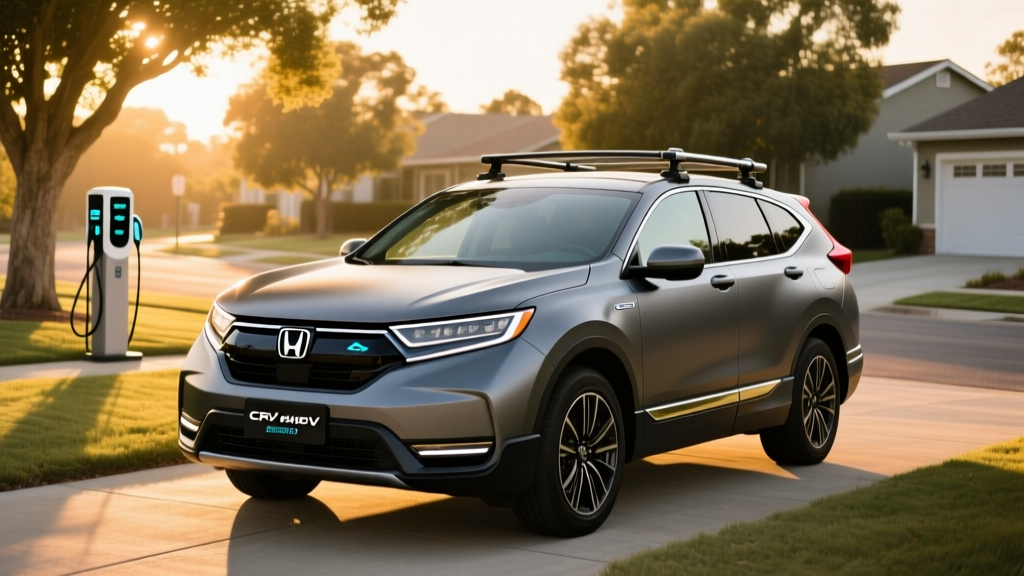
The Honda CR-V has long been a compact SUV benchmark, and its hybrid variant has become the volume seller for good reason. The 2026 Honda CR-V Hybrid SUV pairs a 2.0-liter Atkinson-cycle four-cylinder with a two-motor hybrid system to deliver 204 combined horsepower and an EPA-estimated 40 MPG combined. For buyers navigating the spectrum from conventional gas to full electric, the CR-V Hybrid occupies a practical middle ground: no plug required, no range anxiety, and meaningful fuel savings over the turbocharged gas model.
This guide breaks down every number that matters — EPA fuel economy across trims, real-world efficiency observations, powertrain architecture, pricing by trim, battery warranty details, and where the CR-V Hybrid fits against plug-in hybrid and full EV alternatives.
EPA Fuel Economy: City, Highway, and Combined MPG by Trim
The 2026 Honda CR-V Hybrid is available in Sport, Sport-L, and Sport Touring trims, all sharing the same fourth-generation two-motor hybrid powertrain. Front-wheel drive (FWD) is standard on Sport and Sport-L; all-wheel drive (AWD) is optional on those and standard on Sport Touring. The AWD system adds a rear-mounted drive motor, which slightly affects efficiency.
| Trim / Drivetrain | City MPG | Highway MPG | Combined MPG | Annual Fuel Cost* |
|---|---|---|---|---|
| Sport / Sport-L (FWD) | 43 | 36 | 40 | ~$1,450 |
| Sport / Sport-L / Sport Touring (AWD) | 40 | 34 | 37 | ~$1,575 |
*Based on 15,000 miles/year at $3.50/gallon regular unleaded. Your costs will vary with local fuel prices and driving habits.
The city-highway split is typical of Honda's hybrid system, which relies heavily on electric-motor propulsion at low speeds and engages the gasoline engine primarily at highway cruising. This is why the city number exceeds the highway number — the opposite of a conventional gas vehicle.
Real-World MPG: What Owners Actually See
EPA estimates are a baseline, not a guarantee. The CR-V Hybrid's real-world fuel economy varies based on driving conditions, climate, and route profile.
- City / suburban driving: 38–45 MPG — hybrids shine here, and many owners report exceeding the EPA city estimate in stop-and-go traffic thanks to aggressive regenerative braking.
- Highway cruising (70+ mph): 30–35 MPG — aerodynamic drag and sustained engine operation reduce the hybrid advantage at speed.
- Cold weather (below 30°F): Expect a 10–20% reduction (roughly 32–36 MPG combined AWD). The engine runs more frequently to provide cabin heat and maintain battery temperature.
- Mixed daily commute: 35–40 MPG combined is achievable for most drivers in moderate climates.
Compared to the non-hybrid 2026 CR-V (turbocharged 1.5L, EPA 29 MPG combined AWD), the hybrid delivers roughly 25–28% better fuel economy in mixed driving — a meaningful gap that compounds over years of ownership.
Powertrain Architecture: How the Two-Motor System Works
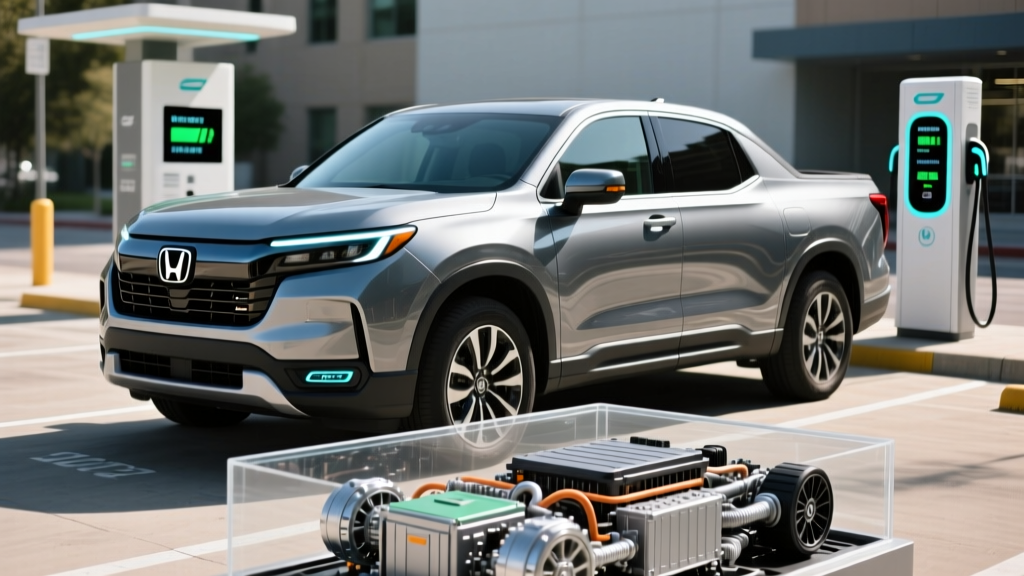
The CR-V Hybrid uses Honda's fourth-generation two-motor hybrid system, a series-parallel architecture that operates differently from traditional planetary-gear hybrids like Toyota's.
| Specification | Detail |
|---|---|
| Engine | 2.0L Atkinson-cycle DOHC 4-cylinder |
| Engine output | 145 hp @ 6,100 rpm / 134 lb-ft torque |
| Drive motor (front) | 184 hp / 247 lb-ft torque |
| Combined system output | 204 hp / 247 lb-ft torque |
| AWD rear motor | Additional rear drive motor (AWD trims) |
| Transmission | Direct-drive (no conventional transmission or CVT belt) |
| Hybrid battery | Lithium-ion, ~1.1 kWh (HEV — not plug-in) |
| 0–60 mph | ~7.6 seconds (AWD) |
| Towing capacity | 1,000 lbs |
The system operates in three primary modes:
- EV Drive: Battery powers the drive motor alone — used for low-speed acceleration and light-load cruising. The engine is off.
- Hybrid Drive: Engine spins a generator motor that produces electricity to feed the drive motor. The engine is not mechanically connected to the wheels. This covers most acceleration scenarios.
- Engine Drive: A lockup clutch mechanically connects the engine directly to the front wheels at steady highway speeds (roughly 55–75 mph), where the engine operates at its most efficient point.
This architecture gives the CR-V Hybrid an electric-vehicle-like feel in city driving — smooth, linear torque delivery with no gear shifts — while maintaining highway efficiency through direct mechanical coupling.
HEV vs. PHEV vs. Full EV: Which Powertrain Fits Your Life?
The CR-V Hybrid is a conventional hybrid (HEV). It does not plug in. Honda does not currently offer a plug-in hybrid (PHEV) version of the CR-V in the U.S. market. Here is how the three electrified powertrain types compare for compact SUV buyers:
| Factor | HEV (CR-V Hybrid) | PHEV (e.g., Toyota RAV4 Prime) | BEV (e.g., Tesla Model Y, Hyundai Ioniq 5) |
|---|---|---|---|
| Plugs in? | No | Yes (Level 1/2) | Yes (Level 1/2/DC fast) |
| Electric-only range | ~1 mile at low speed | 25–42 miles typical | 250–330+ miles (EPA) |
| Combined efficiency | 37–40 MPG | 38 MPG + 94 MPGe | 100–130 MPGe |
| Upfront cost premium | +1,500–3,000 vs. gas | +5,000–8,000 vs. gas | +8,000–15,000 vs. gas |
| Home charging needed? | No | Recommended (Level 2) | Essential (Level 2) |
| Federal tax credit (§30D) | Not eligible | Up to $7,500 if eligible | Up to $7,500 if eligible |
| Maintenance complexity | Low (no plug, small battery) | Moderate (two full systems) | Low (fewer moving parts) |
| Best for | No home charging access; want simplicity | Home charging + short commutes | Home charging + longer commutes; want zero tailpipe emissions |
- Choose the CR-V Hybrid (HEV) if: You lack reliable home or workplace charging, drive 200+ miles in a single trip regularly, or want the lowest-complexity path to better fuel economy without changing your refueling habits.
- Choose a PHEV if: You can install a Level 2 home charger, your daily commute is under 40 miles round-trip, and you still want gasoline backup for road trips without planning charging stops.
- Choose a full EV if: You have home charging, your daily driving is under 250 miles, you want the lowest per-mile energy cost, and you are ready to plan longer road trips around DC fast-charging infrastructure.
Pricing, Trims, and Tax Credit Eligibility
The 2026 Honda CR-V Hybrid lineup spans three trims, with pricing that reflects the hybrid premium over the gasoline LX and EX trims.
| Trim | Drivetrain | MSRP (incl. destination) |
|---|---|---|
| Sport | FWD | $36,395 |
| Sport | AWD | $37,895 |
| Sport-L | FWD | $38,895 |
| Sport-L | AWD | $40,395 |
| Sport Touring | AWD (standard) | $42,895 |
Federal Tax Credit Status
The Honda CR-V Hybrid (HEV) does not qualify for the federal §30D Clean Vehicle Credit. Under current IRS rules, the §30D credit applies only to plug-in electric vehicles (PHEVs and BEVs) with a minimum battery capacity of 7 kWh. Conventional hybrids like the CR-V Hybrid have a much smaller battery (~1.1 kWh) and no plug-in capability, placing them outside the credit's scope.
Some states and municipalities offer separate incentives for hybrid vehicles, though these are less common and typically smaller than EV incentives. Check your state energy office or the Alternative Fuels Data Center for local programs.
Battery Warranty, Reliability, and Replacement Cost
Hybrid battery longevity is the most common concern among first-time hybrid buyers. Honda's warranty coverage and the track record of its hybrid systems provide substantial reassurance.
- Hybrid battery (high-voltage): 8 years / 100,000 miles (10 years / 150,000 miles in CARB states including CA, NY, MA, and others that follow California emissions standards)
- Hybrid system components: 8 years / 100,000 miles — covers the drive motors, power control unit, and related electronics
- Powertrain warranty: 5 years / 60,000 miles
- New vehicle limited warranty: 3 years / 36,000 miles
Long-Term Reliability
Honda's two-motor hybrid system has been in production since 2014 (Accord Hybrid) and has proven durable. The lithium-ion hybrid battery is relatively small (~1.1 kWh) and operates within a narrow state-of-charge window — typically between 20% and 80% — which minimizes degradation. Unlike full EV batteries that undergo deep charge cycles daily, the CR-V Hybrid's battery experiences shallow cycles managed by the power control unit.
Based on long-term data from earlier-generation Honda hybrids, significant battery degradation before 150,000 miles is uncommon. Many Honda hybrid owners report 200,000+ miles on the original battery pack.
Battery Replacement Cost
If the hybrid battery does require replacement outside of warranty, expect the following approximate costs:
- OEM replacement battery pack: $2,000–$3,500 (parts)
- Labor: $500–$1,000
- Total out-of-pocket: $2,500–$4,500 at a Honda dealership
This is substantially less than a full EV battery replacement ($8,000–$20,000+) because the hybrid battery is far smaller. Third-party refurbished battery options may reduce cost further, though they may not carry the same warranty coverage.
Five-Year Cost of Ownership: Hybrid vs. Gas CR-V
The hybrid premium pays for itself through fuel savings. Here is a five-year comparison assuming 15,000 miles per year and $3.50/gallon regular unleaded:
| Cost Factor | CR-V Hybrid AWD (37 MPG) | CR-V Gas AWD (28 MPG) | Difference |
|---|---|---|---|
| Annual fuel consumption | 405 gallons | 536 gallons | 131 gallons/year |
| Annual fuel cost | $1,418 | $1,876 | $458/year |
| 5-year fuel cost | $7,090 | $9,380 | $2,290 saved |
| MSRP premium (AWD Sport) | $37,895 | $35,595 (EX AWD) | +$2,300 |
At current fuel prices, the hybrid's MSRP premium is roughly recovered through fuel savings alone within five years — and the savings continue to accumulate for every year you keep the vehicle. If gas prices rise above $4.00/gallon, the payback period shortens further. Factor in potentially higher resale value for the hybrid trim and the economic case strengthens.
Pros and Cons: The Honest Summary
- 40 MPG combined (FWD) — class-leading for the segment
- Smooth, EV-like acceleration in city driving
- No plug-in charging required — zero lifestyle change
- AWD available with minimal efficiency penalty (3 MPG)
- Strong hybrid battery warranty (8yr/100k mi, 10yr/150k CARB)
- Competitive cargo space (36.3 cu ft behind rear seats)
- Honda Sensing safety suite standard on all trims
- No PHEV option — cannot drive on electric-only for commutes
- Not eligible for the $7,500 federal §30D tax credit
- Highway MPG drops to 34 (AWD) — less impressive than city
- 1,000-lb towing capacity — lower than some competitors
- Engine drone under hard acceleration (common to Honda hybrids)
- Sport trim lacks some premium features reserved for Touring
Frequently Asked Questions
How many MPG does the Honda CR-V Hybrid get?
The 2026 Honda CR-V Hybrid FWD is EPA-rated at 43 city / 36 highway / 40 combined MPG. The AWD version is rated at 40 city / 34 highway / 37 combined. In real-world city driving, many owners report exceeding the EPA city estimate, while highway-only driving at 75+ mph may yield 30–33 MPG.
Does the Honda CR-V Hybrid need to be plugged in?
No. The CR-V Hybrid is a conventional hybrid (HEV). It charges its own small battery through regenerative braking and the gasoline engine. You refuel it exactly like a standard gas car — at any gas station. There is no plug, no charging cable, and no home charger required.
Is there a plug-in hybrid (PHEV) version of the CR-V?
Not in the U.S. market as of 2026. Honda has not offered a CR-V plug-in hybrid stateside. If you want a compact SUV PHEV with 30+ miles of electric-only range, consider the Toyota RAV4 Prime (42 miles EV range) or the Hyundai Tucson PHEV (33 miles EV range).
Does the CR-V Hybrid qualify for any federal tax credit?
No. The federal §30D Clean Vehicle Credit requires a plug-in vehicle with at least 7 kWh of battery capacity. The CR-V Hybrid's ~1.1 kWh battery and lack of plug-in capability make it ineligible. Check your state's incentive programs for possible hybrid-specific rebates, though these are uncommon.
How long will the CR-V Hybrid battery last?
Honda covers the hybrid battery for 8 years/100,000 miles (10 years/150,000 miles in CARB states). Based on long-term data from Honda's hybrid systems, the battery typically lasts 150,000–200,000+ miles before significant degradation. The small battery operates within a protective charge window that minimizes wear. Out-of-warranty replacement costs approximately $2,500–$4,500.
Is the CR-V Hybrid more reliable than the gas version?
Honda's hybrid system has proven highly reliable since its introduction. The hybrid eliminates the conventional transmission (no CVT belt or torque converter to fail) and uses regenerative braking that reduces wear on the friction brake pads. The gasoline engine operates less frequently and under more controlled conditions than in the turbo gas model, which may reduce long-term engine wear.
How does the CR-V Hybrid compare to the Toyota RAV4 Hybrid?
The 2026 Toyota RAV4 Hybrid is EPA-rated at 41 MPG combined (AWD standard), slightly edging the CR-V Hybrid AWD at 37 MPG combined. However, the CR-V Hybrid offers a more refined driving experience, a more spacious interior, and a more modern infotainment system. The RAV4 Prime PHEV variant provides 42 miles of electric range if you want plug-in capability — something Honda does not offer on the CR-V.