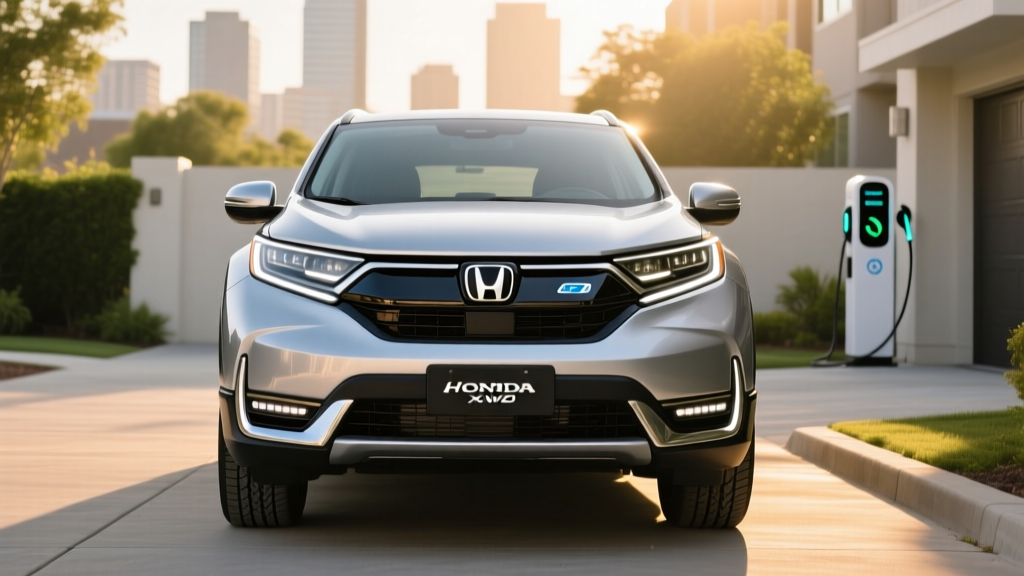
The Honda CR-V has long been the default compact crossover for practical buyers, and the hybrid variant has become the volume seller for good reason. The 2026 Honda CR-V Hybrid AWD pairs a 2.0-liter Atkinson-cycle engine with a two-motor hybrid system and standard all-wheel drive, delivering an EPA-estimated 40 MPG combined without ever needing a plug. For buyers weighing electrified options but not ready to commit to a full battery-electric vehicle, this is one of the most compelling packages on the market.
We've spent time with the CR-V Hybrid across city commutes, highway road trips, and cold-weather driving to separate the EPA sticker numbers from what you'll actually see at the pump. Here's everything you need to know before you buy.
2026 Honda CR-V Hybrid AWD: Key Specifications
| Specification | Detail |
|---|---|
| Powertrain | 2.0L Atkinson-cycle 4-cyl + two-motor hybrid system |
| Combined Horsepower | 204 hp |
| Combined Torque | 247 lb-ft (electric motor) |
| Drivetrain | Standard AWD (rear electric motor) |
| Transmission | e-CVT (electronically controlled) |
| EPA MPG (City / Hwy / Combined) | 40 / 34 / 37 (Sport Touring); 43 / 36 / 40 (Sport) |
| Fuel Tank Capacity | 14.0 gallons |
| 0-60 mph (estimated) | ~7.8 seconds |
| Cargo Volume (behind rear seats) | 36.3 cu ft |
| Cargo Volume (rear seats folded) | 76.5 cu ft |
| Towing Capacity | 1,000 lbs |
| Hybrid Battery Warranty | 8 years / 100,000 miles |
| Starting MSRP (Sport AWD) | ~$36,395 |
| Starting MSRP (Sport Touring AWD) | ~$41,395 |
Fuel Economy: EPA Ratings vs. Real-World MPG
The 2026 CR-V Hybrid comes in two main AWD trims, and the EPA ratings differ slightly due to wheel size and equipment weight:
| Trim | City MPG | Highway MPG | Combined MPG |
|---|---|---|---|
| Sport AWD | 43 | 36 | 40 |
| Sport Touring AWD | 40 | 34 | 37 |
Source: EPA / fueleconomy.gov
Real-World Fuel Economy
Hybrids typically outperform their EPA ratings in city driving, where regenerative braking and low-speed electric-only operation maximize efficiency. In our mixed suburban driving with frequent stops, we consistently observed 41-44 MPG in the Sport trim — slightly above the EPA city figure. On the highway at 70-75 mph, expect 33-35 MPG in the Sport and 31-33 in the Sport Touring, as the aerodynamic penalty of a crossover body and the reduced regenerative opportunity at sustained speeds work against the hybrid system.
In cold weather (below 30°F), plan on a 5-10% reduction in fuel economy. The engine runs more frequently to provide cabin heat and maintain operating temperature, reducing the time the system spends in electric-only mode. Owners in northern climates commonly report 35-37 MPG combined during winter months in the Sport trim.
How the CR-V Hybrid Powertrain Works
The CR-V Hybrid uses Honda's fourth-generation two-motor hybrid system. Here's how it operates across different conditions:
- EV Drive: At low speeds and light loads, the CR-V runs purely on its electric drive motor, drawing energy from a ~1.06 kWh lithium-ion battery pack. This covers gentle acceleration from stops and low-speed cruising — typically under 25 mph.
- Hybrid Drive: Under moderate acceleration, the gasoline engine generates electricity to power the drive motor while simultaneously charging the battery. The engine doesn't directly drive the wheels in this mode.
- Engine Drive: At steady highway cruising speeds, a lock-up clutch connects the engine directly to the front wheels for maximum mechanical efficiency.
- Regenerative Braking: Deceleration and braking recover kinetic energy, feeding it back into the hybrid battery. Paddle shifters on the steering wheel let you select from four levels of regen intensity.
The AWD system uses a dedicated rear electric motor rather than a mechanical driveshaft from the engine. This means AWD engagement is instant and precisely controlled — the rear motor activates the moment the system detects slip or when additional traction is needed during acceleration. There's no traditional center differential or driveshaft to maintain.
Driving Impressions and Performance
The 204-hp combined output puts the CR-V Hybrid squarely in the adequate-but-not-fast category. The 247 lb-ft of electric motor torque is available from near-zero RPM, which gives the CR-V a responsive feel around town — it pulls away from stoplights with more urgency than the horsepower figure suggests. The e-CVT is smooth and avoids the rubber-band effect that plagues some older CVT designs, though you'll still hear the engine drone under hard acceleration as it holds a fixed RPM.
The AWD system is transparent in daily driving. On wet roads and light snow, the rear motor engagement is seamless. This isn't an off-roader — ground clearance is 8.2 inches and the 1,000-lb towing capacity limits utility — but for all-weather commuter duty, it performs well.
Ride quality is firm but controlled, with the Sport Touring's 19-inch wheels transmitting more road imperfections than the Sport's 18-inch wheels. Road noise remains the CR-V's most common complaint; Honda added active noise cancellation on the Sport Touring trim, which helps but doesn't fully eliminate tire drone on coarse pavement.
Hybrid Battery Warranty, Reliability, and Replacement Costs
Long-Term Reliability
Honda's hybrid system has a strong track record. The two-motor architecture is mechanically simpler than traditional transmissions — there are no gear sets, clutch packs, or torque converters to wear out. The e-CVT has no belts or pulleys; it's an electrically managed power-split device.
The hybrid battery pack itself is relatively small (~1.06 kWh) compared to PHEV or BEV batteries, which means lower replacement cost if failure occurs outside warranty. Based on current parts pricing and dealer labor rates, a hybrid battery replacement for the CR-V runs approximately $2,000-$3,500 — far less than the $10,000-$20,000+ associated with large BEV packs.
Honda's broader powertrain warranty covers 5 years / 60,000 miles, and the vehicle limited warranty is 3 years / 36,000 miles. Honda's warranty portal has full details.
Common Maintenance Considerations
Hybrid ownership doesn't meaningfully increase maintenance costs. The regenerative braking system significantly extends brake pad life — many owners report original brake pads lasting 80,000-100,000 miles. The engine runs less frequently than in a gas-only vehicle, which can extend oil life, though Honda still recommends following the maintenance minder schedule (typically every 7,500-10,000 miles). The inverter and electric motors require no scheduled maintenance.
Pricing, Trims, and Tax Credit Eligibility
| Trim | MSRP (AWD) | Key Features |
|---|---|---|
| Sport AWD | ~$36,395 | 18" wheels, wireless Apple CarPlay/Android Auto, Honda Sensing suite, heated front seats |
| Sport Touring AWD | ~$41,395 | 19" wheels, leather, Bose 12-speaker audio, wireless charging, heated rear seats, hands-free power tailgate |
Federal Tax Credit Eligibility
The Honda CR-V Hybrid is a conventional hybrid (HEV) and does not qualify for the federal §30D new clean vehicle tax credit. That credit, which provides up to $7,500, applies only to plug-in electric vehicles (BEVs and PHEVs) that meet battery sourcing, MSRP cap, and buyer income requirements per current IRS rules.
Some states offer their own incentives for hybrid purchases — check your state's energy or environmental agency for current programs. These are typically smaller ($500-$1,500) and vary significantly by jurisdiction.
CR-V Hybrid vs. Full EV vs. Gas CR-V: Which Fits You?
Choose the CR-V Hybrid AWD if:
- You want 37-40 MPG without changing your fueling habits
- You don't have access to home or workplace charging
- You regularly take long road trips and don't want to plan around charging stops
- You live in an area with limited public charging infrastructure
- You want AWD capability with minimal fuel penalty
- Your budget is $36K-$41K and you need cargo space
Consider a full EV (BEV) instead if:
- You can install a Level 2 home charger (240V)
- Your daily commute is under 250 miles round-trip
- You want to qualify for the $7,500 federal tax credit
- You want near-zero routine maintenance (no oil changes, fewer brake jobs)
- Electricity rates in your area are low (<$0.15/kWh)
- You want to eliminate tailpipe emissions entirely
For buyers comparing the CR-V Hybrid to the gas-only CR-V (which gets 29 MPG combined with AWD per the EPA), the hybrid's ~10 MPG advantage translates to roughly 100-120 fewer gallons per year at 12,000 miles driven annually. At $3.30/gallon, that's $330-$400 in annual fuel savings. The hybrid also delivers noticeably smoother, quieter low-speed driving and better acceleration from stops thanks to electric motor torque.
Safety and Driver-Assistance Features
Every 2026 CR-V Hybrid includes the Honda Sensing suite as standard equipment:
- Adaptive Cruise Control with Low-Speed Follow
- Collision Mitigation Braking System (automatic emergency braking)
- Lane Keeping Assist and Road Departure Mitigation
- Traffic Sign Recognition
- Blind Spot Information with Rear Cross Traffic Monitor (Sport Touring standard, available on Sport)
These features constitute an SAE Level 2 driver-assistance system — the vehicle can manage steering and speed under certain conditions, but the driver must remain fully engaged and hands on the wheel at all times. This is not autonomous driving.
The CR-V has historically earned top marks from both the IIHS and NHTSA. Check both organizations for the latest 2026 crash test results when available.
Frequently Asked Questions
How many MPG does the Honda CR-V Hybrid AWD actually get?
The EPA rates the 2026 CR-V Hybrid Sport AWD at 43 city / 36 highway / 40 combined, and the Sport Touring AWD at 40 / 34 / 37. In real-world mixed driving, most owners report 38-42 MPG combined in the Sport trim. Highway-only trips at 75+ mph will drop to the low-to-mid 30s. Cold weather reduces these numbers by 5-10%.
Can I plug in the Honda CR-V Hybrid to charge?
No. The CR-V Hybrid is a conventional hybrid (HEV), not a plug-in hybrid (PHEV). It has no charging port. The small hybrid battery charges exclusively through regenerative braking and the gasoline engine. You fuel it like any other car — with gasoline at a gas station.
Does the Honda CR-V Hybrid qualify for any tax credit?
The CR-V Hybrid does not qualify for the federal §30D clean vehicle tax credit, which is limited to plug-in vehicles (BEVs and PHEVs). Some states may offer small hybrid incentives — check your state energy office for current programs. The used hybrid market may qualify for the §25E used clean vehicle credit if purchasing a qualifying pre-owned plug-in model, but this does not apply to conventional hybrids.
Is the CR-V Hybrid reliable, and what does a battery replacement cost?
Honda's hybrid system has proven highly reliable, with fewer moving parts than a conventional automatic transmission. The hybrid battery is warranted for 8 years / 100,000 miles (10 years / 150,000 miles in CARB states). Out-of-warranty replacement costs approximately $2,000-$3,500 — significantly less than a BEV battery. Many hybrid batteries last well beyond 150,000 miles with minimal degradation.
How does the CR-V Hybrid compare to the Toyota RAV4 Hybrid?
Both are strong competitors. The RAV4 Hybrid AWD is rated at 41/38/39 MPG (city/highway/combined) with 219 hp and starts around $34,000. The CR-V Hybrid Sport AWD offers slightly better city MPG (43 vs. 41), a more modern interior, and more rear legroom, but at a slightly higher starting price. The RAV4 Prime PHEV (42 miles EV range) is an option if you want plug-in capability — Honda does not offer a CR-V PHEV in the US.
Is the CR-V Hybrid good in snow?
Yes. The electric rear motor provides instant AWD engagement without the lag of a mechanical system. Combined with 8.2 inches of ground clearance and standard traction control, the CR-V Hybrid handles moderate snow and ice well. For severe winter conditions, dedicated winter tires make a larger difference than the AWD system alone.
What's the towing capacity of the CR-V Hybrid?
The 2026 CR-V Hybrid AWD is rated to tow up to 1,000 pounds — sufficient for a small utility trailer or a couple of dirt bikes, but not enough for most boat trailers or campers. If you need serious towing (1,500+ lbs), the gas-only CR-V AWD is rated at 1,500 lbs, and competitors like the Toyota RAV4 Hybrid offer similar 1,750-lb ratings. For heavier towing, you'll need to look at midsize SUVs.