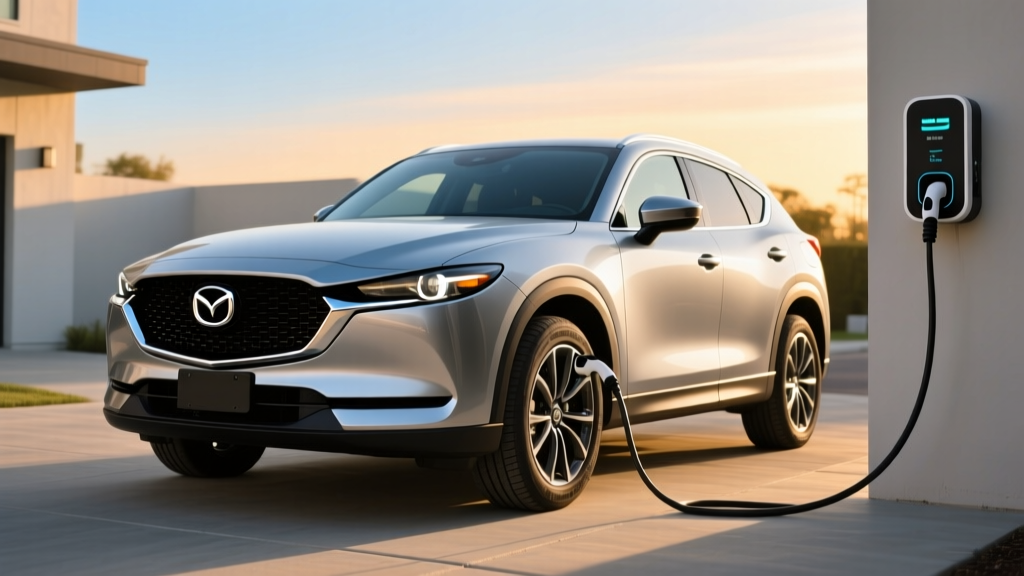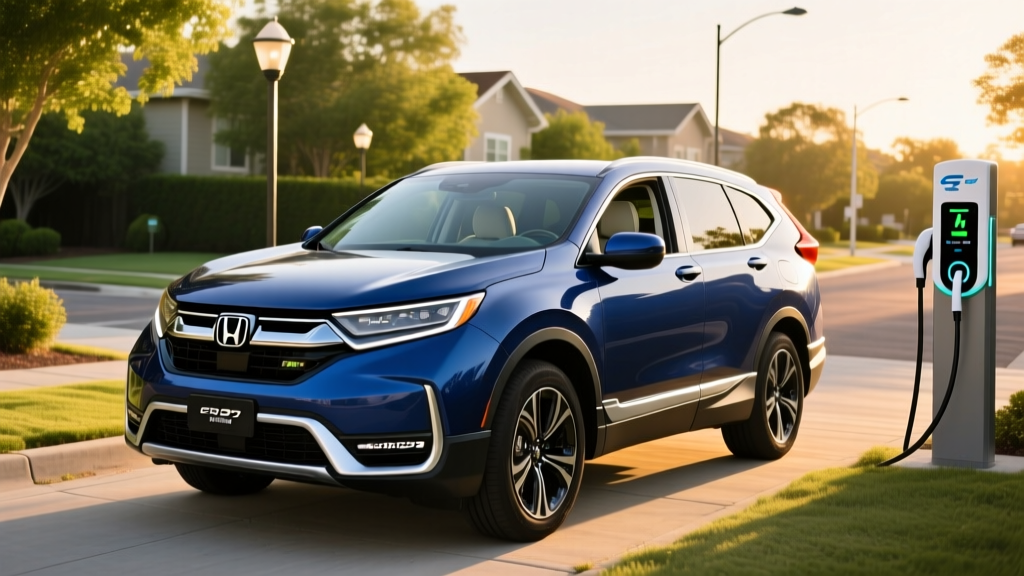
The 2027 Honda CR-V Hybrid continues as one of the best-selling electrified compact SUVs in the U.S., and for good reason: it delivers diesel-rivaling fuel economy without requiring a plug, a charger, or any change in daily habits. With 40 MPG combined and 204 horsepower from its two-motor hybrid system, the CR-V Hybrid threads the needle between efficiency and practicality for buyers who aren't ready to commit to a full battery-electric vehicle.
This guide breaks down every critical number — EPA fuel economy, real-world efficiency, powertrain specs, battery warranty, and pricing — and answers the core question: is the CR-V Hybrid the right electrified vehicle for you, or should you look at a PHEV or full EV instead?
2027 Honda CR-V Hybrid: Core Specifications
| Specification | 2027 Honda CR-V Hybrid |
|---|---|
| Powertrain | 2.0L 4-cyl Atkinson-cycle + 2 electric motors |
| Combined Horsepower | 204 hp |
| Combined Torque | 247 lb-ft (motor) |
| Transmission | e-CVT (direct-drive, no traditional gearbox) |
| Drivetrain | FWD standard; AWD available (Sport, Sport-L, Sport Touring) |
| EPA MPG (FWD) | 43 city / 36 highway / 40 combined |
| EPA MPG (AWD) | 40 city / 34 highway / 37 combined |
| Fuel Tank | 14.0 gallons |
| Total Driving Range | ~560 miles (FWD) / ~518 miles (AWD) |
| 0-60 mph | ~7.6 seconds |
| Towing Capacity | 1,000 lbs |
| Cargo Volume | 36.3 cu ft (rear seats up) / 76.5 cu ft (folded) |
| Starting MSRP | ~$36,395 (Sport FWD) |
Source: EPA Fuel Economy / Honda Motor Co. Specifications are based on model-year data and may vary by final EPA certification.
Fuel Economy: EPA Ratings vs Real-World MPG
The headline number is 40 MPG combined for front-wheel-drive trims, but the city/highway split tells the more useful story for daily driving.
| Drivetrain | City | Highway | Combined |
|---|---|---|---|
| FWD (Sport, Sport-L) | 43 MPG | 36 MPG | 40 MPG |
| AWD (Sport, Sport-L, Sport Touring) | 40 MPG | 34 MPG | 37 MPG |
Why Hybrids Often Beat EPA in the City
Unlike gasoline-only vehicles, the CR-V Hybrid's two-motor system does its best work in stop-and-go traffic. At low speeds, the SUV runs primarily on electric power, with the 2.0L engine acting as a generator rather than directly driving the wheels. Regenerative braking recaptures energy that a conventional car would waste as heat.
In real-world ownership, drivers who do predominantly city and suburban driving frequently report 42-46 MPG on FWD trims. Highway-only driving at 75+ mph, where the engine must work harder and regen opportunities are minimal, typically yields 33-35 MPG — slightly below the EPA highway estimate.
Powertrain Deep Dive: Honda's Two-Motor Hybrid System
Honda's hybrid system in the CR-V is fundamentally different from Toyota's planetary-gear design. It uses two electric motors — one as a generator, one as a drive motor — connected through a lock-up clutch rather than a traditional transmission.
Here's how it operates across different conditions:
- EV Drive (low speed, light load): The battery powers the drive motor directly. The gasoline engine is off. This covers parking-lot maneuvers, residential streets, and gentle acceleration up to ~30 mph.
- Hybrid Drive (moderate load): The engine spins the generator motor, which feeds electricity to the drive motor. The engine never directly turns the wheels. This covers most suburban and city driving.
- Engine Drive (steady highway cruising): At sustained speeds above ~45 mph with light throttle, the lock-up clutch engages and the engine drives the wheels directly — more efficient than converting mechanical energy to electrical and back.
The 204 combined horsepower and 247 lb-ft of electric torque provide confident merging and passing. The 0-60 mph time of approximately 7.6 seconds is adequate for the segment, though not sporty. The electric torque fill eliminates the lag you'd feel in a turbocharged gas-only SUV.
Pricing, Trims, and Tax Credit Eligibility
The 2027 CR-V Hybrid is available in three trims, all carrying the same powertrain:
| Trim | Drivetrain | Est. MSRP |
|---|---|---|
| Sport | FWD or AWD | $36,395 (FWD) / $37,995 (AWD) |
| Sport-L | FWD or AWD | $38,995 (FWD) / $40,595 (AWD) |
| Sport Touring | AWD only | $42,895 |
Does the CR-V Hybrid Qualify for a Federal Tax Credit?
No. The federal IRS §30D Clean Vehicle Credit (up to $7,500) applies only to plug-in electric vehicles — battery-electric vehicles (BEVs) and plug-in hybrids (PHEVs) with at least 7 kWh of battery capacity. Conventional hybrids like the CR-V Hybrid, which cannot be plugged in, do not qualify for this credit.
Some states offer separate incentives for hybrid purchases, but these vary widely and change frequently. Check your state's energy or environmental agency website for current programs. There is no federal incentive for conventional HEVs as of 2026.
Battery Warranty, Longevity, and Replacement Cost
How Long Will the Battery Last?
Honda's hybrid battery is a relatively small pack — roughly 1.06 kWh — and it operates within a narrow state-of-charge window (never fully depleted, never fully charged). This shallow-cycling strategy dramatically reduces degradation compared to a full EV battery that cycles from 10% to 90%.
Based on long-term data from Honda's hybrid fleet (Accord Hybrid, Insight, and earlier CR-V Hybrids), most hybrid batteries retain sufficient capacity well beyond 150,000 miles. Failures before the warranty period are uncommon but not unheard of.
Battery Replacement Cost
If the hybrid battery does fail outside of warranty, replacement costs typically range from $2,000 to $4,000 including parts and labor at a Honda dealership. Third-party hybrid battery refurbishers offer replacements for $1,200-$2,500. This is substantially less than an EV traction battery replacement, which can exceed $10,000-$15,000.
Hybrid vs PHEV vs Full EV: Which Is Right for You?
The CR-V Hybrid is one option among three electrification paths. Here's how to decide:
Choose the CR-V Hybrid (HEV) If:
- You can't charge at home (apartment, street parking)
- You want zero behavior change — just add gas
- You drive 10,000-15,000 miles/year in mixed conditions
- You want the lowest upfront cost among electrified SUVs
- You take frequent long road trips and don't want to plan charging stops
Choose a PHEV (e.g., RAV4 Prime) If:
- You can charge at home (Level 1 or 2)
- Your daily commute is under 35-40 miles round trip
- You want electric-only daily driving with gas-engine road-trip flexibility
- You want to qualify for the $7,500 federal tax credit (subject to eligibility)
- You're willing to pay $5,000-$8,000 more upfront
Choose a Full EV (e.g., Ioniq 5, Model Y) If:
- You can install a Level 2 home charger
- You want the lowest per-mile fuel cost (~$0.04-0.06/mi vs ~$0.10-0.12/mi for hybrid)
- You want zero tailpipe emissions and minimal maintenance
- You qualify for the federal tax credit and/or state rebates
- You're comfortable planning road-trip charging stops
Pros and Cons of the 2027 Honda CR-V Hybrid
✓ Pros
- 40 MPG combined (FWD) with no plug-in requirement
- Strong low-end electric torque for city driving
- Excellent reliability track record for Honda hybrid systems
- 8yr/100k-mile battery warranty (10yr/150k in CARB states)
- Class-leading cargo space vs hybrid competitors
- Over 550 miles of total range per tank
- No range anxiety or charging infrastructure dependency
✗ Cons
- No federal tax credit eligibility (HEV, not PHEV/BEV)
- No electric-only driving mode for zero-emission zones
- AWD drops combined MPG to 37
- 1,000-lb towing limit is below some competitors
- Engine noise becomes noticeable under hard acceleration
- Sport Touring trim pushes past $42,000 — near PHEV territory
- No DC fast charging capability (not applicable to HEVs)
Ownership Costs: CR-V Hybrid vs Gas CR-V vs Full EV
To put the CR-V Hybrid's value in context, here's a 5-year/75,000-mile cost comparison against the gas-only CR-V and a comparable full EV (Hyundai Ioniq 5):
| Cost Factor | CR-V Hybrid (FWD) | CR-V Gas (AWD) | Ioniq 5 (RWD) |
|---|---|---|---|
| Purchase Price (est.) | $36,400 | $33,000 | $42,500 |
| Federal Tax Credit | $0 | $0 | Up to $7,500* |
| Fuel/Energy (75k mi) | ~$6,560 | ~$9,375 | ~$3,375 |
| Maintenance (5 yr) | ~$2,800 | ~$3,500 | ~$1,500 |
| 5-Year Net Cost | ~$45,760 | ~$45,875 | ~$39,875 |
*Tax credit eligibility depends on buyer income, vehicle MSRP caps, and battery sourcing requirements per IRS §30D. Consult a tax professional. Fuel cost assumptions: $3.50/gal gas, $0.14/kWh electricity, 15,000 mi/year.
The CR-V Hybrid essentially matches the gas CR-V on 5-year total cost while delivering significantly lower emissions and better city drivability. A full EV with tax credit eligibility pulls ahead on operating costs, but requires home charging access and a higher upfront investment.
Frequently Asked Questions
How many MPG does the 2027 Honda CR-V Hybrid get?
The FWD CR-V Hybrid achieves an EPA-estimated 43 city / 36 highway / 40 combined MPG. AWD trims are rated at 40 city / 34 highway / 37 combined. In real-world city driving, many owners report exceeding the EPA city estimate due to the hybrid system's regenerative braking efficiency.
Does the CR-V Hybrid need to be plugged in?
No. The CR-V Hybrid is a conventional hybrid (HEV). It charges its small battery through regenerative braking and the gasoline engine. You never plug it in — you simply fill the 14-gallon gas tank as you would with any other vehicle.
How far can the CR-V Hybrid drive on electric power alone?
The CR-V Hybrid can travel roughly 1-2 miles at very low speeds (under 30 mph) on electric power alone, such as in a parking lot or residential street. It is not designed for sustained electric-only driving. If you need 25-40 miles of electric-only range, you need a plug-in hybrid (PHEV) like the Toyota RAV4 Prime or a full EV.
Is the Honda CR-V Hybrid reliable?
Honda's two-motor hybrid system has a strong reliability record across the Accord Hybrid, Insight, and CR-V Hybrid lineups. The hybrid battery carries an 8-year/100,000-mile warranty (10 years/150,000 miles in CARB states). Major hybrid-system failures before 100,000 miles are rare. Honda consistently earns top marks from IIHS and NHTSA for safety.
What does it cost to replace the CR-V Hybrid battery?
Out-of-warranty hybrid battery replacement runs $2,000-$4,000 at a Honda dealership, or $1,200-$2,500 through independent hybrid-battery specialists. This is significantly less than an EV battery replacement. Given the battery's shallow-cycling design and warranty coverage, most owners will never face this expense.
Does the CR-V Hybrid qualify for any tax credit?
The CR-V Hybrid does not qualify for the federal §30D Clean Vehicle Credit, which is reserved for plug-in vehicles (BEVs and PHEVs). Some states offer separate hybrid incentives, but these vary by jurisdiction. Check your state's energy office or the Alternative Fuels Data Center for current state-level programs.
CR-V Hybrid vs RAV4 Hybrid — which is better?
The Toyota RAV4 Hybrid offers slightly more combined horsepower (219 hp) and standard AWD with 41 MPG combined. The CR-V Hybrid counters with more cargo volume (36.3 vs 37.6 cu ft is competitive), a more refined driving feel, and Honda's infotainment system. Both are excellent choices — the decision often comes down to brand preference, dealer proximity, and specific trim pricing in your market.