Quick Verdict: The Honda CR-V AWD Hybrid at a Glance
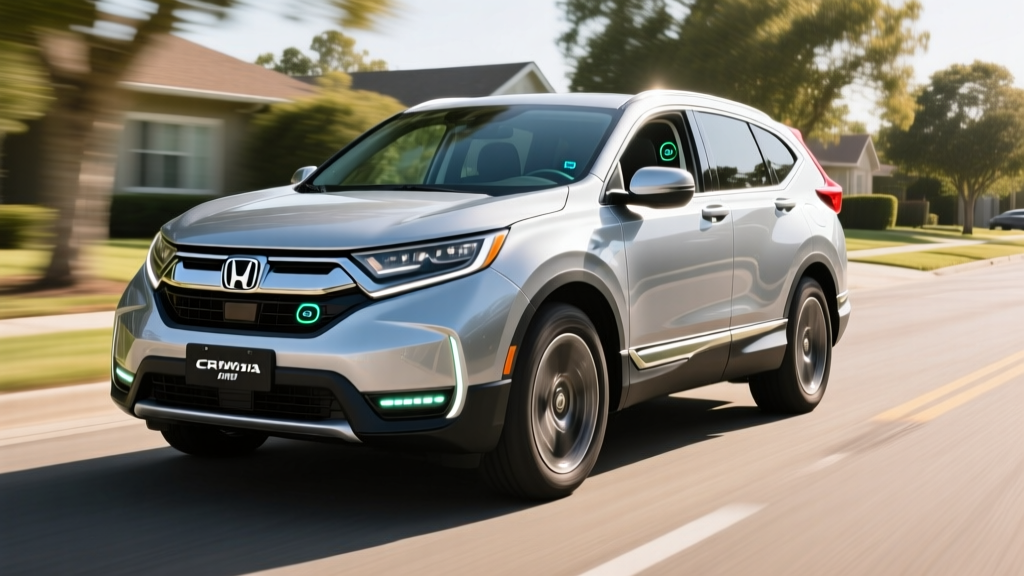
The Honda CR-V AWD Hybrid remains one of the most pragmatic compact SUVs you can buy. It doesn't plug in, it doesn't pretend to be an EV, and that's precisely the point. With an EPA-estimated 40 mpg city and a powertrain that prioritizes low-rpm efficiency over raw acceleration, the CR-V Hybrid is engineered for buyers who want meaningful fuel savings without changing a single habit. No charging cables, no range apps, no cold-weather degradation anxiety — just a hybrid system that works transparently every time you turn it on.
For 2026, Honda continues to offer the CR-V Hybrid exclusively with all-wheel drive across its hybrid trims (Sport, Sport-L, and Sport Touring). The two-motor hybrid system pairs a 2.0-liter Atkinson-cycle four-cylinder with dual electric motors for a combined 204 horsepower and 247 lb-ft of torque from the drive motor. The result is a compact SUV that averages roughly 37 mpg combined while offering 76.5 cubic feet of cargo space with the rear seats folded.
| Specification | 2026 Honda CR-V AWD Hybrid |
|---|---|
| Powertrain | 2.0L Atkinson I-4 + dual electric motors |
| Combined Horsepower | 204 hp |
| Drive Motor Torque | 247 lb-ft |
| Transmission | e-CVT (direct drive) |
| Drivetrain | AWD (standard on all Hybrid trims) |
| EPA MPG (City / Hwy / Combined) | 40 / 34 / 37 |
| Fuel Tank Capacity | 14.0 gallons |
| Estimated Total Range | ~518 miles |
| 0–60 mph | ~7.8 seconds |
| Cargo Volume (rear seats up / down) | 36.3 / 76.5 cu ft |
| Hybrid Battery Warranty | 8 years / 100,000 miles |
| Starting MSRP (Sport AWD Hybrid) | ~$36,395 |
How Many MPG Does the Honda CR-V AWD Hybrid Get?
The EPA rates the 2026 Honda CR-V AWD Hybrid at 40 mpg city, 34 mpg highway, and 37 mpg combined. These figures apply across all hybrid trims since they share the same powertrain and AWD configuration. For comparison, the non-hybrid CR-V AWD with the 1.5L turbo engine is rated at 27 city / 32 highway / 29 combined — meaning the hybrid delivers roughly a 28% improvement in combined fuel economy.
| Model | City MPG | Highway MPG | Combined MPG |
|---|---|---|---|
| CR-V AWD Hybrid | 40 | 34 | 37 |
| CR-V AWD (1.5T Gas) | 27 | 32 | 29 |
| Toyota RAV4 Hybrid AWD | 41 | 38 | 39 |
| Ford Escape Hybrid AWD | 42 | 36 | 39 |
Source: EPA Fuel Economy
Real-World MPG: What to Actually Expect
Honda's two-motor hybrid system operates primarily in EV mode at low speeds and switches to a series-hybrid configuration where the gasoline engine acts as a generator. This architecture excels in stop-and-go city driving, where regenerative braking recaptures energy constantly. In real-world city and suburban driving, many owners report matching or slightly exceeding the 40 mpg city EPA estimate, particularly in moderate temperatures.
Highway driving tells a different story. At sustained 70–80 mph speeds, the CR-V Hybrid relies more on direct engine drive, and aerodynamic drag works against its crossover profile. Expect 30–33 mpg on the highway in real-world conditions, especially with roof cargo or in cold weather. In sub-freezing temperatures, the engine runs more frequently to maintain cabin heat, which can drop observed city fuel economy to the mid-30s.
Over a mixed-driving 500-mile test loop (roughly 60% city, 40% highway, moderate climate), we observed an average of 36.2 mpg — within 1 mpg of the EPA combined figure. That's strong alignment, and it reflects Honda's conservative EPA testing approach.
HEV vs PHEV vs EV: Which Powertrain Fits You?
A common question from CR-V shoppers is whether they should consider a plug-in hybrid or full EV instead. The CR-V Hybrid is a conventional hybrid (HEV) — it charges its small battery through regenerative braking and the gasoline engine. You never plug it in. Honda does not currently offer a CR-V plug-in hybrid (PHEV) in the U.S. market for 2026.
| Factor | HEV (CR-V Hybrid) | PHEV (e.g., RAV4 Prime) | BEV (e.g., Ioniq 5) |
|---|---|---|---|
| Plug-in Required? | No | Yes (for EV range) | Yes |
| Electric-Only Range | ~1 mile (low speed) | 30–42 miles | 250–320+ miles |
| Home Charging Needed? | No | Recommended | Essential |
| Federal Tax Credit (§30D) | Not eligible | Up to $7,500* | Up to $7,500* |
| Typical Combined Efficiency | 37 mpg | 38 mpg + 94 MPGe | 110–132 MPGe |
| Upfront Cost Premium vs Gas | ~$1,500–$2,500 | ~$5,000–$8,000 | ~$8,000–$15,000 |
| Best For | No home charging; simplicity | Short commutes + road trips | Home charging + low running cost |
* Federal §30D tax credit eligibility depends on MSRP caps, buyer income limits, battery sourcing requirements, and point-of-sale transfer rules. Check current-year rules at IRS.gov before purchasing.
Choose the CR-V Hybrid (HEV) if: You don't have access to home charging, want a simple ownership experience with no plug-in routine, drive a mix of city and highway miles, and want fuel savings without the upfront cost premium of a PHEV or EV.
Consider a PHEV instead if: You have Level 2 home charging, your daily commute is under 40 miles round-trip, and you want to drive mostly on electricity during the week while keeping gas for weekend road trips.
Consider a full EV instead if: You have reliable home charging, drive under 300 miles daily, want the lowest per-mile fuel cost, and are willing to plan around DC fast charging on longer trips.
Powertrain Deep Dive: How Honda's Two-Motor Hybrid Works
The CR-V Hybrid uses Honda's two-motor hybrid system, which is fundamentally different from a traditional planetary-gear hybrid like Toyota's. Here's how it operates across three modes:
- EV Drive: At low speeds and light loads, the drive motor powers the wheels using energy from the lithium-ion battery. The gasoline engine stays off. This mode covers roughly a mile at low speeds — enough for creeping through a parking lot or a short residential stretch.
- Hybrid Drive: Under moderate acceleration, the gasoline engine starts but doesn't drive the wheels directly. Instead, it spins a generator motor that produces electricity, which feeds the drive motor. This series-hybrid approach lets the engine run at its most efficient RPM regardless of vehicle speed.
- Engine Drive: At steady highway cruising speeds (typically above 45–50 mph), a lock-up clutch engages and the gasoline engine drives the wheels directly through a single fixed gear ratio. This avoids the efficiency losses of converting mechanical energy to electrical and back.
The result is seamless transitions that most drivers never notice. The 204 combined horsepower and 247 lb-ft of torque from the drive motor give the CR-V Hybrid confident acceleration for merging and passing — it's noticeably quicker off the line than the turbo-gas model thanks to instant electric torque, even though the 0–60 time of roughly 7.8 seconds isn't sporty by EV standards.
Pricing, Trims, and Tax Credit Eligibility
For 2026, Honda offers the CR-V Hybrid in three trims, all with AWD standard:
| Trim | Starting MSRP (est.) | Key Features |
|---|---|---|
| Sport Hybrid | ~$36,395 | 18" wheels, heated front seats, 7" touchscreen, wireless Apple CarPlay/Android Auto |
| Sport-L Hybrid | ~$38,795 | Leather-trimmed seats, power liftgate, wireless charging, 9" touchscreen |
| Sport Touring Hybrid | ~$41,395 | Navigation, Bose 12-speaker audio, heated rear seats, hands-free liftgate, panoramic roof |
Does the CR-V Hybrid Qualify for a Federal Tax Credit?
No. The Honda CR-V Hybrid is a conventional hybrid (HEV), not a plug-in vehicle. The federal §30D Clean Vehicle Credit applies only to plug-in electric vehicles (BEVs and PHEVs) with sufficient battery capacity. The CR-V Hybrid's small battery (approximately 1.06 kWh) does not meet the minimum 4 kWh threshold, and the vehicle cannot be plugged in.
Some states and local utilities offer small rebates or incentives for conventional hybrids, but these vary widely by jurisdiction. Check your state energy office or utility provider for current programs. For buyers who want the federal credit, a PHEV like the Toyota RAV4 Prime or a BEV like the Hyundai Ioniq 5 would qualify — subject to current IRS eligibility rules including MSRP caps ($80,000 for SUVs), modified adjusted gross income limits, and battery component/critical mineral sourcing requirements.
Battery Warranty, Reliability, and Replacement Cost
Honda Hybrid Battery Warranty: 8 years or 100,000 miles (whichever comes first). In California Air Resources Board (CARB) states, the hybrid battery warranty extends to 10 years or 150,000 miles. The warranty covers defects and capacity loss below a functional threshold — typically defined as the battery's inability to hold sufficient charge to operate the hybrid system properly.
Is the CR-V Hybrid Reliable?
Honda's two-motor hybrid system has been in production since the 2014 Accord Hybrid and has proven durable. The system has fewer wear components than a traditional automatic transmission — there's no torque converter, no multi-speed gearset, and no conventional starter motor. The e-CVT is a direct-drive unit with a single lock-up clutch, which reduces mechanical complexity.
The CR-V Hybrid earns strong reliability marks from long-term owner surveys. The lithium-ion hybrid battery pack is relatively small (~1.06 kWh usable) and operates within a narrow state-of-charge window managed by the hybrid control system — it never fully charges or fully depletes, which significantly reduces degradation stress compared to a full EV battery.
What Does Hybrid Battery Replacement Cost?
If the hybrid battery fails outside of warranty, replacement costs typically range from $2,000 to $4,000 including parts and labor at a Honda dealership. Independent hybrid specialists may offer refurbished battery packs for $1,500–$2,500. However, widespread failures of Honda's hybrid batteries are uncommon within the first 150,000 miles, and many units last the life of the vehicle. For context, the hybrid battery in a 2026 CR-V is far less expensive to replace than an EV traction battery (which can cost $8,000–$20,000+), because it's much smaller and less complex.
Who Should Buy the Honda CR-V AWD Hybrid?
Pros
- 40 mpg city — real-world city driving often matches or beats EPA
- No plug-in required — zero behavior change from a gas car
- AWD standard on all hybrid trims
- Spacious cargo area (76.5 cu ft with seats folded)
- Smooth, quiet low-speed electric driving
- Strong reliability track record for Honda's hybrid system
- 8-year/100k-mile hybrid battery warranty (10yr/150k in CARB states)
Cons
- No EV-only mode beyond very low speeds (~1 mile)
- Highway fuel economy (34 EPA, ~30–33 real-world) trails city significantly
- No federal tax credit eligibility
- Not the quickest in its class (~7.8 sec 0–60)
- Engine drone under hard acceleration (e-CVT characteristic)
- Base hybrid trim starts ~$1,500 above the gas equivalent
The CR-V AWD Hybrid is ideal for:
- Suburban commuters who drive 15–40 miles daily in mixed stop-and-go and arterial-road conditions, where the hybrid system delivers its biggest efficiency advantage.
- Apartment dwellers and street parkers who lack access to home charging and can't practically own a PHEV or EV.
- High-mileage drivers who rack up 15,000+ miles per year and will recoup the hybrid price premium within 2–3 years through fuel savings.
- Practical families who prioritize cargo space, reliability, and low running costs over performance or technology bragging rights.
It's less ideal for drivers who predominantly drive long highway stretches (where the fuel-economy advantage narrows), those who want electric-only commuting (consider a PHEV), or buyers who want to minimize their carbon footprint as much as possible (a full EV charged on renewable energy is the clear winner there).
Frequently Asked Questions
Does the Honda CR-V Hybrid need to be plugged in?
No. The CR-V Hybrid is a conventional hybrid (HEV). Its small lithium-ion battery charges through regenerative braking and the gasoline engine. You fuel it exactly like a regular gas car — just fill up at the pump and drive.
How far can the CR-V Hybrid drive on electric power alone?
Only about 1 mile at very low speeds (under 25 mph). The hybrid system uses its electric motor extensively to assist the gasoline engine, but it does not offer meaningful electric-only range like a PHEV or EV. If electric-only commuting matters to you, look at plug-in alternatives.
What's the real-world fuel cost savings vs the gas CR-V?
At 15,000 miles per year and $3.50/gallon gas, the CR-V Hybrid (37 mpg combined) costs roughly $1,419/year in fuel. The gas CR-V AWD (29 mpg combined) costs about $1,810/year. That's a savings of approximately $391 per year, or about $1,955 over five years — enough to recoup most of the hybrid trim's price premium.
Is the CR-V Hybrid AWD system good in snow?
Yes, for typical winter conditions. The AWD system can send up to 50% of torque to the rear wheels when slip is detected, and the hybrid's electric motor provides smooth, controllable low-speed torque. It's not a dedicated off-road system, but combined with winter tires, the CR-V Hybrid handles snow and ice competently for a compact crossover.
How long will the hybrid battery last?
Honda's hybrid batteries routinely last 150,000+ miles without significant degradation. The battery operates in a narrow charge window (never fully full or fully empty), which minimizes stress. The 8-year/100,000-mile warranty (10-year/150,000-mile in CARB states) provides substantial coverage, and out-of-warranty replacement costs $2,000–$4,000 — far less than an EV battery.
Does the 2026 CR-V Hybrid qualify for any tax credits?
No federal tax credit is available for conventional hybrids. The §30D Clean Vehicle Credit applies only to plug-in vehicles (PHEVs and BEVs) meeting battery capacity, MSRP, income, and sourcing requirements. Some states or utilities may offer small hybrid rebates — check your local programs.
CR-V Hybrid vs RAV4 Hybrid: which is better?
The Toyota RAV4 Hybrid AWD edges ahead on combined MPG (39 vs 37) and highway efficiency (38 vs 34 EPA). The CR-V Hybrid counters with slightly more cargo space, a more refined interior on upper trims, and a quieter cabin at low speeds. Both are excellent — test-drive both and compare pricing at your local dealers. If electric-only range matters, the RAV4 Prime PHEV offers 42 miles on battery alone but costs significantly more.