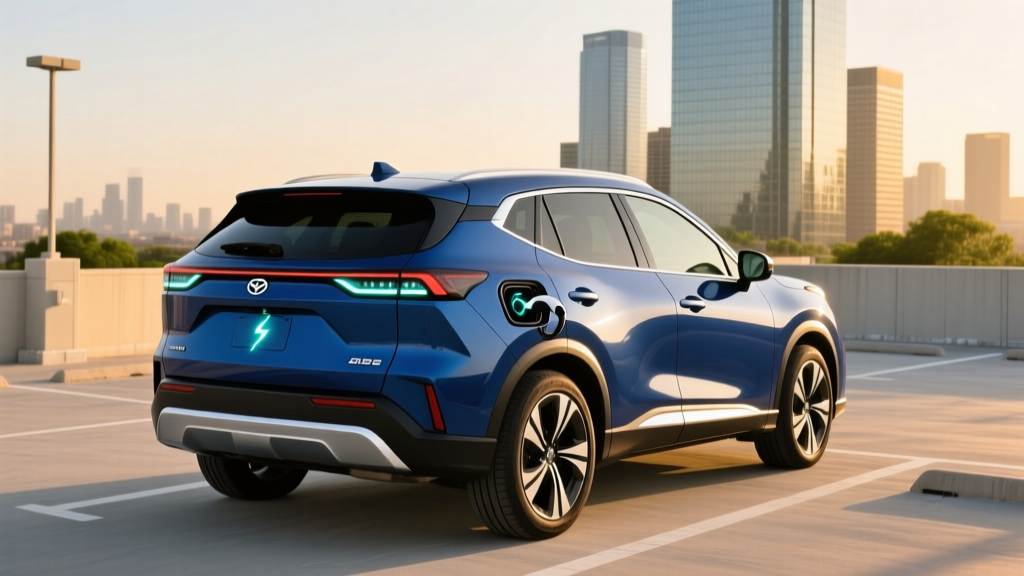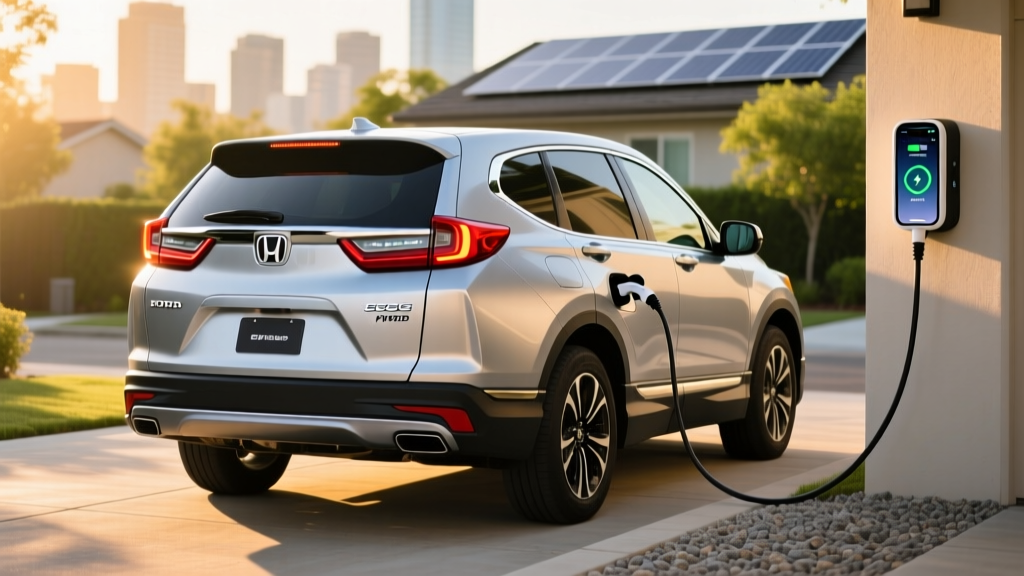
The 2026 Honda CR-V Hybrid remains one of the best-selling electrified compact SUVs in America, and for good reason. It pairs a proven two-motor hybrid system with Honda's spacious, practical interior — delivering diesel-like fuel economy without ever needing to plug in. For buyers weighing an electrified purchase but not ready to commit to a full battery-electric vehicle, the CR-V Hybrid occupies a compelling middle ground.
In this guide, we'll cover exactly what the 2026 CR-V Hybrid delivers in EPA-rated efficiency, real-world fuel economy, powertrain performance, pricing, and long-term ownership considerations including battery warranty and replacement costs. We'll also clarify a common point of confusion: Honda does not currently sell a plug-in hybrid (PHEV) version of the CR-V in the U.S. market, so this review focuses exclusively on the conventional hybrid (HEV) powertrain.
HEV vs. PHEV: What the 2026 CR-V Hybrid Actually Is
Before diving into specs, it's important to establish exactly what you're buying. The 2026 Honda CR-V is offered as a conventional hybrid electric vehicle (HEV) — meaning it uses a small battery and electric motors to assist the gasoline engine, but it cannot be plugged in. The battery recharges through regenerative braking and engine power.
HEV (Conventional Hybrid): Small battery (~1-2 kWh). No plug. Recharges via regen and engine. Fuel economy boost of 20-40% over gas-only equivalent. Example: 2026 CR-V Hybrid.
PHEV (Plug-in Hybrid): Larger battery (~15-25 kWh). Plugs in for 25-45 miles of electric-only driving before the gas engine kicks in. Eligible for some tax credits. Example: Toyota RAV4 Prime, Hyundai Tucson PHEV.
The 2026 CR-V does not have a PHEV variant in the U.S. Honda previously offered the Clarity PHEV (discontinued) but has not applied plug-in tech to the CR-V domestically.
If you need electric-only commuting capability and can charge at home, competitors like the Toyota RAV4 Prime (42 miles electric-only) or the Hyundai Tucson PHEV (33 miles) may be worth cross-shopping. But if you simply want excellent fuel economy with zero lifestyle change — no chargers, no range planning — the CR-V HEV is purpose-built for that.
2026 Honda CR-V Hybrid Fuel Economy: EPA Ratings and Real-World MPG
Fuel economy is the headline number for any hybrid buyer. Here's what the EPA rates the 2026 CR-V Hybrid at, broken down by drivetrain configuration:
| Configuration | City MPG | Highway MPG | Combined MPG |
|---|---|---|---|
| FWD (Sport, Sport-L, Sport Touring) | 43 | 36 | 40 |
| AWD (all Hybrid trims available) | 40 | 34 | 37 |
Source: EPA Fuel Economy
Real-World MPG: What Owners Actually See
EPA numbers are a starting point, not a guarantee. The CR-V Hybrid's two-motor system excels in stop-and-go city driving, where the electric motors handle low-speed propulsion and regenerative braking recaptures energy. This means:
- City driving: Many owners report meeting or slightly exceeding the 43 MPG city EPA rating in warm weather on suburban routes with frequent stops. The hybrid system is at its most efficient here.
- Highway driving: Expect 33-36 MPG on flat interstate at 65-70 mph. At sustained highway speeds, the gasoline engine does most of the work, and aerodynamic drag dominates. The 36 MPG EPA highway figure is realistic but not conservative.
- Cold weather: In temperatures below freezing, expect a 10-15% drop in fuel economy (roughly 34-36 MPG combined for FWD). The engine runs more frequently to provide cabin heat and maintain battery temperature.
- Mountainous terrain: Sustained climbs will reduce MPG significantly (high 20s), though regenerative braking on descents partially recovers this.
Powertrain Specs: How the CR-V Hybrid Makes Its Power
The 2026 CR-V Hybrid uses Honda's fourth-generation two-motor hybrid system, pairing a 2.0-liter Atkinson-cycle four-cylinder engine with two electric motors. Here's the full breakdown:
| Specification | Value |
|---|---|
| Engine | 2.0L Atkinson-cycle DOHC 4-cylinder |
| Engine Power | 145 hp @ 6,100 rpm |
| Engine Torque | 134 lb-ft @ 4,500 rpm |
| Electric Motor (Drive) | 181 hp / 247 lb-ft |
| Combined System Output | 204 hp / 247 lb-ft |
| Hybrid Battery | ~1.06 kWh lithium-ion |
| Transmission | e-CVT (direct-drive with lock-up clutch) |
| 0-60 mph | ~7.6 seconds |
| Drivetrain | FWD or AWD (torque-vectoring rear motor on AWD) |
| Towing Capacity | 1,000 lbs |
The combined 204 horsepower is competitive in the compact SUV hybrid segment — slightly less than the Toyota RAV4 Hybrid (219 hp) but more than the Hyundai Tucson Hybrid (180 hp base). The 247 lb-ft of torque from the drive motor is available from near-zero RPM, giving the CR-V Hybrid responsive acceleration from stops, which is where most daily driving happens.
The e-CVT is not a traditional belt-driven CVT. Honda's system uses a direct-drive gear arrangement with a lock-up clutch for highway cruising, which avoids the "rubber band" feel that older CVTs are known for. At highway speeds, the engine mechanically connects to the wheels for efficiency; at lower speeds, the drive motor handles propulsion while the engine spins a generator motor to produce electricity.
2026 Honda CR-V Hybrid Pricing by Trim
Honda positions the hybrid powertrain on the upper trims of the CR-V lineup, which means you get more standard equipment but at a higher entry price than the gas-only base model. Here's the 2026 pricing breakdown (MSRP, excluding destination):
| Trim | Drivetrain | MSRP |
|---|---|---|
| Sport Hybrid | FWD | $36,395 |
| Sport Hybrid | AWD | $37,895 |
| Sport-L Hybrid | FWD | $38,795 |
| Sport-L Hybrid | AWD | $40,295 |
| Sport Touring Hybrid | AWD (standard) | $43,295 |
Note: Add approximately $1,350 for destination and handling. Prices reflect Honda's U.S. MSRP for the 2026 model year.
Federal and State Tax Credit Eligibility
Here's where the conventional hybrid hits a wall compared to PHEVs and BEVs: the 2026 Honda CR-V Hybrid does not qualify for the federal §30D clean vehicle tax credit. That credit — up to $7,500 — is reserved for plug-in electric vehicles with battery capacity of at least 7 kWh. The CR-V Hybrid's ~1 kWh battery falls well short of that threshold.
- Federal §30D credit: Not eligible (HEV, not a plug-in vehicle)
- Federal §25C energy efficiency credit: Not applicable (this applies to home improvements, not vehicles)
- State incentives: Some states offer small rebates for conventional hybrids, but these are increasingly rare as states redirect funds to PHEVs and BEVs. Check your state's energy office or AFDC incentive database for current programs.
The financial case for the CR-V Hybrid rests entirely on fuel savings, not tax incentives. At 40 MPG combined versus the gas-only CR-V's 30 MPG combined, and assuming $3.40/gallon national average and 15,000 miles/year, the hybrid saves approximately $525 per year in fuel costs. Over a 7-year ownership period, that's roughly $3,675 in savings — enough to offset a meaningful portion of the hybrid's price premium over the gas model.
Battery Warranty, Reliability, and Replacement Cost
Battery longevity is consistently the top concern among hybrid shoppers. Here's what Honda covers and what the data shows:
- Hybrid battery: 8 years / 100,000 miles (10 years / 150,000 miles in CARB states including CA, NY, MA, and others)
- Hybrid system components: 8 years / 100,000 miles (includes inverter, electric motors, control unit)
- Capacity retention threshold: Honda does not publish a specific degradation percentage trigger, but warranty covers "defects in materials or workmanship" and failure to hold adequate charge
In practice, Honda's hybrid batteries have demonstrated excellent longevity. Third-generation Accord and CR-V Hybrids (2017-2022) are accumulating 150,000+ miles with minimal battery degradation. The lithium-ion cells in Honda's HEV system are relatively small and operate within a narrow state-of-charge window (roughly 40-60% SoC most of the time), which significantly reduces stress and extends cycle life compared to the deeper cycles a PHEV or BEV battery undergoes.
Battery Replacement Cost
If the hybrid battery does fail outside of warranty — which remains uncommon based on available data — replacement costs are moderate compared to full EV batteries:
- OEM replacement battery pack: $2,000 - $3,500 (parts)
- Labor: $500 - $1,000
- Total out-of-pocket: $2,500 - $4,500 at a Honda dealer
- Aftermarket/remanufactured options: $1,500 - $2,500 installed at independent hybrid specialists
This is a fraction of the $10,000-$20,000+ that a full EV battery replacement can cost, and the failure rate is low enough that it should not be a primary purchase concern. According to Consumer Reports reliability data, Honda's hybrid powertrain consistently ranks among the most dependable in the segment.
Pros and Cons: The 2026 CR-V Hybrid Verdict
Pros
- 40 MPG combined (FWD) — top-tier for the class
- 204 hp provides confident acceleration
- No plug-in required — zero lifestyle adjustment
- Spacious cargo area (38.2 cu ft behind rear seats)
- Honda Sensing safety suite standard on all trims
- Strong resale value and reliability track record
- AWD available with torque-vectoring rear motor
Cons
- No federal tax credit eligibility
- Hybrid trims start at $36,395 — premium over gas CR-V
- 1,000-lb towing limit (gas model: 1,500 lbs)
- No PHEV option for electric-only commuting
- Highway MPG (36 FWD) less impressive than city (43)
- Road noise on highway is noticeable vs. competitors
- No DC fast charging (not applicable to HEV, but worth noting vs. PHEVs)
CR-V Hybrid vs. PHEV vs. Full EV: Which Should You Choose?
The right electrified vehicle depends on your driving pattern, charging access, and budget. Here's a decision framework:
- You cannot charge at home (apartment, street parking, no garage outlet)
- You want maximum simplicity — no apps, no charging networks, no plug
- You drive a mix of city and highway with no single dominant pattern
- Your budget is $36K-$44K and you don't want to stretch for a PHEV or BEV
- You want proven long-term reliability with minimal new-technology risk
- You can charge at home (Level 1 outlet is sufficient for overnight PHEV charging)
- Your daily commute is under 30-40 miles round-trip (you'll drive mostly on electricity)
- You want the option of electric-only driving but also need gas flexibility for road trips
- You can benefit from the $7,500 federal tax credit (check IRS §30D eligibility for income and sourcing requirements)
- You can install a Level 2 home charger (240V, 32-48A)
- Your daily driving is under 250 miles and you're comfortable planning road-trip charging
- You want the lowest operating cost (electricity is roughly $0.04-$0.06/mile vs. $0.10-$0.14/mile for the hybrid)
- You want to eliminate oil changes, spark plugs, and most drivetrain maintenance
- You qualify for the federal tax credit and potentially state EV rebates
Frequently Asked Questions
How many MPG does the 2026 Honda CR-V Hybrid get?
The EPA rates the 2026 CR-V Hybrid at 43 city / 36 highway / 40 combined MPG for front-wheel drive, and 40 city / 34 highway / 37 combined for all-wheel drive. Real-world results typically fall within 2-3 MPG of these figures depending on driving conditions and climate.
Does the 2026 CR-V Hybrid need to be plugged in?
No. The CR-V Hybrid is a conventional hybrid (HEV) that recharges its battery entirely through regenerative braking and the gasoline engine. There is no plug, no charging cable, and no need for any charging infrastructure.
Is there a plug-in hybrid (PHEV) version of the 2026 CR-V?
No. Honda does not offer a PHEV variant of the CR-V in the United States. If you want a plug-in hybrid compact SUV, competitors include the Toyota RAV4 Prime (42 miles electric-only, $43,690), Hyundai Tucson PHEV (33 miles electric-only, $38,725), and Kia Sportage PHEV (34 miles electric-only, $39,890).
How long will the CR-V Hybrid battery last?
Honda's hybrid battery warranty covers 8 years/100,000 miles (10 years/150,000 miles in CARB states). Based on long-term data from previous-generation Honda Hybrids, the battery typically lasts 150,000-200,000+ miles before any significant degradation. The narrow state-of-charge operating window in Honda's HEV system is highly favorable to battery longevity.
What does it cost to replace the CR-V Hybrid battery?
An OEM replacement hybrid battery costs approximately $2,000-$3,500 for the part, plus $500-$1,000 in labor, totaling $2,500-$4,500 at a Honda dealer. Remanufactured aftermarket batteries are available for $1,500-$2,500 installed. However, battery failure before 150,000+ miles is uncommon based on available reliability data.
Does the 2026 CR-V Hybrid qualify for any tax credit?
No. The federal §30D clean vehicle tax credit requires a plug-in vehicle with at least 7 kWh of battery capacity. The CR-V Hybrid's ~1 kWh battery does not meet this threshold. Some states may offer minor incentives for hybrids, but these are increasingly rare. Check the Alternative Fuels Data Center for state-specific programs.
Is the CR-V Hybrid better than the gas-only CR-V?
For most buyers, yes. The hybrid delivers 10 MPG better combined fuel economy (40 vs. 30 MPG), smoother acceleration from the electric motor, and only a modest price premium that pays back in fuel savings within 5-7 years. The gas-only CR-V has a slight edge in towing (1,500 lbs vs. 1,000 lbs) and lower base pricing, but for daily commuting and family use, the hybrid is the stronger value.
Sources: EPA Fuel Economy (fueleconomy.gov), Honda CR-V Official Specifications, IRS Clean Vehicle Credits