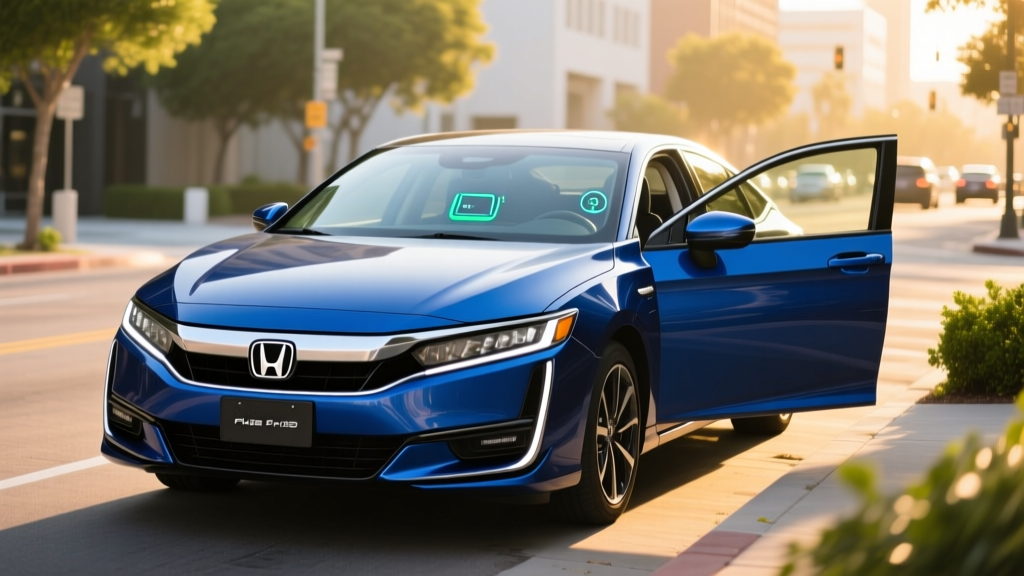
The Honda Clarity Plug-In Hybrid occupies a rare space in the electrified vehicle market: a midsize sedan that delivers genuine electric-only commuting range, hybrid flexibility for road trips, and Honda's reputation for reliability — all at a used-market price that undercuts new PHEVs by thousands. Though Honda discontinued the Clarity after the 2022 model year, it remains one of the most capable plug-in hybrids ever sold in the U.S., and its specs still compete with current offerings.
If you're researching the Clarity plug-in hybrid as a potential purchase — new old-stock, certified pre-owned, or used — this guide covers every number that matters: real-world electric range, EPA MPG, battery health expectations, charging logistics, and how it stacks up against buying a full EV or a conventional hybrid.
HEV vs. PHEV: Where the Clarity Fits
Before evaluating the Clarity specifically, it's worth clarifying the fundamental difference between hybrid types, because confusion here leads to ownership frustration.
Conventional Hybrid (HEV) vs. Plug-In Hybrid (PHEV)
| Feature | HEV (e.g., Toyota Prius) | PHEV (e.g., Honda Clarity Plug-In) |
|---|---|---|
| Plugs in? | No — charges via regenerative braking and engine | Yes — has a larger battery you charge from an outlet or charger |
| Electric-only range | ~0.5–1 mile at low speeds | EPA-rated 47 miles |
| Battery size | ~1.0–1.3 kWh | 17.0 kWh total (usable ~14.5 kWh) |
| Gas engine | Primary propulsion, assisted by electric motor | Backup/generator after battery depletes; can also assist in HV mode |
| Best for | Drivers who can't charge at home | Drivers with home/work charging who want EV commuting + gas flexibility |
The Clarity is a PHEV. You must plug it in regularly to realize its electric-range benefit. If you never plug in, you're carrying 700+ lbs of battery for no gain — a conventional hybrid would serve you better.
The Clarity also came in two other variants — a battery-electric (Clarity EV, 89-mile range, California-only lease) and a hydrogen fuel-cell (Clarity Fuel Cell, lease-only). Both are extremely rare on the used market. This guide focuses exclusively on the Clarity Plug-In Hybrid, which was sold nationwide and is the most practical variant for most buyers.
Electric Range, MPGe, and Fuel Economy: The Numbers
The Clarity PHEV's headline figure is its 47-mile EPA-rated electric-only range — one of the longest of any PHEV sold in the U.S. at the time, and still competitive with 2025–2026 models like the Toyota RAV4 Prime (42 miles) and Jeep Wrangler 4xe (22 miles).
EPA Range vs. Real-World Expectation
EPA electric-only range: 47 miles
Real-world (moderate weather, mixed driving): 38–45 miles
Real-world (highway-heavy, 70+ mph): 30–36 miles
Real-world (cold weather, below 35°F): 28–35 miles
The Clarity's electric range is genuinely usable for most commutes. Owners with a 20–30 mile round trip can realistically go weeks without the gas engine engaging — provided they charge nightly. Highway driving at sustained speeds drains the battery faster due to aerodynamic drag; cold weather reduces lithium-ion efficiency and activates cabin heating, which draws from the battery.
| Metric | City | Highway | Combined |
|---|---|---|---|
| Electric mode (MPGe) | 118 | 102 | 110 |
| Hybrid mode (MPG, battery depleted) | 44 | 40 | 42 |
| Total range (electric + gas) | ~340 miles (47 electric + ~293 gas) | ||
| Energy consumption (electric) | 31 kWh/100 miles | ||
Source: EPA fueleconomy.gov
Real-World MPG: What Owners Actually Report
The Clarity PHEV's real-world fuel economy depends almost entirely on your charging habits:
- Daily charging, short commute (<40 mi): Many owners report 80–150+ MPGe effective averages, burning only a few gallons per month. The engine may not start for weeks.
- Regular charging, mixed driving: Expect 50–70 MPGe blended, as the engine kicks in for longer trips but you still do most city miles on electricity.
- Never charging (PHEV as HEV): The 42 MPG combined EPA rating holds fairly steady in practice. Some drivers see 38–40 MPG on the highway, 44–46 in city traffic — Honda's hybrid system is efficient even without plug-in benefit.
This last point matters for used buyers: even if you lose access to charging temporarily, the Clarity remains a competent 42-MPG hybrid. You're not stranded — you're just not maximizing the vehicle's potential.
Powertrain and Performance Specs
| Battery (total / usable) | 17.0 kWh / ~14.5 kWh (Lithium-Ion) |
| Electric motor output | 181 HP / 232 lb-ft torque |
| Gas engine | 1.5L Atkinson-cycle 4-cylinder, 103 HP |
| Combined system output | 212 HP |
| Transmission | E-CVT (single-speed direct drive with lock-up clutch) |
| 0–60 mph | ~7.5 seconds |
| Drivetrain | Front-wheel drive |
| EPA electric range | 47 miles |
| Total range | ~340 miles |
| Cargo volume | 15.5 cu ft (battery intrudes slightly) |
| Curb weight | 4,052 lbs |
| Original MSRP (2017–2022) | $33,400 (base) / $37,400 (Touring) |
The Clarity's powertrain is Honda's two-motor hybrid system, which operates differently from a traditional CVT hybrid. In EV mode, the 181-HP traction motor drives the wheels directly — the gas engine is completely off and disconnected. This gives the Clarity a smooth, responsive, EV-like feel around town with instant torque from a stop.
When the battery depletes (or you select HV mode), the 1.5L engine primarily acts as a generator, producing electricity for the drive motor. At highway cruising speeds (roughly 65–80 mph), a lock-up clutch connects the engine directly to the wheels for improved efficiency. The transitions are nearly seamless — most drivers won't notice when the engine starts.
Performance is adequate, not sporty. The 212 combined HP moves the 4,052-lb sedan competently, but the Clarity prioritizes efficiency over acceleration. The 0–60 time of ~7.5 seconds is fine for merging and passing but won't win any stoplight races. The ride is quiet and composed, with Honda's typical well-tuned suspension.
Charging: Level 1, Level 2, and What You Need to Know
The Clarity PHEV uses a standard J1772 connector for AC charging. It does not support DC fast charging — a common limitation among PHEVs (the RAV4 Prime and most other PHEVs also lack DC fast charge capability).
| Charge Level | Power (kW) | Full Charge Time | Miles Added/Hour |
|---|---|---|---|
| Level 1 (120V household outlet) | ~1.4 kW (12A) | ~12 hours (0–100%) | ~4 miles/hr |
| Level 2 (240V, home or public) | ~6.6 kW (onboard charger max) | ~2.5 hours (0–100%) | ~19 miles/hr |
| DC Fast Charge | Not supported | ||
Practical charging advice: The included Level 1 charging cord works with any standard 120V outlet and will fully replenish the battery overnight (~12 hours). For most owners with a short commute, Level 1 is sufficient — you plug in at night and wake up to a full battery.
A Level 2 home charger (240V, 32A circuit) cuts charge time to about 2.5 hours. This matters if you want to "opportunity charge" — for example, plugging in when you get home at 5 PM and having a full battery by 7:30 PM for an evening errand. A basic Level 2 charger (e.g., Emporia Vue, ChargePoint Home Flex) costs $300–$600, plus $500–$1,500 for professional installation depending on your electrical panel's capacity and proximity to the charging location.
The 6.6 kW onboard charger is a strong point: many competing PHEVs (including some current models) still use 3.3 kW or 3.6 kW onboard chargers, meaning the Clarity charges twice as fast on Level 2.
Battery Health, Warranty, and Replacement Costs
Honda Hybrid Battery Warranty
Original warranty: 8 years / 100,000 miles (10 years / 150,000 miles in CARB states including CA, CT, ME, MA, NJ, NY, OR, RI, VT, WA)
Coverage: Defects and capacity loss below ~60% of original capacity
Transferability: Warranty transfers to subsequent owners — important for used buyers
For a 2017–2018 model, the 8-year/100k warranty may be expiring soon or already expired in non-CARB states. A 2020–2022 model still has significant warranty coverage remaining.
Battery Degradation: What to Expect
Honda's PHEV battery management system is conservative — it maintains a generous buffer at the top and bottom of the battery's state of charge to prevent deep cycling, which is the primary cause of lithium-ion degradation. Based on owner reports and industry data from similar Honda/Acura hybrid systems:
- Years 1–3: Minimal degradation, typically 2–5% range loss
- Years 4–6: Gradual loss, total ~5–10% range reduction
- Years 7–10: Total degradation typically 10–15%, meaning a 47-mile new battery becomes ~40–42 miles
- Beyond 10 years / 120k+ miles: Some units may approach the warranty threshold, but catastrophic failure is rare
The Clarity's battery is a lithium-ion pack (not LFP chemistry, which Honda reserves for newer platforms). Degradation accelerates with frequent 100% charges left sitting in heat, consistent DC fast charging (not applicable here), and extreme temperature exposure. Best practice: charge to 100% when you need the range, but don't leave the car sitting fully charged in a hot garage for days.
Battery Replacement Cost
If the battery fails outside warranty, replacement costs are a legitimate concern:
- OEM replacement battery: $3,000–$5,000 (part only)
- Installed at Honda dealer: $4,500–$7,000 total (battery + labor + programming)
- Refurbished/aftermarket options: $2,000–$3,500 installed (availability is limited but growing as the fleet ages)
For context, the 12V auxiliary battery (standard lead-acid or AGM) is separate and costs $150–$250 to replace — same as any car. Don't confuse a dead 12V with a traction battery issue; many "my hybrid won't start" complaints trace to the 12V.
Reliability and Ownership Costs
The Clarity PHEV benefits from Honda's well-established hybrid system, which shares architecture with the Accord Hybrid. The two-motor powertrain has been in production since 2014 with iterative improvements, and it's proven durable in high-mileage fleet and taxi use.
Reliability highlights:
- Powertrain: Excellent — the E-CVT has no traditional transmission fluid, belts, or clutch packs to wear. Fewer moving parts than a conventional automatic.
- Engine: The 1.5L Atkinson-cycle is lightly stressed (103 HP from 1.5L) and rarely runs at full load. Oil changes every 7,500–10,000 miles; some owners go longer since the engine runs so infrequently.
- Brakes: Regenerative braking handles most deceleration, so friction brake pads often last 80,000–120,000+ miles.
- Known issues: Early 2018 models had some reports of a groaning noise from the brake actuator (covered under warranty). Infotainment is Honda's older-generation system — functional but not the fastest. No widespread battery failures reported.
Insurance and maintenance: Insurance premiums for the Clarity PHEV are moderate — typically $1,200–$1,800/year depending on state and driver profile. Maintenance costs are lower than a gas-only car: no spark plugs to change frequently (the engine barely runs), no transmission fluid changes, and extended brake life. Budget ~$300–$500/year for routine maintenance (oil, cabin filter, tire rotation).
Tax Credits and Incentives: The Used-EV Opportunity
Here's where the Clarity PHEV becomes especially interesting for 2026 buyers. The original federal tax credit for new Clarity PHEVs ($7,500 under old rules) is no longer available for new purchases since the model is discontinued. However, the Used Clean Vehicle Credit (IRS §25E) can apply:
- Credit amount: 30% of the sale price, up to $4,000 maximum
- Vehicle eligibility: Must be at least 2 model years old, sold by a licensed dealer, sale price ≤$25,000, and the specific VIN must have a remaining battery capacity. The Clarity PHEV qualifies on the IRS eligible list.
- Buyer income caps (2026): AGI ≤$75,000 single / $112,500 head of household / $150,000 married filing jointly
- Frequency limit: Once per buyer every 3 years
- Point-of-sale transfer: Available — the dealer can apply the credit as a down-payment reduction at purchase
Source: IRS.gov — Used Clean Vehicle Credit. Eligibility rules are subject to change; verify with a tax professional before purchase.
Practical example: A 2021 Clarity PHEV Touring selling for $22,000 at a dealer would qualify for 30% × $22,000 = $6,600, but the credit is capped at $4,000. Your effective cost: $18,000 — for a 47-mile-range PHEV with Honda reliability. That's exceptional value compared to new PHEVs starting at $35,000+.
Clarity PHEV vs. Alternatives: Which Should You Choose?
Pros
- 47-mile EV range — among the longest of any PHEV
- Smooth, quiet EV-mode driving
- 6.6 kW onboard charger (faster than most PHEV rivals)
- 42 MPG hybrid mode when battery is depleted
- Honda reliability and strong dealer network
- Comfortable, spacious midsize sedan interior
- Used-EV tax credit eligible (up to $4,000)
Cons
- Discontinued — no new models available
- No DC fast charging
- FWD only (no AWD option)
- Infotainment feels dated (2017-era Honda system)
- Cargo space reduced vs. Accord (15.5 vs 16.7 cu ft)
- No Apple CarPlay/Android Auto on 2017–2018 base trims
- Battery warranty expiring on earliest models
Hybrid vs. PHEV vs. Full EV — Which Fits You?
| Your Situation | Best Choice |
|---|---|
| No home/work charging access | Conventional HEV (Toyota Prius, Honda Accord Hybrid) |
| Can charge at home, commute <40 mi, take occasional road trips | PHEV (Clarity Plug-In Hybrid, RAV4 Prime) |
| Can charge at home, daily driving <250 mi, want lowest running cost | Full BEV (Tesla Model 3, Hyundai Ioniq 6, Chevy Equinox EV) |
| Budget under $20k, want electrified efficiency | Used Clarity PHEV with §25E credit |
| Need AWD for snow/terrain | RAV4 Prime (PHEV), or AWD BEV (Model Y, Ioniq 5) |
Buying a Used Clarity PHEV: What to Check
Since the Clarity is now a used-market-only purchase, here's a focused inspection checklist:
- Battery state of health (SoH): Ask the dealer or seller for a battery health report. Some Honda dealers can pull this via the OBD-II diagnostic system. Look for >85% capacity retention. The Clarity's dash displays an EV range estimate — if a full charge shows less than ~38 miles in moderate weather, the battery has degraded more than expected.
- Charging port and cable: Inspect the J1772 port for corrosion, loose pins, or damage. Test-charge the vehicle at a public Level 2 station during your test drive.
- Warranty remaining: Check the original in-service date and mileage against the 8yr/100k (or 10yr/150k CARB) battery warranty. Get the VIN and call Honda customer service if the Carfax doesn't show clear warranty status.
- Service records: Oil changes may be infrequent (the engine runs less), but they still matter. Verify the 12V battery has been replaced if the car is 4+ years old.
- Trim level: The Touring trim adds leather, navigation, Honda Sensing suite (adaptive cruise, lane keeping), and a premium audio system. The base trim is well-equipped but lacks some ADAS features on 2017–2018 models.
Frequently Asked Questions
How many MPG does the Honda Clarity Plug-In Hybrid get?
The Clarity PHEV gets 110 MPGe combined in electric mode and 42 MPG combined (44 city / 40 highway) in hybrid mode after the battery depletes. Real-world hybrid-mode MPG closely matches the EPA estimate, while electric-mode efficiency depends heavily on driving style and temperature.
How far can the Clarity go on electric only?
The EPA rates the Clarity PHEV at 47 miles of electric-only range. In real-world conditions, expect 38–45 miles in moderate weather with mixed driving, dropping to 28–35 miles in cold weather or sustained highway speeds above 70 mph.
Does the Clarity Plug-In Hybrid qualify for any tax credit in 2026?
New Clarity PHEVs are no longer available, so the new-vehicle §30D credit doesn't apply. However, a used Clarity PHEV purchased from a dealer for $25,000 or less can qualify for the Used Clean Vehicle Credit (§25E) — 30% of the sale price up to $4,000, subject to buyer income limits ($75k single / $150k joint). Verify eligibility at IRS.gov and consult a tax professional.
Is the Honda Clarity Plug-In Hybrid reliable?
Yes. The Clarity uses Honda's proven two-motor hybrid system shared with the Accord Hybrid. The powertrain has few wear components, regenerative braking extends brake life, and the engine runs infrequently. Honda's hybrid battery warranty covers 8 years/100,000 miles (10/150k in CARB states). No widespread battery failures have been reported in the fleet.
What does it cost to replace the Clarity PHEV battery?
An OEM battery replacement runs $4,500–$7,000 installed at a Honda dealer. Refurbished options may be available for $2,000–$3,500 as the fleet ages. Most Clarity batteries are lasting well beyond 100,000 miles with gradual capacity loss rather than sudden failure.
Can I charge the Clarity PHEV at a Tesla Supercharger?
No. The Clarity uses a J1772 connector for AC charging and has no DC fast-charge capability. Tesla Superchargers provide DC fast charge with NACS or CCS connectors. You can charge at any public Level 2 station with a J1772 connector (ChargePoint, EVgo Level 2, Blink, etc.) or at home with the included 120V cord or an aftermarket 240V charger.
Is the Clarity PHEV better than buying a full EV?
It depends on your situation. If you have reliable home charging, a commute under 40 miles, and take 2–3 road trips per year, the Clarity PHEV gives you EV-like daily driving with zero range anxiety on long trips. If your daily driving exceeds 50 miles or you want the lowest possible running costs and zero engine maintenance, a full EV with 250+ mile range (and access to DC fast charging) is a better long-term fit. The Clarity is the ideal bridge vehicle for drivers not yet ready to commit fully to electric.