The Honda Clarity Hybrid Plug-In: A Used-Market PHEV Standout
If you're searching for a midsize plug-in hybrid that delivers genuine electric-only commuting range without range anxiety on longer trips, the Honda Clarity hybrid plug-in (officially the Clarity Plug-In Hybrid) remains one of the most capable PHEVs ever sold in the US — even though Honda discontinued it after the 2021 model year. With 47 miles of EPA-rated electric range, a comfortable cabin, and Honda's reputation for powertrain durability, the Clarity PHEV has become a sought-after vehicle on the used market in 2026.
This guide breaks down everything you need to know: real-world MPG versus EPA estimates, electric-only range, battery health and warranty coverage, charging logistics, and whether the Clarity PHEV still makes financial sense compared to a new hybrid or a full battery-electric vehicle (BEV).
| Spec | Value |
|---|---|
| EPA Electric-Only Range | 47 miles |
| EPA Combined Range (EV + Gas) | 340 miles |
| EPA MPGe (Electric Mode) | 110 MPGe |
| EPA MPG (Hybrid/Gas Mode) | 44 city / 40 hwy / 42 combined |
| Battery Capacity | 17.0 kWh (usable ~14.0 kWh) |
| Battery Chemistry | Lithium-ion (NMC) |
| Onboard Charger | 3.3 kW (Level 2 AC only) |
| DC Fast Charging | Not supported |
| Level 2 Charge Time (0–100%) | ~2.5 hours |
| Level 1 Charge Time (120V) | ~12 hours |
| Combined System Horsepower | 212 hp |
| Engine | 1.5L Atkinson-cycle 4-cyl + electric motor |
| 0–60 mph | ~7.7 seconds |
| Cargo Volume | 15.5 cu ft |
| Original MSRP (Base / Touring) | $33,400 / $36,620 |
HEV vs PHEV: Understanding the Clarity Lineup
Honda actually sold three distinct Clarity variants between 2017 and 2021, and the naming causes frequent confusion. Here's the breakdown:
| Variant | Type | Needs Plug? | Electric-Only Range | EPA MPG |
|---|---|---|---|---|
| Clarity Plug-In Hybrid | PHEV | Yes (recommended) | 47 miles | 110 MPGe / 42 MPG |
| Clarity Hybrid | HEV (conventional) | No | ~1–2 miles (low speed only) | 44 city / 40 hwy / 42 combined |
| Clarity Electric | BEV (full electric) | Yes (required) | 89 miles | 114 MPGe |
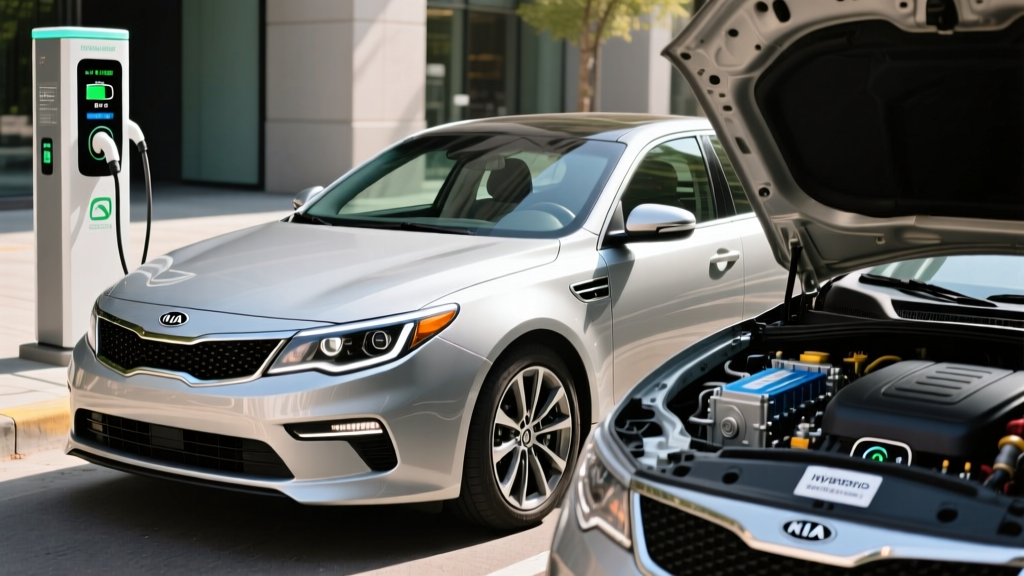
The conventional hybrid (HEV) generates all its electricity internally through regenerative braking and the gasoline engine — you never plug it in. The plug-in hybrid (PHEV) has a much larger battery that you charge from a wall outlet or charging station, enabling extended electric-only driving before the gas engine kicks in. The Clarity PHEV is the variant that maximizes both electric commuting and road-trip flexibility, and it's the focus of this guide.
Electric-Only Range: 47 EPA Miles in the Real World
The EPA rates the Clarity Plug-In Hybrid at 47 miles of electric-only range, which was best-in-class when it launched and still holds up well against newer PHEVs like the Toyota RAV4 Prime (42 miles) and Hyundai Tucson PHEV (33 miles).
Real-World Range Expectations:
- City/suburban driving (moderate temps): 45–50 miles — regenerative braking extends range in stop-and-go traffic
- Highway (65–70 mph): 35–40 miles — higher speeds drain the battery faster
- Cold weather (below 32°F): 30–35 miles — battery efficiency drops and cabin heating draws power
- Hot weather with A/C: 40–44 miles — less impact than cold, but still a reduction
Owners consistently report that the Clarity PHEV meets or slightly exceeds its EPA electric range in warm-weather city driving, thanks to Honda's efficient two-motor hybrid system. However, once the 17.0 kWh battery (approximately 14.0 kWh usable) is depleted, the 1.5L Atkinson-cycle engine seamlessly takes over — and you're driving a very efficient conventional hybrid.
Fuel Economy: EPA MPG and Real-World Results
Once the electric range is exhausted, the Clarity PHEV operates as a conventional hybrid. According to fueleconomy.gov, the EPA rates it at:
| Mode | City | Highway | Combined |
|---|---|---|---|
| Electric Mode (MPGe) | 118 MPGe | 102 MPGe | 110 MPGe |
| Hybrid/Gas Mode (MPG) | 44 MPG | 40 MPG | 42 MPG |
Real-world MPG observations: Like most hybrids, the Clarity PHEV tends to exceed its EPA city rating in stop-and-go traffic where regenerative braking recovers energy that would otherwise be lost. Owners report 45–48 MPG in urban driving. Highway figures typically fall slightly below the EPA estimate at 37–40 MPG, especially at speeds above 70 mph or in hilly terrain. Combined real-world usage in hybrid mode averages around 41–44 MPG for most drivers.
Powertrain and Charging: What's Under the Hood
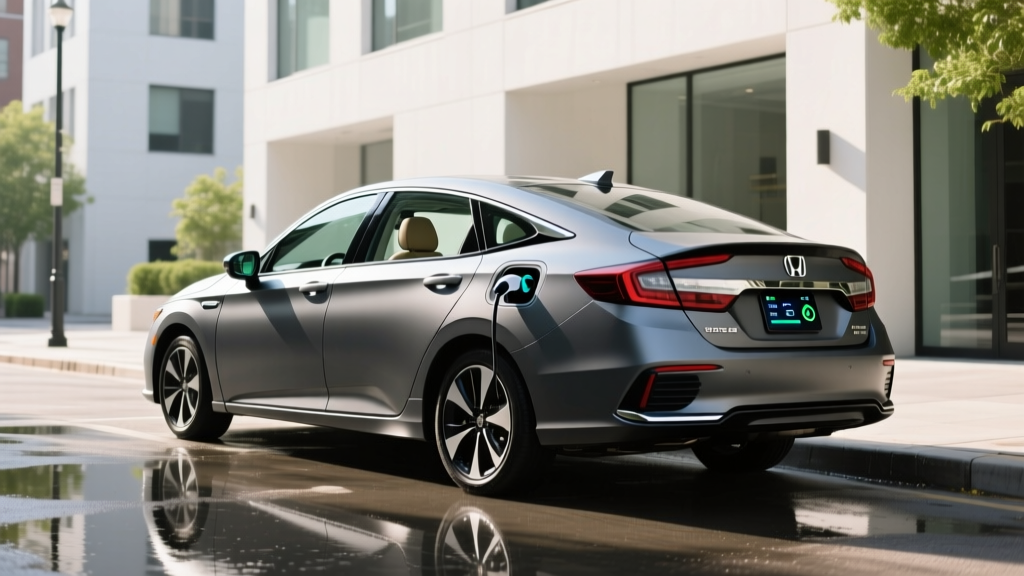
The Clarity PHEV uses Honda's two-motor hybrid system paired with a 1.5-liter Atkinson-cycle inline-four engine. The combined output is 212 horsepower, which is adequate for confident merging and passing. The electric motor provides instant torque from a stop, making the car feel quicker than its 7.7-second 0–60 time suggests in everyday driving.
Charging logistics:
- Level 1 (120V household outlet): ~12 hours for a full charge using the included portable cord. Fine for overnight charging if your daily commute is under 40 miles.
- Level 2 (240V home charger or public station): ~2.5 hours via the 3.3 kW onboard charger. A home Level 2 station (like a ChargePoint Home Flex or Emporia Vue) is strongly recommended for daily use.
- DC fast charging: Not available. The Clarity PHEV has no DC fast-charge port, which is typical for PHEVs in this era and price range.
The 3.3 kW onboard charger is the limiting factor. Even at a public Level 2 station capable of 7.2 kW or 11.5 kW, the Clarity will only draw 3.3 kW. For a PHEV with a 17 kWh battery, this isn't a dealbreaker — a full charge still takes about 2.5 hours — but it means you can't take advantage of faster public chargers.
Battery Health, Warranty, and Replacement Cost
Battery longevity is the top concern for any used PHEV buyer. Here's what you need to know about the Clarity's lithium-ion pack:
Honda Hybrid Battery Warranty (Original):
- Coverage: 8 years / 100,000 miles (10 years / 150,000 miles in CARB states including CA, NY, MA, and others)
- Capacity threshold: Honda warrants the battery against defects and excessive capacity loss, though the specific degradation threshold is not publicly defined as a percentage
- Transferability: The warranty transfers to subsequent owners for the remainder of the original term
Degradation in practice: The Clarity PHEV's 17.0 kWh battery has proven durable. Owner forums and long-term reports indicate typical capacity loss of 5–10% over the first 5 years or 60,000–80,000 miles. A 2018 model in 2026 might show 40–44 miles of electric range instead of the original 47 — a manageable reduction. Honda's hybrid system also maintains a generous buffer (roughly 3 kWh reserved at the top and bottom of the pack) to protect the cells from deep cycling stress.
Battery replacement cost: If the battery fails outside warranty, expect a replacement cost between $3,000 and $5,500 for the pack plus labor at a Honda dealer. Third-party hybrid battery rebuild services may offer lower-cost options in the $2,000–$3,500 range. Given the Clarity's track record, outright battery failure before 150,000 miles is uncommon — gradual capacity loss is the more likely scenario, and it rarely renders the car undrivable.
Used-Market Pricing and Tax Credit Eligibility in 2026
Since the Clarity PHEV was discontinued after 2021, you'll be shopping the used market. As of early 2026, typical pricing runs:
- 2018–2019 models (60,000–90,000 mi): $18,000–$23,000
- 2020–2021 models (30,000–60,000 mi): $22,000–$28,000
- Low-mileage Touring trims: $26,000–$30,000
Federal tax credit for used PHEVs (§25E): Under current IRS rules, the Used Clean Vehicle Credit offers up to $4,000 (30% of the sale price, capped at $4,000) for eligible used PHEVs purchased from a dealer. Key eligibility requirements:
- Sale price must be $25,000 or below
- Buyer income caps: $75,000 (single), $112,500 (head of household), $150,000 (joint)
- Vehicle must be at least 2 model years old (all Clarity PHEVs qualify)
- Vehicle must have a battery capacity of at least 7 kWh (the Clarity's 17.0 kWh qualifies)
- Must purchase from a licensed dealer (private-party sales do not qualify)
- Credit is non-refundable — you must have tax liability to claim it
This means a 2020 Clarity PHEV priced at $24,500 from a dealer could effectively cost $20,500 after the credit, making it one of the most affordable ways into a 40+ mile PHEV. Consult a tax professional to confirm your eligibility, as IRS rules are subject to change and individual circumstances vary.
Clarity PHEV vs Full EV vs Conventional Hybrid: Which Fits You?
Choose the Clarity PHEV if:
- Your daily commute is under 45 miles round-trip and you can charge at home
- You take road trips of 200+ miles regularly and don't want to plan around charging stations
- You want to reduce fuel consumption without committing to full electric
- You're shopping the used market on a $20,000–$28,000 budget
Choose a full EV (BEV) if:
- You have reliable home Level 2 charging and rarely drive more than 250 miles in a day
- You want zero tailpipe emissions and minimal maintenance (no oil changes, no engine)
- You're buying new and can access the full $7,500 §30D federal credit
Choose a conventional hybrid (HEV) if:
- You can't charge at home (apartment, street parking, no garage)
- You want a simpler ownership experience with no plug-in routine
- You want a new vehicle with a current warranty (the Clarity HEV was also discontinued, but Toyota Camry Hybrid, Honda Accord Hybrid are available new)
Pros:
- 47-mile EPA electric range — longest of any PHEV sedan in its class
- 42 MPG combined in hybrid mode — excellent even without plugging in
- Spacious, comfortable interior with premium feel
- Smooth, quiet electric driving experience
- Eligible for up to $4,000 used-EV federal credit (income/price limits apply)
- Proven Honda powertrain reliability
Cons:
- Discontinued — no new models available, limited remaining warranty
- 3.3 kW onboard charger limits Level 2 speed
- No DC fast charging
- Cargo space reduced to 15.5 cu ft due to battery placement
- Infotainment system feels dated vs 2026 competitors
- Only available as a sedan — no SUV/crossover option
Reliability and Long-Term Ownership
Honda's hybrid powertrains have an excellent reliability track record, and the Clarity PHEV benefits from the same engineering philosophy. The two-motor hybrid system has fewer wear components than a traditional automatic transmission (no torque converter, no multi-speed gearbox). Common maintenance items include standard brake service (though regenerative braking extends pad life significantly), coolant changes for the hybrid system, and the usual suspension and tire wear.
According to NHTSA records, the Clarity has minimal safety recalls — primarily a software update for the hybrid system in some 2018 models. Always verify recall completion via the VIN on NHTSA's website before purchasing.
For a 2026 buyer, the key reliability consideration is remaining battery warranty. A 2021 model may still have 2–3 years of factory hybrid battery coverage remaining (through 2029 or 100,000 miles), which provides meaningful peace of mind. Prioritize low-mileage, single-owner examples with documented maintenance records.
Frequently Asked Questions
How many MPG does the Honda Clarity hybrid plug-in get?
The Clarity PHEV achieves 110 MPGe in electric mode and 42 MPG combined (44 city / 40 highway) once the battery is depleted and it operates as a conventional hybrid. Real-world city driving often yields 45–48 MPG thanks to regenerative braking.
How far can the Honda Clarity plug-in hybrid go on electric only?
The EPA rates it at 47 miles of electric-only range. In real-world driving, expect 45–50 miles in warm city conditions, 35–40 miles on the highway, and 30–35 miles in cold weather below freezing.
Does the Honda Clarity PHEV qualify for a tax credit?
It no longer qualifies for the new-vehicle §30D credit (which ended for the Clarity when it was discontinued). However, it may qualify for the §25E Used Clean Vehicle Credit of up to $4,000, provided the sale price is $25,000 or less, the buyer meets income caps, and the purchase is through a licensed dealer.
Is the Honda Clarity plug-in hybrid reliable?
Yes. Honda's hybrid system is proven across multiple models, and the Clarity PHEV has shown minimal major failures in owner reports. Battery degradation is gradual (5–10% over 5 years), and the hybrid powertrain has fewer wear items than a conventional drivetrain. Verify remaining warranty and recall status by VIN.
What does it cost to replace the Clarity PHEV battery?
Dealer replacement runs $3,000–$5,500 including labor. Third-party hybrid battery rebuilds may cost $2,000–$3,500. Complete battery failure before 150,000 miles is rare; gradual capacity loss is more typical and doesn't prevent the car from operating normally in hybrid mode.
Do I need to plug in the Clarity PHEV every night?
You don't have to — the car operates perfectly as a conventional hybrid without ever plugging in. But to take advantage of the 47-mile electric range and 110 MPGe efficiency, nightly charging on a Level 1 (120V) or Level 2 (240V) outlet is recommended. A Level 2 home charger tops the battery in about 2.5 hours.
Hybrid vs PHEV vs EV — which should I choose?
If you can charge at home and your commute is under 45 miles, the Clarity PHEV offers the best of both worlds: electric daily driving with gas-engine flexibility for road trips. A conventional hybrid (HEV) is better if you can't plug in at all. A full EV is ideal if you want zero emissions, minimal maintenance, and your daily driving stays within ~250 miles with reliable charging access.