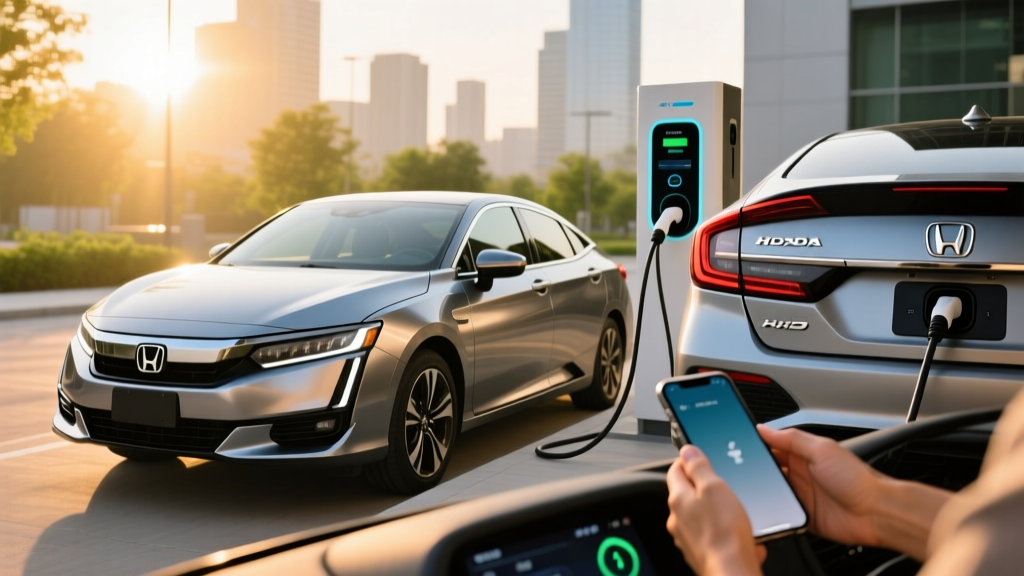
If you've been searching for a midsize sedan that bridges the gap between a conventional hybrid and a full electric vehicle, the Honda Clarity Hybrid lineup deserves a close look. Honda offered the Clarity in two distinct electrified flavors — a conventional hybrid (HEV) and a plug-in hybrid (PHEV) — each serving very different driving patterns. With the Clarity discontinued after the 2022 model year, it now lives exclusively on the used market, where its strong fuel economy and generous electric-only range (on the PHEV) make it a compelling value proposition for savvy buyers in 2026.
This guide breaks down both versions of the Honda Clarity Hybrid with exact EPA figures, real-world expectations, battery longevity data, and tax credit implications so you can decide whether a used Clarity fits your commute — or whether a newer alternative makes more sense.
HEV vs PHEV: Understanding the Two Honda Clarity Hybrid Versions
The Honda Clarity was sold in two hybrid configurations, and confusing them is one of the most common mistakes shoppers make. Here's the fundamental difference:
Clarity Hybrid (HEV)
A conventional hybrid that never needs to be plugged in. It recovers energy through regenerative braking and its gasoline engine to charge a small battery. You simply fill it with gas and drive. The electric motor assists the engine to boost fuel economy, but the car cannot drive on electricity alone for meaningful distances.
Clarity Plug-In Hybrid (PHEV)
A plug-in hybrid with a much larger battery that you charge by plugging in (Level 1 or Level 2). It can drive on pure electricity for a meaningful distance before the gasoline engine kicks in, functioning as a conventional hybrid afterward. This gives you an EV-like commute with a gas-engine safety net for longer trips.
If you have access to home or workplace charging and your daily round-trip commute falls under 45 miles, the PHEV version effectively operates as an electric car most days. If you lack reliable charging access, the HEV is the pragmatic choice — no plug required, just excellent fuel economy.
Fuel Economy and Electric-Only Range: The Numbers
Fuel economy is the headline spec for any hybrid buyer. Here's how both Clarity variants stack up according to EPA data from fueleconomy.gov:
| Metric | Clarity Hybrid (HEV) | Clarity Plug-In Hybrid (PHEV) |
|---|---|---|
| City MPG (gas) | 49 MPG | 44 MPG (charge-sustaining) |
| Highway MPG (gas) | 47 MPG | 40 MPG (charge-sustaining) |
| Combined MPG (gas) | 48 MPG | 42 MPG (charge-sustaining) |
| MPGe (electric + gas) | N/A | 110 MPGe combined |
| Electric-only range | N/A | 47 miles (EPA) |
| Total combined range | ~570 miles | ~340 miles (gas + electric) |
| Fuel tank capacity | 12.1 gallons | 7.0 gallons |
Real-World MPG and Range Expectations
Clarity HEV: Expect the EPA's 48 MPG combined to hold up well in mixed driving. In city-heavy commuting, many owners report 50–54 MPG thanks to aggressive regenerative braking. Highway-only trips at 75+ MPH typically drop to 40–43 MPG.
Clarity PHEV: The 47-mile EPA electric range is achievable in mild weather at moderate speeds. In cold weather (below 35°F), expect that range to drop to roughly 35–40 miles due to cabin heating demands and reduced battery efficiency. Once the battery is depleted, real-world charge-sustaining fuel economy averages 38–42 MPG depending on terrain and driving style.
Powertrain Specs: What's Under the Hood
| Specification | Clarity Hybrid (HEV) | Clarity Plug-In Hybrid (PHEV) |
|---|---|---|
| Engine | 1.5L Atkinson-cycle 4-cyl | 1.5L Atkinson-cycle 4-cyl |
| Engine horsepower | 103 HP | 103 HP |
| Electric motor output | 130 HP / 195 lb-ft torque | 181 HP / 232 lb-ft torque |
| Combined system output | 151 HP | 212 HP |
| Battery capacity | 1.2 kWh (lithium-ion) | 17.0 kWh (lithium-ion) |
| Transmission | e-CVT | e-CVT (single-speed direct drive) |
| Drivetrain | Front-wheel drive | Front-wheel drive |
| 0–60 MPH | ~8.2 seconds | ~7.5 seconds |
Both versions use Honda's two-motor hybrid system, but the PHEV's larger electric motor delivers noticeably stronger acceleration — particularly in EV mode, where torque delivery is instant. The PHEV feels like a genuinely quick car around town; the HEV is adequate but not thrilling.
Charging the Clarity Plug-In Hybrid: Times, Levels, and Limitations
If you're considering the PHEV, charging logistics matter. Here's what you need to know:
| Charging Level | Power (kW) | Full Charge Time | Notes |
|---|---|---|---|
| Level 1 (120V household outlet) | ~1.4 kW | ~12 hours | Works overnight for most commutes |
| Level 2 (240V home/public charger) | ~3.3 kW (onboard charger limit) | ~2.5 hours | Recommended for daily use |
| DC Fast Charging | Not supported | N/A | No DC fast-charge capability |
The Clarity PHEV uses a standard J1772 connector for AC charging. A critical limitation: the onboard charger is capped at 3.3 kW, meaning even if you plug into a 7.2 kW or 11.5 kW Level 2 station, the car will only accept 3.3 kW. This is common for PHEVs with smaller batteries but worth knowing if you're investing in a high-power home charger primarily for this vehicle.
The lack of DC fast charging is a trade-off. For a 17 kWh battery, though, a full Level 2 charge in 2.5 hours is usually sufficient — most owners plug in at home overnight and wake up to a full battery every morning.
Battery Longevity, Warranty, and Replacement Costs
Honda Hybrid Battery Warranty (Original)
- Coverage: 8 years / 100,000 miles (10 years / 150,000 miles in CARB states including CA, NY, MA, and others)
- Capacity threshold: Honda covers defects and significant capacity loss, though no specific percentage retention guarantee is published (unlike some EV makers that warrant 70% SoH)
- Transferability: The hybrid battery warranty transfers to subsequent owners, which matters for used-car buyers in 2026
Real-world degradation data: Honda's hybrid batteries have proven durable. The Clarity PHEV's 17 kWh lithium-ion pack has shown minimal degradation in owner reports — most seeing less than 5–8% capacity loss after 5 years and 60,000+ miles. The HEV's smaller 1.2 kWh battery undergoes shallower charge cycles and typically lasts the life of the vehicle without issue.
Battery replacement cost: If you're buying a used Clarity outside warranty coverage, budget awareness matters. A replacement PHEV battery pack runs approximately $3,000–$5,000 (parts and labor) at a Honda dealer. The HEV's smaller IMA-style battery is significantly cheaper at roughly $1,500–$2,500. Independent hybrid battery shops may offer refurbished packs at lower cost.
For context, Toyota and Honda hybrid batteries have among the best longevity records in the industry. Many Prius and Insight batteries have exceeded 200,000 miles without replacement. The Clarity's system uses similar proven chemistry and thermal management principles.
Pricing on the Used Market and Tax Credit Reality
Since the Honda Clarity Hybrid was discontinued after the 2022 model year, there is no new-vehicle MSRP to discuss. Here's what the used market looks like in early 2026:
| Model | Original MSRP (2022) | Estimated Used Price (2026) |
|---|---|---|
| Clarity Hybrid (HEV) | $34,195 | $22,000–$27,000 |
| Clarity Plug-In Hybrid (PHEV) | $37,495 | $25,000–$31,000 |
Tax Credit Eligibility
Here's where the picture gets nuanced for used buyers:
- Federal used-EV credit (§25E): The Clarity PHEV qualifies for up to $4,000 under the pre-owned clean vehicle credit, provided: the sale price is $25,000 or less, the buyer's adjusted gross income falls below IRS thresholds ($75,000 single / $150,000 married filing jointly), and the vehicle is purchased from a licensed dealer. Verify current rules at irs.gov.
- HEV version: The conventional hybrid does not qualify for any federal tax credit — it has no plug and does not meet the definition of a qualified plug-in vehicle.
- New-vehicle §30D credit (historical): The Clarity PHEV originally qualified for up to $7,500 when purchased new, but this is no longer relevant for 2026 buyers.
- State incentives: Some states offer additional rebates for used PHEVs. Check your state's energy or environmental agency for current programs — these vary widely and change frequently.
Key pricing insight: The §25E credit's $25,000 sale-price cap means only lower-mileage or base-trim PHEV examples will qualify. If you find a Clarity PHEV priced at $24,500 from a dealer and meet the income requirements, the effective price drops to roughly $20,500 — exceptional value for a 47-mile electric-range sedan.
Who Should Choose the Honda Clarity Hybrid?
Choose the Clarity HEV if:
- You don't have access to home or workplace charging
- You want maximum simplicity — just gas up and go
- Your driving is a mix of city and highway with no predictable short commute
- You prioritize total range (570+ miles per tank) over electric driving
Choose the Clarity PHEV if:
- You can install a Level 2 charger at home or charge at work
- Your daily round-trip commute is under 40–45 miles
- You want EV-like daily driving with gas-engine flexibility for road trips
- You want to reduce fuel costs dramatically while keeping one vehicle
Choose a full BEV instead if:
- Your commute is predictable and under 250 miles round-trip
- You have reliable home charging and access to DC fast chargers for road trips
- You want to eliminate gasoline entirely and minimize maintenance
- You qualify for the full $7,500 federal credit on a new EV purchase
Pros
- Class-leading 47-mile electric range (PHEV)
- Spacious midsize sedan with premium interior feel
- Excellent 48 MPG combined (HEV) in real-world driving
- Strong Honda Sensing safety suite standard
- Comfortable ride quality and quiet cabin
- Proven hybrid system reliability
Cons
- Discontinued — no new models available
- Small 7.0-gallon fuel tank limits total PHEV range
- 3.3 kW onboard charger is slow for Level 2
- No DC fast charging on PHEV
- Trunk space reduced by battery placement (15.5 cu ft)
- Infotainment system feels dated by 2026 standards
How the Clarity Hybrid Compares to Alternatives
If you're cross-shopping, the Clarity's closest competitors in the used market include:
- Toyota Prius Prime (PHEV): 25-mile electric range (2022), better cargo space, but less electric-only range than the Clarity
- Hyundai Ioniq PHEV: 29-mile electric range, slightly smaller, more affordable used pricing
- Toyota Camry Hybrid (HEV): 52 MPG combined, more mainstream availability, stronger dealer network
- Honda Accord Hybrid (HEV): 48 MPG combined, still in production, easier to find newer model years
The Clarity PHEV's 47-mile electric range remains best-in-class for a sedan of its era. If maximizing electric-only commuting is your priority and you accept the used-market reality, it's hard to beat.
Frequently Asked Questions
How many MPG does the Honda Clarity Hybrid get?
The conventional Clarity Hybrid (HEV) achieves 49 city / 47 highway / 48 combined MPG per the EPA. The Clarity Plug-In Hybrid gets 42 MPG combined when operating on gasoline after the battery is depleted, plus 110 MPGe when factoring in electric driving. In real-world city driving, the HEV often exceeds 50 MPG.
How far can the Clarity Plug-In Hybrid go on electric only?
The EPA rates the Clarity PHEV at 47 miles of electric-only range. In real-world conditions with mild weather and moderate speeds, 42–47 miles is achievable. In cold weather or at sustained highway speeds, expect 35–40 miles before the gasoline engine engages.
Is the Honda Clarity Hybrid reliable?
Yes. Honda's two-motor hybrid system has proven highly reliable, sharing engineering DNA with the well-regarded Accord Hybrid. The lithium-ion battery packs in both the HEV and PHEV versions have shown minimal degradation over time. Honda's 8-year/100,000-mile hybrid battery warranty (10 years/150,000 miles in CARB states) provides additional peace of mind, and this warranty transfers to used-car buyers.
What does a Honda Clarity hybrid battery replacement cost?
A replacement PHEV battery pack costs approximately $3,000–$5,000 at a Honda dealership. The HEV's smaller battery runs $1,500–$2,500. Independent hybrid specialists may offer lower prices with refurbished packs. However, widespread battery failures on the Clarity are rare — most packs last well beyond 100,000 miles.
Does the Honda Clarity Hybrid qualify for a tax credit in 2026?
The Clarity PHEV can qualify for the federal used clean vehicle credit (§25E) of up to $4,000 when purchased from a dealer for $25,000 or less, subject to buyer income limits ($75,000 single / $150,000 married). The conventional HEV does not qualify for any federal credit. State incentives vary — check your local programs. Always confirm eligibility with a tax professional before purchasing.
Can I charge the Clarity PHEV at a public fast charger?
No. The Clarity Plug-In Hybrid does not support DC fast charging. It charges via AC only using a J1772 connector, at a maximum rate of 3.3 kW on Level 2. A full charge takes about 2.5 hours on Level 2 or about 12 hours on a standard 120V household outlet.