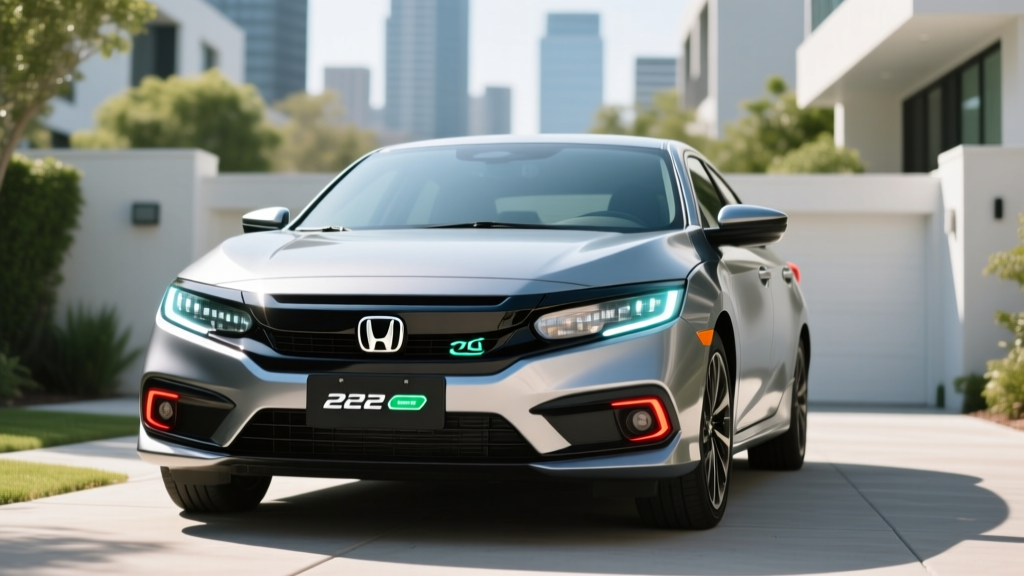
The Honda Civic Hybrid has returned to the lineup as one of the most fuel-efficient compact sedans on the market, blending a proven two-motor hybrid system with Civic practicality. But for buyers researching long-term ownership, the central question is durability: will the hybrid battery last, and what happens when it doesn't? This guide breaks down the 2026 Honda Civic Hybrid's reliability profile, real-world MPG, battery warranty coverage, and total cost of ownership so you can decide whether it beats a conventional gas Civic or a full battery-electric vehicle.
What Powers the 2026 Honda Civic Hybrid?
The 2026 Civic Hybrid uses Honda's fourth-generation two-motor hybrid system — a conventional hybrid (HEV), not a plug-in hybrid (PHEV). It pairs a 2.0-liter Atkinson-cycle four-cylinder engine with two electric motors and a compact lithium-ion battery pack mounted under the rear seats. There is no plug, no charging port, and no electric-only driving range to manage. The system generates a combined 200 horsepower and 232 lb-ft of torque, routed to the front wheels through an electronically controlled continuously variable transmission (e-CVT).
Unlike Toyota's planetary-gear Hybrid Synergy Drive, Honda's system operates primarily as a series hybrid at low and moderate speeds: the engine spins a generator motor that feeds electricity to the drive motor, which turns the wheels. At highway cruising speeds, a lockup clutch connects the engine directly to the wheels for efficiency. This architecture eliminates the traditional transmission entirely, reducing mechanical complexity — a key factor in Honda Civic Hybrid reliability over time.
| Spec | Value |
|---|---|
| Engine | 2.0L Atkinson-cycle inline-4 |
| Combined System Output | 200 hp / 232 lb-ft torque |
| Drive Motor | AC permanent-magnet synchronous |
| Transmission | e-CVT (no traditional gears) |
| Battery Type | Lithium-ion (under rear seat) |
| Drivetrain | Front-wheel drive |
| 0–60 mph (est.) | ~7.2 seconds |
Fuel Economy: EPA Ratings vs. Real-World MPG
The EPA rates the 2026 Honda Civic Hybrid at 50 MPG city / 47 MPG highway / 49 MPG combined for the Sport Touring Hybrid sedan. The Sport Hybrid trim carries identical ratings. These figures place the Civic Hybrid at the top of the compact hybrid sedan segment, competing directly with the Toyota Corolla Hybrid (50/43/47 MPG) and the Hyundai Elantra Hybrid (51/58/54 MPG).
| Model | City MPG | Highway MPG | Combined MPG |
|---|---|---|---|
| Honda Civic Hybrid | 50 | 47 | 49 |
| Toyota Corolla Hybrid | 50 | 43 | 47 |
| Hyundai Elantra Hybrid | 51 | 58 | 54 |
Source: fueleconomy.gov
Honda's two-motor system excels in stop-and-go traffic, where the drive motor handles propulsion and regenerative braking recovers energy. In real-world city driving, many owners report 52–55 MPG — exceeding the EPA city estimate. Highway driving at sustained 70+ mph yields closer to 42–45 MPG, as the engine engages directly and aerodynamic drag increases. In cold weather (below 35°F), expect a 5–8% reduction due to engine warm-up cycles and reduced battery efficiency. A combined real-world average of 47–50 MPG is achievable for mixed driving — a result you can verify on the EPA's Find a Car tool.
Honda Civic Hybrid Reliability: Battery Lifespan and Track Record
Honda Civic Hybrid reliability benefits from over two decades of hybrid system experience. Honda first introduced the IMA (Integrated Motor Assist) system in the 2000 Insight and has progressively refined its architecture. The current fourth-generation two-motor system, introduced with the Accord Hybrid and now in the Civic, has fewer moving parts than a conventional automatic transmission and no friction-based clutch packs to wear out.
The lithium-ion battery pack in the Civic Hybrid is relatively small — roughly 1.0 kWh of usable capacity — because it only needs to buffer energy between the generator motor and the drive motor. It is never deeply discharged or fully charged during normal operation; the system maintains a narrow state-of-charge window (roughly 40–60%) to minimize degradation. This shallow-cycling strategy is the primary reason hybrid batteries routinely outlast their warranty periods.
Honda covers the Civic Hybrid's battery and hybrid system components under its hybrid battery warranty: 8 years / 100,000 miles (extended to 10 years / 150,000 miles in California and states that follow CARB emissions standards). The warranty covers capacity loss below a defined threshold and any defect in the battery module, power control unit, or drive motor.
If replacement is needed out of warranty, a new OEM hybrid battery pack for the Civic Hybrid typically costs between $2,000 and $3,500 installed at a dealership. Third-party refurbished packs are available for $1,200–$2,000. For context, Toyota Prius hybrid batteries — a comparable benchmark — routinely last 150,000–200,000 miles before significant degradation, and Honda's current system uses similar lithium-ion chemistry and management strategies.
Common Reliability Concerns
- Battery degradation: Minimal in practice. Shallow cycling and active thermal management keep the pack within a safe operating window. Expect less than 10% capacity loss over 10 years.
- e-CVT durability: Honda's e-CVT has no belts, pulleys, or traditional clutch packs. Failures are rare and typically linked to cooling-system issues rather than the hybrid components themselves.
- 12V auxiliary battery: Like all modern vehicles, the Civic Hybrid has a 12V battery for accessories. It may require replacement every 4–6 years — standard maintenance unrelated to the hybrid system.
- Brake wear: Regenerative braking significantly reduces friction brake usage. Many hybrid owners report original brake pads lasting 80,000+ miles.
HEV vs. PHEV vs. EV: Which Powertrain Fits You?
The Civic Hybrid is a conventional HEV — it generates all its electricity onboard and never plugs in. If you're cross-shopping electrified vehicles, here's how the three categories differ:
| Factor | HEV (Civic Hybrid) | PHEV (e.g., Toyota Prius Prime) | BEV (e.g., Tesla Model 3) |
|---|---|---|---|
| Plug-in Required? | No | Yes (for EV range) | Yes |
| Electric-Only Range | 0 miles | 25–44 miles | 250–360 miles |
| Fuel/Energy Cost per Mile | ~$0.08 (gas) | ~$0.04 (electric) / $0.08 (gas) | ~$0.04 (electric) |
| Home Charging Needed? | No | Recommended | Essential |
| Federal Tax Credit | Not eligible | Up to $7,500 (§30D) | Up to $7,500 (§30D) |
| Maintenance Complexity | Low | Moderate | Lowest |
| Best For | No home charging, high MPG | Short commutes + road trips | Home charging, max savings |
The Civic Hybrid is the right choice if you want maximum fuel efficiency without changing your refueling habits. You never plug in, you fill up at any gas station, and you get roughly double the MPG of a conventional gas Civic. If you have home charging access and a commute under 40 miles round-trip, a PHEV like the Prius Prime (44 miles electric-only) could eliminate your weekday gas use entirely. A full EV like the Tesla Model 3 or Chevrolet Equinox EV offers the lowest per-mile energy cost but requires reliable charging infrastructure.
Pricing, Trims, and Tax Credit Eligibility
The 2026 Honda Civic Hybrid is offered in two trims:
- Sport Hybrid: Starting at approximately $29,845 MSRP (including destination)
- Sport Touring Hybrid: Starting at approximately $32,045 MSRP (including destination)
Both trims include the 200-hp hybrid powertrain, Honda Sensing suite (adaptive cruise, lane-keeping, automatic emergency braking), a 7-inch or 9-inch touchscreen with wireless Apple CarPlay/Android Auto (Sport Touring), and LED lighting.
Does the Civic Hybrid Qualify for a Federal Tax Credit?
No. The Honda Civic Hybrid is a conventional HEV, and the IRS §30D Clean Vehicle Credit applies only to plug-in electric vehicles (PHEVs and BEVs) with sufficient battery capacity. Conventional hybrids do not qualify for the federal $7,500 credit, nor do they qualify for the $4,000 used-EV credit. Some states and utilities offer small rebates for hybrid purchases — check your local program — but there is no federal incentive for HEVs.
This is a meaningful cost consideration: a PHEV competitor like the Toyota Prius Prime may qualify for up to $7,500 at point of sale (subject to MSRP caps, buyer income limits, and battery-sourcing requirements under current IRS rules), potentially making it cheaper than the Civic Hybrid after incentives despite a higher sticker price.
Total Cost of Ownership: Civic Hybrid vs. Gas Civic
To put Honda Civic Hybrid reliability and efficiency into financial context, here's a 5-year / 75,000-mile ownership comparison against the gas-only Civic:
| Cost Category | Civic Hybrid (49 MPG) | Gas Civic (33 MPG combined) |
|---|---|---|
| Fuel (at $3.40/gal avg) | $5,204 | $7,727 |
| Maintenance (5 yr) | $2,800 | $3,200 |
| Insurance (5 yr avg) | $7,500 | $7,000 |
| Purchase Price (base MSRP) | $29,845 | $24,845 |
| Fuel Savings over Gas | +$2,523 saved | |
| Net Price Premium (Hybrid) | $5,000 upfront − $2,523 fuel = ~$2,477 net | |
The Civic Hybrid carries a roughly $5,000 price premium over the gas Civic. Fuel savings recover about half of that over five years at 15,000 miles annually. The payback period extends to roughly 8–9 years at current gas prices. However, the hybrid also offers stronger low-end torque (232 lb-ft vs. 138 lb-ft), quieter operation at low speeds, and reduced brake wear — benefits that don't appear on a spreadsheet but improve daily driving.
Who Should Buy the Honda Civic Hybrid?
Choose the Civic Hybrid If:
- You want 50 MPG without plugging in or changing habits
- You lack access to home or workplace EV charging
- You take frequent road trips and don't want to plan charging stops
- You value low mechanical complexity (no traditional transmission)
- You want a proven hybrid system with strong warranty coverage
Look Elsewhere If:
- You have home charging and want maximum fuel savings (consider a BEV)
- You want a federal tax credit to offset purchase cost (PHEV or BEV required)
- Your commute is under 30 miles round-trip and you want electric-only driving (consider a PHEV)
- You need AWD (the Civic Hybrid is FWD only; consider the Toyota Prius AWD)
Frequently Asked Questions
How many MPG does the Honda Civic Hybrid get?
The EPA rates the 2026 Civic Hybrid at 50 MPG city, 47 MPG highway, and 49 MPG combined. Real-world city driving often exceeds 50 MPG due to regenerative braking, while sustained highway driving at 70+ mph may return 42–45 MPG.
How far can the Civic Hybrid drive on electric power alone?
It cannot. The Civic Hybrid is a conventional HEV with no plug and no meaningful electric-only range. The electric motor assists the engine and propels the car at very low speeds for brief distances (under 1 mile), but the engine is always available and engages automatically.
Is the Honda Civic Hybrid reliable?
Yes. Honda's fourth-generation two-motor hybrid system has fewer moving parts than a conventional automatic transmission. The battery pack is shallow-cycled (maintained between roughly 40–60% state of charge), which dramatically extends its lifespan. Hybrid battery failures before 150,000 miles are uncommon based on historical Honda and Toyota hybrid data.
What does a Honda Civic Hybrid battery replacement cost?
An OEM replacement hybrid battery costs approximately $2,000–$3,500 installed at a Honda dealership. Refurbished aftermarket packs are available for $1,200–$2,000. The battery is covered under Honda's hybrid warranty for 8 years/100,000 miles (10 years/150,000 miles in CARB states).
Does the Honda Civic Hybrid qualify for any tax credit?
No. The federal §30D Clean Vehicle Credit applies only to plug-in vehicles (PHEVs and BEVs). As a conventional hybrid, the Civic Hybrid is not eligible for the $7,500 federal credit. Check your state and utility for possible hybrid rebates, but these are typically modest ($250–$500).
How does the Civic Hybrid compare to a full EV like the Tesla Model 3?
The Civic Hybrid costs less upfront, requires no charging infrastructure, and eliminates range-planning for road trips. The Model 3 costs significantly less per mile to fuel (~$0.04/mi electric vs. ~$0.08/mi gas), qualifies for a federal tax credit, and has lower maintenance costs — but requires reliable home or workplace charging. For drivers without charging access, the Civic Hybrid delivers the best efficiency without infrastructure dependency.