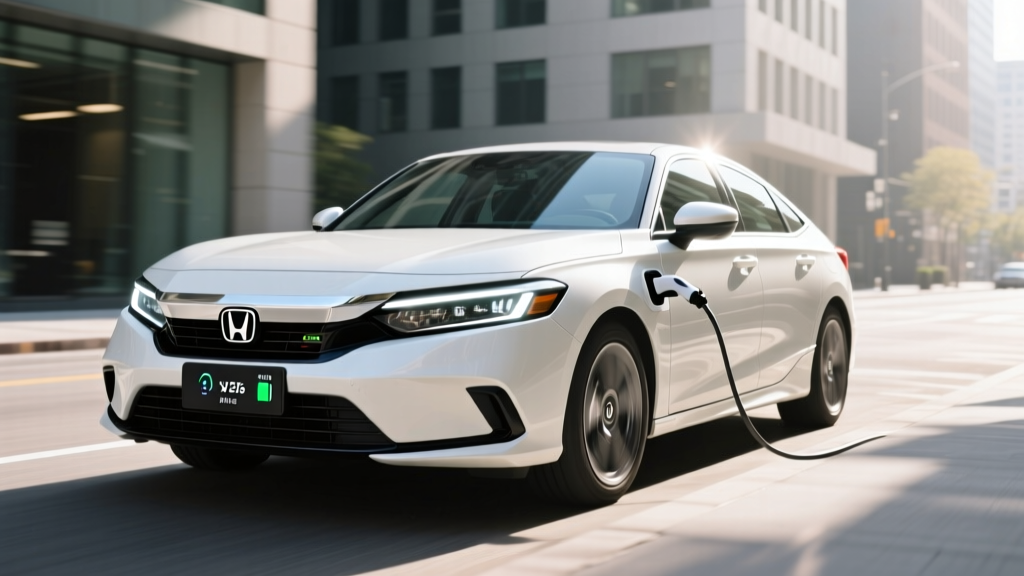
The Honda Civic Hybrid returned to the lineup after a long hiatus, and for 2026, it remains one of the most fuel-efficient compact sedans you can drive without plugging in. If you've been searching for a civic hybrid lease, you're likely weighing monthly payments against fuel savings, reliability, and whether a conventional hybrid (HEV) or a full battery-electric vehicle (BEV) makes more financial sense for your commute.
This guide breaks down everything a prospective lessee needs: real-world and EPA fuel economy, the two-motor hybrid powertrain, battery longevity and warranty coverage, federal tax credit eligibility, and how the Civic Hybrid stacks up against plug-in alternatives and full EVs. All figures reflect the 2026 model year.
2026 Honda Civic Hybrid: Quick Specs at a Glance
| Spec | Value |
|---|---|
| Powertrain | 2.0L Atkinson-cycle 4-cyl + two-motor hybrid system |
| Combined Horsepower | 200 hp |
| Combined Torque | 232 lb-ft |
| EPA MPG (City / Hwy / Combined) | 50 / 47 / 49 |
| Fuel Tank Capacity | 10.6 gallons |
| Total Range (est.) | ~519 miles |
| 0–60 mph (est.) | ~7.2 seconds |
| Drivetrain | Front-wheel drive |
| Hybrid Battery Warranty | 8 years / 100,000 miles (10 yr/150,000 mi in CARB states) |
| Starting MSRP (Sport Sedan) | ~$29,845 |
| Federal EV Tax Credit (§30D) | Not eligible (HEV, not a plug-in) |
Fuel Economy: EPA Numbers vs. Real-World MPG
The 2026 Civic Hybrid sedan carries an EPA rating of 50 city / 47 highway / 49 combined MPG (Sport Touring trim drops slightly to 48 combined due to larger wheels and added weight). The hatchback variant rates at 49 city / 45 highway / 47 combined.
| Body Style / Trim | City | Highway | Combined |
|---|---|---|---|
| Sedan (Sport) | 50 MPG | 47 MPG | 49 MPG |
| Sedan (Sport Touring) | 49 MPG | 45 MPG | 48 MPG |
| Hatchback (Sport Touring) | 49 MPG | 45 MPG | 47 MPG |
Real-World MPG: What Owners Actually See
Honda's two-motor hybrid system is optimized for city driving, where the electric motor handles most low-speed propulsion and the gas engine primarily acts as a generator. In real-world mixed driving, owners and testers routinely report meeting or slightly exceeding the EPA combined figure in urban-heavy commutes — 50–54 MPG is common in stop-and-go traffic thanks to aggressive regenerative braking.
Highway driving tells a different story. At sustained 70–80 mph speeds, expect 42–46 MPG. The Atkinson-cycle 2.0L engine is efficient but doesn't benefit as much from regenerative braking on open roads. In cold weather (below 30°F), a 5–8% drop in fuel economy is typical as the engine runs more frequently to maintain cabin heat and battery temperature.
HEV vs. PHEV: Understanding What the Civic Hybrid Is (and Isn't)
This is a critical distinction for anyone researching a Civic Hybrid lease. The 2026 Civic Hybrid is a conventional hybrid electric vehicle (HEV) — it does not have a plug, cannot be charged from an external source, and has no electric-only driving mode beyond very low-speed, short-distance creeping.
Conventional Hybrid (HEV)
- No plug — charges via regenerative braking and engine
- Small battery (~1–2 kWh usable)
- Electric motor assists engine; brief EV-only at low speeds
- No electric-only range rating
- Example: Honda Civic Hybrid
Plug-In Hybrid (PHEV)
- Plugs into Level 1 or Level 2 charger
- Larger battery (typically 12–20 kWh)
- 20–40 miles of electric-only driving before engine engages
- May qualify for federal tax credit (up to $7,500)
- Example: Toyota Prius Prime, Hyundai Tucson PHEV
Honda does not currently offer a Civic plug-in hybrid. If electric-only commuting is a priority, you would need to look at competitors like the Toyota Prius Prime (44 miles EV-only, EPA-rated) or consider a full BEV such as the Chevrolet Equus EV or Hyundai Ioniq 6.
Powertrain Deep Dive: Two-Motor Hybrid System
The Civic Hybrid uses Honda's fourth-generation two-motor hybrid system, pairing a 2.0-liter Atkinson-cycle inline-four with two electric motors and a lithium-ion battery pack. Here's how the system delivers its 200 combined horsepower:
- Gas engine: 2.0L DOHC Atkinson-cycle, ~143 hp / 134 lb-ft — primarily serves as a generator at low-to-mid speeds, directly drives the wheels only at highway cruising via a lock-up clutch
- Propulsion motor: ~184 hp / 232 lb-ft — the primary drive motor for acceleration and city driving
- Generator motor: Converts engine output to electricity and handles regenerative braking
- Lithium-ion battery: Approximately 1.0 kWh total capacity (small by EV standards — this is not a traction battery for sustained electric driving)
The system operates in three modes seamlessly: EV Drive (battery powers the motor for brief low-speed movement), Hybrid Drive (engine generates electricity to power the motor), and Engine Drive (engine directly powers wheels at efficient highway speeds). The transition between modes is nearly imperceptible — one of the system's strongest attributes.
Performance is genuinely brisk for the segment. The 200-hp combined output and 232 lb-ft of torque (available instantly from the electric motor) gives the Civic Hybrid confident acceleration that outpaces many turbocharged compact competitors. The 0–60 mph time of approximately 7.2 seconds is competitive with sport-oriented gas-powered compacts.
Lease Pricing, Incentives, and Total Monthly Cost
As of early 2026, Honda and dealer-offered Civic Hybrid leases typically fall in the following range depending on region, trim, credit tier, and down payment:
| Trim | MSRP | Est. Monthly (36 mo, $2,500 down) | Money Factor (est.) | Residual (est.) |
|---|---|---|---|---|
| Sport Sedan | $29,845 | $320–$370 | 0.0024–0.0028 | 58–62% |
| Sport Touring Sedan | $32,845 | $360–$420 | 0.0024–0.0028 | 57–61% |
| Sport Touring Hatchback | $33,445 | $370–$430 | 0.0025–0.0029 | 56–60% |
Note: Lease terms vary significantly by dealer, region, and Honda Financial Services promotional programs. Always request itemized lease quotes showing capitalized cost, money factor, residual, and fees.
Tax Credit Reality for the Civic Hybrid
Because the Civic Hybrid is a conventional HEV — not a plug-in vehicle — it does not qualify for the federal §30D Clean Vehicle Credit (up to $7,500 for new EVs and PHEVs). It also does not qualify for the $4,000 used EV credit under §25E.
However, some states and localities offer incentives for hybrid vehicles, though these are increasingly rare as programs shift focus to zero-emission vehicles. Check your state's energy office or Alternative Fuels Data Center for current local programs. A few states still offer reduced registration fees or HOV lane access for hybrids, but these benefits are phasing out in most jurisdictions.
Battery Warranty, Reliability, and Replacement Costs
Hybrid battery longevity is consistently the top concern for first-time hybrid buyers. Here's what Honda covers:
• Federal states: 8 years / 100,000 miles
• CARB states (CA, CO, CT, ME, MD, MA, NJ, NY, OR, RI, VT, WA): 10 years / 150,000 miles
• Coverage applies if battery capacity drops below a defined threshold (typically ~60–70% of original capacity, per Honda's warranty documentation)
• Powertrain warranty: 5 years / 60,000 miles (covers engine, transmission, hybrid components)
How Long Do Civic Hybrid Batteries Last?
Honda's lithium-ion hybrid battery pack in the Civic is far smaller and less stressed than a full EV battery. It operates in a narrow state-of-charge window (roughly 40–80% SoC), which dramatically reduces degradation. Based on data from previous-generation Honda hybrid systems (Insight, Accord Hybrid, CR-V Hybrid), these batteries routinely last 150,000–200,000+ miles without significant capacity loss.
Should a replacement be needed out of warranty, a Honda hybrid battery replacement currently costs approximately $2,000–$3,500 including labor at a dealership, with refurbished options available for less. This is a fraction of full EV battery replacement costs ($8,000–$20,000+).
For reliability data, Honda's hybrid powertrain has strong track records. The Civic Hybrid's system is an evolution of the proven architecture used in the Accord Hybrid and CR-V Hybrid, both of which have received above-average reliability ratings from consumer surveys. Check IIHS and NHTSA for the latest crash-test scores.
Civic Hybrid vs. Plug-In Hybrid vs. Full EV: Which Fits Your Lease?
The right electrified vehicle depends on your driving pattern, charging access, and budget. Here's a practical decision framework:
| Factor | HEV (Civic Hybrid) | PHEV (e.g., Prius Prime) | Full EV (e.g., Ioniq 6) |
|---|---|---|---|
| Plug-in charging needed? | No | Recommended (not required) | Yes — essential |
| Electric-only range | None (assist only) | 25–44 miles | 250–360+ miles |
| Combined efficiency | 49 MPG | 48 MPG + 120+ MPGe | 120–140 MPGe |
| Federal tax credit | None | Up to $7,500 (if eligible) | Up to $7,500 (if eligible) |
| Home charging install | Not needed | Recommended ($500–$2,000) | Required ($500–$2,500+) |
| Monthly fuel/energy cost* | ~$100–$120 | ~$40–$90 (with home charging) | ~$45–$80 (with home charging) |
| Maintenance | Standard + hybrid system | Standard + hybrid + battery | Minimal (no oil, fewer fluids) |
| Best for | No charging access, long commutes | Short commute + home charging | Home charging + mostly under 300 mi/day |
*Based on 12,000 miles/year, $3.40/gal gasoline, $0.15/kWh electricity. Actual costs vary by region and driving pattern.
- You don't have access to home or workplace charging
- Your commute involves long highway stretches where PHEV electric range is quickly depleted
- You want maximum simplicity — no plug, no charging apps, no range planning
- You want a proven, low-risk powertrain with strong resale value
- You have reliable Level 2 home charging and a short daily commute (under 40 miles)
- You want to qualify for federal or state tax credits
- You want to minimize or eliminate gasoline use
- You're ready for the EV ownership experience (charging logistics, route planning on road trips)
Pros and Cons of a Civic Hybrid Lease
Pros
- 49 MPG combined — among the best in the compact segment
- 200 hp with instant electric torque — genuinely quick
- No charging infrastructure needed
- Strong reliability history from Honda's hybrid systems
- 500+ mile range per tank eliminates fuel stops on road trips
- Competitive lease rates with strong residuals
- Excellent Honda Sensing ADAS suite standard
Cons
- No federal tax credit (HEV, not a plug-in)
- Highway MPG drops to 42–46 in real-world driving
- No electric-only driving mode for zero-emission commutes
- FWD only — no AWD option unlike some competitors
- Sport Touring trim pushes MSRP above $32,000
- Lease means no equity at term end (vs. buying)
Frequently Asked Questions
How many MPG does the 2026 Honda Civic Hybrid get?
The EPA rates the Civic Hybrid Sport Sedan at 50 city / 47 highway / 49 combined MPG. In real-world driving, owners commonly report 50–54 MPG in city-heavy commutes and 42–46 MPG on sustained highway trips. The Sport Touring trim rates slightly lower at 48 combined.
Can the Civic Hybrid drive on electric power only?
Only in very limited circumstances — brief low-speed creeping in parking lots or stop-and-go traffic (typically under 1 mile at speeds below ~25 mph). The Civic Hybrid is a conventional HEV with a small battery; it is not designed for sustained electric-only driving. If EV-only commuting matters to you, consider a PHEV like the Toyota Prius Prime or a full BEV.
Does the Honda Civic Hybrid qualify for a tax credit?
No. The federal §30D Clean Vehicle Credit applies only to plug-in electric vehicles (BEVs and PHEVs) that meet battery sourcing, MSRP, and buyer income requirements. The Civic Hybrid is a conventional HEV and is not eligible. Some states may offer minor hybrid incentives — check your local programs via the Alternative Fuels Data Center.
Is the Civic Hybrid battery reliable, and what does replacement cost?
Honda's hybrid battery systems have strong long-term reliability records, with most lasting well beyond 150,000 miles. The battery is warrantied for 8 years/100,000 miles (10 years/150,000 miles in CARB states). Out-of-warranty replacement costs approximately $2,000–$3,500 at a dealership.
Should I lease or buy the Civic Hybrid?
Leasing makes sense if you want lower monthly payments, plan to upgrade in 3 years, and want warranty coverage for the entire ownership period (the 3-year/36,000-mile bumper-to-bumper and 5-year/60,000-mile powertrain warranties cover the full lease term). Buying makes more sense if you plan to keep the car 7+ years, drive over 15,000 miles annually (lease penalties apply for excess mileage), or want to build equity. The Civic Hybrid's strong fuel economy and reliability make it a solid long-term ownership candidate.
How does the Civic Hybrid compare to the Toyota Prius?
The Prius (57 MPG combined for the LE trim) edges out the Civic Hybrid on pure fuel economy, but the Civic offers more horsepower (200 vs. 196 for the Prius AWD), a more conventional driving feel, and Honda's well-regarded interior build quality. The Prius Prime PHEV variant adds 44 miles of electric-only range and potential tax credit eligibility — a meaningful advantage if you have home charging. Test-drive both before committing to a lease.