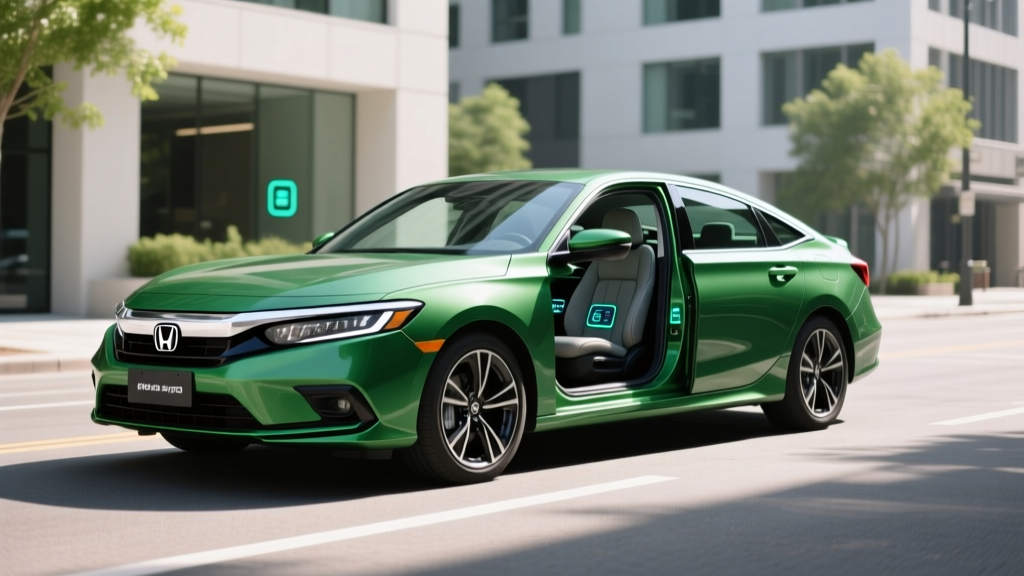
If you are browsing Honda Civic Hybrid lease deals in 2026, you are likely looking for a fuel-efficient daily driver that doesn't require plugging in or changing your habits. The Civic Hybrid returns to the lineup as a conventional hybrid (HEV), pairing a 2.0-liter Atkinson-cycle engine with a two-motor system to deliver an EPA-estimated 50 MPG combined. It's a compelling alternative to both gas-only compacts and full battery-electric vehicles (BEVs), especially for renters, apartment dwellers, or anyone without reliable home charging access.
This guide breaks down the Civic Hybrid's powertrain, real-world fuel economy, battery longevity, lease economics, and how it stacks up against plug-in hybrids and full EVs—so you can decide if it's the right electrified vehicle for your garage.
2026 Honda Civic Hybrid: Powertrain and Efficiency Specs
The 2026 Civic Hybrid uses Honda's fourth-generation two-motor hybrid system. Unlike a plug-in hybrid, it has no charge port—you never plug it in. The system recovers energy through regenerative braking and the gasoline engine to keep a small lithium-ion battery charged. Here is the full specification breakdown:
| Specification | Value |
|---|---|
| Powertrain | 2.0L DOHC 4-cyl (Atkinson) + 2-motor hybrid system |
| Combined Horsepower | 200 hp |
| Combined Torque | 232 lb-ft |
| Transmission | e-CVT (electrically variable) |
| Drivetrain | Front-wheel drive |
| Battery Type | Lithium-ion (approx. 1.1 kWh, non-plug-in) |
| EPA Fuel Economy (Combined) | 50 MPG |
| EPA City | 51 MPG |
| EPA Highway | 47 MPG |
| Fuel Tank Capacity | 12.4 gallons |
| Total Driving Range | ~620 miles |
| 0–60 mph | ~7.2 seconds (est.) |
| Starting MSRP (Sport Hybrid) | ~$29,845 |
| Body Styles | Sedan, Hatchback (Sport Touring Hybrid) |
The 200-horsepower output makes the Civic Hybrid notably quicker than the non-hybrid 2.0L Civic (158 hp) and gives it confident highway merging power. The electric motor's instant torque (peaking at low RPM) is what makes the car feel punchy around town, even though it's optimized for efficiency.
Real-World MPG: What to Actually Expect
The EPA rates the Civic Hybrid at 51 city / 47 highway / 50 combined. But how does that translate to real driving?
| Driving Scenario | Expected MPG | Notes |
|---|---|---|
| City / stop-and-go | 50–55 MPG | Hybrids excel here; regen braking recovers energy |
| Suburban mixed driving | 48–52 MPG | Closest to EPA combined estimate |
| Highway (70–80 mph) | 42–47 MPG | Aero drag reduces hybrid advantage at speed |
| Cold weather (below 35°F) | 40–46 MPG | Engine runs more often for cabin heat; battery less efficient |
| Aggressive / sport driving | 38–43 MPG | Heavy throttle use bypasses electric assist |
The key insight: conventional hybrids often exceed their EPA city rating in real-world stop-and-go driving because regenerative braking is most effective at lower speeds. Highway driving is where you'll see the biggest shortfall from the sticker. On a 200-mile highway trip at 75 mph, expect closer to 43–45 MPG. In winter, plan for a 10–15% drop across the board.
For context, the gas-only 2026 Civic 2.0L is rated at 33 MPG combined. The hybrid delivers roughly 50% more miles per gallon—a substantial gain that compounds over 12,000–15,000 annual miles.
Understanding the Civic Hybrid: HEV vs. PHEV vs. EV
A common point of confusion when shopping for electrified vehicles is the difference between a conventional hybrid, a plug-in hybrid, and a full electric vehicle. The Civic Hybrid is a conventional hybrid (HEV). Here's how the three categories compare:
| Feature | HEV (Civic Hybrid) | PHEV (e.g., Toyota Prius Prime) | BEV (e.g., Tesla Model 3) |
|---|---|---|---|
| Plug-in Charging? | No | Yes | Yes |
| Electric-Only Range | ~1 mile (low speed) | 25–44 miles | 250–360+ miles |
| Total Range | ~620 miles | ~400–500 miles | 250–360+ miles |
| Fuel / Energy | Gasoline only | Gasoline + electricity | Electricity only |
| Home Charging Needed? | No | Recommended for full benefit | Essential |
| Federal Tax Credit (§30D) | Not eligible | Up to $7,500 (if qualified) | Up to $7,500 (if qualified) |
| Starting Price Range | ~$29,000–$35,000 | ~$33,000–$42,000 | ~$38,000–$55,000 |
| Maintenance Complexity | Low (no plug, small battery) | Moderate (two systems) | Low (fewer moving parts) |
The Civic Hybrid is an HEV. It has a small (~1.1 kWh) battery that charges itself through regenerative braking and engine operation. You cannot plug it in. If you want electric-only commuting, you need a PHEV or BEV. If you want maximum simplicity with strong fuel economy and no charging infrastructure required, the Civic Hybrid hits the sweet spot.
Lease Pricing and Deal Economics for 2026
When evaluating Honda Civic Hybrid lease deals, the numbers that matter are the capitalized cost (negotiated price), money factor (interest rate), residual value, and any manufacturer-to-dealer incentives. Here's a framework for 2026:
| Parameter | Sport Hybrid Sedan | Sport Touring Hybrid Sedan |
|---|---|---|
| MSRP | ~$29,845 | ~$33,845 |
| Typical Negotiated Cap Cost | $27,500–$29,000 | $31,000–$33,000 |
| Residual Value (36 mo / 12k mi) | ~58–62% | ~56–60% |
| Money Factor (est.) | 0.0022–0.0028 | 0.0022–0.0028 |
| Estimated Monthly Payment (36 mo, $0 down) | $340–$400 | $390–$450 |
| Due at Signing (typical) | $2,000–$3,500 | $2,000–$3,500 |
Important note on tax credits: The Honda Civic Hybrid is a conventional HEV. It does not qualify for the federal §30D clean vehicle tax credit, which is reserved for plug-in vehicles (PHEVs and BEVs) meeting battery-sourcing and critical-mineral requirements per IRS guidelines. Some states offer hybrid-specific rebates, but these vary by jurisdiction—check your state energy office or Alternative Fuels Data Center for local programs.
Negotiating Your Lease: Practical Tips
- Target the Sport Hybrid trim for the best value. The Sport Touring adds leather, Bose audio, and navigation, but the powertrain and MPG are identical.
- Avoid putting money down on a lease. If the car is totaled, your down payment is lost. Roll acquisition fees into the monthly payment instead.
- Ask about Honda's loyalty and conquest incentives. Honda periodically offers $500–$1,000 lease cash for current Honda owners or competitive-brand trade-ins.
- Compare the lease to a purchase with financing. With Civic Hybrid MSRPs under $34,000 and strong resale values, purchasing may be more economical over 5+ years if you plan to keep the car.
- Get quotes from 3–4 dealers via email before visiting. Lease payments vary based on dealer markups and money factor markups.
Battery Warranty, Reliability, and Long-Term Costs
Hybrid battery longevity is the number one concern for first-time hybrid buyers. Here's what you need to know about the Civic Hybrid's battery and drivetrain durability:
Honda Hybrid Battery and Powertrain Warranty
- Hybrid Battery Warranty: 8 years / 100,000 miles (10 years / 150,000 miles in CARB states including CA, NY, MA, and others)
- Powertrain Warranty: 5 years / 60,000 miles
- Bumper-to-Bumper: 3 years / 36,000 miles
- Capacity Threshold: Honda covers the hybrid battery if it fails or drops below functional capacity during the warranty period
Honda's hybrid system is among the most proven in the industry. The two-motor architecture has been used in the Accord Hybrid, CR-V Hybrid, and Insight for years with strong reliability records. The Civic Hybrid's battery is small (~1.1 kWh) and is never deeply discharged—the system maintains a buffer to protect longevity. This shallow cycling is why hybrid batteries routinely last 150,000–200,000+ miles.
Replacement cost if out of warranty: A Honda hybrid battery replacement typically runs $2,000–$4,000 including labor at a dealership. Third-party reconditioned batteries can reduce this to $1,500–$2,500. Given the 8–10 year warranty coverage and the battery's small size, this is a low-probability expense for most owners.
According to IIHS, the Civic continues to earn top safety ratings, and the hybrid variant shares the same structural platform. Reliability data from long-term hybrid owners consistently shows the hybrid system as one of the most dependable components—fewer moving parts than a conventional automatic transmission, and no clutch or torque converter to fail.
Who Should Lease the Civic Hybrid (and Who Shouldn't)
Pros
- 50 MPG combined with no plug-in requirement
- 200 hp provides confident acceleration
- 620-mile total range eliminates range anxiety
- Lower starting price than PHEVs and BEVs
- 8–10 year hybrid battery warranty
- Strong resale value and Honda reliability reputation
- Available in sedan and hatchback body styles
Cons
- No federal tax credit eligibility (HEV, not PHEV)
- No electric-only commuting capability
- Highway MPG drops below EPA estimate at 75+ mph
- Cold weather reduces efficiency by 10–15%
- Higher MSRP than gas-only Civic (~$3,000 premium)
- FWD only—no AWD option unlike the CR-V Hybrid
Choose the Civic Hybrid If:
- You rent or live in an apartment without charging access
- Your commute is mostly city and suburban driving
- You want a simple, reliable fuel-sipper with no behavior change
- You drive 12,000–20,000 miles per year (fuel savings compound)
- You want a compact car under $35,000 MSRP
Consider a PHEV or BEV Instead If:
- You have home charging and want electric-only commuting (look at Prius Prime, RAV4 Prime)
- You want to claim the $7,500 federal tax credit (requires a PHEV or BEV)
- You drive mostly short trips under 30 miles and want zero gas use
- You want AWD (consider the CR-V Hybrid or a BEV crossover)
Fuel Cost Savings Over a 36-Month Lease
At 15,000 miles per year and $3.40/gallon regular unleaded:
- Civic Hybrid (50 MPG): ~$1,020/year in fuel
- Gas-only Civic 2.0L (33 MPG): ~$1,545/year in fuel
- Annual savings: ~$525/year, or ~$1,575 over a 36-month lease
That fuel savings partially offsets the ~$3,000 MSRP premium of the Hybrid over the gas-only model. Over a purchase (5–8 years of ownership), the hybrid's fuel savings and strong resale value make it the more economical choice for most drivers.
Frequently Asked Questions
How many MPG does the 2026 Honda Civic Hybrid get?
The EPA rates the Civic Hybrid at 51 city / 47 highway / 50 combined MPG. In real-world city driving, many owners report 50–55 MPG thanks to regenerative braking. Highway driving at 75+ mph typically yields 42–47 MPG. Cold weather can reduce efficiency by 10–15%.
Does the Honda Civic Hybrid need to be plugged in?
No. The Civic Hybrid is a conventional hybrid (HEV). It charges its own battery through regenerative braking and the gasoline engine. There is no charge port and no plug-in capability. If you want plug-in charging, you need a PHEV like the Toyota Prius Prime.
How far can the Civic Hybrid drive on electric only?
Effectively about one mile at very low speeds (under 25 mph) in EV mode. The Civic Hybrid is not designed for electric-only commuting—its electric motor assists the gasoline engine for efficiency, not for standalone propulsion over meaningful distances. For 25–44 miles of electric-only range, you need a PHEV.
Does the Civic Hybrid qualify for a federal tax credit?
No. The federal §30D clean vehicle credit applies only to plug-in electric vehicles (PHEVs and BEVs) that meet battery component and critical mineral sourcing requirements, as outlined by the IRS. The Civic Hybrid is a conventional HEV and is not eligible. Some states may offer hybrid-specific incentives—check your local programs.
Is the Honda Civic Hybrid reliable? What does battery replacement cost?
Honda's hybrid system has a strong reliability track record across multiple models. The hybrid battery is covered for 8 years/100,000 miles (10 years/150,000 miles in CARB states). Out-of-warranty battery replacement typically costs $2,000–$4,000 at a dealership, though reconditioned options are available for less. The small battery size and shallow discharge cycles contribute to long lifespan—150,000–200,000+ miles is common.
What is a good monthly lease payment for the Civic Hybrid in 2026?
For a 36-month lease with 12,000 miles/year and $2,500 due at signing, expect $340–$400/month for the Sport Hybrid sedan and $390–$450/month for the Sport Touring Hybrid. Payments vary by region, dealer, credit score, and available incentives. Always compare quotes from multiple dealers.
Should I lease or buy the Civic Hybrid?
Leasing makes sense if you want lower monthly payments, plan to drive 12,000 miles or fewer per year, and prefer a new car every 3 years. Buying is more economical if you plan to keep the car 5+ years—the hybrid's fuel savings (~$525/year vs. gas Civic) and strong resale value favor long-term ownership. The hybrid battery warranty also provides peace of mind for buyers planning to keep the car through 100,000+ miles.