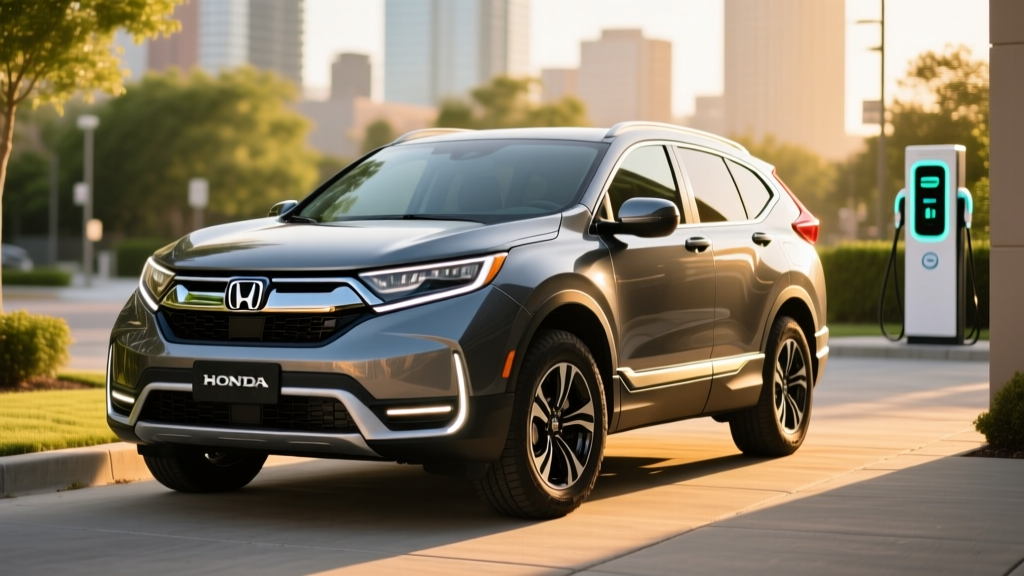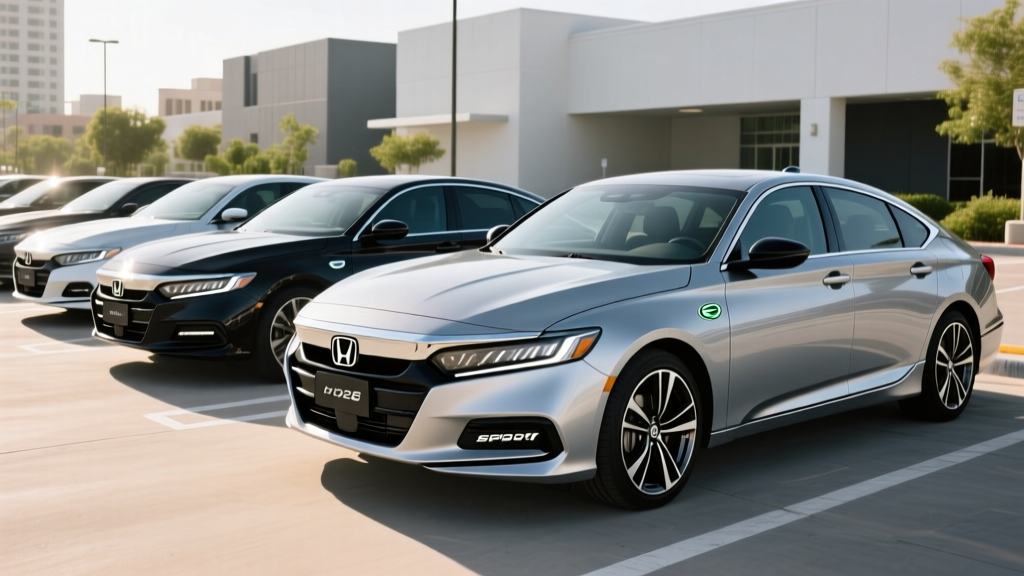
The Honda Accord Hybrid remains one of the best-selling electrified sedans in America for a reason: it delivers exceptional fuel economy without requiring any change in driving habits. No plugs, no range anxiety, no charging apps — just a conventional hybrid powertrain that sips fuel in city traffic and cruises efficiently on the highway. For 2026, Honda continues to offer the Accord Hybrid across three trims, each targeting a different buyer profile and budget.
This guide breaks down every 2026 Honda Accord Hybrid trim with exact EPA fuel economy figures, pricing, powertrain specifications, battery warranty details, and real-world efficiency expectations so you can choose the right configuration.
2026 Honda Accord Hybrid: HEV, Not PHEV — Know the Difference
Before diving into trims, it's critical to understand what the Accord Hybrid is — and what it isn't. The Accord Hybrid is a conventional hybrid electric vehicle (HEV). It pairs a gasoline engine with electric motors and a small battery pack that recharges through regenerative braking and the engine itself. You never plug it in.
HEV vs. PHEV vs. BEV: Where the Accord Hybrid Fits
| Feature | HEV (Accord Hybrid) | PHEV (e.g., Toyota Prius Prime) | BEV (e.g., Tesla Model 3) |
|---|---|---|---|
| Plug-in charging | No | Yes | Yes |
| Electric-only range | ~1 mile at low speed | 25–44 miles typical | 250–360+ miles |
| Battery size | ~1.06 kWh | 10–18 kWh | 50–100 kWh |
| Gas engine | Yes (primary) | Yes (backup) | None |
| Federal tax credit (§30D) | No | Up to $7,500* | Up to $7,500* |
| Home charging needed | No | Recommended (Level 2) | Essential |
*§30D credit eligibility depends on MSRP caps, buyer income limits, and battery sourcing requirements. See IRS.gov for current rules.
The Accord Hybrid does not qualify for the federal §30D clean vehicle credit, which is reserved for plug-in vehicles (PHEVs and BEVs) meeting specific battery sourcing and MSRP requirements. However, the Accord Hybrid's lower purchase price and zero infrastructure requirements often result in a lower total cost of ownership compared to PHEVs and BEVs for drivers without reliable home charging access.
2026 Accord Hybrid Powertrain: Engine, Motors, and Horsepower
Every 2026 Accord Hybrid shares the same fourth-generation two-motor hybrid system, which Honda has refined significantly since its introduction. The powertrain is identical across all three trims — the differences between trims are in features, technology, and interior appointments, not performance.
| Specification | All Trims (Sport, Sport-L, Touring) |
|---|---|
| Engine | 2.0L DOHC 4-cylinder Atkinson-cycle |
| Engine output | 146 hp / 134 lb-ft torque |
| Drive motors | Dual-motor hybrid system |
| Electric motor output | 184 hp / 247 lb-ft torque |
| Combined system output | 204 hp / 247 lb-ft torque |
| Transmission | e-CVT (direct drive with lock-up clutch) |
| Drivetrain | Front-wheel drive |
| Hybrid battery | ~1.06 kWh lithium-ion |
| 0–60 mph | ~7.1 seconds (est.) |
The Accord Hybrid operates primarily in electric drive mode at low and moderate speeds, with the gasoline engine acting as a generator. At highway speeds, a lock-up clutch engages to connect the engine directly to the wheels for improved efficiency. This system eliminates the "rubber band" feel of older CVTs and delivers responsive, linear acceleration from the electric motors.
Fuel Economy: EPA MPG by Trim and Real-World Expectations
All three 2026 Accord Hybrid trims share identical EPA fuel economy ratings thanks to the same powertrain and similar curb weights. Here's what the EPA reports via fueleconomy.gov:
| Metric | EPA Rating |
|---|---|
| City MPG | 51 MPG |
| Highway MPG | 44 MPG |
| Combined MPG | 48 MPG |
| Fuel tank capacity | 12.8 gallons |
| Total driving range | ~614 miles |
Real-World MPG: What Owners Actually See
The Accord Hybrid's EPA ratings are among the most accurate in the segment, but real-world results vary predictably by driving conditions:
- City driving: Most owners report meeting or exceeding the 51 MPG city figure. Hybrid systems thrive in stop-and-go traffic where regenerative braking constantly recharges the battery and the electric motor handles low-speed propulsion.
- Highway driving (70–80 mph): Expect 40–43 MPG on flat interstate. Aerodynamic drag reduces hybrid advantages at sustained high speed.
- Cold weather (below 32°F): A 5–10% efficiency reduction is typical as the engine runs more frequently to provide cabin heat and warm the battery. Expect 42–45 MPG combined in winter.
- Mixed driving: Owner-reported lifetime averages on Fuelly and similar platforms cluster around 45–49 MPG, closely tracking the 48 MPG combined EPA figure.
Bottom line: The Accord Hybrid delivers 48 MPG combined as advertised. City drivers may see 50–53 MPG; highway-heavy commuters should budget for 42–44 MPG. With a 12.8-gallon tank, real-world range sits between 540 and 650 miles depending on conditions — meaning one fill-up every two weeks for most drivers.
2026 Honda Accord Hybrid Trims: Pricing and Feature Breakdown
Honda offers the 2026 Accord Hybrid in three trims. All share the same powertrain — differences are in comfort, technology, and driver-assistance features.
| Feature | Sport | Sport-L | Touring |
|---|---|---|---|
| MSRP (incl. destination) | $34,490 | $36,250 | $40,390 |
| Wheels | 19-inch alloy | 19-inch alloy | 19-inch alloy |
| Seats | Cloth | Leather-trimmed | Leather-trimmed, heated/ventilated front |
| Infotainment | 12.3-inch touchscreen, wireless Apple CarPlay/Android Auto | 12.3-inch touchscreen, wireless Apple CarPlay/Android Auto | 12.3-inch touchscreen, Google built-in, wireless charging |
| Audio | 8 speakers | 8 speakers | 12-speaker Bose premium |
| Heated rear seats | No | No | Yes |
| Wireless phone charging | No | Yes | Yes |
| Head-up display | No | No | Yes |
| Honda Sensing (ADAS) | Standard | Standard | Standard |
| Low-speed braking control | Standard | Standard | Standard |
| Traffic sign recognition | Standard | Standard | Standard |
Federal and State Tax Credit Eligibility
The Accord Hybrid does not qualify for the federal §30D New Clean Vehicle Credit. That credit is restricted to plug-in electric vehicles (PHEVs and BEVs) with battery packs of at least 7 kWh that meet critical mineral and battery component sourcing requirements outlined by the IRS.
The Accord Hybrid's ~1.06 kWh battery falls far below the 7 kWh threshold. Some states may offer modest incentives for conventional hybrids, but these vary by jurisdiction and change frequently — check your state's energy or environmental agency for current programs.
Honda Sensing: Driver-Assistance Technology Across All Trims
Every 2026 Accord Hybrid includes Honda Sensing, Honda's Level 2 driver-assistance suite. This is important to clarify: Honda Sensing is not self-driving. Per the SAE automation scale, it is Level 2 — the driver must remain engaged, hands on or near the wheel, and eyes on the road at all times.
SAE Level 2 — Partial Automation: The system can control steering and speed simultaneously under specific conditions (lane markings visible, speeds within operating range). The driver is fully responsible for monitoring the environment and must be prepared to take over immediately. This is the same automation level as Tesla Autopilot, Ford BlueCruise, and GM Super Cruise.
Honda Sensing on the 2026 Accord Hybrid includes:
- Adaptive Cruise Control (ACC) with Low-Speed Follow
- Lane Keeping Assist System (LKAS)
- Road Departure Mitigation (RDM)
- Collision Mitigation Braking System (CMBS)
- Traffic Sign Recognition (TSR)
- Traffic Jam Assist (low-speed steering assist)
On the Touring trim, the system benefits from enhanced sensor processing and the head-up display, which projects speed and navigation info into the driver's sight line — reducing eye movement and complementing the ADAS suite.
Battery Warranty, Reliability, and Replacement Cost
Hybrid battery longevity is the single most common concern among prospective hybrid buyers. Honda addresses this with a robust warranty and a track record of battery durability.
2026 Accord Hybrid Battery and Powertrain Warranty
| Hybrid battery warranty | 8 years / 100,000 miles (10 years / 150,000 miles in CARB states*) |
| Powertrain warranty | 5 years / 60,000 miles |
| Basic vehicle warranty | 3 years / 36,000 miles |
| Hybrid system components | Covered under 8-year/100,000-mile hybrid warranty |
*CARB states include CA, CO, CT, ME, MD, MA, NJ, NY, OR, RI, VT, WA, and others adopting California emissions standards. Confirm your state's classification with your dealer.
Real-World Battery Longevity
The Accord Hybrid's lithium-ion battery pack is relatively small (~1.06 kWh) and operates within a conservative state-of-charge window — Honda's battery management system prevents full depletion and full saturation, which are the primary causes of lithium-ion degradation. As a result:
- Most Accord Hybrid batteries last well beyond the warranty period. Reports of failure before 150,000 miles are uncommon.
- Honda's hybrid system has been in production since 2014 (with the current generation debuting for 2023), providing a substantial reliability track record.
- The IIHS has consistently rated the Accord highly for safety, and Consumer Reports typically rates Accord Hybrid reliability as above average.
Battery Replacement Cost
If the hybrid battery does require replacement outside of warranty:
- OEM replacement (dealer): $2,000–$4,000 including labor
- Refurbished/aftermarket: $1,200–$2,500 including labor
- Individual cell/module repair: Some specialist shops can replace failed modules for $500–$1,200
Compared to a full EV battery replacement ($8,000–$20,000+), the Accord Hybrid's small battery is relatively inexpensive to service — and failures are rare within normal ownership timeframes.
Who Should Choose the Accord Hybrid vs. a PHEV or Full EV?
The Accord Hybrid occupies a specific niche in the electrification spectrum. Here's a practical decision framework:
Choose the Accord Hybrid If:
- You don't have access to home or workplace charging (apartment, street parking, no garage)
- You want maximum fuel efficiency with zero lifestyle changes — no plug-in routine, no charging apps
- Your annual mileage is moderate (10,000–15,000 miles) and you want to minimize fuel costs without a large upfront premium
- You frequently drive long distances where charging infrastructure is sparse
- You want a proven, low-risk powertrain with a strong reliability record
Consider a PHEV Instead If:
- You have home charging and a short commute (under 30 miles) — a PHEV can handle daily driving on electricity alone
- You want to qualify for the §30D federal tax credit (up to $7,500, subject to eligibility)
- You want to reduce gasoline consumption dramatically while keeping a gas engine for road trips
Consider a Full EV (BEV) Instead If:
- You have reliable Level 2 home charging
- Your daily driving is under 250 miles and you rarely take road trips exceeding 300 miles
- You want to eliminate gasoline entirely and minimize moving parts
- You qualify for federal and state EV incentives that offset the higher purchase price
Accord Hybrid Ownership Costs: Fuel Savings vs. Gas-Only Accord
To put the Accord Hybrid's value in perspective, compare its fuel costs to the gas-only 2026 Accord (1.5L turbo, EPA 29 city / 37 highway / 32 combined):
| Metric | Accord Hybrid | Gas Accord (1.5T) |
|---|---|---|
| Combined MPG | 48 | 32 |
| Gallons per 15,000 miles | 312.5 | 468.8 |
| Annual fuel cost ($3.50/gal) | $1,094 | $1,641 |
| 5-year fuel cost | $5,469 | $8,203 |
| 5-year fuel savings (Hybrid) | $2,734 | |
The Accord Hybrid typically carries a $1,500–$2,500 price premium over the equivalent gas-only trim. With annual fuel savings of roughly $547, the hybrid pays for itself within 3–5 years for most drivers — and continues saving money for the life of the vehicle.
Pros, Cons, and Final Verdict by Trim
Pros — All Trims
- 48 MPG combined — among the best in the midsize sedan segment
- 614-mile total range eliminates range anxiety entirely
- No plug-in charging required — zero infrastructure cost
- Honda Sensing ADAS standard on every trim
- Strong 8-year/100,000-mile hybrid battery warranty
- Spacious interior with 16.7 cu ft trunk (hybrid battery does not compromise cargo)
- Responsive electric-motor torque for confident city driving
Cons — All Trims
- No federal tax credit eligibility (HEV, not PHEV/BEV)
- FWD only — no all-wheel-drive option (unlike Toyota Camry Hybrid AWD)
- Engine noise becomes noticeable under hard acceleration
- ~7.1-second 0–60 is adequate but not quick for a 204-hp sedan
- Touring trim pushes $41,000 — approaching entry-luxury pricing
- No DC fast charging (not applicable to HEV, but limits future-proofing perception)
Trim Recommendation
Sport ($34,490): Best value. You get the full hybrid powertrain, Honda Sensing, 12.3-inch infotainment, and 19-inch wheels. The cloth seats are the only significant compromise. Ideal for budget-conscious buyers who prioritize fuel savings over luxury.
Sport-L ($36,250): Adds leather seats and wireless phone charging for $1,760 more. The leather is a meaningful upgrade for families and resale value. This is the sweet spot for most buyers.
Touring ($40,390): The fully loaded option with Bose audio, heated/ventilated seats, heated rear seats, head-up display, and Google built-in. Premium features justify the cost only if you plan to keep the car 7+ years and value comfort technology.
Frequently Asked Questions
How many MPG does the 2026 Honda Accord Hybrid get?
The EPA rates all 2026 Accord Hybrid trims at 51 MPG city, 44 MPG highway, and 48 MPG combined. Real-world city driving often exceeds 50 MPG thanks to regenerative braking, while sustained highway driving at 75+ mph typically yields 40–43 MPG. Expect 45–49 MPG in mixed driving over the long term.
Does the Honda Accord Hybrid need to be plugged in?
No. The Accord Hybrid is a conventional hybrid (HEV). Its small lithium-ion battery recharges through regenerative braking and the gasoline engine. You simply fill up at a gas station like any other car. Honda does not currently offer a plug-in hybrid (PHEV) version of the Accord in the US market.
Does the 2026 Accord Hybrid qualify for a federal tax credit?
No. The federal §30D New Clean Vehicle Credit applies only to plug-in electric vehicles (PHEVs and BEVs) with battery packs of at least 7 kWh. The Accord Hybrid's ~1.06 kWh battery does not meet this threshold. Check your state's energy agency for any local hybrid incentives, which vary by jurisdiction.
Is the Accord Hybrid reliable, and what does battery replacement cost?
Honda's hybrid system has a strong reliability record since its 2014 introduction. The hybrid battery is covered for 8 years/100,000 miles (10 years/150,000 miles in CARB states). Out-of-warranty replacement costs $2,000–$4,000 at a dealer, though failures before 150,000 miles are uncommon. The small battery size keeps replacement costs far lower than a full EV battery.
How does the Accord Hybrid compare to the Toyota Camry Hybrid?
The Camry Hybrid offers similar fuel economy (up to 52 MPG combined on LE trim) and is available with all-wheel drive — a key advantage in snowy climates. The Accord Hybrid counters with a larger trunk (16.7 vs. 15.1 cu ft), more rear-seat legroom, and a more refined ride quality. If AWD is essential, the Camry wins; if cargo space and comfort matter more, the Accord Hybrid has the edge.
Should I buy the Accord Hybrid or a full EV?
Choose the Accord Hybrid if you lack home charging access, frequently drive long distances, or want zero lifestyle changes. Choose a full EV if you have Level 2 home charging, your daily driving stays under 250 miles, and you want to eliminate gasoline costs and qualify for the $7,500 federal tax credit (subject to eligibility). The Accord Hybrid is the lower-risk, lower-complexity choice; a BEV offers greater long-term fuel savings if your situation supports it.