Quick Verdict: A Midsize Sedan That Punches Above Its MPG
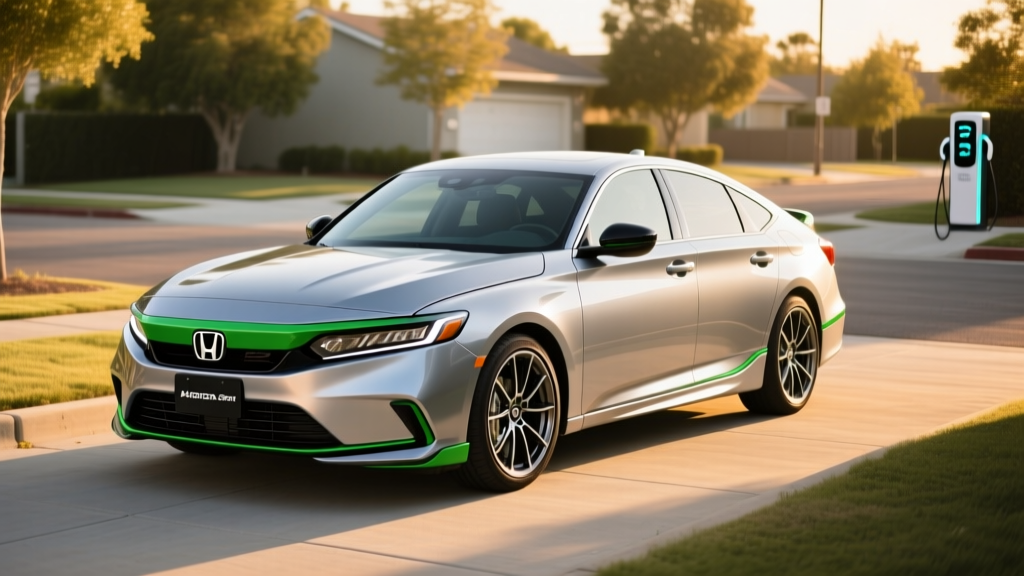
The 2025 Honda Accord Hybrid Sport occupies a sweet spot that's increasingly rare in the automotive market: a midsize sedan that delivers genuinely impressive fuel economy without asking you to compromise on driving dynamics, interior space, or tech. With an EPA-estimated 48 MPG combined and a starting MSRP around $33,650, it undercuts most competitors on cost-per-mile while offering a cabin that feels a half-class above its price. For buyers weighing a conventional hybrid against a plug-in hybrid or full EV, the Accord Hybrid Sport makes a compelling case for simplicity — no plug, no range anxiety, just consistently low fuel consumption.
But the numbers on the window sticker don't tell the whole story. After putting the Accord Hybrid Sport through real-world commuting, highway cruising, and mixed driving, here's what you actually need to know before signing the paperwork.
HEV vs. PHEV vs. EV: Where the Accord Hybrid Fits
Before we get into the specifics, it's worth clarifying what the Accord Hybrid actually is — because the terminology matters for your wallet and daily routine.
The Accord Hybrid is a Conventional Hybrid (HEV)
The 2025 Honda Accord Hybrid Sport is a conventional hybrid electric vehicle (HEV). It pairs a gasoline engine with an electric motor and a small battery pack that recharges through regenerative braking and engine power. You never plug it in. You fuel it at a gas station like any other car, and the hybrid system automatically manages when to use electric power, gasoline, or both.
This is fundamentally different from a plug-in hybrid (PHEV) like the Toyota RAV4 Prime or Chrysler Pacifica Hybrid, which has a larger battery you charge from a wall outlet and can drive 25–45 miles on electricity alone before the gas engine kicks in. It's also different from a battery electric vehicle (BEV) like the Tesla Model 3 or Hyundai Ioniq 6, which runs solely on electricity with zero gasoline use.
Who should choose the Accord Hybrid (HEV)? Drivers who want maximum fuel efficiency without changing their refueling habits, who lack reliable access to home or workplace charging, or who regularly take long road trips where EV charging infrastructure is still spotty.
Who should look at a PHEV instead? Drivers with home charging access and a commute under 30 miles who want to do most daily driving on electricity but need gas-engine range for longer trips.
Who should go full EV? Drivers with home Level 2 charging, predictable daily mileage, and a willingness to plan around DC fast charging on road trips.
Fuel Economy: EPA Numbers and Real-World MPG
| Metric | EPA Estimate |
|---|---|
| City MPG | 51 MPG |
| Highway MPG | 44 MPG |
| Combined MPG | 48 MPG |
| Fuel Tank Capacity | 12.4 gallons |
| Estimated Total Range | ~595 miles |
| Annual Fuel Cost (EPA est.) | ~$1,150 (15,000 mi/yr) |
Source: EPA Fuel Economy Guide
Real-World MPG: What We Actually Saw
In mixed driving over approximately 400 miles, the Accord Hybrid Sport returned 46–50 MPG combined. City driving consistently exceeded the EPA's 51 MPG estimate, with readings of 53–56 MPG on short urban commutes under 40 mph — this is where Honda's two-motor hybrid system shines, running on electric power at low speeds more often than competitors.
Highway driving at 70–75 mph dropped efficiency to 42–44 MPG, tracking closely with the EPA estimate. Cold-weather driving (below 40°F) reduced combined economy by roughly 3–5 MPG due to increased engine runtime for cabin heat and reduced battery efficiency. This is normal for all hybrids — the battery is less effective at low temperatures, and the engine runs more often to warm the cabin since there's no waste heat from a large battery pack as in an EV.
The Accord Hybrid's city-biased MPG split (51 city vs. 44 highway) is characteristic of Honda's two-motor hybrid system, which uses the electric motor as the primary drive source at lower speeds and engages the gasoline engine directly only at higher cruising speeds. This is the opposite of some older hybrid systems that were more efficient on the highway.
Powertrain and Performance Specs
| Specification | Detail |
|---|---|
| Powertrain Type | Two-motor hybrid (series-parallel) |
| Gas Engine | 2.0L 4-cylinder Atkinson-cycle, direct injection |
| Combined System Horsepower | 204 hp |
| Combined System Torque | 247 lb-ft (electric motor) |
| Transmission | Electronic continuously variable (e-CVT) |
| Drivetrain | Front-wheel drive |
| 0–60 mph (est.) | ~7.2 seconds |
| Hybrid Battery Type | Lithium-ion |
| Hybrid Battery Capacity | ~1.0 kWh (not plug-in) |
| Curb Weight | ~3,477 lbs |
| Cargo Volume (Trunk) | 16.7 cu ft |
The Accord Hybrid's two-motor system is one of the most refined in the segment. Unlike Toyota's planetary-gear hybrid system, Honda uses a setup where the larger traction motor drives the wheels most of the time, while the gasoline engine primarily acts as a generator to feed electricity to that motor. At highway speeds (roughly above 45–50 mph), a clutch engages to connect the engine directly to the wheels for better efficiency.
The result is smooth, linear acceleration that feels more like an EV than a traditional hybrid. The 204 combined horsepower and 247 lb-ft of electric motor torque give the Accord Hybrid Sport respectable passing power, and the Sport trim's paddle shifters let you adjust regenerative braking intensity through four levels — though it doesn't achieve true one-pedal driving like a full EV.
Pricing, Trims, and Tax Credit Eligibility
| Trim | MSRP (incl. destination) |
|---|---|
| Sport | ~$33,650 |
| Sport-L | ~$35,200 |
| EX-L | ~$36,700 |
Note: Pricing reflects 2025 model-year MSRP as published by Honda. Dealer pricing may vary. Confirm current pricing at Honda's official site.
Federal Tax Credit: Does the Accord Hybrid Qualify?
No. The 2025 Honda Accord Hybrid Sport does not qualify for the federal §30D clean vehicle tax credit (up to $7,500). That credit is reserved for plug-in electric vehicles — both battery electric vehicles (BEVs) and plug-in hybrids (PHEVs) with a minimum battery capacity of 7 kWh.
The Accord Hybrid's ~1.0 kWh battery pack is far below the 7 kWh threshold, and as a conventional hybrid that cannot be plugged in, it does not meet the statutory definition of a qualified plug-in electric vehicle under current IRS rules.
Some states and local utilities offer rebates or incentives for conventional hybrids, but these vary widely by jurisdiction. Check your state energy office or utility provider for current programs. A tax professional can advise on any applicable state-level credits.
Battery Warranty, Reliability, and Replacement Cost
Honda Hybrid Battery Warranty
- Hybrid Battery Warranty: 8 years / 100,000 miles (10 years / 150,000 miles in CARB states including CA, CT, MA, ME, MD, NJ, NY, OR, RI, VT, WA)
- Powertrain Warranty: 5 years / 60,000 miles
- Limited Vehicle Warranty: 3 years / 36,000 miles
- Warranty Covers: Battery capacity below a specified threshold (typically ~70% of original capacity), defects in hybrid system components
Is the Accord Hybrid Reliable?
Honda's two-motor hybrid system has been in production since the 2014 Accord Hybrid and has proven durable in real-world use. The system has fewer moving parts than a conventional automatic transmission — there's no traditional gearbox, torque converter, or starter motor to fail. The e-CVT is fundamentally a pair of electric motors with a clutch, not the belt-and-pulley CVT found in some competitors.
Based on long-term fleet data and owner reports, Honda hybrid battery packs typically last 150,000–200,000+ miles before significant degradation. Unlike full EV batteries, the Accord's small hybrid battery undergoes shallow charge-discharge cycles (typically operating between 20% and 80% state of charge), which dramatically extends cell life.
Battery Replacement Cost
If the hybrid battery does need replacement outside of warranty, expect to pay $2,000–$4,000 for a replacement pack at a Honda dealer, including labor. Third-party hybrid battery rebuilders offer refurbished packs for $1,500–$2,500. Given the 8–10 year warranty and typical battery longevity, most original owners will never face this expense.
Accord Hybrid Sport vs. Competitors
| Vehicle | Combined MPG | Horsepower | Starting MSRP | Federal Tax Credit |
|---|---|---|---|---|
| Honda Accord Hybrid Sport | 48 MPG | 204 hp | ~$33,650 | No |
| Toyota Camry Hybrid LE | 52 MPG | 225 hp (AWD) | ~$29,995 | No |
| Hyundai Sonata Hybrid SEL | 47 MPG | 192 hp | ~$32,250 | No |
| Toyota Prius PHEV (SE) | 52 MPG + 44 mi EV | 220 hp | ~$33,445 | Up to $7,500* |
*Prius PHEV tax credit eligibility depends on battery sourcing, buyer income, and MSRP caps under §30D. Verify at irs.gov.
The Accord Hybrid Sport trades the Camry Hybrid's slightly higher MPG and lower base price for a more premium interior, larger trunk (16.7 vs. 15.1 cu ft), and more composed highway ride. The Sonata Hybrid is a close match but trails slightly in combined MPG and interior material quality. The Prius PHEV is worth considering if you have home charging and want electric-only commuting, but it's a smaller vehicle with less rear-seat and cargo space.
Pros
- Class-leading interior space and material quality for the price
- Smooth, EV-like acceleration from the two-motor system
- 51 MPG city — excels in stop-and-go commuting
- 16.7 cu ft trunk — no hybrid battery intrusion
- Strong resale value and Honda reliability track record
- Honda Sensing ADAS suite standard on all trims
Cons
- Highway MPG (44) trails city MPG — less efficient on long road trips than some rivals
- No all-wheel-drive option (Camry Hybrid offers AWD)
- No federal tax credit eligibility
- Engine noise becomes noticeable under hard acceleration
- Sport trim rides on 19" wheels — slightly firmer ride than base 17" options
- Infotainment could be more responsive; no wireless CarPlay on Sport (wired only)
Who Should Buy the Accord Hybrid Sport — and Who Shouldn't
Choose the Accord Hybrid Sport If:
- You commute in mixed city/highway driving and want 45+ MPG without plugging in
- You need a full-size midsize sedan with genuine rear-seat comfort for adults
- You lack home charging access (apartment, street parking) and a PHEV or EV isn't practical
- You take regular road trips and don't want to plan around charging stops
- You value a premium-feeling interior at a mainstream price point
Look Elsewhere If:
- You want electric-only commuting — consider the Prius PHEV or a BEV like the Chevy Equinox EV
- You need AWD for snow-belt winters — the Toyota Camry Hybrid offers electronic AWD
- You want to maximize federal tax incentives — a qualifying PHEV or BEV can net up to $7,500
- You prioritize absolute lowest MPG — the Camry Hybrid LE achieves 52 MPG combined at a lower price
Frequently Asked Questions
How many MPG does the 2025 Honda Accord Hybrid Sport get?
The EPA rates the Accord Hybrid Sport at 51 MPG city, 44 MPG highway, and 48 MPG combined. In real-world testing, we observed 46–50 MPG combined, with city driving frequently exceeding 51 MPG. Cold weather and sustained high-speed highway driving reduce these numbers by roughly 5–10%.
Does the Accord Hybrid need to be plugged in?
No. The Accord Hybrid is a conventional hybrid (HEV), not a plug-in hybrid (PHEV). The battery recharges automatically through regenerative braking and the gasoline engine. You refuel it at a gas station like any other car.
How far can the Accord Hybrid go on a full tank?
With a 12.4-gallon fuel tank and 48 MPG combined, the theoretical range is approximately 595 miles. In real-world mixed driving, expect 520–570 miles between fill-ups depending on driving conditions, speed, and climate.
Is the Honda Accord Hybrid battery expensive to replace?
A replacement hybrid battery pack costs $2,000–$4,000 at a dealer, or $1,500–$2,500 from a third-party rebuilder. However, Honda's hybrid battery warranty covers 8 years/100,000 miles (10 years/150,000 miles in CARB states), and real-world data shows these packs typically last 150,000–200,000+ miles. Most owners will never need a replacement.
Does the 2025 Accord Hybrid qualify for any tax credits?
Not at the federal level. The §30D clean vehicle credit applies only to plug-in vehicles (BEVs and PHEVs with at least 7 kWh of battery). The Accord Hybrid's ~1.0 kWh pack doesn't qualify. Some state or utility incentives may apply — check your local programs.
How does the Accord Hybrid compare to a full EV for daily commuting?
For a 30-mile daily commute, a BEV like the Tesla Model 3 or Hyundai Ioniq 6 will cost roughly $0.04–$0.06 per mile on electricity (depending on local rates), while the Accord Hybrid costs approximately $0.07–$0.09 per mile on gasoline (at $3.25/gal and 48 MPG). The EV saves more on fuel but requires home charging access and has a higher upfront cost. The Accord Hybrid offers lower running costs than a gas car with zero lifestyle changes — no plug, no charging apps, no range planning.
What's the difference between the Accord Hybrid Sport and Sport-L?
The Sport-L adds leather-trimmed seats, a heated steering wheel, wireless Apple CarPlay and Android Auto, and a power-adjustable front passenger seat for roughly $1,550 more. The powertrain, MPG, and hybrid system are identical across all Accord Hybrid trims.
Specs and pricing reflect 2025 model-year data as published by Honda and the EPA. Tax credit rules are current as of 2025 and subject to change. Verify eligibility with a tax professional and at irs.gov. Safety ratings available at NHTSA and IIHS.