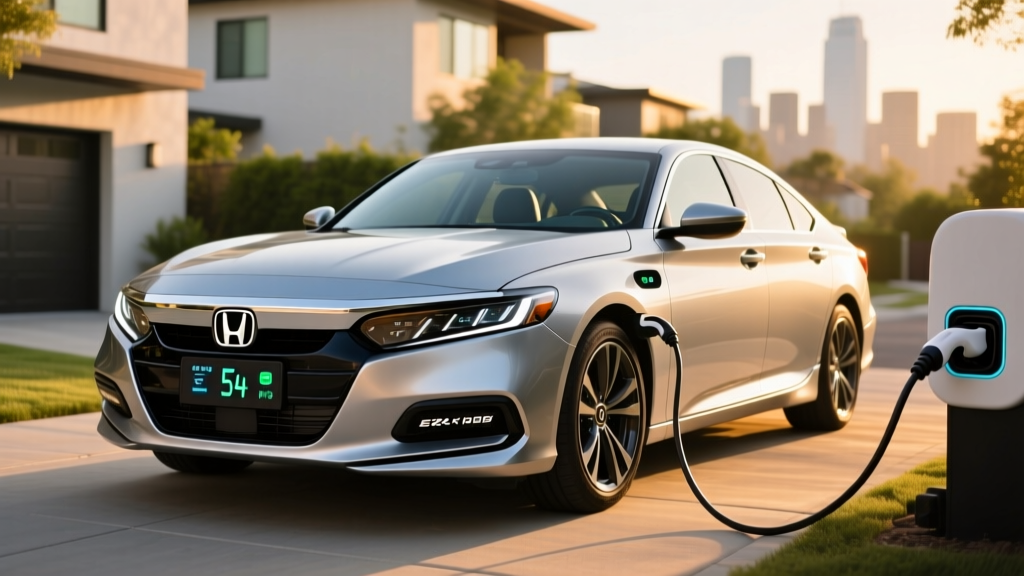
Quick Verdict: The Accord EX-L Hybrid's Efficiency Sweet Spot
The 2026 Honda Accord EX-L Hybrid occupies a compelling middle ground in the midsize sedan segment. With an EPA-estimated 48 MPG combined and a starting MSRP around $35,000, it offers near-Prius efficiency without the plug-in complexity or range anxiety. For buyers seeking maximum fuel savings without changing their refueling habits, the Accord EX-L Hybrid remains one of the most practical electrified choices available.
| Specification | 2026 Honda Accord EX-L Hybrid |
|---|---|
| EPA Fuel Economy (City/Hwy/Combined) | 51 / 44 / 48 MPG |
| Powertrain | 2.0L 4-cyl + 2 electric motors |
| Combined Horsepower | 204 hp |
| Transmission | eCVT (no traditional gears) |
| Drivetrain | Front-wheel drive |
| Battery Type | Lithium-ion (1.06 kWh usable) |
| 0-60 mph | ~7.0 seconds |
| Base MSRP (EX-L trim) | $35,090 |
| Hybrid Battery Warranty | 8 years / 100,000 miles |
Understanding the Accord Hybrid: HEV vs PHEV Explained
The Honda Accord EX-L is a conventional hybrid electric vehicle (HEV), not a plug-in hybrid (PHEV). This distinction matters significantly for ownership expectations:
Conventional Hybrid (HEV) - Accord EX-L
- No plug required: The battery charges through regenerative braking and the gasoline engine
- Small battery: ~1 kWh usable capacity, primarily for assist and regenerative capture
- No electric-only range: The vehicle can creep short distances on electric power but cannot sustain highway speeds without the engine
- Simple ownership: Refuel at any gas station, no home charging infrastructure needed
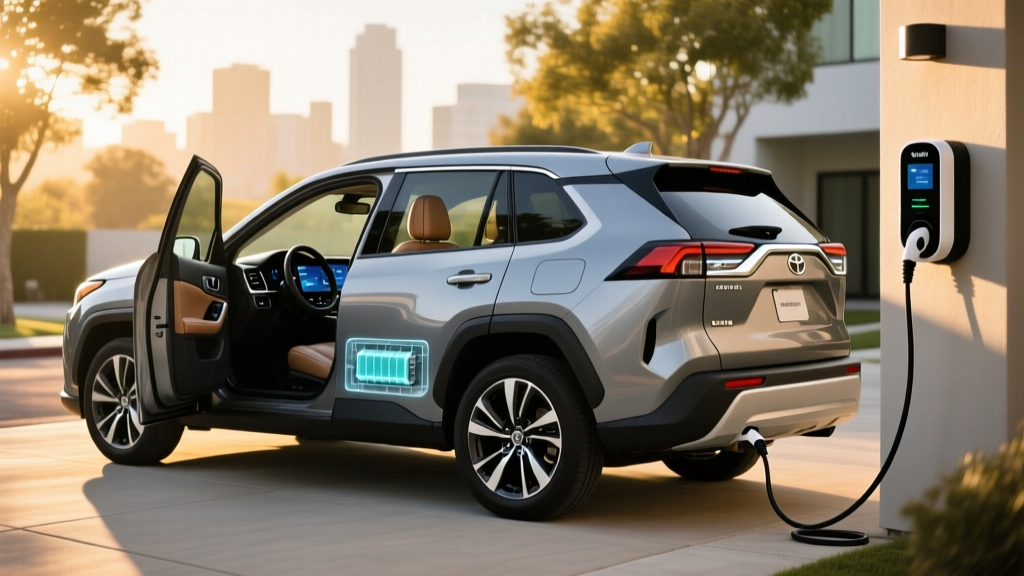
Plug-In Hybrid (PHEV) - Example: Toyota RAV4 Prime
- Plug-in capable: Larger battery (18+ kWh) charges from wall outlet or charging station
- Electric-only range: Typically 25-45 miles before the gasoline engine engages
- Higher complexity: Requires charging access to maximize efficiency benefits
- Tax credit eligible: May qualify for federal §30D credits (subject to sourcing and income rules)
The Accord Hybrid's architecture prioritizes simplicity and reliability. You never need to think about charging—the system manages energy flow automatically, using electric motors for low-speed efficiency and seamless engine engagement when needed.
Fuel Economy: EPA Estimates vs Real-World MPG
| Driving Condition | EPA Estimate | Real-World Expectation |
|---|---|---|
| City | 51 MPG | 48-54 MPG (hybrids often exceed EPA in stop-and-go) |
| Highway | 44 MPG | 40-46 MPG (sustained high speeds reduce hybrid advantage) |
| Combined | 48 MPG | 45-50 MPG (varies with driving style and conditions) |
According to fueleconomy.gov, the 2026 Accord Hybrid achieves 51 city / 44 highway / 48 combined MPG. However, real-world results often diverge from EPA stickers in predictable ways:
City driving advantage: Hybrids excel in urban environments where regenerative braking recaptures energy during frequent stops. Many owners report exceeding 50 MPG in city commutes with moderate acceleration.
Highway efficiency drop: At sustained speeds above 65 mph, the gasoline engine operates continuously, reducing the hybrid system's benefit. Expect 40-44 MPG on long highway trips, especially with headwinds or elevation changes.
Cold weather impact: In freezing temperatures, expect a 5-10% efficiency reduction as the engine runs more frequently to provide cabin heat and maintain battery temperature. The Accord Hybrid lacks a heat pump (common in full EVs) so winter MPG typically drops to 42-45 combined.
Powertrain Details: How the Two-Motor System Works
The Accord EX-L Hybrid uses Honda's two-motor hybrid system, which differs fundamentally from traditional transmissions:
- 2.0-liter Atkinson-cycle engine: 146 hp, optimized for efficiency over peak power
- Primary drive motor: 181 hp, provides most acceleration force
- Generator motor: Charges the battery and can assist propulsion
- Combined system output: 204 hp (motors and engine don't simply add together due to power curve differences)
The eCVT (electronic continuously variable transmission) has no physical gears. Instead, the system operates in three modes:
- EV Drive: Battery powers the drive motor alone (low speeds, light loads, short distances)
- Hybrid Drive: Engine generates electricity to power the drive motor, with battery assist as needed
- Engine Drive: At highway speeds, a lock-up clutch connects the engine directly to the wheels for maximum efficiency
This architecture delivers smooth, linear acceleration without the rubber-band effect of older CVTs. The 0-60 mph time of approximately 7.0 seconds provides adequate merging power, though it trails the non-hybrid Accord's turbocharged acceleration.
Pricing and Tax Credit Eligibility
The 2026 Honda Accord EX-L Hybrid starts at an MSRP of approximately $35,090 (including destination charges). This positions it $1,500-$2,000 above the equivalent gasoline-only EX-L trim, a premium that typically pays back in fuel savings within 2-3 years for drivers covering 12,000+ miles annually.
Federal Tax Credit Status
The Accord Hybrid does NOT qualify for the federal §30D Clean Vehicle Credit. This credit applies only to plug-in electric vehicles with battery capacity ≥7 kWh and the ability to charge from an external source. As a conventional hybrid with a ~1 kWh battery, the Accord HEV falls outside IRS eligibility requirements.
Some states offer separate incentives for hybrid vehicles, though these have become rare as policy focus shifts to full EVs and PHEVs. Check your state's energy office or department of environmental quality for current programs.
Total Cost of Ownership Comparison
At current fuel prices ($3.50/gallon national average) and 12,000 miles/year:
- Accord Hybrid (48 MPG): ~$875 annual fuel cost
- Accord Gasoline (33 MPG combined): ~$1,273 annual fuel cost
- Annual savings: ~$398
- 5-year savings: ~$1,990 (offsets most of the hybrid premium)
Battery Longevity and Warranty Coverage
Honda Hybrid Battery Warranty
Coverage: 8 years or 100,000 miles (whichever comes first)
What's covered: Defects in materials/workmanship, capacity loss below functional threshold
Real-world lifespan: Most Honda hybrid batteries last 150,000-200,000+ miles before significant degradation
Replacement cost (out of warranty): $2,000-$4,000 including labor (varies by region and battery availability)
Honda's hybrid battery warranty provides substantial peace of mind. The lithium-ion battery pack is significantly smaller than a full EV battery (1.06 kWh vs 60-100 kWh), meaning less stress per cycle and typically longer calendar life.
Real-world data from high-mileage Accord and Civic Hybrid owners suggests these batteries rarely fail catastrophically. Instead, gradual capacity loss over 10-15 years may reduce efficiency by 5-10%, but the vehicle remains fully operational. Individual cell replacement (rather than full pack replacement) is sometimes possible, reducing out-of-warranty repair costs.
Maintenance tip: Avoid frequent deep discharges. The hybrid system's battery management already prevents this automatically, but aggressive driving that repeatedly depletes the battery to its minimum threshold can accelerate long-term degradation.
Who Should Choose the Accord EX-L Hybrid?
Choose the Accord Hybrid If:
- You drive 12,000+ miles/year and want maximum fuel savings without changing refueling habits
- Your commute includes significant city driving where hybrid efficiency shines
- You lack access to home or workplace charging (apartment dwellers, street parking)
- You want proven reliability with minimal new-technology risk
- You prefer a traditional sedan with excellent resale value
Consider Alternatives If:
- You want electric-only driving for short trips (look at PHEVs like Toyota Prius Prime)
- You qualify for the $7,500 federal EV tax credit and have home charging access (full EVs become more cost-competitive)
- You prioritize maximum acceleration over efficiency (turbo Accord or EVs offer quicker 0-60 times)
- You drive primarily highway miles where the hybrid advantage diminishes
Accord Hybrid vs Full EV vs PHEV Decision Framework
Choose the Accord Hybrid (HEV) if: You want 40% better fuel economy than gas cars with zero lifestyle changes. No charging infrastructure, no range planning, no plug-in tax credit complexity.
Choose a PHEV (Prius Prime, RAV4 Prime) if: You have home/workplace charging and want 25-40 miles of electric-only range for daily commutes, plus gasoline flexibility for road trips. May qualify for partial federal tax credits.
Choose a full EV (Tesla Model 3, Hyundai Ioniq 6) if: You have reliable home charging, drive under 300 miles/day, qualify for the full $7,500 federal credit, and want zero tailpipe emissions with minimal maintenance.
Frequently Asked Questions
How many MPG does the Honda Accord EX-L Hybrid actually get?
The EPA rates it at 51 city / 44 highway / 48 combined MPG. Real-world results typically range from 45-50 MPG combined, with city driving often exceeding 50 MPG and highway driving dropping to 40-44 MPG. Cold weather and aggressive acceleration reduce these figures by 5-10%.
Does the Accord Hybrid need to be plugged in?
No. The Accord EX-L Hybrid is a conventional hybrid (HEV) that charges its small battery through regenerative braking and the gasoline engine. You never plug it in—just refuel at any gas station. This is different from plug-in hybrids (PHEVs) which have larger batteries and can charge from wall outlets.
Is the Accord Hybrid reliable, and what does battery replacement cost?
Honda's hybrid system has proven highly reliable over 15+ years of production. The hybrid battery carries an 8-year/100,000-mile warranty, and most units last 150,000-200,000+ miles. Out-of-warranty replacement costs $2,000-$4,000 if needed, though catastrophic failure is rare.
Does the Accord Hybrid qualify for any tax credits?
No federal tax credit applies to conventional hybrids. The §30D Clean Vehicle Credit requires plug-in capability and ≥7 kWh battery capacity. Some states may offer separate hybrid incentives, but these have become uncommon. The Accord Hybrid's value proposition relies on fuel savings rather than purchase incentives.
How does the Accord Hybrid compare to the Toyota Camry Hybrid?
Both achieve similar efficiency (Camry Hybrid: 52 MPG combined). The Accord offers slightly more rear legroom and cargo space, while the Camry Hybrid starts ~$1,500 lower. Driving dynamics favor the Accord; pure efficiency slightly favors the Camry. Both are excellent choices with strong reliability records.
Can the Accord Hybrid run on electric power alone?
Only at very low speeds (under 25 mph) for short distances (typically under 1 mile). The battery is too small to sustain highway speeds on electric power alone. For meaningful electric-only range (25-40 miles), you'd need a plug-in hybrid like the Toyota Prius Prime or a full battery EV.
Final Assessment: Efficiency Without Compromise
The 2026 Honda Accord EX-L Hybrid delivers exactly what its target buyer wants: substantial fuel savings (48 MPG combined) without the complexity, range anxiety, or infrastructure requirements of plug-in vehicles. At $35,090, it commands a modest premium over gasoline Accords but pays for itself through fuel savings within 2-3 years for typical drivers.
For buyers with charging access who qualify for federal EV tax credits, full electric vehicles may offer greater long-term savings. But for the majority of drivers—especially those in apartments, with street parking, or who regularly exceed 300 miles between stops—the Accord Hybrid remains one of the smartest electrified choices available. No plugs, no anxiety, just 500+ miles between fill-ups and a proven track record of reliability.