The 2006 Honda Civic Hybrid: An Early-Era HEV Retrospective
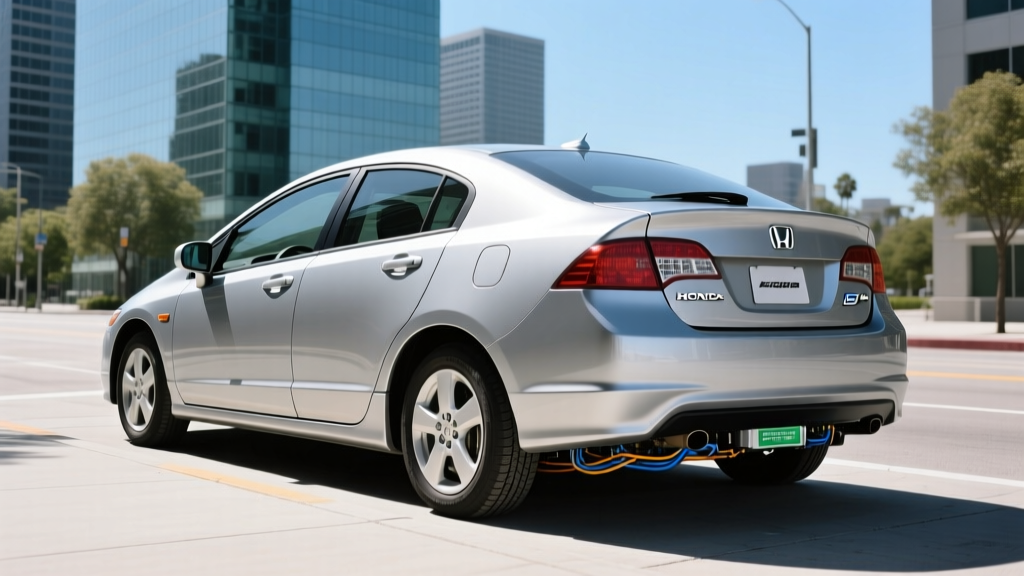
The 2006 Honda Civic Hybrid was one of the first mainstream gas-electric vehicles sold in the United States, arriving during a period when Toyota's Prius dominated the hybrid conversation. Honda took a different approach with its Integrated Motor Assist (IMA) system — pairing a small electric motor sandwiched between a gasoline engine and a continuously variable transmission (CVT) rather than using a full parallel hybrid architecture. For buyers researching the Honda 2006 hybrid today, whether as a budget commuter, a used-car prospect, or a milestone in hybrid history, understanding its real-world fuel economy, battery longevity, and ownership economics in 2026 is essential.
This guide covers the 2006 Civic Hybrid as a conventional hybrid electric vehicle (HEV) — meaning it never plugs in. It recovers energy through regenerative braking and uses its gasoline engine to generate electricity and propel the car. If you're looking for plug-in capability, Honda did not offer a PHEV variant of the Civic in 2006 (or in any subsequent model year, as of 2026).
HEV vs PHEV: What the 2006 Civic Hybrid Actually Is
| Feature | Conventional Hybrid (HEV) | Plug-In Hybrid (PHEV) |
|---|---|---|
| Plug-in charging? | No — self-charging via engine + regen | Yes — plug into Level 1 or Level 2 |
| Electric-only driving? | Limited assist only, no pure EV mode | 20–50 miles EV-only typical |
| Battery size | 0.5–2.0 kWh | 10–25 kWh typical |
| Federal tax credit (new)? | No longer eligible (expired) | Up to $7,500 under §30D if eligible |
| Example | 2006 Honda Civic Hybrid | 2026 Toyota RAV4 Prime, Honda Clarity PHEV (discontinued 2021) |
The 2006 Civic Hybrid is a textbook HEV. Its nickel-metal hydride (NiMH) battery pack stores roughly 0.35 kWh of usable energy — a fraction of what modern PHEVs carry. The electric motor assists the gasoline engine during acceleration and enables idle stop-start, but it cannot propel the car on electric power alone at any meaningful speed. There is no charge port, no EV-only range, and no home charging setup required.
Fuel Economy: EPA Ratings and Real-World MPG
The 2006 Civic Hybrid was rated by the EPA at:
| Driving Cycle | EPA MPG | Real-World Expectation (2026) |
|---|---|---|
| City | 49 MPG | 42–48 MPG |
| Highway | 51 MPG | 44–50 MPG |
| Combined | 50 MPG | 43–49 MPG |
Important context on 2006 EPA testing: The EPA revised its fuel economy testing methodology starting with the 2008 model year to better reflect real-world driving (faster acceleration, air conditioning use, colder temperatures). The 2006 Civic Hybrid's original window sticker showed higher numbers — some early marketing cited 50/51 city/highway. Under the revised methodology applied retroactively, the EPA's current listing shows approximately 42 MPG combined (39 city / 45 highway) for the 2006 Civic Hybrid when evaluated under the updated cycle.
In real-world ownership two decades later, several factors affect MPG:
- IMA battery degradation: A weakened NiMH pack provides less assist, forcing the gasoline engine to work harder. Expect 2–5 MPG loss with a degraded battery.
- Driving style: Hybrids reward gentle acceleration and steady speeds. Aggressive driving can drop MPG into the mid-30s.
- Tire pressure and maintenance: Underinflated tires, dirty air filters, and old spark plugs compound efficiency losses on any 20-year-old vehicle.
- Climate: Cold weather reduces battery efficiency and increases engine warm-up time. Expect 3–6 MPG loss in winter conditions below 35°F.
Powertrain and IMA System Specifications
| Specification | 2006 Honda Civic Hybrid |
|---|---|
| Engine | 1.3L inline-4 i-DSI (8-valve) |
| Engine horsepower | 93 hp @ 6,000 rpm |
| Electric motor (IMA) | 15 kW (20 hp), brushless DC |
| Combined system output | 110 hp @ 6,000 rpm / 123 lb-ft torque |
| Transmission | Continuously Variable (CVT) |
| Drivetrain | Front-wheel drive |
| Battery chemistry | Nickel-Metal Hydride (NiMH) |
| Battery capacity | ~0.35 kWh (nominal), 11 modules |
| 0–60 mph | ~10.8 seconds |
| Curb weight | ~2,865 lbs |
| Fuel tank | 13.2 gallons |
| Total range (est.) | ~530–570 miles per tank |
Honda's IMA system in the 2006 model year is a mild hybrid architecture by modern standards. The 15 kW electric motor cannot drive the car independently — it assists the 1.3L engine during acceleration, provides regenerative braking on deceleration, and enables the engine to shut off at idle. The result is improved fuel economy compared to the conventional 2006 Civic (rated at roughly 30/38 MPG city/highway for the automatic sedan), but the gap narrows at steady highway speeds where the electric assist contributes less.
Battery Longevity, Warranty, and Replacement Costs
Original Battery Warranty
Honda covered the 2006 Civic Hybrid's IMA battery for 8 years / 80,000 miles (10 years / 150,000 miles in California and states adopting CARB emissions standards). This warranty has expired for all 2006 models as of 2016 at the latest.
The IMA NiMH battery pack is the single largest ownership concern for a 2006 Civic Hybrid in 2026. These batteries were designed for a roughly 10–15 year service life, and most original packs have either already been replaced or are operating at significantly reduced capacity.
Signs of IMA battery degradation or failure:
- IMA warning light on the dashboard
- Noticeable drop in fuel economy (5+ MPG loss)
- Reduced regenerative braking (battery won't accept charge)
- Engine won't auto-stop at idle
- Diagnostic codes: P0A7F (hybrid battery pack deterioration), P1447, P1449
Replacement options and costs (2026 estimates):
| Option | Cost Range | Notes |
|---|---|---|
| New OEM Honda IMA battery | $2,000–$3,500 (if still available) | Increasingly rare; Honda may no longer stock 2006 packs |
| Refurbished/remanufactured pack | $800–$1,500 | Most common choice; quality varies by vendor |
| Aftermarket NiMH replacement | $900–$1,800 | Third-party suppliers like Bumblebee Batteries, Dorman |
| Individual module replacement | $200–$600 (DIY) | Replace only failed modules; requires technical skill |
| Used pack from salvage yard | $300–$700 | High risk — unknown remaining life |
For a 2006 Civic Hybrid with a current market value of roughly $2,500–$5,000 depending on condition and mileage (per Kelley Blue Book estimates), a $2,000+ battery replacement represents a significant percentage of the car's value. Buyers should factor this into any purchase decision.
Pricing, Tax Credits, and Ownership Economics
The 2006 Honda Civic Hybrid originally carried an MSRP of approximately $22,600. In 2026, used examples typically sell for $2,500–$5,000 from private sellers and $3,500–$6,500 from dealerships, depending on mileage, condition, and battery health.
Tax credit status: The federal hybrid tax credit that was available for the Civic Hybrid when new (up to $2,100 under the Energy Policy Act of 2005) expired long ago. Honda's credit phase-out triggered in 2007 after the manufacturer hit 60,000 qualifying hybrid sales. No federal tax credit is available for purchasing a used 2006 Civic Hybrid in 2026.
The current §30D clean vehicle credit applies only to new qualifying EVs and PHEVs — conventional hybrids like the Civic Hybrid are not eligible regardless of year.
Annual ownership cost estimate (2026):
| Expense | Estimated Annual Cost |
|---|---|
| Fuel (12,000 mi/yr @ 44 MPG, $3.30/gal) | ~$900 |
| Insurance | ~$800–$1,200 |
| Maintenance (oil, filters, brakes, tires) | ~$600–$900 |
| Registration/taxes | ~$100–$300 |
| IMA battery reserve (saving for replacement) | ~$200–$400 |
| Total estimated | ~$2,600–$3,700/yr |
Compared to a 2006 Civic gasoline model (~30 MPG combined), the hybrid saves roughly $350–$500 per year in fuel costs at current prices. The hybrid's CVT transmission and IMA system add some maintenance complexity, partially offsetting fuel savings.
Reliability and Common Issues Beyond the Battery
The 2006 Civic Hybrid's 1.3L i-DSI engine and CVT are generally reliable, but two decades of age introduce wear items:
- CVT transmission: Early Honda CVTs can develop shudder or hesitation, especially if fluid was not changed regularly. CVT fluid replacement every 30,000–50,000 miles is critical. A CVT replacement runs $2,500–$4,000.
- Motor mount (rear): The rear engine mount is a known failure point on 8th-generation Civics and can cause excessive vibration. Replacement: ~$200–$400.
- Idle stop system: The 12V auxiliary battery and IMA system must both be healthy for auto-stop to function. A weak 12V battery can disable the feature.
- Brake actuator: Regenerative braking changes the brake feel and wear pattern. Brake actuators on the IMA system can fail, though this is uncommon.
- Rust: As with any 20-year-old vehicle, frame and undercarriage corrosion is a concern in salt-belt states.
For safety recall information, check the NHTSA database using the VIN. The 2006 Civic Hybrid was not tested by IIHS under the current rating protocol.
Who Should Buy a 2006 Civic Hybrid in 2026?
Pros
- Low purchase price ($2,500–$5,000)
- Strong fuel economy for a non-plug-in vehicle (42–49 MPG real-world)
- No charging infrastructure needed — just add gas
- Simple, proven technology with extensive DIY repair community
- Lightweight and easy to park
Cons
- IMA battery likely at end-of-life; replacement costs $800–$3,500
- Slow acceleration (10.8s 0–60) — underpowered for highway merging
- No modern safety features (no AEB, lane-keep, blind-spot monitoring)
- CVT transmission can be costly to replace if neglected
- No tax credits or incentives available
- Interior quality and noise levels reflect 2006 economy-car standards
Choose the 2006 Civic Hybrid If:
- You need a sub-$5,000 commuter car with excellent MPG
- You cannot charge at home or lack access to plug-in infrastructure
- You're mechanically inclined and willing to handle IMA battery maintenance
- Your commute is mostly city/suburban driving where hybrid efficiency shines
Consider a Modern PHEV or Used EV Instead If:
- You want warranty coverage and modern safety technology
- You have home charging access and want electric-only commuting
- You drive highway-heavy routes where the Civic Hybrid's MPG advantage shrinks
- You qualify for the used EV tax credit (up to $4,000 for qualifying pre-owned EVs and PHEVs under §25E)
Frequently Asked Questions
How many MPG does the 2006 Honda Civic Hybrid get?
The original EPA rating was approximately 49 city / 51 highway / 50 combined. Under the revised EPA methodology (applied retroactively), the rating drops to roughly 39 city / 45 highway / 42 combined. Real-world owners in 2026 report 42–49 MPG combined depending on battery health, driving style, and climate.
Does the 2006 Honda Civic Hybrid need to be plugged in?
No. The 2006 Civic Hybrid is a conventional hybrid (HEV). It charges its small NiMH battery through regenerative braking and the gasoline engine. There is no plug, no charging cable, and no electric-only driving mode.
How far can it go on electric only?
The 2006 Civic Hybrid cannot drive on electric power alone. The IMA motor only assists the gasoline engine — it does not provide standalone propulsion. Zero miles of electric-only range.
Is the 2006 Civic Hybrid reliable and what does a battery replacement cost?
The powertrain is generally reliable with proper maintenance, but the IMA battery is now 20 years old and likely needs replacement if it hasn't been done already. A refurbished NiMH pack costs $800–$1,500; a new OEM pack (if available) costs $2,000–$3,500. The CVT transmission also requires regular fluid changes to avoid costly failure.
Does the 2006 Civic Hybrid qualify for any tax credit?
No. The original federal hybrid tax credit for this model expired in 2007. In 2026, no federal tax credit applies to conventional hybrids — the §30D new vehicle credit and §25E used vehicle credit only cover plug-in EVs and PHEVs that meet battery sourcing and MSRP requirements.
Hybrid vs PHEV vs EV — which should I choose?
A conventional hybrid (HEV) like the 2006 Civic Hybrid suits buyers who want better MPG without any charging infrastructure. A PHEV (like a used Toyota Prius Prime or Chrysler Pacifica Hybrid) offers 20–45 miles of electric-only range for short commutes plus a gas engine for longer trips — ideal if you can charge at home. A full EV (BEV) eliminates gasoline entirely with 200–350+ miles of range but requires reliable home or public charging. For a budget under $5,000, the HEV is often the only practical option; for $15,000–$25,000, used PHEVs and EVs become available with potential tax credit eligibility.
Can I still get IMA battery service for a 2006 Civic Hybrid?
Yes, but options are narrowing. Honda dealerships may still order OEM packs (availability varies), and third-party suppliers offer refurbished and aftermarket NiMH packs. Independent hybrid-specialty shops and DIY module replacement are increasingly common as the car ages. Check forums like CleanMPG and CivicHybridForum for current vendor recommendations.