American drivers have been burning less gasoline per mile for more than two decades, and much of that progress traces directly to the hybrid powertrain. The history of American hybrid cars is not just a story about Toyota and Honda — it is a chronicle of how U.S. automakers, federal regulators, and battery chemists pushed electrification from a niche experiment into the mainstream. In 2026, hybrids and plug-in hybrids (PHEVs) account for roughly one in every eight new vehicles sold in the United States, and their evolution reveals exactly why they remain a practical bridge for buyers who are not yet ready for a full battery-electric vehicle (BEV).
The First Wave: How Hybrids Arrived in America (1999–2004)
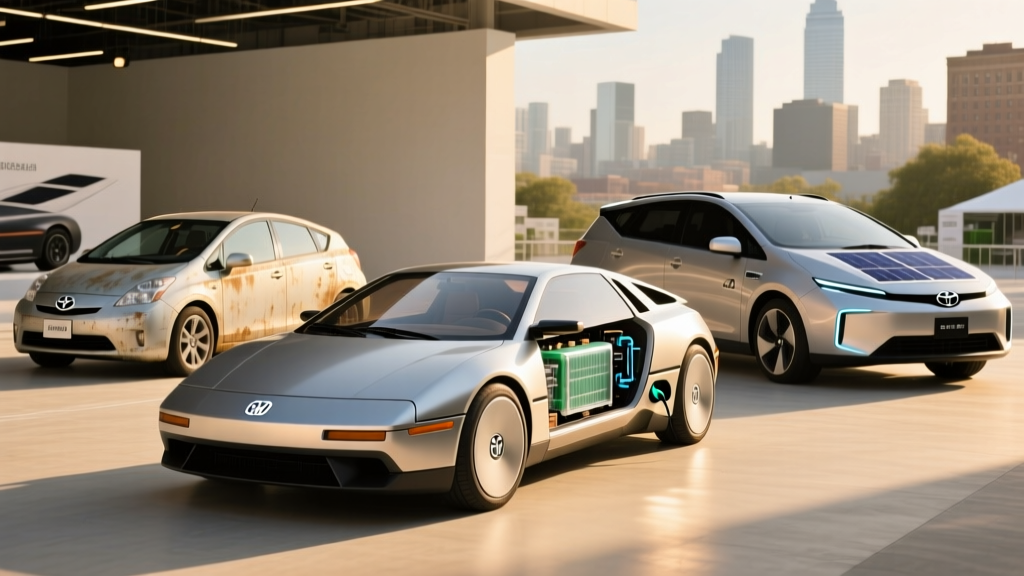
The modern American hybrid era began in December 1999, when Honda introduced the two-seat Insight to U.S. showrooms. Rated by the EPA at an astonishing 70 mpg city / 53 mpg highway (under the less stringent pre-2008 test cycle), the Insight used a 1.0-liter three-cylinder engine paired with a 10-kW electric motor and a nickel-metal hydride (NiMH) battery pack weighing just 62 pounds. Toyota followed seven months later with the first-generation Prius, a 42 mpg combined sedan that established the template for nearly every hybrid that followed: a planetary gearset blending engine and motor power seamlessly, regenerative braking to recapture energy, and a small battery that never needed a plug.
Ford joined the race in 2004 with the Escape Hybrid, the first hybrid SUV and the first American-branded hybrid to reach volume production. Its 2.3-liter Atkinson-cycle four-cylinder and 70-kW motor delivered 33 mpg combined — remarkable for a compact SUV of the era. Chrysler, then part of DaimlerChrysler, experimented with a mild-hybrid RAM pickup but never brought a full hybrid to market in those early years. The first-wave lesson was clear: hybrids worked best in stop-and-go city driving, where regenerative braking and engine-off coasting compounded fuel savings.
HEV vs PHEV: Understanding the Two Hybrid Paths
Before tracing the timeline further, it is essential to separate the two hybrid architectures that dominate the 2026 market.
Conventional Hybrid (HEV)
A conventional hybrid has a small battery (typically 1.0–2.0 kWh) that is recharged exclusively by the gasoline engine and regenerative braking. You never plug it in. The electric motor assists the engine during acceleration and can power the car at low speeds for short distances. Examples: Toyota RAV4 Hybrid, Honda CR-V Hybrid, Ford Maverick Hybrid.
Plug-in Hybrid (PHEV)
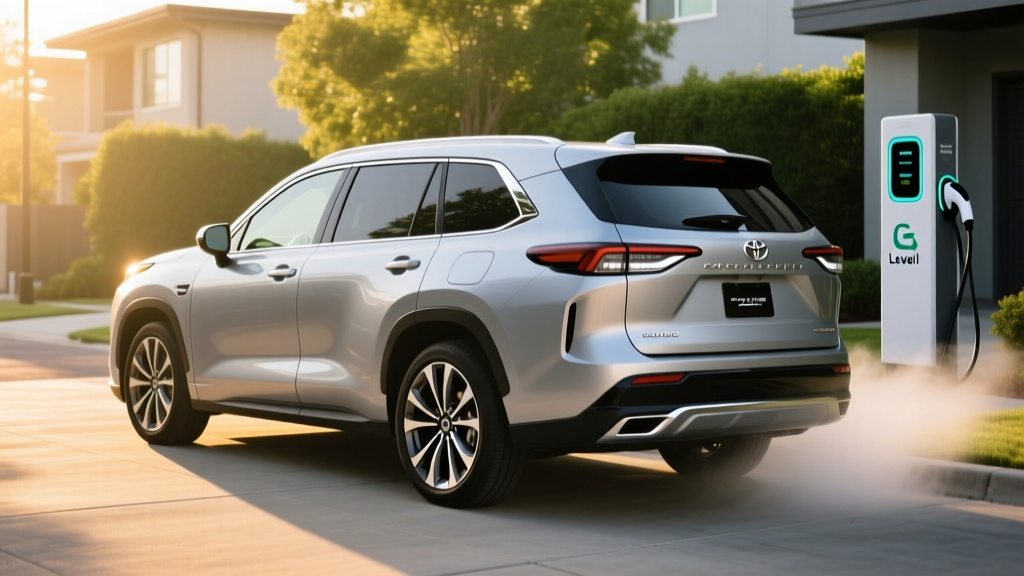
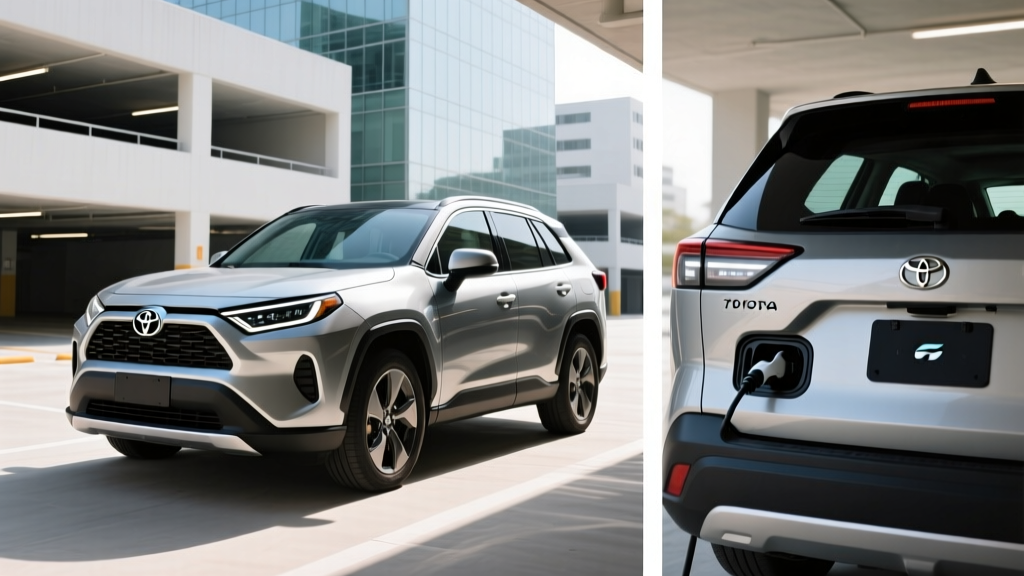
A plug-in hybrid carries a much larger battery (12–25 kWh usable in 2026 models) that can be recharged from a wall outlet or public charger. This enables 25–50 miles of pure electric driving before the gasoline engine starts. Once the battery is depleted, the car operates like a conventional hybrid. Examples: Toyota RAV4 Prime, Jeep Wrangler 4xe, Chrysler Pacifica Hybrid.
The Middle Era: Federal Policy, Lithium-Ion, and the PHEV Pivot (2005–2016)
The Energy Policy Act of 2005 introduced the first federal tax credits for hybrid buyers — up to $3,450 for qualifying models — and sparked a surge in hybrid adoption. Toyota's second-generation Prius (2004–2009) became a cultural icon, hitting 46 mpg combined under the revised EPA test and selling over 100,000 units annually in the U.S. by 2007. GM responded with the two-mode hybrid system in the Tahoe and Yukon SUVs, a sophisticated but expensive setup that improved highway fuel economy by roughly 25 percent but added nearly $7,000 to the sticker price.
The real inflection point came in 2010 with the Chevrolet Volt, America's first extended-range plug-in hybrid. The Volt carried a 16 kWh lithium-ion battery (the first Li-ion pack in a mass-market American car) and delivered 35 miles of electric-only range before a 1.4-liter engine acted as a generator. Unlike a pure BEV, the Volt eliminated range anxiety entirely. Ford followed in 2013 with the C-Max Energi and Fusion Energi PHEVs, each offering roughly 19 miles of electric range from a 7.6 kWh pack — modest by today's standards, but enough to prove that American automakers could engineer competitive plug-in powertrains.
During this period, battery chemistry shifted decisively from NiMH to lithium-ion. Li-ion cells offered roughly double the energy density (watt-hours per kilogram), enabling larger packs without prohibitive weight. By 2016, the second-generation Chevrolet Volt extended electric range to 53 miles with an 18.4 kWh pack, and the Hyundai Sonata PHEV (sold in the U.S.) delivered 27 electric miles. The PHEV formula was set: enough battery for the average American commute (the U.S. Census Bureau reports a median one-way commute of 26.4 miles), plus a gas engine for road trips.
2026 Snapshot: Where American Hybrids Stand Today
The 2026 model year offers the most capable lineup of American-branded hybrids and PHEVs in history. Below is a side-by-side look at three high-volume models that illustrate the current state of the art.
| Spec | 2026 Ford Maverick Hybrid (HEV) | 2026 Jeep Wrangler 4xe (PHEV) | 2026 Chrysler Pacifica Hybrid (PHEV) |
|---|---|---|---|
| Powertrain | 2.5L 4-cyl + 96-kW motor | 2.0L turbo 4-cyl + two motors | 3.6L V6 + two motors |
| Combined HP | 191 hp | 375 hp | 260 hp |
| Battery (usable) | 1.1 kWh (Li-ion) | 17.3 kWh (NMC Li-ion) | 16.0 kWh (NMC Li-ion) |
| EPA Combined MPG / MPGe | 37 mpg combined | 49 MPGe (elec+gas) / 20 mpg gas-only | 82 MPGe (elec+gas) / 30 mpg gas-only |
| EPA City / Highway | 40 city / 33 hwy | N/A (MPGe: 49 combined) | N/A (MPGe: 82 combined) |
| Electric-Only Range (PHEV) | N/A (HEV) | 22 miles | 32 miles |
| Total Range | ~500 miles | ~370 miles | ~430 miles |
| Level 2 Charge Time (10–100%) | N/A | ~2.0 hours (7.2 kW onboard) | ~2.0 hours (7.2 kW onboard) |
| DC Fast Charging | No | No | No |
| 0–60 mph | 7.5 sec (est.) | 6.0 sec | 7.1 sec |
| Base MSRP | $28,990 | $55,490 | $52,095 |
| Federal §30D Tax Credit | Not eligible (HEV) | Up to $3,750* | Up to $7,500* |
| Battery Warranty | 8 yr / 100,000 mi | 8 yr / 100,000 mi | 8 yr / 100,000 mi |
*Federal §30D credit eligibility depends on MSRP caps ($80,000 SUVs / $55,000 sedans), buyer income limits ($150K single / $300K joint), and critical-mineral/battery-sourcing requirements. Verify current rules at IRS.gov. Credit may be transferred to the dealer at point of sale under 2026 rules.
Fuel Economy in the Real World: EPA vs Actual MPG
One of the most consistent findings across two decades of hybrid ownership is that conventional hybrids often exceed their EPA city ratings in real-world stop-and-go driving, while highway fuel economy may fall slightly short. The reason is physics: regenerative braking recaptures kinetic energy that a gas car wastes as heat, and the more you brake, the more you recharge. In a 2025 long-term test of the Ford Maverick Hybrid, Car and Driver recorded 42 mpg over 10,000 miles of mixed suburban driving — 2 mpg above the EPA city sticker.
PHEVs introduce a different calculus. The EPA reports MPGe (miles per gallon equivalent) during the electric phase and separate mpg for gas-only operation. A Wrangler 4xe owner who charges nightly and commutes 18 miles may use zero gasoline for months, while one who never plugs in will see 20 mpg — worse than the non-hybrid Wrangler's 22 mpg combined, due to the 4xe's 800-pound battery penalty. The real-world fuel economy of a PHEV is therefore entirely dependent on charging behavior.
| Model | EPA Combined | Observed Real-World | Notes |
|---|---|---|---|
| Ford Maverick Hybrid | 37 mpg | 35–42 mpg | Higher in city; lower at sustained 80 mph |
| Toyota RAV4 Hybrid* | 39 mpg | 36–43 mpg | Strong regen in hilly terrain boosts city mpg |
| Chrysler Pacifica Hybrid (gas-only mode) | 30 mpg | 27–31 mpg | Heavy minivan; highway cruising hurts |
| Jeep Wrangler 4xe (gas-only mode) | 20 mpg | 17–21 mpg | Aerodynamics and weight are significant penalties |
*RAV4 Hybrid included as a market benchmark; manufactured by Toyota (Japan) but assembled in Kentucky and a top seller in the U.S.
Battery Longevity, Warranty, and Replacement Costs
Hybrid Battery Warranty Standard (2026)
Federal law mandates that hybrid and PHEV battery packs carry a minimum warranty of 8 years / 100,000 miles in all 50 states. In California Air Resources Board (CARB) states — which include CA, CO, CT, ME, MD, MA, NJ, NY, OR, RI, VT, and WA — that warranty extends to 10 years / 150,000 miles for emissions-related components, which many manufacturers interpret to include the hybrid battery.
Hybrid battery degradation has proven far less severe than early skeptics feared. Toyota reports that fewer than 1 percent of first-generation Prius packs required warranty replacement. A 2024 study by fueleconomy.gov found that 10-year-old HEV battery packs typically retain 85–92 percent of original capacity — more than sufficient for the assist-and-regen duty cycle of a conventional hybrid.
When replacement is necessary, costs in 2026 range from roughly $2,200 for a remanufactured NiMH pack (older Prius models) to $5,500–$8,000 for a new NMC lithium-ion PHEV battery from a dealer. Third-party hybrid-battery specialists offer refurbished packs for 40–60 percent less. For context, the average hybrid owner will spend $4,000–$6,000 less on fuel over eight years compared to a gas-only equivalent, meaning the battery replacement cost — if it ever arises — is largely offset by fuel savings.
Tax Credits and Incentives: What Applies in 2026
Conventional hybrids (HEVs) do not qualify for the federal §30D Clean Vehicle Credit. That credit is reserved for BEVs and PHEVs that meet battery-sourcing and critical-mineral thresholds. For 2026, qualifying PHEVs can receive up to $7,500, split into two components:
- $3,750 for meeting the critical-minerals requirement (minerals sourced from the U.S. or a free-trade-agreement partner)
- $3,750 for meeting the battery-component sourcing requirement (components manufactured or assembled in North America)
Many PHEVs from American brands qualify for only one of these two components due to supply-chain constraints, resulting in a $3,750 credit rather than the full $7,500. Buyers must also meet income caps ($150,000 single / $225,000 head of household / $300,000 joint) and the vehicle must be under the MSRP cap ($80,000 for SUVs and pickups / $55,000 for sedans). Under 2026 rules, the credit can be transferred to the dealer at the point of sale, reducing the purchase price directly rather than waiting for a tax refund. Always verify eligibility on the official IRS Clean Vehicle Credits page and consult a tax professional for your specific situation.
Some states layer on additional incentives. Colorado, for example, offers a $2,500 state credit for PHEVs through 2028. Check your state energy office or the Alternative Fuels Data Center for current local programs.
Hybrid vs PHEV vs EV: Which Powertrain Fits You?
Choose a Conventional Hybrid (HEV) If:
- You cannot install a home charger (apartment, street parking, no garage)
- Your budget is under $35,000 and you want maximum fuel savings per dollar
- You drive primarily in city/suburban traffic where regenerative braking shines
- You want zero change to your fueling routine — just fill up at gas stations
- Example: 2026 Ford Maverick Hybrid at $28,990, 37 mpg combined
Choose a Plug-in Hybrid (PHEV) If:
- You can charge at home (Level 1 120V outlet is sufficient for overnight)
- Your daily round-trip commute is under 30–40 miles
- You want electric daily driving but need gas flexibility for road trips
- You want to capture a federal tax credit ($3,750–$7,500)
- Example: 2026 Chrysler Pacifica Hybrid, 32 miles electric, $52,095 base
Choose a Full EV (BEV) If:
- You have reliable home Level 2 charging (240V)
- Your daily driving is under 250 miles and you road-trip infrequently
- You want the lowest per-mile fuel cost and minimal maintenance
- You want the full $7,500 federal credit on qualifying models
- Example: 2026 Tesla Model Y, 320 miles EPA range, ~$44,990 base
Quick Decision Framework
No home charging access? → HEV. You will still save 30–50 percent on fuel vs a gas car without ever plugging in.
Home charging + short commute + road trips? → PHEV. You get the best of both worlds and a tax credit.
Home charging + mostly local driving? → BEV. Lowest operating cost, longest range, and the strongest credit eligibility.
Reliability Track Record: What Two Decades of Data Show
Hybrid powertrains have consistently ranked among the most reliable in the industry. Consumer Reports' 2025 Annual Auto Reliability Survey placed the Toyota Prius, RAV4 Hybrid, and Camry Hybrid in the top 10 most reliable vehicles across all powertrains. The reasons are mechanical as much as electrical: the Atkinson-cycle engines in hybrids run at lower stress, the e-CVT transmissions have no traditional gears or clutch packs to wear, and regenerative braking reduces wear on friction brake pads (many hybrid owners report original brake pads at 80,000 miles).
American-brand hybrids have improved markedly. The Ford Maverick Hybrid and Escape Hybrid earned above-average reliability scores in 2025, a significant improvement from the early Ford Fusion Hybrid years. The Jeep Wrangler 4xe has been more mixed — its complex PHEV system added to the Wrangler's already below-average reliability rating, with owners reporting occasional issues with the onboard charger and high-voltage cooling system. The Chrysler Pacifica Hybrid has performed closer to average, with the main complaint being stow-and-go seating mechanisms rather than the hybrid powertrain itself.
The Road Ahead: Hybrids in the Late 2020s and Beyond
The history of American hybrid cars is still being written. Ford has announced a next-generation PHEV truck platform for 2028 with a projected 50-mile electric range and DC fast-charging capability — a first for an American PHEV pickup. GM is investing $3.5 billion in U.S. battery plants to support both BEVs and PHEVs through 2030. Toyota, the hybrid pioneer, continues to expand its lineup and has committed to offering a hybrid or PHEV variant of every model it sells in the U.S. by 2027.
For the buyer reading this in 2026, the takeaway is that hybrids are no longer a compromise — they are a mature, proven technology with predictable costs, strong reliability, and genuine fuel savings. Whether you choose a $29,000 HEV that sips 37 mpg in traffic or a $52,000 PHEV minivan that handles school drop-offs on electricity and cross-country vacations on gasoline, you are participating in a 25-year American engineering tradition that has saved billions of gallons of fuel and paved the way for the fully electric future now unfolding.
Frequently Asked Questions
How many MPG does a typical American hybrid get in 2026?
The Ford Maverick Hybrid leads American-brand HEVs at 37 mpg combined (40 city / 33 highway). The Toyota RAV4 Hybrid, assembled in Kentucky, achieves 39 mpg combined. PHEVs report MPGe during the electric phase (e.g., Chrysler Pacifica Hybrid at 82 MPGe) and separate mpg in gas-only mode (30 mpg combined).
How far can a 2026 PHEV go on electric only?
Current American-brand PHEVs range from 22 miles (Jeep Wrangler 4xe) to 32 miles (Chrysler Pacifica Hybrid). The Toyota RAV4 Prime, while Japanese-branded, is a popular benchmark at 42 miles. For context, the average American one-way commute is 26.4 miles, so most PHEVs can cover a full commute on electricity alone.
Do conventional hybrids need to be plugged in?
No. A conventional hybrid (HEV) recharges its small battery entirely through the gasoline engine and regenerative braking. You fuel it exactly like a normal gas car. Only plug-in hybrids (PHEVs) benefit from — and require — external charging to realize their electric-range advantage.
Is hybrid battery replacement expensive?
Out-of-warranty hybrid battery replacement costs between $2,200 (remanufactured NiMH) and $8,000 (new NMC lithium-ion PHEV pack) in 2026. However, federal law mandates an 8-year/100,000-mile warranty (10 years/150,000 miles in CARB states), and real-world data shows most packs last well beyond the warranty period with minimal degradation.
Does a hybrid qualify for the $7,500 federal tax credit?
Only plug-in hybrids (PHEVs) and full EVs qualify for the §30D Clean Vehicle Credit — conventional hybrids do not. Even among PHEVs, the credit ranges from $3,750 to $7,500 depending on battery-sourcing compliance, and buyers must meet income and MSRP caps. Check the IRS Clean Vehicle Credits page for current eligibility.
Are hybrids more reliable than gas-only cars?
On average, yes. Hybrid powertrains put less stress on the engine, eliminate traditional transmissions (using e-CVTs instead), and reduce brake wear through regenerative braking. Consumer Reports and J.D. Power data consistently place hybrid models at or above average reliability, particularly Toyota and Honda hybrids. American-brand hybrids from Ford have also improved significantly in recent model years.