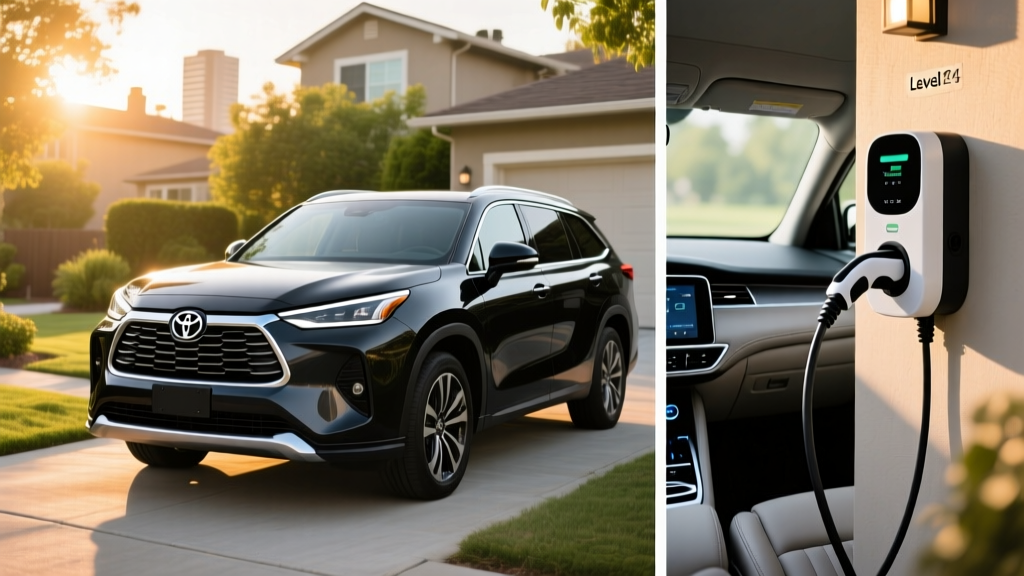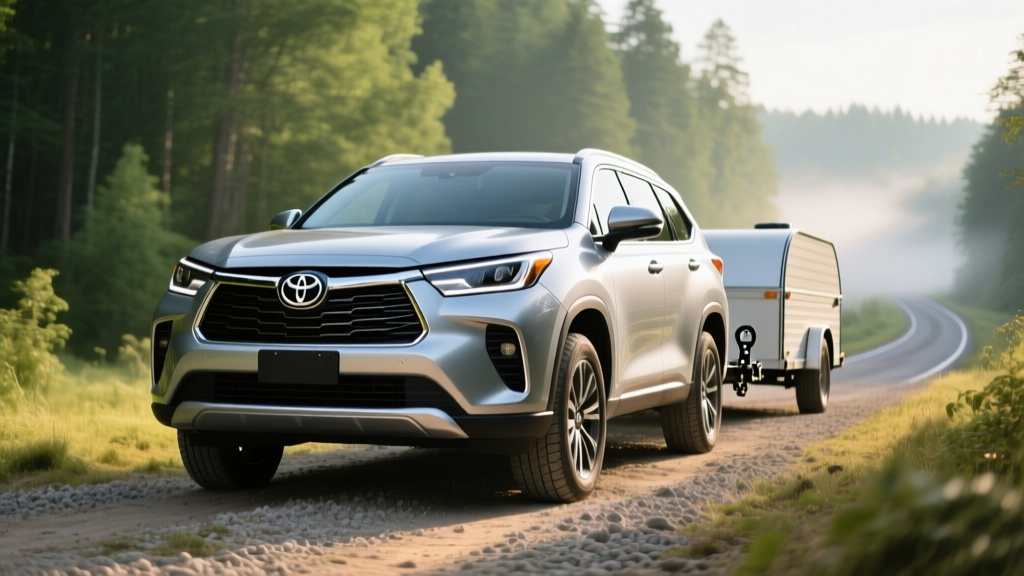
Family haulers that sip fuel and pull a trailer are a narrow category, and the Toyota Highlander Hybrid has owned it for years. If you've searched for the Highlander Hybrid towing capacity hoping for a 5,000-lb rating, you'll need to adjust expectations — but what you get in return is a three-row SUV that achieves up to 35 MPG combined while still managing a respectable 3,500-pound tow rating.
For 2026, Toyota continues the Highlander Hybrid with its proven 2.5-liter four-cylinder hybrid powertrain, standard electronic on-demand AWD on most trims, and no plug-in variant. That means no federal tax credit, but also no charging cords, no range anxiety, and a battery system with one of the strongest reliability records in the industry.
Highlander Hybrid Towing Capacity: The Hard Numbers
The 2026 Toyota Highlander Hybrid is rated to tow 3,500 pounds across all trims when properly equipped with the factory tow package. This applies whether you choose the LE, XLE, Limited, or Platinum trim. The rating is consistent with the previous model years and reflects the hybrid powertrain's torque delivery and cooling capacity.
| Specification | Value |
|---|---|
| Max Towing Capacity | 3,500 lbs (all trims, with tow package) |
| Max Payload | ~1,385 lbs (varies by trim) |
| Tow Package Required | Yes — includes hitch receiver, wiring harness, engine oil cooler |
| Trailer Sway Control | Standard |
| Drivetrain | Electronic On-Demand AWD (standard on most trims) |
What 3,500 lbs actually gets you: a small teardrop camper (1,500–2,500 lbs), a lightweight pop-up trailer, a pair of jet skis on a single-axle trailer, or a small utility trailer loaded with landscaping materials. It will not handle a full-size travel trailer, a large boat on a tandem-axle trailer, or a horse trailer. If you regularly tow above 3,500 lbs, you'll need to look at the (now-discontinued) V6 Highlander, a body-on-frame SUV like the Toyota 4Runner, or a full-size truck.
Fuel Economy: EPA Ratings vs. Real-World MPG
The Highlander Hybrid's headline number is its efficiency. For a three-row SUV with AWD, the EPA figures are genuinely impressive.
| Drivetrain | City | Highway | Combined |
|---|---|---|---|
| FWD (LE trim) | 36 MPG | 35 MPG | 36 MPG |
| AWD (LE, XLE, Limited, Platinum) | 35 MPG | 34 MPG | 35 MPG |
Real-world expectation: Conventional hybrids like the Highlander Hybrid tend to exceed their EPA city ratings in stop-and-go driving, where regenerative braking and electric-motor assist do the most work. Owners regularly report 37–39 MPG in city commuting. Highway driving at 75+ MPH typically yields 30–32 MPG, particularly in cold weather or with a roof box installed. Combined real-world usage for most owners lands between 33–37 MPG, per data aggregated on fueleconomy.gov.
For comparison, the non-hybrid Highlander (when it was last offered with the turbocharged 2.4L four-cylinder) achieved around 24 MPG combined. That's an 11-MPG advantage for the hybrid — translating to roughly $500–$700 per year in fuel savings for a driver covering 15,000 miles annually at $3.50/gallon.
Powertrain: How the Hybrid System Delivers 243 HP
The 2026 Highlander Hybrid pairs a 2.5-liter Atkinson-cycle four-cylinder gasoline engine with two front-mounted electric motor-generators and a third motor on the rear axle (for AWD models). There is no traditional driveshaft to the rear wheels — the rear axle is powered entirely by the electric motor, which Toyota calls "Electronic On-Demand AWD."
| Component | Specification |
|---|---|
| Gas Engine | 2.5L inline-4, Atkinson cycle |
| Engine Output | 184 HP / 175 lb-ft torque |
| Front Electric Motors | Two motor-generators (MG1, MG2) |
| Rear Electric Motor (AWD) | 40 HP / 89 lb-ft |
| Combined System Output | 243 HP |
| Transmission | eCVT (planetary gearset, no fixed gears) |
| Hybrid Battery | 1.87 kWh nickel-metal hydride (NiMH) |
| 0–60 MPH | ~7.8 seconds |
Key distinction — HEV vs. PHEV: The Highlander Hybrid is a conventional hybrid (HEV), not a plug-in hybrid. It cannot be plugged in. The small 1.87 kWh battery recharges through regenerative braking and the gas engine. You will never see an "electric-only range" figure because the vehicle is not designed to drive on battery power alone for any meaningful distance — the electric motors assist the gas engine, they don't replace it. If you want plug-in capability in a Toyota three-row SUV, the Toyota Grand Highlander Hybrid (which also uses a hybrid system but offers more space) or the plug-in RAV4 Prime (two-row, 42 miles electric-only) are the closest alternatives in Toyota's lineup.
HEV vs. PHEV vs. Full EV: Which Fits Your Situation?
Buyers cross-shopping the Highlander Hybrid often wonder whether they should go further into electrification. Here's a practical decision framework.
| Factor | HEV (Highlander Hybrid) | PHEV (e.g., Kia Sorento PHEV) | Full EV (e.g., Kia EV9) |
|---|---|---|---|
| Plug-in Required? | No | Yes (for max benefit) | Yes |
| Electric-Only Range | None meaningful | 30–35 miles typical | 250–300+ miles |
| Home Charging Needed? | No | Recommended (Level 2) | Essential |
| Towing Capacity | 3,500 lbs | 2,000–3,500 lbs (varies) | 2,000–5,000 lbs (varies) |
| Fuel Cost (15K mi/yr) | ~$1,500–$1,700 | ~$800–$1,200 | ~$500–$700 (home charging) |
| Federal Tax Credit | None | Up to $7,500 (if eligible) | Up to $7,500 (if eligible) |
| Best For | No home charging, frequent towing, road trips | Home charging + short commutes + occasional road trips | Home charging, low towing needs, daily commuting |
- You cannot install a Level 2 home charger (apartment, street parking, HOA restriction)
- You tow 2,000–3,500 lbs regularly and don't want range loss anxiety
- You take long road trips through rural areas with sparse charging infrastructure
- You want maximum simplicity — no charging cables, no apps, no preconditioning
- You have home charging and a commute under 35 miles (PHEV covers it on electricity)
- You want the lowest possible operating cost and rarely tow
- You qualify for the federal tax credit, which can offset a PHEV/EV's higher purchase price
Pricing, Trims, and Tax Credit Eligibility
The 2026 Toyota Highlander Hybrid starts at approximately $41,715 for the LE FWD trim and climbs to around $54,000 for the Platinum AWD. All trims share the same powertrain and 3,500-lb tow rating.
| Trim | Drivetrain | Approx. MSRP |
|---|---|---|
| LE | FWD | $41,715 |
| LE | AWD | $43,315 |
| XLE | AWD | $46,565 |
| Limited | AWD | $50,315 |
| Platinum | AWD | $54,065 |
Federal tax credit: The Highlander Hybrid does not qualify for the IRS §30D Clean Vehicle Credit. That credit applies only to plug-in electric vehicles (PHEVs and BEVs) with a battery capacity of at least 7 kWh. The Highlander Hybrid's 1.87 kWh NiMH battery is far below the threshold. There is no federal incentive for conventional hybrids. Some states or local utilities may offer minor rebates for hybrid purchases — check your state energy office or utility provider for current programs.
Battery Longevity, Warranty, and Replacement Cost
Hybrid battery longevity is consistently the top concern for buyers considering a used or new Highlander Hybrid. Toyota's track record here is among the best in the industry.
- Coverage: 10 years or 150,000 miles (whichever comes first)
- Applies to: Hybrid battery pack, hybrid control module, inverter
- Transferable: Yes — transfers to subsequent owners automatically
- Capacity threshold: Toyota warrants against failure, not a specific degradation percentage (unlike EV batteries)
Real-world lifespan data: Toyota's NiMH hybrid batteries have demonstrated remarkable longevity. Data from fleet operators, taxi services, and high-mileage owners shows many Highlander Hybrid battery packs lasting 200,000–300,000 miles before requiring replacement. The NiMH chemistry is less energy-dense than the lithium-ion packs in EVs, but it is extremely tolerant of the shallow charge-discharge cycles that characterize hybrid operation — the battery rarely drops below 40% or above 80% state of charge, which minimizes degradation.
Replacement cost if out of warranty: A new OEM hybrid battery for the Highlander Hybrid typically costs $3,000–$4,500 installed at a Toyota dealer. Refurbished or reconditioned packs from third-party specialists run $1,500–$2,500 installed. Individual cell-module replacement (only the degraded modules) can cost as little as $500–$1,000 at a hybrid specialist shop. Compare this to EV battery replacements, which often exceed $10,000–$15,000.
Reliability and Ownership Costs
The Highlander Hybrid benefits from one of the most mature hybrid systems on the market. Toyota's Hybrid Synergy Drive has been in continuous production since the 1997 Prius, and the current-generation 2.5L system has been in the Highlander since the 2020 model year with minimal changes.
According to IIHS and long-term owner surveys, common maintenance items remain conventional: brake pads last significantly longer than in gas-only vehicles (regenerative braking reduces wear), the eCVT has no clutch packs or bands to wear out, and the gas engine runs the low-stress Atkinson cycle. The primary cost consideration is that AWD models have an additional electric motor and inverter at the rear axle, which adds a component that could theoretically require service — though failure rates are extremely low.
5-year estimated cost of ownership for a Highlander Hybrid XLE AWD (15,000 miles/year, $3.50/gallon):
- Fuel: ~$8,200 (at 35 MPG combined)
- Insurance: ~$8,500–$10,000 (varies by state and driver)
- Maintenance: ~$3,000–$3,500 (oil changes, tires, brakes, cabin filter)
- Depreciation: ~$18,000–$22,000 (Highlander Hybrids hold value well)
- Total: ~$37,700–$43,700 over 5 years
Pros and Cons at a Glance
Pros
- 35 MPG combined in a three-row AWD SUV — class-leading efficiency
- 3,500-lb tow rating covers light trailers, boats, and campers
- No plug-in charging required — zero lifestyle adjustment
- 10-year / 150,000-mile hybrid battery warranty
- Strong resale value; Highlander Hybrids hold price well in the used market
- Proven, mature hybrid system with low failure rates
- Trailer sway control standard
Cons
- 3,500-lb tow limit falls short of body-on-frame SUVs (4Runner: 5,000 lbs)
- No federal tax credit (conventional hybrid, not PHEV/BEV)
- Four-cylinder engine can sound strained under hard acceleration or heavy load
- Towing drops fuel economy to 18–22 MPG
- Third-row space is tight for adults on long trips
- No plug-in hybrid variant available for electric-only commuting
Frequently Asked Questions
How many MPG does the 2026 Highlander Hybrid get?
The EPA rates the AWD Highlander Hybrid at 35 city / 34 highway / 35 combined MPG. The FWD LE trim achieves 36 combined. In real-world driving, owners often exceed the city rating (37–39 MPG in stop-and-go traffic) but fall short on the highway (30–32 MPG at 75+ MPH). Towing drops economy to roughly 18–22 MPG.
Can the Highlander Hybrid tow a camper trailer?
Yes, within limits. The 3,500-lb tow rating handles teardrop campers (typically 1,500–2,500 lbs), pop-up tent trailers, and small hybrid travel trailers. It cannot tow most full-size travel trailers, which often weigh 4,500–7,000 lbs loaded. Always check your specific trailer's GVWR and ensure the combined weight of trailer plus cargo stays under 3,500 lbs.
Is the Highlander Hybrid a plug-in hybrid?
No. The Highlander Hybrid is a conventional hybrid (HEV). It cannot be plugged in and has no meaningful electric-only driving range. The small 1.87 kWh battery charges through regenerative braking and the gas engine. Toyota does not currently offer a plug-in hybrid version of the Highlander.
Does the Highlander Hybrid qualify for a tax credit?
No. The federal §30D Clean Vehicle Credit applies only to plug-in vehicles (PHEVs and BEVs) with battery capacity of at least 7 kWh. The Highlander Hybrid's 1.87 kWh battery does not qualify. Check with your state energy office or utility for any local hybrid rebates, which vary by jurisdiction.
How long will the Highlander Hybrid battery last?
Toyota's NiMH hybrid batteries have demonstrated lifespans of 200,000–300,000+ miles in real-world use. The battery is covered by a 10-year / 150,000-mile warranty. If replacement is eventually needed out of warranty, expect $3,000–$4,500 for a new OEM pack or $1,500–$2,500 for a refurbished unit. Individual cell-module repair can cost as little as $500–$1,000.
How does Highlander Hybrid towing compare to a gas-only SUV?
The non-hybrid turbocharged Highlander (when last offered) was rated for 5,000 lbs of towing — 1,500 lbs more than the hybrid. If you regularly tow between 3,500 and 5,000 lbs, the hybrid won't work. But if your towing stays under 3,500 lbs, the hybrid gives you identical capability with 11+ MPG better fuel economy in daily driving.
Is the Highlander Hybrid reliable?
Yes. Toyota's hybrid system is one of the most proven in the automotive industry, with nearly 30 years of continuous refinement. The eCVT transmission has no traditional wear items (no clutch packs, bands, or torque converter), regenerative braking extends brake-pad life, and the Atkinson-cycle engine runs under lower thermal stress. The Highlander Hybrid consistently earns above-average reliability scores from owner surveys and receives strong safety ratings from the NHTSA.
Sources: EPA fuel economy data via fueleconomy.gov; Toyota Motor Corporation official specifications; IRS §30D Clean Vehicle Credit guidelines via irs.gov.