Quick Verdict: The Highlander Hybrid's Value Proposition
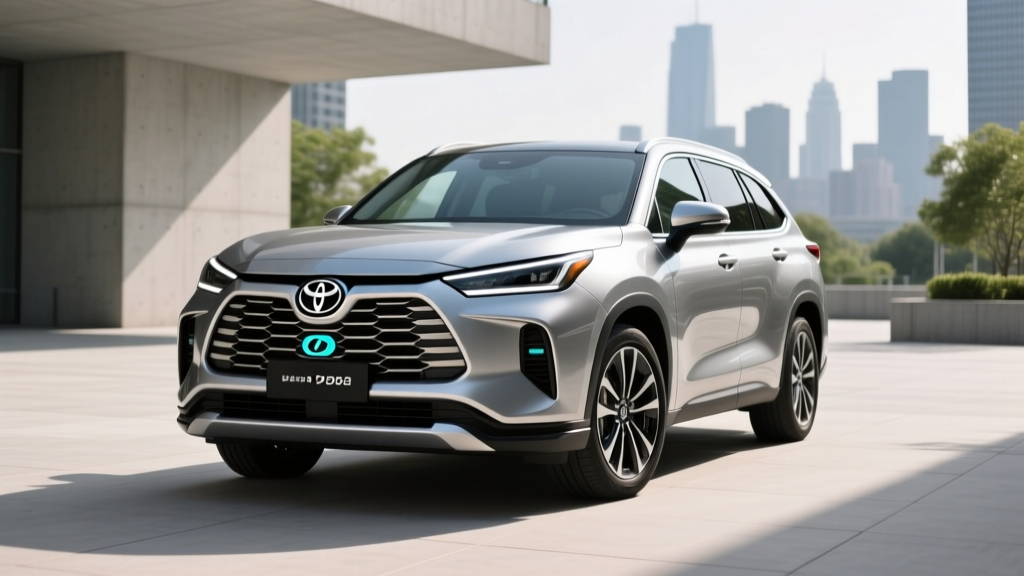
The 2026 Toyota Highlander Hybrid occupies a specific niche: a three-row, eight-passenger SUV that delivers mid-30s fuel economy without requiring a plug, a garage charger, or any change in driving habits. Starting at an MSRP of $42,320 (including destination) for the LE trim and climbing to $53,170 for the Platinum, the Highlander Hybrid commands a premium over its gas-only sibling but pays that back at the pump over a few years of typical driving.
This is a conventional hybrid electric vehicle (HEV), not a plug-in hybrid. You never plug it in. The battery charges through regenerative braking and the gasoline engine. If you're looking for electric-only driving, the RAV4 Prime is Toyota's PHEV offering — the Highlander lineup does not currently include a plug-in variant.
| Trim | MSRP (incl. destination) | Key Additions |
|---|---|---|
| LE | $42,320 | Toyota Safety Sense 3.0, 8-inch display, tri-zone climate |
| XLE | $45,770 | SofTex seats, power liftgate, 20-inch wheels, wireless charging |
| Limited | $49,070 | Leather, 12.3-inch touchscreen, panoramic roof, JBL audio |
| Platinum | $53,170 | Head-up display, 360° camera, ventilated front seats, captain's chairs std. |
AWD (Toyota calls it Electronic On-Demand AWD, using a separate rear electric motor) is a $1,600 add on LE and XLE trims, and standard on Limited and Platinum. All trims seat up to eight with a second-row bench; captain's chairs reduce capacity to seven and are optional on XLE and Limited, standard on Platinum.
EPA Fuel Economy and Real-World MPG
The Highlander Hybrid's powertrain pairs a 2.5-liter four-cylinder engine with two front electric motors (three total with AWD's rear motor). The result is a combined 243 horsepower and EPA ratings that are remarkably consistent across city and highway driving.
| Drivetrain | City | Highway | Combined |
|---|---|---|---|
| FWD | 36 MPG | 35 MPG | 36 MPG |
| AWD (Electronic On-Demand) | 35 MPG | 34 MPG | 35 MPG |
Source: EPA fueleconomy.gov
Toyota's hybrid system excels in city driving, where regenerative braking and electric-motor assist do the heavy lifting. Owners consistently report 37–40 MPG in mixed city driving, exceeding the EPA city estimate. Highway-only trips at 75+ MPH typically yield 30–33 MPG, below the EPA highway sticker. In cold weather (below 30°F), expect a 5–10% drop as the engine runs more frequently for cabin heat. A realistic combined figure for mixed driving in most climates: 33–36 MPG.
With a 17.9-gallon fuel tank, real-world total range sits between 590 and 645 miles depending on driving conditions — enough for most road trips without a mid-journey fuel stop.
Powertrain and Driving Performance
The Highlander Hybrid uses Toyota's fourth-generation hybrid system, which is fundamentally different from the turbocharged four-cylinder in the gas-only Highlander. Here's how the numbers stack up:
| Specification | Highlander Hybrid | Gas Highlander (2.4L Turbo) |
|---|---|---|
| Engine | 2.5L inline-4 + electric motors | 2.4L turbocharged inline-4 |
| Combined Horsepower | 243 HP | 265 HP |
| Transmission | eCVT (planetary gearset) | 8-speed automatic |
| 0–60 MPH | ~7.9 seconds | ~7.0 seconds |
| Towing Capacity | 3,500 lbs | 5,000 lbs |
| EPA Combined MPG | 35–36 MPG | 24 MPG |
The hybrid is roughly one second slower to 60 MPH than the gas model, and towing capacity drops by 1,500 pounds. If you're towing a boat or camper over 3,500 lbs regularly, the gas powertrain is the pragmatic choice. For everyone else, the hybrid's smooth, linear acceleration and seamless stop-start behavior make it the more refined daily driver.
The eCVT is not a belt-driven CVT — it's a planetary gearset that blends engine and motor power without fixed gear ratios. There are no rubber-band sensations or droning. Acceleration feels direct, if not sporty.
Hybrid Battery: Warranty, Longevity, and Replacement Cost
The Highlander Hybrid uses a 1.87 kWh nickel-metal hydride (NiMH) battery pack mounted beneath the second-row seats. This is a small battery by EV standards — it's designed for frequent shallow charge/discharge cycles, not long electric-only range. The battery never fully charges or fully depletes; the hybrid system keeps it in a 40–80% state-of-charge window to maximize lifespan.
Toyota covers the hybrid battery for 10 years or 150,000 miles (whichever comes first) on 2020-and-newer models, transferable to subsequent owners. Hybrid system components (inverter, motors, control module) carry the same 10-year/150,000-mile coverage. This is among the strongest hybrid battery warranties in the segment.
Based on long-term data from Toyota's hybrid fleet (Prius, Camry Hybrid, RAV4 Hybrid), hybrid battery replacement before 200,000 miles is uncommon. When replacement is needed, a new OEM hybrid battery for the Highlander runs approximately $3,000–$4,500 including labor at a dealership. Refurbished or aftermarket options can reduce that to $1,500–$2,500. For context, that's roughly equivalent to 2–3 years of fuel savings the hybrid provides over the gas model.
Highlander Hybrid vs. PHEV vs. Full EV: Which Fits You?
The Highlander Hybrid is an HEV — it runs on gasoline, recovers energy through braking, and requires zero plug-in infrastructure. But how does it compare to plug-in hybrids and full battery-electric vehicles for a three-row family hauler?
| Factor | Highlander Hybrid (HEV) | Typical PHEV SUV | Full EV (e.g., Kia EV9) |
|---|---|---|---|
| Plug-in Required? | No | Yes (for EV range) | Yes (always) |
| Electric-Only Range | 0 miles | 30–45 miles | 250–300+ miles |
| Home Charging Needed? | No | Recommended (Level 2) | Essential (Level 2) |
| Fuel Cost (annual, 15K mi) | ~$1,500–$1,800 | ~$800–$1,400 | ~$500–$900 |
| MSRP Range | $42,320–$53,170 | $50,000–$65,000 | $55,000–$75,000 |
| Federal Tax Credit (§30D) | Not eligible | Up to $7,500 (if eligible) | Up to $7,500 (if eligible) |
| Maintenance | Standard (oil, filters) | Standard (oil, filters) | Minimal (no oil, fewer fluids) |
Choose the Highlander Hybrid (HEV) if: You don't have reliable home charging access, you take frequent long road trips, you want three rows under $50K, and you prefer the simplicity of a gas-and-go vehicle with excellent fuel economy.
Choose a PHEV (like the Chrysler Pacifica Hybrid or Volvo XC90 Recharge) if: You can charge at home, your daily commute is under 40 miles, and you want electric-only weekday driving with gas flexibility for weekend trips.
Choose a full BEV (like the Kia EV9 or Rivian R1S) if: You have Level 2 home charging, you want to eliminate gas entirely, you drive under 300 miles daily, and you're willing to pay a higher upfront price for lower running costs.
Tax Credit Eligibility: What the Highlander Hybrid Does and Doesn't Qualify For
The Highlander Hybrid is a conventional HEV, which means it does not qualify for the federal §30D Clean Vehicle Credit (up to $7,500). That credit is reserved for plug-in vehicles — BEVs and PHEVs — that meet battery sourcing, MSRP caps, and buyer income requirements as defined by the IRS.
However, some states offer incentives for conventional hybrids or for fuel-efficient vehicles more broadly. These vary significantly by jurisdiction and change frequently, so check your state's energy or DMV website for current programs. A few states have offered rebates or reduced registration fees for high-MPG vehicles, but these are the exception rather than the rule.
- Eligible vehicles: BEVs and PHEVs only (not conventional hybrids)
- MSRP caps: $80,000 for SUVs/pickups/vans; $55,000 for sedans
- Buyer income caps: $300K joint / $225K head of household / $150K single (MAGI)
- Battery sourcing: Critical minerals and battery components must meet phased-in domestic/FHA-partner sourcing thresholds
- Point-of-sale transfer: Eligible buyers can transfer the credit to the dealer at purchase for an immediate price reduction
Consult a tax professional for your specific eligibility. Rules are subject to change.
Ownership Costs: 5-Year Projection
To understand whether the Highlander Hybrid's MSRP premium over the gas model pays off, here's a simplified five-year cost comparison assuming 15,000 miles per year, $3.50/gallon regular fuel, and no major repairs beyond warranty coverage.
| Category | Highlander Hybrid XLE AWD | Gas Highlander XLE AWD (2.4T) |
|---|---|---|
| MSRP | $47,370 | $44,670 |
| Fuel (5 years, 75K miles) | ~$8,100 | ~$12,500 |
| Maintenance (est.) | ~$3,200 | ~$3,600 |
| Insurance (est. avg.) | ~$9,500 | ~$9,200 |
| 5-Year Total (before depreciation) | ~$68,170 | ~$69,970 |
| Fuel Savings (Hybrid) | ~$4,400 over 5 years | |
The hybrid's $2,700 MSRP premium is recovered in fuel savings within roughly 3 years of average driving. Beyond that, the hybrid continues to save money. Maintenance costs are marginally lower for the hybrid because regenerative braking reduces brake pad wear and the engine operates under less stress. Insurance tends to be slightly higher for the hybrid due to the higher replacement cost of hybrid components.
Depreciation data from sources like Kelley Blue Book and iSeeCars consistently shows the Highlander Hybrid retaining value well — often outperforming the gas variant at resale, which further improves the ownership equation.
Pros and Cons
Pros
- 35–36 MPG combined in a three-row SUV — class-leading efficiency
- No plug-in charging required; works with existing gas infrastructure
- 10-year/150,000-mile hybrid battery warranty
- Strong resale value and Toyota reliability track record
- Smooth, quiet powertrain with seamless stop-start
- Toyota Safety Sense 3.0 standard on all trims
Cons
- No federal tax credit eligibility (HEV, not PHEV/BEV)
- Towing limited to 3,500 lbs (gas model tows 5,000)
- Slower acceleration than gas model (~7.9s vs ~7.0s to 60)
- MSRP premium of ~$2,700 over equivalent gas trim
- Third row is tight for adults on longer trips
- Infotainment system lags behind competitors in responsiveness
Frequently Asked Questions
How many MPG does the Highlander Hybrid actually get?
The EPA rates the FWD Highlander Hybrid at 36 city / 35 highway / 36 combined, and the AWD at 35/34/35. In real-world mixed driving, most owners see 33–36 MPG combined. City-heavy routes can push above 38 MPG thanks to the hybrid system's regenerative braking and electric-motor assist at low speeds. Highway-only driving at higher speeds typically returns 30–33 MPG. Source: fueleconomy.gov
Does the Highlander Hybrid need to be plugged in?
No. The Highlander Hybrid is a conventional hybrid (HEV). Its 1.87 kWh battery charges entirely through regenerative braking and the gasoline engine. You fuel it like any other car at any gas station. There is no charging port, no plug, and no electric-only driving mode.
Is the Highlander Hybrid reliable, and what does a battery replacement cost?
Toyota's hybrid system is one of the most proven in the industry, with millions of units on the road since the 2001 Prius. The Highlander Hybrid's battery is covered by a 10-year/150,000-mile warranty. Full replacement, if needed outside warranty, costs approximately $3,000–$4,500 at a dealership (OEM) or $1,500–$2,500 for refurbished options. Most Toyota hybrid batteries last 200,000+ miles without replacement.
Does the Highlander Hybrid qualify for any tax credits?
The Highlander Hybrid does not qualify for the federal §30D Clean Vehicle Credit because it is a conventional hybrid, not a plug-in vehicle. The §30D credit (up to $7,500) applies only to BEVs and PHEVs meeting battery sourcing, MSRP, and buyer income requirements. Some states may offer smaller incentives for high-efficiency vehicles — check your state energy office for current programs.
Is there a plug-in hybrid (PHEV) version of the Highlander?
As of the 2026 model year, Toyota does not offer a Highlander PHEV. The RAV4 Prime is Toyota's plug-in hybrid SUV, but it has only two rows. If you need three rows and plug-in capability, competitors include the Chrysler Pacifica Hybrid (minivan, 32 miles EV range) or the Volvo XC90 Recharge (35 miles EV range, premium pricing).
How does the Highlander Hybrid compare to the gas Highlander in daily driving?
The hybrid is quieter at low speeds, smoother during stop-and-go traffic (the engine shuts off at stops), and significantly cheaper to fuel. You sacrifice about one second in 0–60 acceleration and 1,500 lbs of towing capacity. For commuting, school runs, and road trips without a trailer, the hybrid is the better daily experience. For frequent towing, the gas model's extra torque and 5,000-lb capacity make it the practical pick.