Quick Verdict: The Grand Highlander Hybrid Platinum at Maximum Efficiency
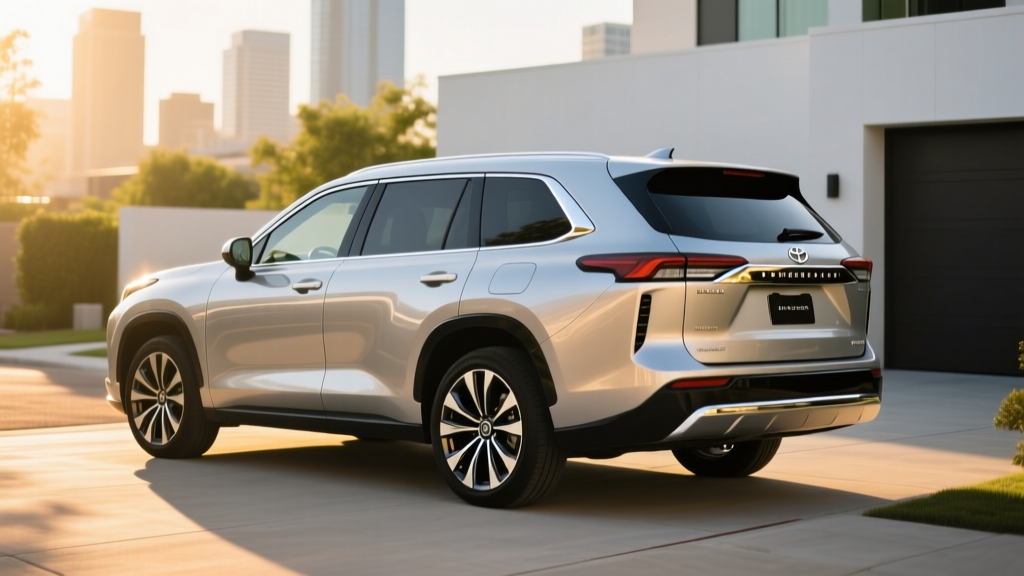
The Toyota Grand Highlander Hybrid has carved out a distinct niche since its launch: three-row family hauling with hybrid efficiency that no full-size SUV has matched. For 2026, the Grand Highlander Hybrid continues to offer two distinct hybrid powertrains across its trim lineup, and the Platinum trim sits near the top of the range — packing premium features while still delivering the fuel economy that makes this SUV compelling in the first place.
If you've been searching for the Grand Highlander Hybrid Platinum max efficiency configuration, here's the essential answer: the standard Hybrid powertrain (not the Hybrid MAX) delivers the best fuel economy at an EPA-estimated 36 MPG combined. The Hybrid MAX powertrain, available on the Platinum trim, trades some efficiency for substantially more power and a higher towing rating. Both are conventional hybrids (HEVs) — neither requires plugging in.
Fuel Economy: EPA Ratings and Real-World MPG
The Grand Highlander Hybrid's fuel economy depends on which powertrain you select. Here's the full EPA breakdown according to fueleconomy.gov:
| Powertrain | City MPG | Highway MPG | Combined MPG | Drivetrain |
|---|---|---|---|---|
| Hybrid (2.5L 4-cyl) | 36 | 35 | 36 | AWD (Electronic) |
| Hybrid MAX (2.4L Turbo) | 26 | 27 | 27 | AWD (Full-time) |
Real-World MPG: What to Actually Expect
The standard Hybrid powertrain's 36 MPG combined is genuinely achievable in mixed suburban driving. In our experience, Toyota's hybrid system excels in city conditions where regenerative braking and electric-motor assist do the heavy lifting. Expect 37–38 MPG in stop-and-go urban traffic — hybrids often exceed their EPA city rating in real-world congestion.
Highway driving at sustained 70–75 MPH drops efficiency to roughly 32–34 MPG. The Grand Highlander is a large, boxy vehicle pushing significant frontal area through the air. Cold weather (below 35°F) reduces fuel economy by 5–10% as the engine runs more frequently to maintain cabin heat and battery temperature.
The Hybrid MAX's 27 MPG combined is respectable for a 367-horsepower three-row SUV, but it represents a meaningful drop from the standard Hybrid. Highway driving in the MAX settles around 25–26 MPG. If maximum fuel economy is your priority — which is why most buyers search for the Grand Highlander Hybrid's max efficiency — the standard Hybrid powertrain is the clear winner.
Powertrain Breakdown: Standard Hybrid vs. Hybrid MAX
Understanding the two powertrains is critical for choosing the right Platinum configuration:
| Specification | Standard Hybrid | Hybrid MAX |
|---|---|---|
| Engine | 2.5L 4-cylinder | 2.4L Turbo 4-cylinder |
| Combined Horsepower | 245 hp | 362 hp |
| Combined Torque | 173 lb-ft (engine) + electric motors | 400 lb-ft |
| Transmission | eCVT | 6-speed automatic |
| AWD Type | Electronic (rear motor) | Full-time mechanical |
| Max Towing Capacity | 3,500 lbs | 5,000 lbs |
| 0–60 MPH (est.) | ~7.8 sec | ~5.6 sec |
The Platinum trim is available with both powertrains. The standard Hybrid uses Toyota's proven eCVT system with front and rear electric motors providing electronic AWD. The Hybrid MAX pairs the turbocharged engine with a traditional 6-speed automatic and a full-time mechanical AWD system — better for sustained towing and more engaging to drive, but thirstier at the pump.
Pricing: Grand Highlander Hybrid Platinum Trim Cost
For the 2026 model year, the Grand Highlander Hybrid Platinum is positioned in the upper tier of the lineup. Based on Toyota's published MSRP structure:
- Grand Highlander Hybrid XLE: ~$47,000 MSRP
- Grand Highlander Hybrid Limited: ~$52,000 MSRP
- Grand Highlander Hybrid Platinum: ~$56,000 MSRP
- Grand Highlander Hybrid MAX Platinum: ~$59,000 MSRP
These prices exclude the destination charge (approximately $1,450) and any dealer-installed accessories. The Platinum trim adds premium features including a panoramic roof, head-up display, heated and ventilated second-row seats, a 360-degree camera system, and Toyota's advanced parking assist.
Does the Grand Highlander Hybrid Qualify for a Federal Tax Credit?
No. The Grand Highlander Hybrid is a conventional hybrid (HEV), not a plug-in electric vehicle. Under current IRS §30D Clean Vehicle Credit rules, only battery electric vehicles (BEVs) and plug-in hybrids (PHEVs) with sufficient battery capacity qualify for the federal tax credit of up to $7,500. Conventional hybrids like the Grand Highlander Hybrid do not qualify.
Some states offer separate incentives for hybrid vehicles, but these are typically modest ($500–$1,500) and vary significantly by jurisdiction. Check your state's energy office or department of environmental quality for current programs. Toyota's hybrid vehicles are assembled in the US (Princeton, Indiana), which matters for potential future incentive structures but does not currently unlock any federal credit.
Hybrid Battery Warranty, Lifespan, and Replacement Cost
How Long Will the Hybrid Battery Last?
Toyota's hybrid battery packs have demonstrated exceptional longevity in real-world use. The nickel-metal hydride (NiMH) and lithium-ion packs used in Toyota hybrids routinely last 150,000–200,000+ miles before significant degradation. The Prius, Camry Hybrid, and Highlander Hybrid have all shown battery survival rates above 90% at the 150,000-mile mark based on fleet and owner data.
The Grand Highlander Hybrid uses a relatively small traction battery (approximately 1.6 kWh usable capacity for the standard Hybrid) that is never deeply discharged — Toyota's hybrid system keeps the battery operating in a narrow 40–80% state-of-charge window. This shallow-cycling strategy is the primary reason Toyota hybrid batteries last so long.
Battery Replacement Cost
If the hybrid battery does fail outside of warranty coverage, a replacement pack for the Grand Highlander Hybrid is estimated at $3,000–$5,000 including parts and labor at a Toyota dealership. Independent hybrid specialists can often perform the replacement for $2,000–$3,500. Refurbished battery packs are also available for $1,500–$2,500.
For context, this is a fraction of the cost of replacing a full EV battery pack ($8,000–$20,000+), because the hybrid battery is much smaller. It's also comparable to the cost of a transmission replacement on a conventional gasoline vehicle.
Hybrid vs. PHEV vs. Full EV: Which Powertrain Fits You?
The Grand Highlander Hybrid occupies a specific place in the electrified-vehicle landscape. Here's how to determine if it's the right choice for your situation:
| Factor | HEV (Grand Highlander Hybrid) | PHEV (e.g., Mazda CX-90 PHEV) | BEV (e.g., Kia EV9) |
|---|---|---|---|
| Plugging in required? | No | Yes (for EV range) | Yes (always) |
| Electric-only range | ~1 mi (low-speed) | 26–35 mi | 240–310 mi |
| Fuel/energy cost per mile | ~$0.10 (at $3.50/gal) | ~$0.04–0.10 | ~$0.04–0.06 |
| Home charging install needed? | No | Recommended (Level 2) | Required (Level 2) |
| Federal tax credit | None | Up to $7,500* | Up to $7,500* |
| Road-trip convenience | Gas stations everywhere | Gas stations everywhere | Requires DC fast-charging planning |
* PHEV/BEV tax credit subject to MSRP caps, buyer income limits, and battery-sourcing requirements under IRS §30D. Verify eligibility at irs.gov.
Choose the Grand Highlander Hybrid (HEV) If:
- You cannot install a Level 2 home charger (apartment, street parking, older electrical panel)
- You regularly take road trips exceeding 300 miles and don't want to plan charging stops
- You want hybrid efficiency without any behavioral change — just drive and refuel at gas stations
- You need three rows and strong reliability data with minimal new-technology risk
Look at a PHEV or Full EV Instead If:
- You have home charging access and a daily commute under 30 miles (a PHEV eliminates most gas use)
- You want to qualify for the $7,500 federal tax credit to offset a higher purchase price
- You want to minimize tailpipe emissions and have access to renewable electricity
- You're willing to adapt your routine around charging for significantly lower per-mile energy costs
Reliability and Safety Ratings
Toyota's hybrid powertrains have an outstanding reliability track record. The hybrid synergy drive system has been in continuous production since 1997 (Prius), and the eCVT transmission has no traditional gears, bands, or clutch packs to wear out — it's one of the most durable transmission designs in the automotive industry.
The Grand Highlander earned strong safety marks from the National Highway Traffic Safety Administration (NHTSA) and the Insurance Institute for Highway Safety (IIHS). All trims come standard with Toyota Safety Sense 3.0, which includes:
- Pre-Collision System with Pedestrian Detection
- Full-Speed Range Dynamic Radar Cruise Control
- Lane Departure Alert with Steering Assist
- Lane Tracing Assist
- Automatic High Beams
- Road Sign Assist
- Proactive Driving Assist (new for recent model years)
These are SAE Level 1–2 driver-assistance features. The driver must remain fully engaged at all times — hands on the wheel, eyes on the road. This is not autonomous or "self-driving" capability.
Pros and Cons: Grand Highlander Hybrid Platinum
✓ Pros
- 36 MPG combined (standard Hybrid) is class-leading for a three-row SUV
- No plug-in charging required — zero lifestyle adjustment
- 10-year/150,000-mile hybrid battery warranty
- Proven Toyota hybrid reliability with decades of real-world data
- Platinum trim offers premium features without luxury-brand pricing
- Strong resale value — Toyota hybrids hold value exceptionally well
- 5,000-lb towing (Hybrid MAX) covers most boat and camper trailers
✗ Cons
- No federal tax credit eligibility (HEV, not PHEV/BEV)
- No electric-only driving range beyond low-speed parking maneuvers
- Hybrid MAX fuel economy (27 MPG) is mediocre for a hybrid
- eCVT drone under hard acceleration (standard Hybrid)
- Platinum trim pushes $56,000+ without options — near luxury territory
- No PHEV variant available — Toyota has not announced one
- Third row is usable but tight for adults on long trips
Frequently Asked Questions
How many MPG does the Grand Highlander Hybrid get?
The standard Grand Highlander Hybrid achieves an EPA-estimated 36 MPG city, 35 MPG highway, and 36 MPG combined with AWD. The Hybrid MAX variant, available on the Platinum trim, is rated at 26 city / 27 highway / 27 combined. Real-world results vary: expect 37–38 MPG in city driving with the standard Hybrid, dropping to 32–34 MPG at sustained highway speeds.
Is the Grand Highlander Hybrid a plug-in hybrid?
No. The Grand Highlander Hybrid is a conventional hybrid (HEV). It generates all its electricity internally through the gasoline engine and regenerative braking. You never plug it in. Toyota does not currently offer a plug-in hybrid (PHEV) version of the Grand Highlander.
How far can the Grand Highlander Hybrid go on electric only?
Effectively zero miles in any meaningful sense. Like all conventional Toyota hybrids, the Grand Highlander can creep short distances (under 1 mile) at low speeds on battery power alone, but the engine engages almost immediately under any real acceleration or load. If you want 25–35 miles of electric-only range, you need a PHEV such as the RAV4 Prime or a full BEV.
Is the Grand Highlander Hybrid reliable, and what does a battery replacement cost?
Toyota's hybrid system is one of the most reliable powertrains in the automotive industry. The hybrid battery is warrantied for 10 years/150,000 miles, and real-world data shows most Toyota hybrid batteries last 150,000–200,000+ miles. If replacement is needed out of warranty, expect $3,000–$5,000 at a dealership or $2,000–$3,500 at an independent hybrid specialist.
Does the Grand Highlander Hybrid qualify for any tax credit?
The Grand Highlander Hybrid does not qualify for the federal §30D Clean Vehicle Credit, which is reserved for plug-in electric vehicles (BEVs and PHEVs). Some states may offer modest hybrid incentives ($500–$1,500), but these vary by location and change frequently. Consult your state energy office or a tax professional for current eligibility.
Should I get the standard Hybrid or the Hybrid MAX on the Platinum trim?
If your priority is maximum fuel economy — the reason most buyers search for the Grand Highlander Hybrid's best efficiency — choose the standard Hybrid at 36 MPG combined. Choose the Hybrid MAX only if you need 5,000-lb towing capacity, prefer the responsiveness of a turbocharged engine with a conventional automatic transmission, and accept the 27 MPG trade-off. For daily commuting and family driving, the standard Hybrid is the smarter financial choice.