Quick Verdict: A Three-Row Hybrid That Actually Delivers
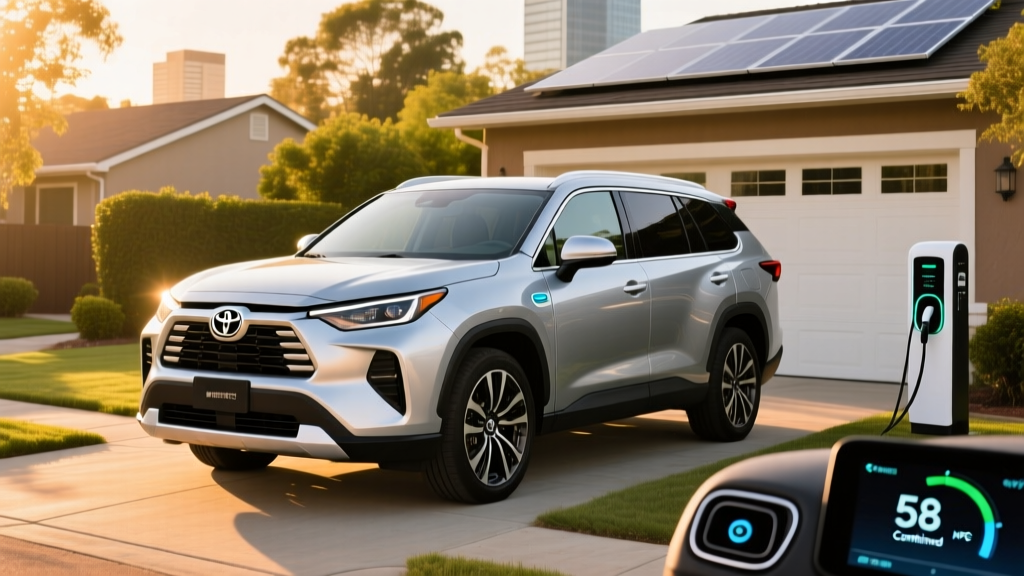
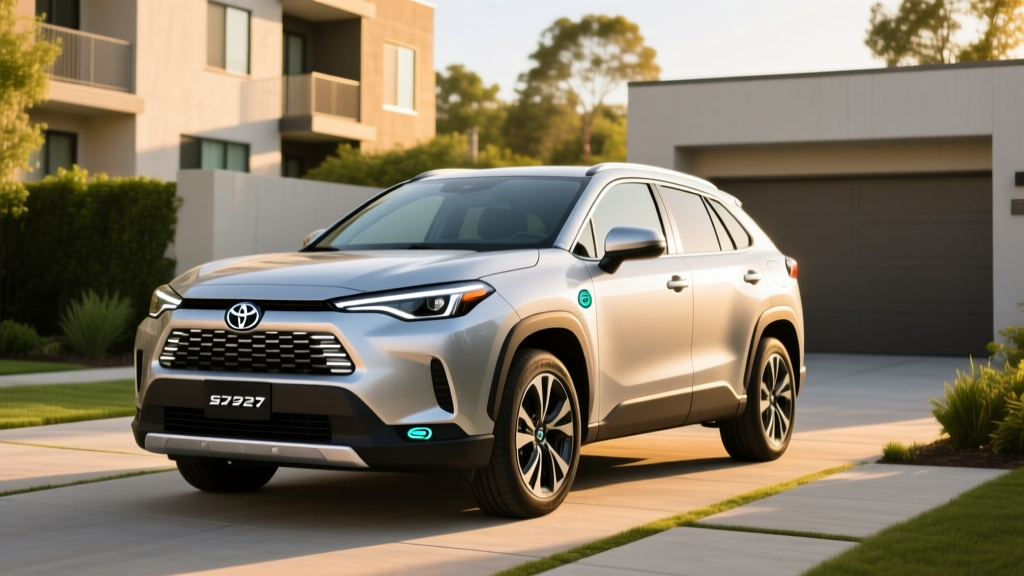
If you've been scanning Grand Highlander Hybrid reviews looking for a no-compromise three-row family hauler that sips fuel without requiring a plug, the 2026 Toyota Grand Highlander Hybrid remains the segment benchmark. It offers up to 36 MPG combined in standard Hybrid form, a potent 362-hp Hybrid MAX option, and seating for up to eight — all without the range anxiety or charging logistics of a full battery-electric SUV. For families who need genuine third-row space and want to avoid the $60,000+ price tags of luxury alternatives, this powertrain configuration is hard to beat.
But the Grand Highlander lineup has nuances that most reviews gloss over. The standard Hybrid and the Hybrid MAX deliver very different fuel economy figures, the trim structure affects which powertrain you get, and real-world MPG behavior differs significantly between city and highway driving. Here's a data-driven breakdown of what you're actually buying.
HEV vs. PHEV: Understanding the Grand Highlander's Hybrid Setup
Let's clear up a common point of confusion right away: the Toyota Grand Highlander Hybrid is a conventional hybrid electric vehicle (HEV), not a plug-in hybrid (PHEV). This distinction matters for your daily routine and your expectations.
Conventional Hybrid (HEV) — Grand Highlander Hybrid
- No plug required: The battery recharges through regenerative braking and the gasoline engine
- No electric-only range to manage: The electric motor assists the engine; you never need to think about charge level
- Smaller battery (~1.6 kWh usable): Lightweight, lower replacement cost, proven longevity
- No federal EV tax credit: Does not qualify under IRS §30D (reserved for PHEVs and BEVs with larger batteries)
Plug-In Hybrid (PHEV) — Not Offered on Grand Highlander
- Toyota does not offer a Grand Highlander PHEV variant for 2026
- The RAV4 Prime and Prius Prime are Toyota's current PHEV models with 38-44 miles of electric-only range
- If plug-in capability in a three-row Toyota SUV is a priority, you'd need to look at the (discontinued) Highlander PHEV from prior years or cross-shop competitors
The HEV approach means the Grand Highlander Hybrid works like a gas car in practice — fill up at any station and drive. The hybrid system seamlessly blends electric motor torque with the 2.5-liter four-cylinder engine to cut fuel consumption, particularly in stop-and-go city driving where electric assist is most effective.
Fuel Economy: EPA Numbers and Real-World MPG
The 2026 Grand Highlander Hybrid comes in two distinct powertrain flavors, and the MPG difference between them is substantial.
| Powertrain | Drivetrain | City MPG | Highway MPG | Combined MPG | Combined Range (est.) |
|---|---|---|---|---|---|
| 2.5L Hybrid (245 hp) | FWD | 37 | 34 | 36 | ~648 mi (18.0 gal tank) |
| 2.5L Hybrid (245 hp) | AWD (eAWD) | 36 | 33 | 35 | ~630 mi |
| Hybrid MAX (362 hp) | AWD | 27 | 28 | 27 | ~486 mi |
Source: EPA Fuel Economy
Real-World MPG: What Owners Actually See
Hybrid fuel economy behaves differently than gas-only vehicles — and often better than the EPA sticker suggests in city driving. Here's what to expect:
- City driving (2.5L Hybrid): Many owners report 38-40 MPG in urban stop-and-go conditions, where regenerative braking and electric motor assist shine. The EPA's 37 city estimate is often conservative in practice.
- Highway driving (2.5L Hybrid): Expect 31-33 MPG at sustained 70-75 mph speeds. Hybrids lose their city advantage on the open road because the engine runs continuously and regenerative braking opportunities are minimal.
- Cold weather impact: In sub-40°F conditions, expect a 5-10% MPG reduction as the engine runs more frequently to provide cabin heat and the battery operates less efficiently.
- Hybrid MAX real-world: The turbocharged 2.4L engine prioritizes performance; expect 25-26 MPG in mixed driving. Buyers choosing this powertrain are trading fuel economy for acceleration.
Hybrid Battery Warranty
Toyota covers the Grand Highlander Hybrid's traction battery with a 10-year / 150,000-mile warranty (whichever comes first), transferable to subsequent owners. This applies in all 50 states. Toyota's hybrid batteries have demonstrated strong longevity — the company's hybrid systems, refined over 25+ years since the original Prius, rarely require full battery replacement within the warranty period.
Powertrain Deep Dive: Two Very Different Hybrids
The Grand Highlander's two hybrid options serve different buyer priorities. Understanding the mechanical differences is critical to choosing the right trim.
| Specification | 2.5L Hybrid | Hybrid MAX |
|---|---|---|
| Engine | 2.5L inline-4 (naturally aspirated) | 2.4L inline-4 (turbocharged) |
| Combined Horsepower | 245 hp | 362 hp |
| Combined Torque | 173 lb-ft (engine) + electric motor | 400 lb-ft |
| Electric Motors | Front + rear (eAWD models) | Front + rear |
| Transmission | eCVT (planetary gearset) | 6-speed automatic |
| 0-60 mph (est.) | ~7.8 seconds | ~6.0 seconds |
| Towing Capacity | 3,500 lbs | 5,000 lbs |
| Drivetrain | FWD or eAWD | AWD (standard) |
| Hybrid Battery | ~1.6 kWh NiMH | ~1.6 kWh NiMH |
The 2.5L Hybrid uses Toyota's proven eCVT planetary gearset — no traditional gears or belts, just smooth, continuous power blending. It's the efficiency champion of the lineup and comes on LE, XLE, and Limited trims.
The Hybrid MAX pairs a turbocharged 2.4-liter with a more powerful electric motor and a conventional 6-speed automatic transmission. It's exclusively available on the Limited and Platinum trims and targets buyers who want V6-rivaling acceleration with better fuel economy than a traditional V6 would deliver. The 5,000-pound towing capacity also makes it the practical choice for boat or trailer duty.
Pricing, Trims, and Tax Credit Eligibility
The 2026 Grand Highlander Hybrid's pricing reflects its position as a mainstream three-row SUV, though it has crept upward in recent model years.
| Trim | Powertrain | Starting MSRP |
|---|---|---|
| LE | 2.5L Hybrid | ~$42,100 |
| XLE | 2.5L Hybrid | ~$45,600 |
| Limited | 2.5L Hybrid or Hybrid MAX | ~$49,800 (Hybrid) / ~$53,500 (MAX) |
| Platinum | Hybrid MAX | ~$56,200 |
Federal Tax Credit: Does the Grand Highlander Hybrid Qualify?
No. The Grand Highlander Hybrid does not qualify for the federal §30D Clean Vehicle Credit. Under current IRS rules, only plug-in electric vehicles (BEVs and PHEVs) with battery capacities of at least 7 kWh are eligible. Conventional HEVs like this one, regardless of how efficient they are, fall outside the credit's scope.
- ❌ Not a PHEV or BEV — ineligible for §30D
- ❌ Battery capacity below 7 kWh threshold
- ✅ Some states offer hybrid-specific rebates or HOV lane access — check your state's energy office
- ✅ Lower total fuel cost partially offsets the lack of a purchase incentive
Reliability, Battery Longevity, and Ownership Costs
Toyota's hybrid system is among the most proven in the automotive industry. The company has sold over 25 million hybrid vehicles globally since 1997, and the eCVT-based powertrain used in the Grand Highlander has no traditional transmission components (clutches, belts, torque converters) that commonly fail.
Battery Replacement Cost
If the hybrid battery does require replacement outside of warranty, current estimates for a Toyota midsize SUV hybrid battery pack run $3,000–$5,000 including labor. However, this scenario is uncommon within the first 150,000 miles based on Toyota's track record with the Highlander Hybrid and Camry Hybrid. Individual cells can sometimes be replaced rather than the entire pack, reducing cost further.
Five-Year Ownership Cost Snapshot
| Cost Category | Grand Highlander Hybrid (35 MPG) | Gas-Only 3-Row SUV (22 MPG) |
|---|---|---|
| Fuel (at $3.50/gal) | ~$7,500 | ~$11,932 |
| Maintenance (oil, brakes, etc.) | ~$2,800 (regen braking reduces pad wear) | ~$3,500 |
| Insurance (avg.) | ~$7,200 | ~$6,800 |
| Depreciation (est.) | ~$18,000 | ~$16,500 |
| Total (approx.) | ~$35,500 | ~$38,732 |
The hybrid's fuel savings — roughly $4,400 over five years — largely offset its slightly higher purchase price and depreciation. Regenerative braking also extends brake pad life significantly, a cost factor many buyers overlook. According to IIHS data, the Grand Highlander has earned strong safety ratings, which helps keep insurance costs competitive for the segment.
Who Should Choose the Grand Highlander Hybrid?
Choose the Grand Highlander Hybrid (2.5L) If:
- You want maximum MPG in a three-row SUV (35-36 combined)
- Your driving is primarily city and suburban — where hybrid systems shine
- You don't have access to home charging and don't want to rely on public chargers
- You value Toyota's long-term reliability reputation and strong resale value
- Your towing needs stay under 3,500 pounds
Choose the Grand Highlander Hybrid MAX If:
- You need 5,000-lb towing capacity for a boat, camper, or trailer
- You want confident highway merging and passing power (362 hp)
- You accept 27 MPG combined as a reasonable trade-off for performance
- You prefer a traditional automatic transmission feel over eCVT
Consider a Full EV (e.g., Kia EV9, Tesla Model X) If:
- You have reliable Level 2 home charging
- You want the $7,500 federal tax credit (subject to IRS §30D income, MSRP, and sourcing rules)
- Your daily driving is under 250 miles and road trips are infrequent
- You want near-zero routine maintenance (no oil changes, fewer brake replacements)
Consider a Gas-Only SUV If:
- Your budget is strictly under $38,000 and you can't stretch to the hybrid's MSRP
- You drive predominantly highway miles at sustained speeds (hybrid advantage shrinks)
- You live in a very cold climate where hybrid battery efficiency drops seasonally
Pros and Cons at a Glance
Pros
- Class-leading 35-36 MPG combined for a three-row SUV
- Genuine adult-sized third row with usable cargo space behind it
- No charging infrastructure needed — works with existing gas stations
- 10-year/150,000-mile hybrid battery warranty
- Hybrid MAX offers 362 hp and 5,000-lb towing
- Strong Toyota resale value and reliability track record
- Standard Toyota Safety Sense 3.0 ADAS suite
Cons
- No federal tax credit eligibility (HEV, not PHEV)
- Hybrid MAX fuel economy drops to 27 MPG combined
- eCVT can produce noticeable engine drone under hard acceleration
- Starting MSRP has climbed above $42,000
- No plug-in hybrid variant available for electric-only commuting
- Third-row access requires folding the second row (no walk-through)
Frequently Asked Questions
How many MPG does the Grand Highlander Hybrid actually get?
The EPA rates the standard 2.5L Hybrid at 36 MPG combined (37 city / 34 highway) in FWD form and 35 combined with eAWD. In real-world city driving, many owners see 38-40 MPG thanks to frequent regenerative braking. Highway-only driving at 75 mph typically yields 31-33 MPG. The Hybrid MAX achieves 27 MPG combined.
Does the Grand Highlander Hybrid need to be plugged in?
No. The Grand Highlander Hybrid is a conventional HEV. Its small battery recharges automatically through regenerative braking and the gasoline engine. You never plug it in — just fill up at a gas station like any other car.
Is there a plug-in hybrid (PHEV) version of the Grand Highlander?
As of the 2026 model year, Toyota does not offer a Grand Highlander PHEV. If you want a Toyota PHEV with electric-only range, the RAV4 Prime (42 miles electric) and Prius Prime (44 miles electric) are the current options, though neither offers three-row seating.
How long will the hybrid battery last and what does replacement cost?
Toyota covers the hybrid battery for 10 years or 150,000 miles. Based on Toyota's extensive hybrid history (Camry Hybrid, Highlander Hybrid, Prius), full battery replacement within this period is uncommon. If replacement is needed out of warranty, expect $3,000–$5,000. The hybrid battery is a nickel-metal hydride (NiMH) pack — proven chemistry with excellent cycle life.
Is the Grand Highlander Hybrid reliable?
Toyota's hybrid powertrain has one of the strongest reliability records in the industry. The eCVT transmission has no clutches, belts, or bands to wear out, and regenerative braking reduces brake pad wear significantly. The Grand Highlander specifically earned strong marks in NHTSA safety testing.
Does the Grand Highlander Hybrid qualify for any tax credit?
The Grand Highlander Hybrid does not qualify for the federal §30D Clean Vehicle Credit, which is limited to plug-in vehicles (BEVs and PHEVs). Some states may offer their own incentives for hybrid vehicles — check your state's energy or environmental agency for current programs.
How does the Grand Highlander Hybrid compare to a full EV like the Kia EV9?
The EV9 offers 279-304 miles of EPA range, qualifies for the federal tax credit, and has near-zero maintenance costs — but starts above $54,000, requires home Level 2 charging for convenient ownership, and takes 20+ minutes on a DC fast charger for road trips. The Grand Highlander Hybrid costs less upfront, needs no charging infrastructure, and can refuel in 5 minutes anywhere, making it the pragmatic choice for families without reliable charging access or those who road-trip frequently.
What's the difference between the standard Hybrid and Hybrid MAX?
The 2.5L Hybrid (245 hp, 35-36 MPG) uses a naturally aspirated engine with an eCVT — optimized for efficiency. The Hybrid MAX (362 hp, 27 MPG) uses a turbocharged 2.4L engine with a 6-speed automatic — optimized for power and towing (5,000 lbs vs. 3,500 lbs). You trade 8-9 MPG for substantially quicker acceleration and higher tow capacity.