Quick Verdict: The Grand Highlander Hybrid MAX Platinum at a Glance
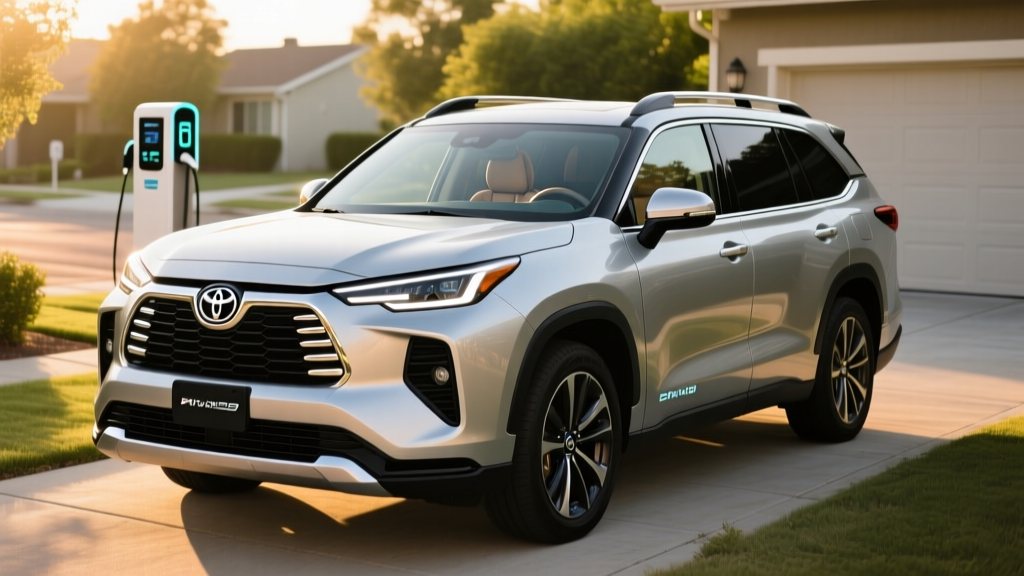
The Toyota Grand Highlander Hybrid MAX Platinum sits at the top of Toyota's three-row hybrid SUV lineup, pairing a turbocharged 2.4-liter four-cylinder with a high-output hybrid system for 362 combined horsepower. Unlike the standard Hybrid MAX powertrain found in lower trims, the Platinum adds premium interior materials, a panoramic roof, and Toyota's full suite of driver-assistance technology. For families who need three rows and want hybrid efficiency without plugging in, this is one of the most capable options on the market — but the MAX Platinum's near-$57,000 sticker demands scrutiny.
This is a conventional hybrid (HEV), not a plug-in hybrid. You never plug it in; the gasoline engine and regenerative braking recharge a small battery that assists the engine for improved fuel economy and low-speed electric driving. If you're looking for electric-only commuting range, you'll want to consider a PHEV or full BEV instead.
| Spec | 2026 Grand Highlander Hybrid MAX Platinum |
|---|---|
| Powertrain | 2.4L turbo I-4 + high-output hybrid motor |
| Combined Horsepower | 362 hp / 400 lb-ft torque |
| Transmission | 6-speed automatic (Direct Shift) |
| Drivetrain | AWD (electronic on-demand rear motor) |
| EPA MPG (City / Hwy / Combined) | 26 / 27 / 27 MPG |
| Fuel Tank | 17.1 gallons |
| Total Range | ~462 miles |
| 0-60 mph | ~5.9 seconds (est.) |
| Towing Capacity | 5,000 lbs |
| Cargo (behind 3rd / 2nd / 1st row) | 20.6 / 57.9 / 97.5 cu ft |
| Hybrid Battery Warranty | 10 years / 150,000 miles |
| Base MSRP (Platinum trim) | $56,895 |
HEV vs PHEV vs EV: Where Does the Grand Highlander Fit?
Before evaluating this SUV's efficiency, it's critical to understand what type of electrified vehicle it is — because Toyota sells the Grand Highlander in both conventional hybrid and (in some markets or future model years) plug-in hybrid configurations.
| Feature | Conventional Hybrid (HEV) | Plug-in Hybrid (PHEV) | Battery Electric (BEV) |
|---|---|---|---|
| Plug in to charge? | No — gas + regen only | Yes — Level 1 or Level 2 | Yes — Level 1, 2, or DC fast |
| Electric-only range | ~0.5-1 mi at low speed | 20-50 mi typical | 200-400+ mi |
| Battery size | 1-2 kWh | 10-25 kWh | 60-120 kWh |
| Fuel source | Gasoline only | Gasoline + electricity | Electricity only |
| Federal tax credit | None (§30D requires plug-in) | Up to $7,500 (if eligible) | Up to $7,500 (if eligible) |
| Best for | No home charging access; want simplicity | Short commute + road trip flexibility | Home charging + daily driving |
The Grand Highlander Hybrid MAX Platinum is a conventional HEV. It qualifies for no federal tax credit under IRS §30D, which explicitly requires a plug-in vehicle with a minimum battery capacity of 7 kWh. Some states may offer small hybrid incentives, but these are rare and typically minimal compared to PHEV/BEV credits. Check your state's energy office for current programs.
Fuel Economy: EPA Ratings and Real-World MPG
| Driving Condition | EPA Estimate | Real-World Expectation |
|---|---|---|
| City | 26 MPG | 27-30 MPG (hybrids excel in stop-and-go) |
| Highway | 27 MPG | 25-27 MPG (turbo + AWD drag at 70+ mph) |
| Combined | 27 MPG | 26-28 MPG |
The Hybrid MAX powertrain uses Toyota's Direct Shift 6-speed automatic rather than the eCVT found in the standard (non-MAX) Grand Highlander Hybrid. This gives the MAX a more traditional driving feel with distinct gear shifts, but it slightly reduces city efficiency compared to the eCVT-equipped Hybrid, which achieves an EPA-estimated 36 MPG combined. The trade-off is substantial power: 362 hp versus 245 hp for the standard hybrid.
According to fueleconomy.gov, the Grand Highlander Hybrid MAX AWD posts 26 city / 27 highway / 27 combined. In real-world mixed driving, owners typically report figures close to or slightly above the EPA combined estimate, especially in suburban and city conditions where regenerative braking recaptures energy frequently. Highway-heavy commutes at 75-80 mph will push consumption closer to 24-25 MPG, particularly when fully loaded with passengers and cargo.
Cold weather reduces hybrid efficiency by roughly 5-10% due to increased engine idling for cabin heat and reduced battery efficiency. Expect 24-25 MPG combined in winter months in northern climates.
Powertrain Deep Dive: The Hybrid MAX System
The Hybrid MAX powertrain pairs a turbocharged 2.4-liter inline-four engine with a high-output electric motor integrated into the transmission. Unlike Toyota's Hybrid Synergy Drive (which uses a planetary gearset eCVT), the Hybrid MAX routes power through a conventional 6-speed automatic, giving drivers familiar shift points and more aggressive acceleration response.
Key powertrain figures:
- Gasoline engine: 2.4L turbocharged I-4, approximately 271 hp on its own
- Electric motor: High-output motor integrated into the transaxle, supplementing torque fill and low-speed assist
- Combined system output: 362 hp / 400 lb-ft of torque
- Rear axle: Electronic on-demand AWD via a separate rear-mounted electric motor (no mechanical driveshaft)
- Hybrid battery: Approximately 1.3 kWh nickel-metal hydride (NiMH), mounted under the rear seats
The rear motor provides AWD traction when slip is detected but does not contribute to the 362 hp peak figure. It's primarily a traction and stability system, not a performance adder. Towing capacity reaches 5,000 pounds — enough for a small boat trailer or a loaded utility trailer, making this one of the more capable hybrid tow vehicles in the segment.
Platinum Trim: What You Get for the Money
The Platinum is the top-tier trim for the Hybrid MAX lineup. At a starting MSRP of approximately $56,895 (before destination), it includes:
- Panoramic glass roof with power shade
- Heated and ventilated front seats; heated second-row captain's chairs
- 12.3-inch touchscreen with wireless Apple CarPlay and Android Auto
- 14-speaker JBL premium audio system
- Head-up display (HUD)
- 360-degree surround-view camera
- Digital rearview mirror
- Toyota Safety Sense 3.0 (ADAS suite — SAE Level 2 driver-assist, not self-driving)
- 20-inch machined-finish alloy wheels
- Power-folding third row
Destination charges add approximately $1,395, bringing the out-the-door starting price near $58,290 before taxes and fees. Fully loaded with accessories, expect to see window stickers approaching $60,000.
Battery Warranty, Lifespan, and Replacement Cost
Toyota Hybrid Battery Warranty: 10 years or 150,000 miles, whichever comes first. This covers the hybrid traction battery against defects and excessive capacity loss. The warranty is transferable to subsequent owners.
Toyota's hybrid battery warranty is among the best in the industry and reflects decades of hybrid reliability data. The NiMH battery in the Hybrid MAX system is smaller and less stressed than the batteries in full EVs, and Toyota's hybrid battery management system is conservative — it never fully charges or fully depletes the pack, which significantly extends cycle life.
Real-world longevity data from Toyota's hybrid fleet (Prius, Camry Hybrid, Highlander Hybrid) shows most hybrid batteries lasting 150,000-200,000+ miles before needing replacement. Some original Prius batteries have exceeded 300,000 miles.
If replacement is needed out of warranty, a new Toyota hybrid battery typically costs between $2,000 and $4,000 including labor, depending on the model. Third-party refurbished batteries are available for $1,000-$2,000. This is dramatically less than a full EV battery replacement, which can run $10,000-$20,000+.
The 12-volt auxiliary battery (which powers electronics and starts the hybrid system) is a separate component with a typical 3-5 year lifespan, similar to any conventional vehicle.
Tax Credits and Incentives: What's Available?
The Grand Highlander Hybrid MAX Platinum does not qualify for the federal §30D clean vehicle tax credit. Under current IRS rules, the §30D credit requires the vehicle to be a plug-in electric vehicle with a battery capacity of at least 7 kWh. The Grand Highlander's ~1.3 kWh NiMH battery falls far short of this threshold.
- Federal §30D credit: Not eligible (HEV, not plug-in)
- Federal alternative fuel vehicle credit: Not applicable
- State incentives: Some states offer small rebates for conventional hybrids (typically $250-$1,000), but these are uncommon and change frequently. Check your state's energy department or AFDC state incentive database for current programs.
- Manufacturer incentives: Toyota occasionally offers lease cash or APR specials on hybrid models. Check Toyota's current offers page for the latest.
If the federal tax credit is a priority for your purchase, you would need to look at a PHEV (such as the Toyota RAV4 Prime or the upcoming Grand Highlander PHEV if Toyota introduces one) or a full BEV to qualify. Always consult a tax professional to confirm eligibility for any credit.
Who Should Buy the Grand Highlander Hybrid MAX Platinum?
Pros
- 362 hp with 27 MPG combined — rare power/efficiency balance in a 3-row SUV
- No plug-in required; fuel anywhere, no charging infrastructure needed
- 5,000-lb towing capacity exceeds most hybrid competitors
- 10-year/150,000-mile hybrid battery warranty
- Platinum trim is fully loaded; few options boxes to check
- Toyota reliability track record and strong resale value
Cons
- 27 MPG combined trails the standard Hybrid (36 MPG) by a wide margin
- No federal tax credit eligibility
- Near-$57K starting price; approaches luxury SUV territory
- No electric-only commuting capability (HEV limitation)
- Hybrid MAX's 6-speed automatic is less smooth than the eCVT at low speeds
- Third row is usable but tight for adults on long trips
Choose the Grand Highlander Hybrid MAX Platinum if: You need three rows, want strong acceleration for highway merging and mountain passes, tow occasionally, and don't have access to home or workplace charging. You value Toyota's hybrid reliability and want a fully loaded SUV without stepping into luxury-brand pricing.
Choose the standard Grand Highlander Hybrid (non-MAX) if: Maximum fuel economy (36 MPG combined) matters more than horsepower. The 245 hp output is adequate for most driving, and the savings are significant.
Choose a PHEV (like the RAV4 Prime or Kia Sorento PHEV) if: You have a short commute (under 35 miles), can charge at home, and want to drive mostly on electricity during the week while keeping gas flexibility for road trips. You'll also qualify for the federal tax credit if income and sourcing rules are met.
Choose a full BEV (like the Kia EV9 or Rivian R1S) if: You have reliable home charging, your daily driving is under 250 miles, and you want zero tailpipe emissions with minimal maintenance. BEVs qualify for up to $7,500 in federal credits (subject to eligibility) and have lower per-mile energy costs.
Frequently Asked Questions
How many MPG does the Grand Highlander Hybrid MAX Platinum get?
The EPA rates it at 26 city / 27 highway / 27 combined MPG. Real-world driving typically yields 26-28 MPG combined, with city driving sometimes exceeding 28 MPG thanks to regenerative braking. Highway cruising at 75+ mph will drop efficiency to approximately 24-25 MPG.
Does the Grand Highlander Hybrid MAX need to be plugged in?
No. This is a conventional hybrid (HEV). The battery recharges through regenerative braking and the gasoline engine. You fuel it like any other gas vehicle — there is no plug, no charging cable, and no electric-only range to manage.
Is the Grand Highlander Hybrid MAX reliable?
Toyota's hybrid systems have an extensive reliability track record spanning over 25 years since the original Prius. The Hybrid MAX system is newer but uses proven components. Toyota backs the hybrid battery with a 10-year/150,000-mile warranty, and real-world data shows most Toyota hybrid batteries lasting well beyond 150,000 miles. The Grand Highlander carries Toyota's standard 3-year/36,000-mile basic warranty and 5-year/60,000-mile powertrain warranty in addition to hybrid-specific coverage.
What is the hybrid battery replacement cost?
Out-of-warranty replacement for a Toyota hybrid battery typically runs $2,000-$4,000 including labor. Refurbished units from third-party suppliers cost $1,000-$2,000. Given the 10-year/150,000-mile warranty and Toyota's battery longevity history, most owners will never need to replace the hybrid battery during their ownership.
Does it qualify for any tax credit?
No federal tax credit applies to the Grand Highlander Hybrid MAX because it is not a plug-in vehicle. The IRS §30D credit requires a minimum 7 kWh battery and plug-in capability. Some states may offer small hybrid incentives, but these vary widely and are typically modest ($250-$1,000). Consult your state's energy office or a tax professional for current details.
How does the Hybrid MAX compare to the standard Grand Highlander Hybrid?
The standard Hybrid uses a 2.5L four-cylinder with an eCVT for 245 hp and an EPA-estimated 36 MPG combined — a massive 9 MPG advantage over the MAX. The MAX trades that efficiency for 362 hp, a 6-speed automatic, and 5,000-lb towing (versus 3,500 lb for the standard Hybrid). If fuel economy is your priority, the standard Hybrid is the clear winner. If you need power and towing, the MAX earns its premium.
Can the Hybrid MAX tow a camper or boat?
Yes. The Hybrid MAX is rated for 5,000 pounds of towing capacity, which covers most small travel trailers, pop-up campers, and boat trailers. This is 1,500 pounds more than the standard Hybrid's 3,500-lb rating, and it's one reason buyers choose the MAX powertrain despite the fuel economy trade-off.
Is Toyota Safety Sense on the Platinum self-driving?
No. Toyota Safety Sense 3.0 is an SAE Level 2 driver-assistance system. It provides adaptive cruise control, lane-centering, automatic emergency braking, and blind-spot monitoring, but the driver must remain fully attentive with hands on the wheel at all times. It does not drive the vehicle autonomously.